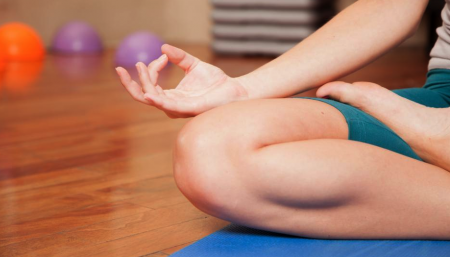
Ease your body into these stretches: you should not be jumping or bouncing around, and the exercises are not supposed to be uncomfortable. Remember to breathe slowly and rhythmically too. The positions should be held for at least 10 seconds, but if you want to increase your flexibility, stretch the major muscle groups for a minimum of 30 seconds. As well as helping your body to relax by reducing muscle tension, these stretch exercises can be done to increase flexibility or to ease muscles, or cool down after exercising.
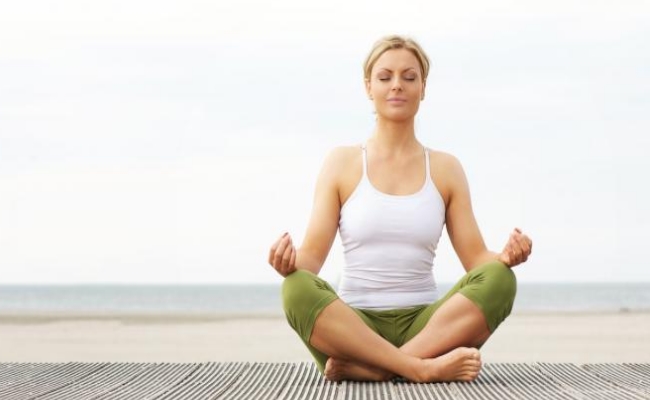
Abdominal breathing is the key here. This allows you to take air deep into your lungs. When you breathe deeply, blood is able to carry oxygen more efficiently to all parts of your body. |
BACK OF THIGHS :
- Stand up straight with your feet close together.
- Extend the right leg forward, balancing on your heel, and bend your left leg at the knee. Keep your hands on the front of your thighs. Lift up your body from the ribs and lean forwards over the outstretched leg, keeping your back straight, and your chin pointing towards the floor. Hold for a few seconds and repeat on the other side.
FRONT OF THIGHS :
- Stand upright with your hands on the back of a chair.
- Bend your left leg up behind your body and clasp your ankle with your left hand.
If you can’t reach far enough, put a towel around your foot (not your ankle) and hold each end of the loop. Try to keep your knees together and the supporting knee (of the right leg) slightly bent. Don’t arch your spine or lean forwards, sideways or backwards. Keep your abdominals pulled in, your buttocks squeezed under and your shoulders forward.
CHEST :
- Stand upright with your head raised and your feet slightly apart, in line with your shoulders.
- Hold your arms behind you and clasp your hands together.
- Press your shoulder blades in towards each other and slowly lift your arms up – without leaning forward. Keep your elbows slightly bent.
BUTTOCKS :
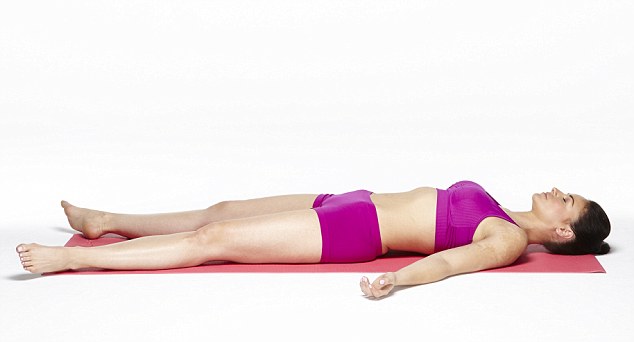
- Lie on your back on the floor, with your arms by your side, palms to the floor. Bend your legs and put your feet flat on the floor.
- Rest the outside of your right knee, letting your left knee go out at an angle to your body.
- Grasp your right thigh with both hands and slowly lift your right foot off the floor, bringing your right knee in towards your chest. If your arms will not stretch comfortably as far as your right thigh, use a towel as pulling loop. Change legs and repeat the exercise.
UPPER BACK :
- Stand upright with your head raised and your feet slightly apart, in line with your shoulders. Raise your arms in front of your body to shoulder level so that they are parallel to the floor.
- Reach forwards with each hand alternately five times.
- Clasp your hands together and, turning the palms away from you,
push them away from your body while tucking in your buttocks. Keeping your hands clasped, reach forwards again, this time pushing your arms from your shoulders, and slowly bring your head down so that it is between your arms. Keep your elbows slightly bent, and take care not to let your whole body lean forwards.
LOWER BACK:
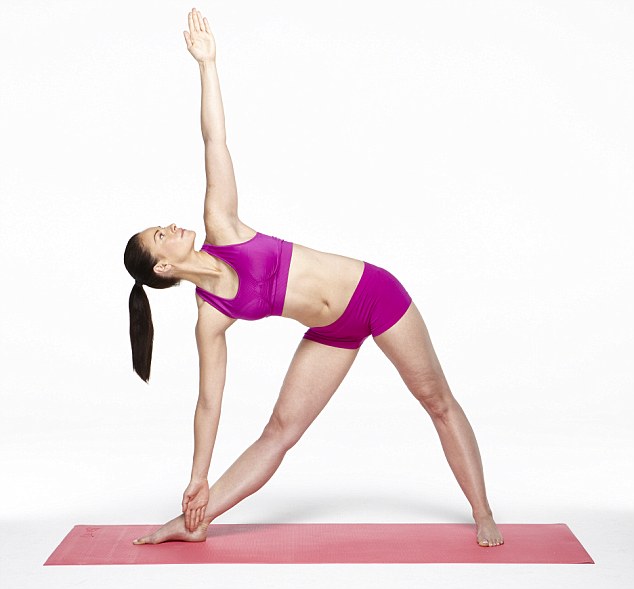
This exercise is suitable for people with lower back problems as long as it is taken very gently. If you have a back problem, stop if you experience pain.
- Lie on your back on the floor with your knees bent up towards your chest and your arms resting by your sides.
- Move your arms out at right angles to your body, palms flat on the floor, keeping your legs bent up to your chest.
- Keeping your shoulders flat, put your legs to one side of your body, and your head to the other.
- Rest and repeat on the other side.
NECK AND SHOULDER : Exercise A
- Stand upright with your feet slightly apart, in line with your shoulders, and your shoulders back and down.
- Ease your neck gently down to the right until you feel a slight stretch on the left side of your neck.
- Hold, then repeat the movement to the left until you feel a gentle stretch on the right; repeat by tipping your head to the right, holding and feeling a light stretch on the left side.
- Maintain your upright position, feet slightly apart.
- Raise your right shoulder up as high as you possibly can.
- Pull it back in a circular motion.
- Next, lower it, still moving in a circle.
- Repeat with your left shoulder. Then repeat the exercise with both shoulders at the same time.
Exercise can decrease muscular tension, loosen tight muscles and decrease the body chemicals that are brought on by stress. It also stimulates brain activity patterns that are associated with meditation and relaxation. Exercise can create an acceptable means of physically releasing stress by diverting it to various body systems. For help starting a fitness program, Click here.
Related Links
- Cooling down after a workout
- Every Breath You Take
- Minimizing Sore Muscles
- Top 10 Ways to check, if you are pushing too hard
Disclaimer
The Content is not intended to be a substitute for professional medical advice, diagnosis, or treatment. Always seek the advice of your physician or other qualified health provider with any questions you may have regarding a medical condition.