
Fiber generally refereed to as ‘roughage’ is essential for the healthy functioning of your body. Even though research continues to prove fiber’s power, statistics show that many people still aren’t taking this nutrient seriously enough. According to the American Dietetic Association (ADA), most adults consume less than 15 grams (g) of fiber daily, and yet the recommended intake for optimum health is 20 to 35 g.
Here are 10 facts to help you fuel your health with fiber.
 Fiber Fights Disease: A high-fiber diet can help prevent heart disease, colon cancer and diverticulosis (an intestinal disorder), and may help control diabetes and prevent breast cancer. Soluble fiber can lower blood cholesterol by 5 percent or more. This type of fiber helps the body eliminate cholesterol by binding it in the digestive tract. Fiber has been used to treat constipation for thousands of years.
 Fiber May Help You Beat Overeating: High-fiber foods take longer to chew and digest, so you feel satisfied longer. Foods containing water-insoluble fiber such as wheat bran, wheat germ, whole grains, cracked wheat bran, brown rice, are not digested and add bulk to the diet. Soluble fibers such as foods in the legumes family, seeds, raw and dried fruits, and raw and cooked vegetables become gel-like substances during digestion and delay the time food goes through the intestines and thus helps you to keep full.
 Most Popular Foods Are Not High in Fiber: According to the ADA, most commonly consumed grains, fruits and vegetables contain only 1 to 3 g of dietary fiber. Unless you eat a very healthy diet, you probably need to increase your fiber intake. Its easy to make up your daily quote if you eat:
- Three servings of vegetables a day and
- Two serving of fruits a day and
- Two serving of pulses a day and
- One serving of whole grain product a day.
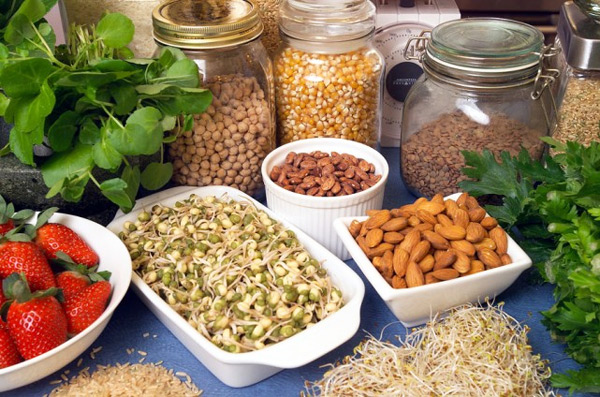
 Legumes and Grains Provide the Most Fiber per Dietary Serving: Dietary fiber is plant matter we cannot digest. The best sources are legumes, whole grains and concentrated grain products. Fruits and vegetables are also good sources, but they usually contain less than 2 g per serving. Refined grains provide less than 1 g per serving. Make use of the Food Guide Pyramind at: http://www.womenfitness.net/programs/ to check what counts as 1 serving.
 Fiber-Rich Legumes Deserve a Closer Look: Legumes (beans and lentils) pack an unusually strong fiber punch. In Nutrition for Women, author Elizabeth Somer, MA, RD, points out that three-fourths of a cup of pork and beans provides 7 g of fiber (or more, depending on the brand). The same size serving of pinto or kidney beans provides at least 13 g of fiber. Preparing beans doesn’t need to take lots of time: Canned beans require little preparation, and lentils cook quickly and don’t require soaking.
 Kids Need Fiber Power, Too: Children older than two (and up to 18 years of age) should consume a daily fiber intake equal to or greater than their age plus 5 (in g). Research shows that a healthy, fiber-rich diet in childhood may reduce the risk of heart disease and some types of cancer later in life. Kids tend to be most receptive to the fiber found in fruits, vegetables and pre-sweetened fortified breakfast cereals, according to the ADA. A cup of raisin bran cereal contains 7 g of fiber; half a cup of cooked green peas has 4 g; and a medium apple (with peel) has 3 g.
 More Fiber Requires More Water: To keep fiber moving through your digestive tract, you need to drink plenty of water. Make sure you consume eight or more glasses each day, particularly when you are active or the weather is hot.
 You Can’t Cook Out Fiber: Don’t worry about cooking your fruits and vegetables–the fiber stays. By the way, all the fiber in fruits and vegetables is not just in the skin or peel.

 You Can Get Too Much of a Good Thing: Eating more than 50 g of fiber per day can cause diarrhea and bloating, and can interfere with your body’s absorption of zinc, iron and other minerals.
 Getting Enough Fiber Doesn’t Have to be Hard: Here are some simple ideas: Top pancakes with warmed fruit. Eat hot oatmeal for breakfast. Sprinkle high-fiber cereal on yogurt, smoothies and fruit dishes. Top pasta with steamed vegetables and beans. Eat fresh produce whenever possible. (One pear or one cup of strawberries, broccoli or carrots each offers 4 or more g of fiber.) Also remember to check labels for fiber content.
Don’t just assume you’re eating enough fiber: Calculate your intake over a few days. If it’s below 20 to 35 g daily, you’re missing one of your best opportunities to maintain your health and reduce your disease risk.
For more on tips of increasing fiber content in your diet, simply log on to:
http://www.womenfitness.net/wfmember/
Disclaimer
The Content is not intended to be a substitute for professional medical advice, diagnosis, or treatment. Always seek the advice of your physician or other qualified health provider with any questions you may have regarding a medical condition.