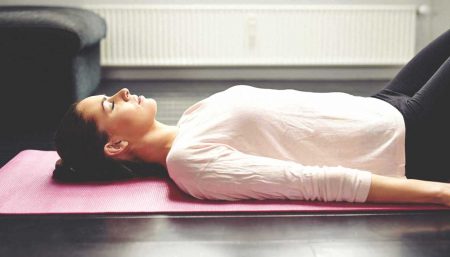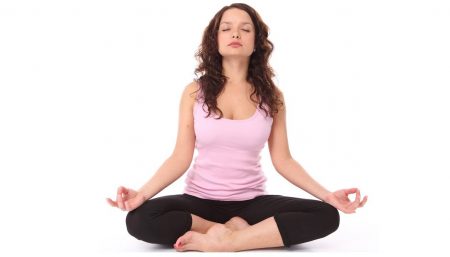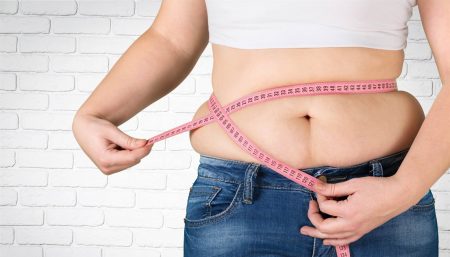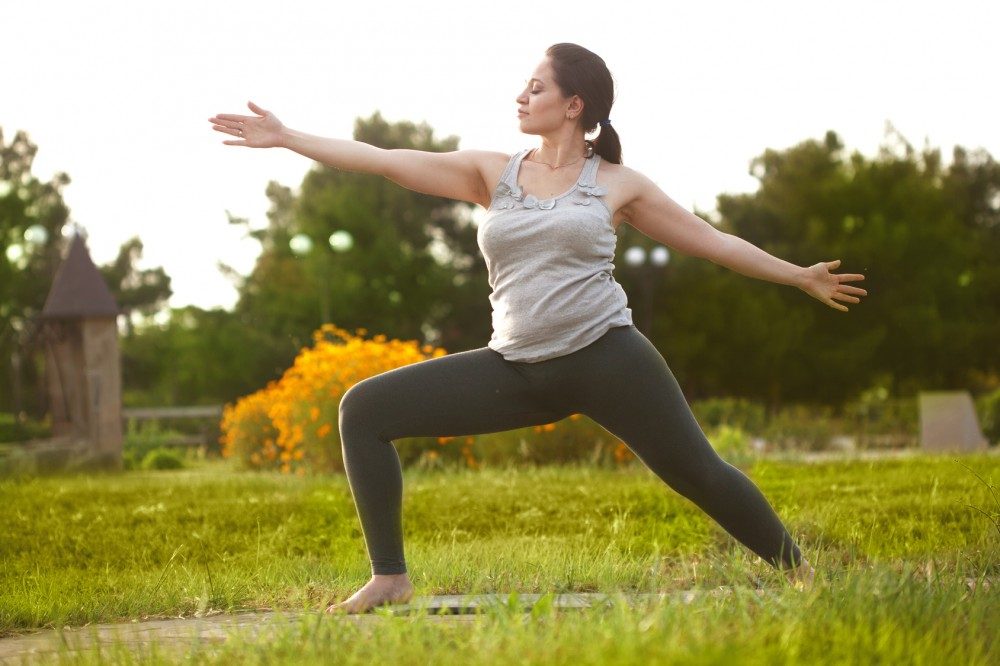
A person of normal weight takes a diet which is sufficient to sustain daily activities without storing energy in the form of fat tissue. Putting on weight, however, means there has been a change in our lifestyle that is conducive to storing energy (calories) in the form of fat tissue. Also, when we speak of obesity in yoga, we refer not only to the physical body, but to all the aspects of our being and the way in which we nourish and mobilize them. In most cases aim of yoga is not justreduction of weight, but this is bound to happen as an outcome of our increased self-awareness.
The best asanas for obesity are the Pawanamuktasana series for the digestive system which help to remove extra fat from the abdomen, hips and thighs, and activate the energy in the lower panic centers.
In yoga therapy the body is the instrument, not the end; it is the means, not the aim. So, it is not just the techniques that are important, but also the attitudewith which we undertake them, how disciplined and regular we are in the practice.
| These yoga asanas should be avoided by women suffering from the high blood pressure, serious heart conditions, back problems such asSciatica and Slipped disc or soon after abdominal surgery. In case you have any doubt, Please consult a competent therapist. |
Surya Namaskara
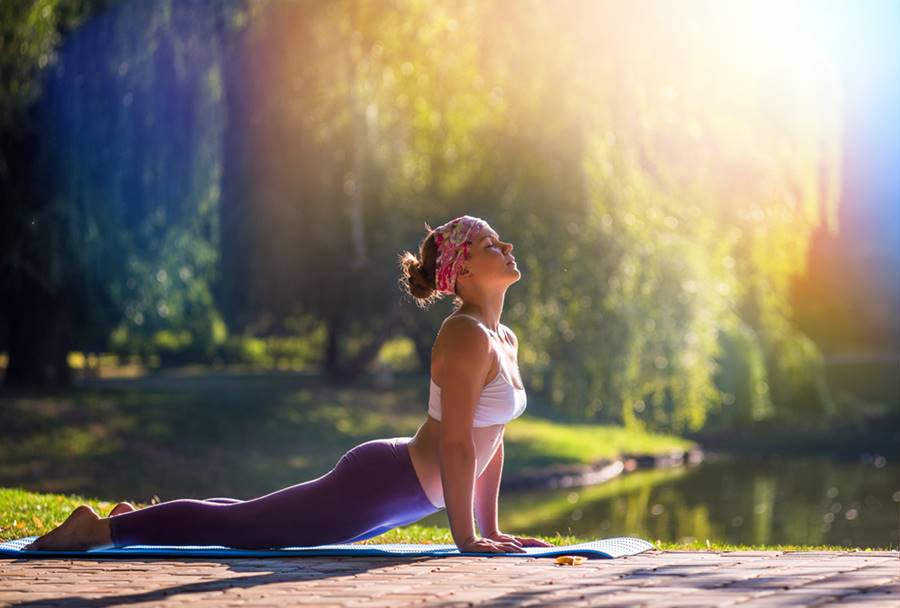
The dynamic series known as surya namaskara (salutation to the sun) is most important for thetreatment of obesity. Surya namskara is a complete practice in itself because it includes asana, pranayama, mantra and meditation. This practice has a unique influence on the endocrine and nervous system, helping to correct metabolic imbalances that cause and perpetuate obesity. Being a dynamic practice, it is also an excellent exercise equated to cycling, jogging orswimming.
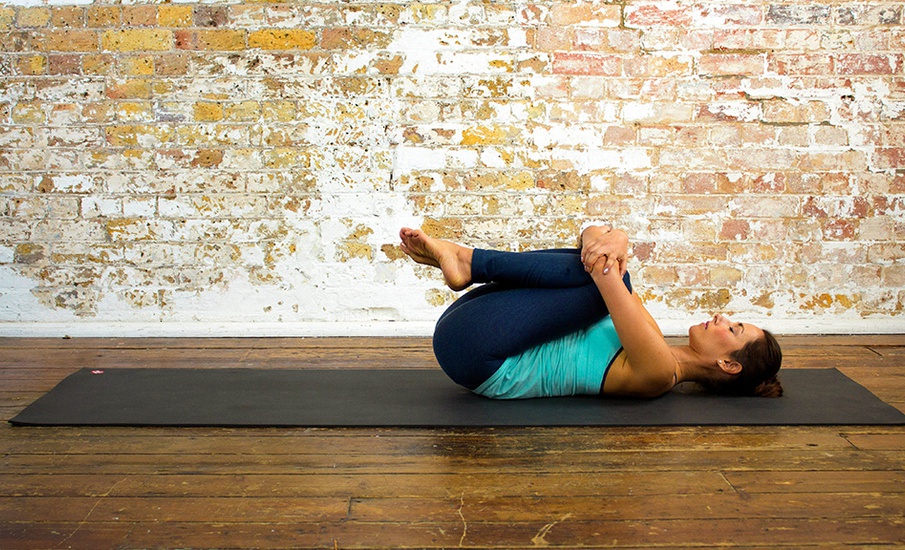
Pawanamuktasana (Wind Liberating Pose)
Instructions:
- Lie down on your back and stretch both your legs. Now leaving the left leg stretched on the ground bend your right leg at the knee and bring the bent knee near the chest. Now inhale and press your bent leg on your chest with both hands, which should be interlocked for 90 this purpose.
- Keep the breath full in your belly and go on pressing the leg on it. Stay in this position for some time. Now start exhaling, lift your head and try to touch your bent knee with your nose. Inhale and bring your head back in the normal position; also take the leg down and exhale. Concentrate on Maniptir Chakra. Repeat this process with your right leg and then with both the legs.Advantages:- This asana regulates the wind in the body. It brings the wind down, so that it can be easily exhausted through the anus. The wind then does not cause disorders in the stomach, and constipation is also relieved. It also helps in keeping away the diseases of the lungs and the heart. Obesity and excessive fat of the abdomen also diminish.
Caution:- Pregnant women are prohibited from doing this asana.
Utthanpadasana (Raised Leg Pose)
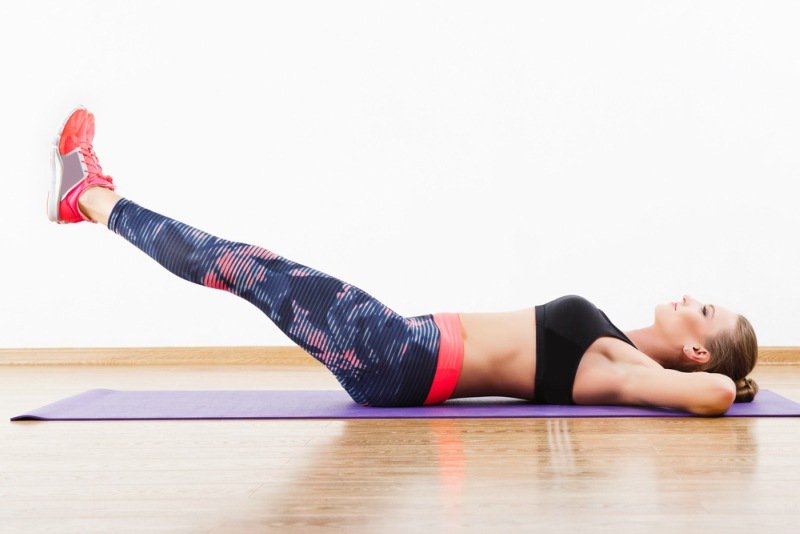
- Lie in the Base position with the palms flat on the floor. Inhale and raise the right leg as high as it is comfortable, make sure to keep the leg straight and the foot relaxed. The left leg should remain straight and in contact with the floor. Hold yourself in this posture four to five seconds, counting mentally and retaining the breath.
- In the second round of practice make sure to practice four to five seconds with the right leg and then the left leg. This can be repeated raising both legs together.
- Inhale while raising the legs. Hold the posture and the breath and Exhale while lowering the legs. On synchronizing the movement with the breath, the stretch in the legs and mental counting in the final position.This Asana strengthens the abdominal muscles and massages the organs. It also strengthens the digestive system, Lower back, Pelvic and Perineal muscles.
Chakra Padasana (Leg Rotation)
- Lie in the Base position.
- Raise the right leg at least six centimeters from the ground, keeping the knee straight. Rotate the entire leg clockwise ten times in as large a circle as possible. The foot should not touch the floor at any time during the rotation. Rotate fifteen times in the opposite direction.
- Repeat the same process with the left leg. Please do not strain. You should make sure to rest in the Base Position introducing abdominal breathing until the respiration returns to normal.
- Raise both the legs together. Keep them together and straight throughout the practice. Rotate both the legs clockwise and then anti- clockwise five to seven times. The circular movement should be as large as possible.
- Breathe normally throughout the practice. On the mental counting of each round, rotation of the legs and on the effects of the Asana on the hips and abdomen.
This is good for Hip Joints, Obesity, toning of abdominal and spinal muscles.
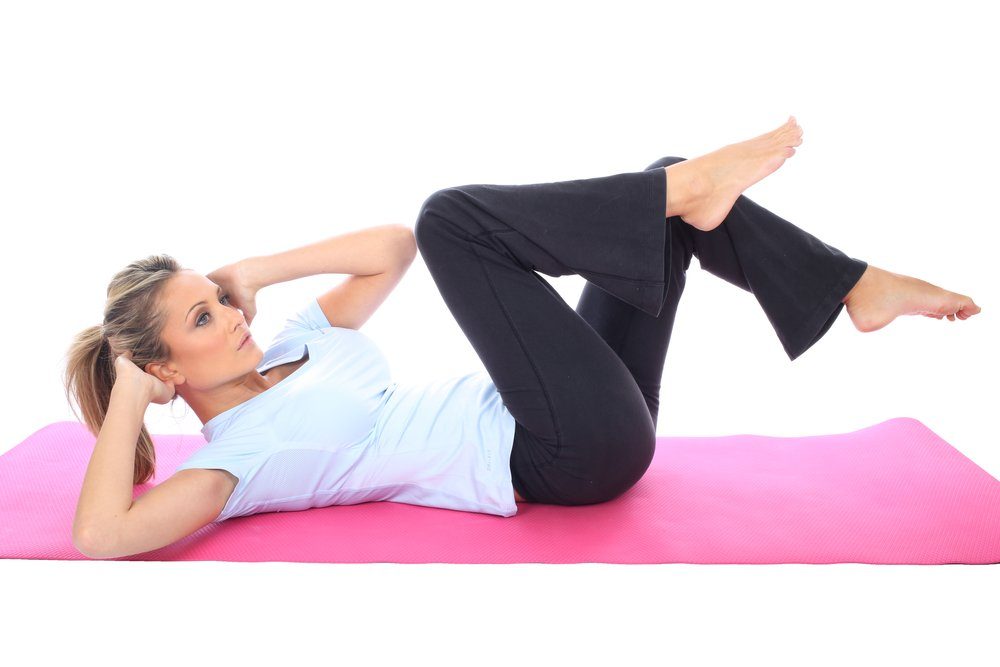
Pada Sanchalanasana (Bicycling)
- Lie in the Base position.
- Raise the right leg. Bend the knee and bring the thigh to the chest. Raise and make the leg straight and then lower the leg straight in the forward movement. Bend the knee and bring it back to the chest to complete the cycling movement. The foot should not touch the floor during the movement. Repeat fifteen times in a forward direction and the fifteen times in reverse. Repeat the same process with the left leg. Inhale while straightening the leg and Exhale while bending the knee and bringing the thigh to the chest.
- Raise both the legs. Practice alternate Bicycling movements as though peddling a bicycle. Practice this fifteen times forward and then fifteen times backward. Breath normally throughout this process.
- Raise both the legs and keep them together throughout the practice. Bring the knees as close as possible to the chest on the backward movement and straighten the legs fully on the forward movement. Slowly lower the legs together, keeping the knees straight, until the legs are just above the floor. The bend knees and bring them back to the chest. Practice five to seven times forward bicycling movements and the same in reverse. Do not strain yourself. Inhale while straightening the legs and Exhale while bending the legs to the chest.
- On the breath, mental counting of each round, and on smoothness of the movement and proper coordination, especially while revere bicycling. While you relax be aware of the abdomen, hip, thighs and lower back.
- Keep the rest of the body, including the head lie down on the floor throughout the practice. After completing each stage remain in the base position and relax until the respiration returns to normal.Good for hip and knee joints, strengthens abdominal and lower back muscles.
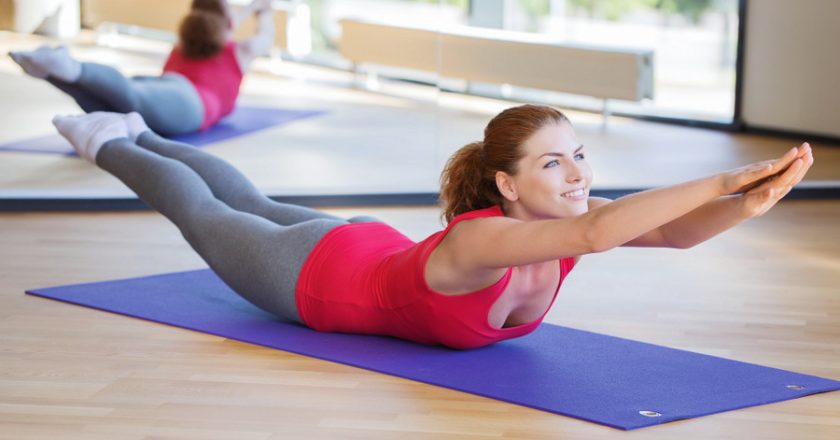
- Lie in the Base position your palms down. Make sure to keep your eyes open throughout the practice. Please breath deeply. Hold the breath and then raise the legs, arms, shoulders, head and trunk off the ground.
- The shoulders and feet should be no more than few centimeters off the floor. Balance the body on the buttocks and keep the spine straight. The arms should be held at the same level and in line with the toes. The hands should be open with the palms down. Look toward your toes.Remain in the final position and hold the breath and count to ten.
- Breath out and return to supine position. Be careful not to injure the back of your head while returning to the floor. Relax the whole body. Practice five to seven rounds as mentioned above. Relax in ShavAsana after each round , gently pushing out the abdomen with inhalation to relax the stomach muscles.
- Inhale before raising the body. Retain the breath while raising, tensing and lowering the body. Exhale in the base position.This Asana stimulates the muscular, digestive, circulatory, nervous andhormonal systems, tones all the organs and removes lethargy. It is especially useful for eliminating nervous tension and bringing about deep relaxation
Chakki Chalanasana (Churning The Mill)
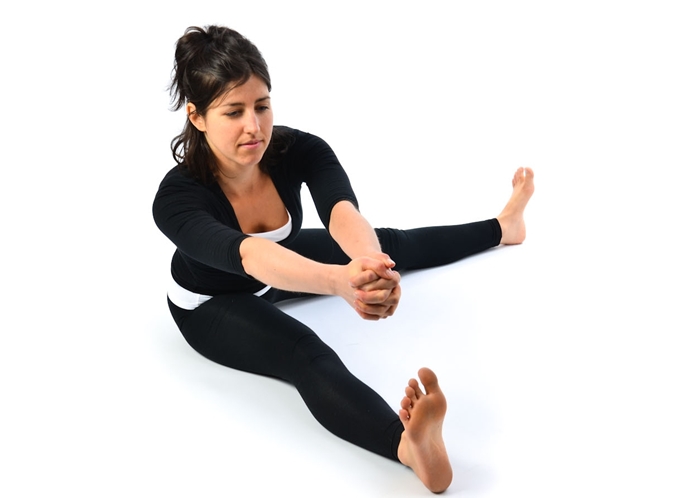
- Sit with the legs stretched out in front of the body about one foot apart. Interlock the fingers of both hands and hold the arms out straight in front of the chest.
- Keep the arms straight and horizontal throughout the practice, do not bend your elbows. Bend forward as far as possible. Imagine the action of churning a mill with an old fashioned stone grinder.
- Swivel to the right so that the hands pass above the right toes and as far to the right as possible. Lean back as far as possible on the backward swing.
- Try to move the body from the waist. On the forward swing, bring the arms and hands to the left side, over the left toes and then back to the center position. One rotation is one round. Make sure to practice five to ten rounds clockwise and then the same number of rounds anti-clockwise.
- In the same sitting position, separate the legs as wide as possible, keeping them straight. Make large circular movements over both feet again trying to take the hands over the toes on the forward swing and coming as far back as possible on the backward swing. Make sure to practice fifteen times in each direction.
- Inhale while leaning back and exhale while moving forward. This Asana is excellent for toning the nerves and organs of the pelvis and abdomen It is very useful for regulating the menstrual cycle and may be performed during the first three months of pregnancy.
Udarakarshanasana (Sleeping abdominal Stretch Pose)
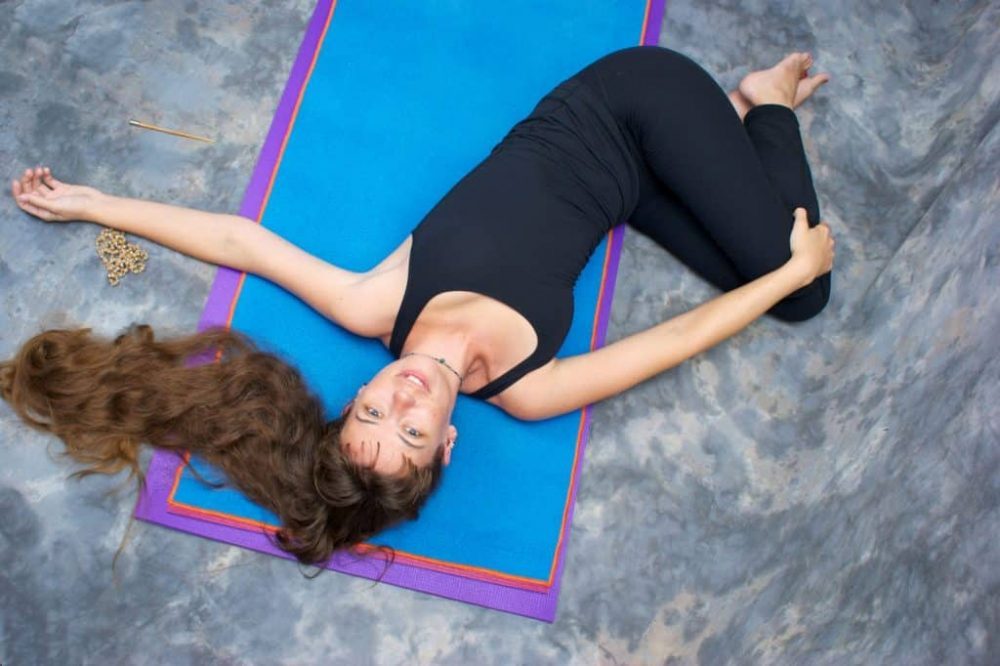
- Lie in the Base position.
- Bend the knees and place the bottom of your both feet flat on the ground, directly in front of your buttocks. Keep the knees and feet together throughout the practice. Interlock the fingers of both hands and place the palms under the back of the head as shown in the figure. While breathing out, slowly lower the legs to the right, trying to bring the knees down to the floor. The feet should remain in contact with each other., although the left foot will move slightly off the floor. Make sure to turn your head gently and neck in the opposite direction to the legs. This will give a uniform twisting stretch to the entire spine. Hold the breath in the final position while mentally counting seven seconds.
- While breathing in, please raise both legs to the upright position. Keep the shoulders and elbows on the floor throughout. Repeat on the left side to complete one round. Make sure to complete seven rounds like as mentioned above.
- Exhale while lowering the legs to the sides. Hold the breath in the final position. Inhale while raising the legs. On the breath, the mental counting in the final position and the twisting stretch on the spinal and abdominal muscles.
This asana gives an excellent stretch to the abdominal muscles and organs, and thereby helps to improve digestion and eliminate constipation. The twisting stretch of the spinal muscles relieves the strain and stiffness caused by prolonged sitting.
Gatyatmak Meru Vakrasana (Dynamic Spinal Twist)
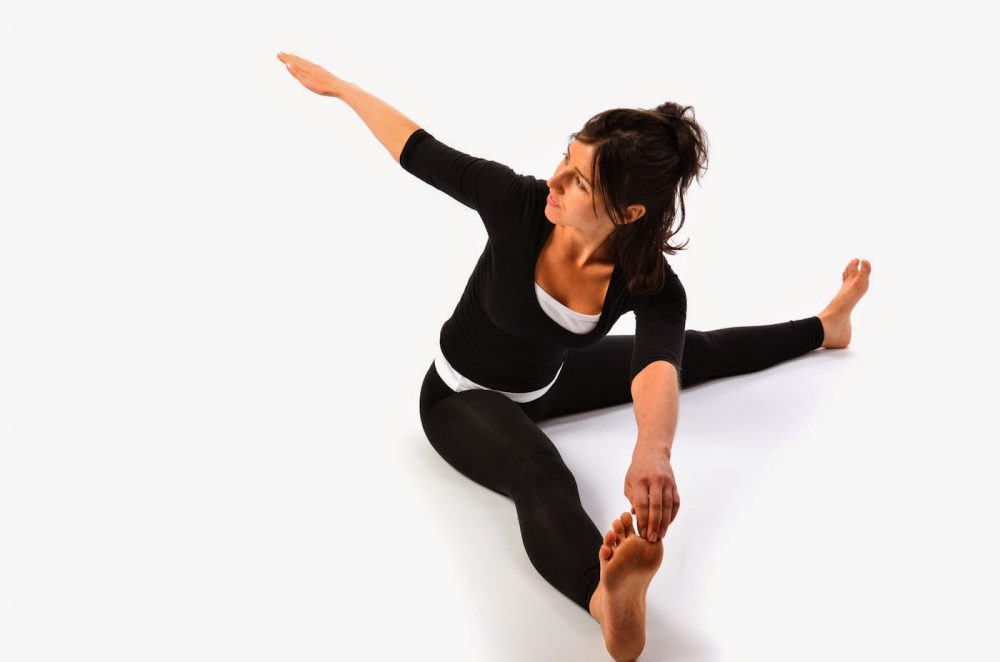
- Sit on the floor with both of your legs outstretched. Separate the legs as far apart as possible and make sure you are not bending your knees.
- Stretch the arms sideways at shoulder level. Keeping the arms straight, twist to the left and bring the right hand down towards the left big toe.
- Stretch the straight left arm behind the back as the trunk twists to the left. Keep both of your arms in straight line. Turn your head to the left and gaze at the left outstretched hand. Twist in the opposite direction and bring the left hand down towards the right big toe.
- Stretch the straight right arm behind the back. Turn the head to the right and gaze at the right outstretched hand. This will complete one round of practice. Make sure to practice fifteen to twenty rounds. Start slowly and then gradually increase the speed.
- To apply the pressure in the abdomen, breathe in when twisting and breath out when returning to the center. To give maximum flexion of the spine: breathe out when twisting and breathe in when returning to the center.
This Asana loosens up the Vertebrae and removes stiffness of the back. People with back conditions should avoid this Asana.
- The other hatha yoga practices which are most helpful in obesity are the shatkarmas, or internal cleansing techniques. These include:shankhaprakshalana, laghu (short) shankhaprakshalana, kunjal, and neti. These practices clean our body internally and keep it free from pollutants which are absorbed from the air, food and water.
Note:- For the proper understanding and performance of the practices here recommended you need the guidance of experienced yoga teacher. Please do not attempt any without this guidance.
Disclaimer
The Content is not intended to be a substitute for professional medical advice, diagnosis, or treatment. Always seek the advice of your physician or other qualified health provider with any questions you may have regarding a medical condition.