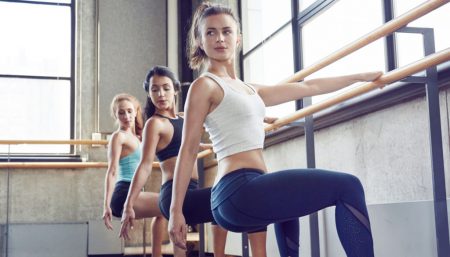
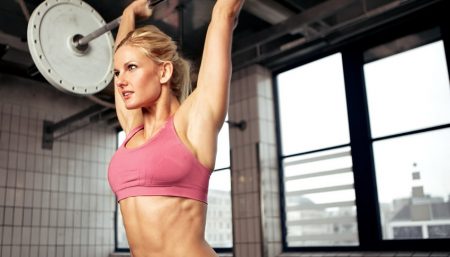
Working the lower body requires a lot of energy, but that effort is repaid with many benefits. Energetic exercise which uses the big muscles of the legs and hips speeds up your metabolic rate long after the exercise is over. Thus a combination of strength training to accentuate and define muscles, and frequent aerobic exercise to help you lose any excess fat, can dramatically improve your shape.
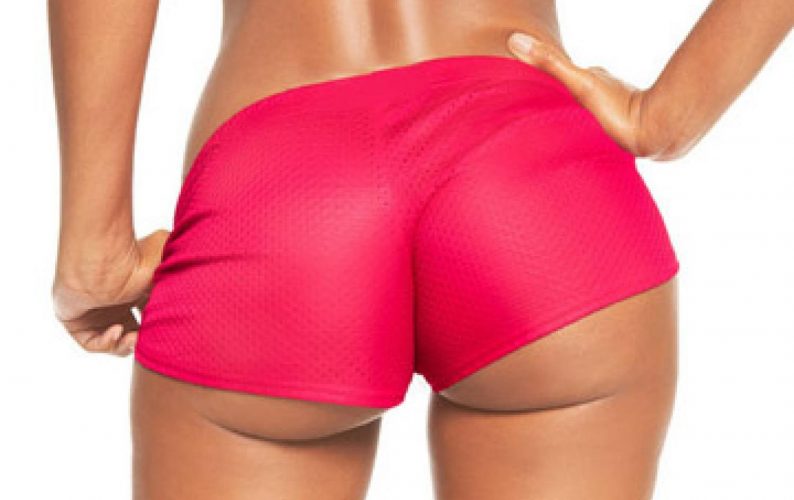
MAIN LOWER BODY MUSCLE GROUPS
- Hamstrings at back of thighs; enable knees to bend and a straight leg to extend backwards.
- Quadriceps at front of thighs; enable knees to extend and hips to flex.
- Gluteals in the buttocks; pull thighs to side, rotate the legs and help raise the torso upright from a forward bend position.
- Adductors at inner thighs; pull legs inwards.
- Adductors at outer thighs; take legs outwards and rotate them inwards.
- Hip flexors connect the lower spine and hip bone to top of thigh; flex the hips.
- Calf muscles at back of lower leg; enable feet to point and heels to lift.
- Tibialis at front of lower leg; pulls the foot up.
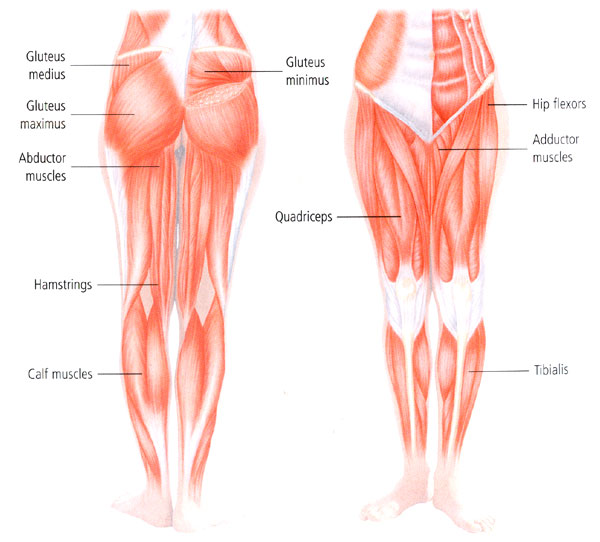
Your main aim
The challenge is to lift and condition the buttocks, to create a distinct separation between the buttocks and the back of the thigh, to improve the shape and tone of the front of the thigh – particularly around the knee and to firm and shape the inner thigh.
Take time to master each exercise, and don’t expect to be proficient at them all immediately. Once learnt correctly, they will be tools for life. Getting it right takes practice and patience. Use a mirror to check your posture and alignment through all the positions of each exercise and if it doesn’t feel right check the instructions again.
Training into shape
Muscles should be trained for both strength and stamina. Different training results in different shapes. Track athletes need power and speed so their training includes jumping, lunging, and squatting. These moves result in finely toned, shapely buttocks and quads. Endurance runners work at a lesser intensity for longer periods and have lean frames with comparatively small musculature. Thus, to lose fat you need to do endurance training, which entails exercising at a lower intensity for longer; or to improve your shape do big, powerful moves for a shorter time. You can adapt all these exercises by changing the intensity and duration.
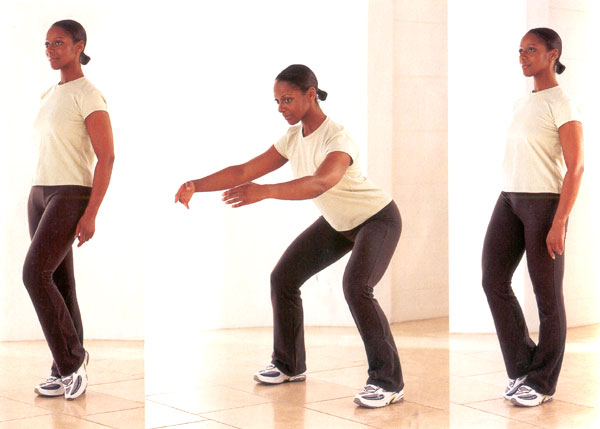
Side step squat
This exercise works all the gluteals and the muscles at the sides of the hips and thighs. As this move is challenging but effective, take time to perfect it. Use a chair the first time you do it to help you find the correct working position. Take about two seconds to step out and two seconds to step in.
- Stand with good posture, knees soft, feet together, left foot lifted and prepared. Breathe easily throughout.
- Step left leg wide to the side. Drop the hips down and back behind the heels while swinging the arms forwards for balance. Keep knees in line with feet and the chest lifted.
- Step the right leg into start position, squeezing your buttocks and abs as you stand up. Start with 8, work up to 20.
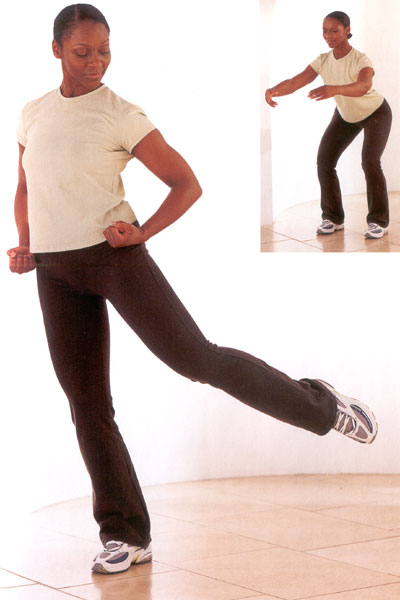
Side leg raise and squeeze
This demanding and effective exercise lifts and shapes the buttocks by working the deepest layers of the gluteals. Repeat five times on each leg, working up to 20 repetitions.
- Begin in a deep squat, arms out for balance, hips low and behind heels, knees in line with feet, chest lifted and the back straight. Breathe easily.
- Raise and rotate the left leg with the knee facing down. Pull in the arms and squeeze the buttocks and outer thigh. Return to a deep squat.
Plie with arms
Think of strength, poise and fluidity when you do this movement. The plie has no pause, momentum or drop and, like many dance movements, it takes a lot of effort to perfect. Practice the leg movements first, then add in the arms when you are ready to do so. Repeat 10 times.
PLIE TIPS
- Keep the back straight as you bend the knees
- Breathe easily throughout
- Keep the upper body and hands free from tension
Position feet slightly wider than hip-width apart with legs gently turned out, arms relaxed at your sides and pelvis in neutral.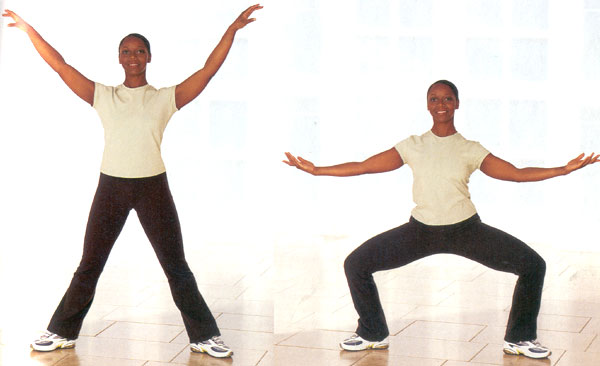
- Keep chest lifted and ribs in line with hips as you bend the knees and take the arms out to the sides. Keep your heels down and your knees in line with your toes.
- Squeeze buttocks and quads hard as you straighten the legs and lift the arms up. Keep the knees soft, abs tight, shoulders down.
- Bend knees deeply, smoothly bringing the arms down and out to the sides. Then straighten the legs, squeeze the buttocks and quads and bring the arms down to start position.
Dance movements such as the plie require great posture, alignment, strength and flexibility.
Dip squat
Increase the challenge of this exercise by alerting the timing and emphasis of the movement. For example, bend down for one count and spend three counts coming up. Try the same in reverse, or hold the position for 2-4 seconds. Use hand weights if you wish.
Keep the back straight and the chest lifted, leaning forwards from the hips. Both these moves require constant attention to the alignment of knees over feet.
- Squat down until the thighs are parallel to the floor, hips behind feet and with all the weight on the heels. Swing the arms in front of you for balance and momentum.
- Squeeze the buttocks tight and push the hips forwards as you stand up. Pull arms to the sides of the hips. Repeat 5 times, progressing to 20.
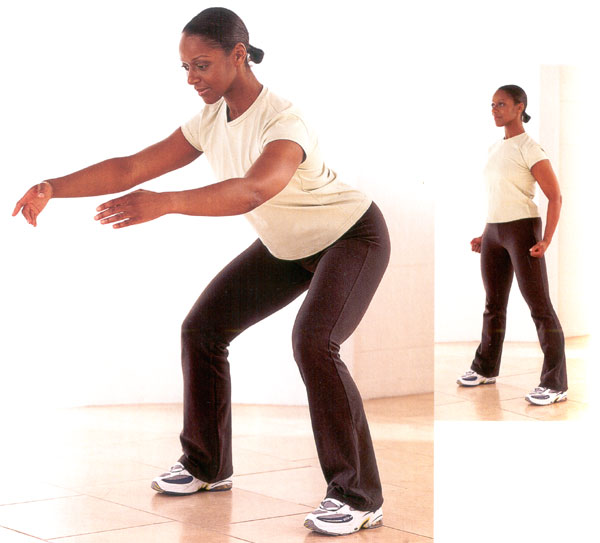
One-legged squat
The American Council on Exercise recently declared this to be the most effective bottom exercise in the world! Use a chair for support if you haven’t yet mastered this tricky position.
- Stand tall with neutral pelvis, abs tight. Place the right foot just in front of you, touching the floor. All weight should be on the rear foot.
- Drop the hips backwards and bring your arms up for balance. Your left knee remains over the left foot. Stand up by curling the hips forward, squeezing the buttocks and pulling the arms in. Repeat 5 times on each leg, progressing to 20.
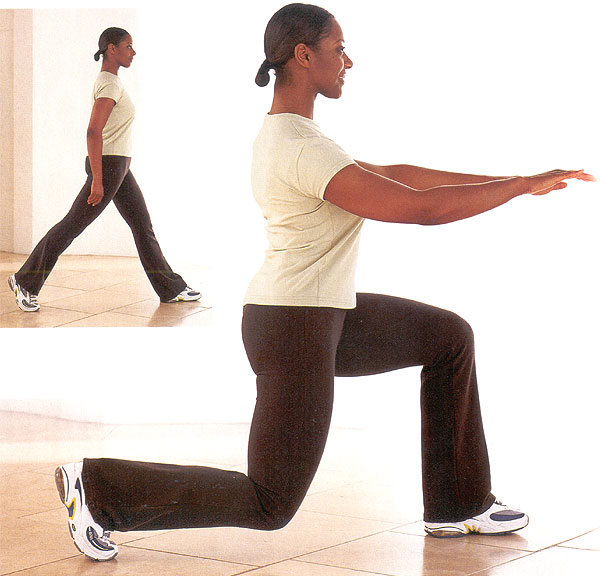
Drop lunge
This exercise is demanding, working the thighs, hamstrings, hips and buttocks. Getting down and up actively, with good alignment and posture, is no easy feet. Use a chair, for support to begin with, and watch out for the most common fault – of allowing the knee to slide in front of the supporting foot – by looking in a mirror. Move down and back up as cleanly as you can. Start by doing 2-4 drop lunges, about two seconds down and two seconds up, but aim for 15-20 lunges. You can, of course, go slower than this count, but not faster.
-
Swing arms out on descent
- Pull in arms on the recovery
-
The front knee should be above the ankle and the rear knee below the hips
- Take a stride forward with the left leg and place the foot flat on floor. Balance on the ball of the rear right foot. Keep the body upright, pelvis neutral and abs tight.
- Bend knees and lower until rear knee is just off the floor. Keep back straight. To come up, push down against the front heel and squeeze the buttocks hard.
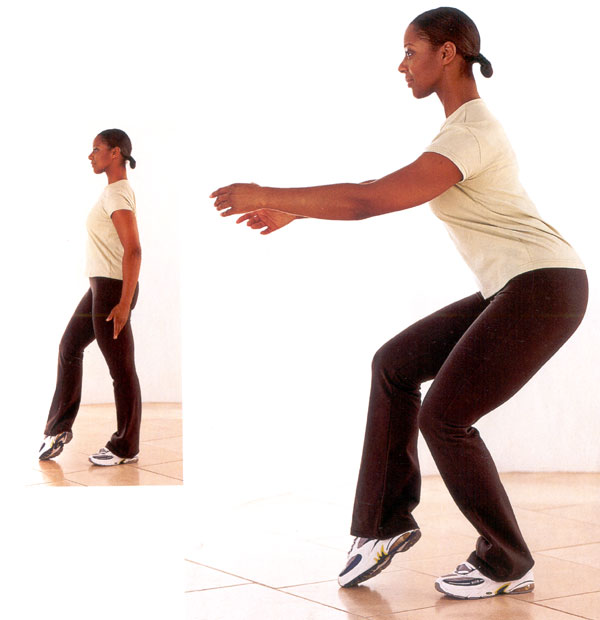
Feet-together squat
This works the gluteals, quads and hamstrings. Start with 10 squats and progress to 20, about two counts down and two counts up. To add variety or intensity, descend for one count and spend three counts coming up. Try also holding the lower position for 2-4 seconds, or using hand weights.
- Stand with good posture, feet together and knees soft. Bend the knees and drop the hips down and back behind the heels, moving the weight to the heels. Swing the arms for balance, keep the chest lifted and the back long.
- As you stand and stretch the legs, pull arms in towards hips and squeeze buttocks hard.
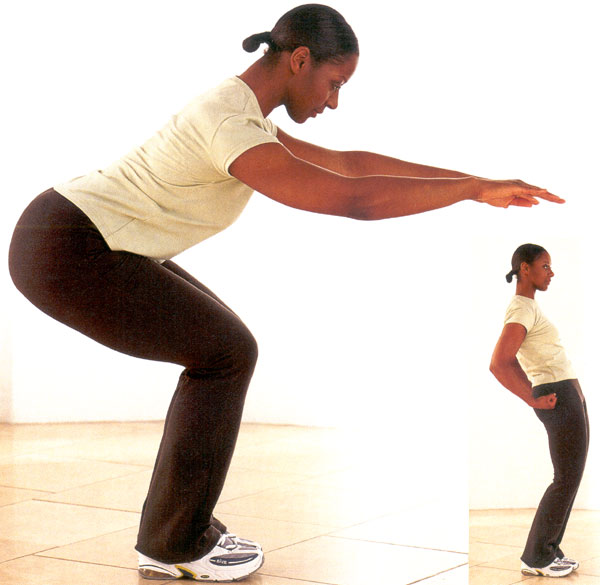
Buttock squeeze and stretch
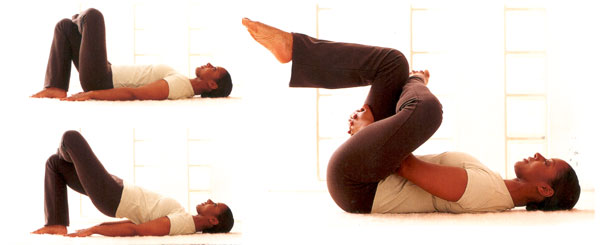
This is a relatively easy exercise for the gluteals. Keep your face, neck and shoulders free from the tension you are building in your gluteals. Try to breathe easily throughout. As you squeeze, don’t lift the hips too much – the emphasis is on the muscle contraction, not the height.
Last but not the least, maximize the effort you put into your lower body workout to see results quickly. Work as slowly and precisely as possible to perfect a move, then alternate the speed to keep challenging the muscles.
Related Links
- Top 10 anywhere leg exercises
- Top 10 Bum Stretches
- The Basic Makeover for your Posture
- Working the hamstring
- Core Strengthening
- Strength Training – How does it work?
- Building lean Body mass
- Calve Muscle Workout
- Training the Hips
Disclaimer
The Content is not intended to be a substitute for professional medical advice, diagnosis, or treatment. Always seek the advice of your physician or other qualified health provider with any questions you may have regarding a medical condition.