Cold weather might make you feel like hibernating, but you don’t have to give up your exercise and fitness goals. You can exercise indoors. Focus on how you’ll benefit if you keep up your exercise routine throughout the cold-weather season. Exercise can help you shake those winter blues. Exercise improves your mood, increases your energy level and helps you sleep better. And you’ll be in better shape when the weather warms up.
Listed below are several popular exercises you can do at home that utilize gravity and body weight to tone muscles.
Squats:
Squats are one of the best lower body exercises you can do. They are multi-joint exercises which target all the muscles of the hips, glutes and thighs. Fast paced frequent repetitions will produce maximum results. For beginners to do the exercise: Place a chair just behind you and stand in front of it with feet about hip- or shoulder-width apart. Contract the abs and keep them tight as you bend the knees and slowly squat towards the chair. Keep the knees behind the toes as you sit down on the chair for a few seconds. Contract the glutes and hamstrings to lift up out of the chair and begin extending the legs. Fully extend the legs until you’re back to standing position. Repeat this for 1-3 sets of 10-16 repetitions. To progress, squat down until you’re just hovering over the chair, but not sitting all the way down. Always keep the knees in line with the toes!
Push-ups:
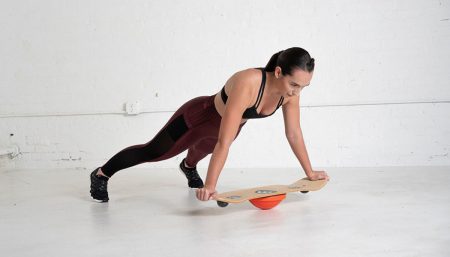
A basic push up does not require any equipment other than your own body weight and your arms. It can be done anywhere there is a firm surface. And it works the chest, the shoulders, abs, and the triceps. Modifications can be made for different fitness levels. If a traditional push-up is too hard, try resting your knees on the ground while you push-up. To do the exercise: Assume a prone position on the floor or other hard surface that’s able to support your body weight. Keep your feet together. Place your hands under your shoulders with your palms on the ground. Curl your toes upward (towards your head) so that the balls of your feet touch the ground. Raise yourself using your arms. At this point, your weight should be supported by your hands and the balls of your feet. This position is called “plank,” which is used for other various exercises. This is the beginning and the end position of a single push-up. Lower your torso to the ground until your elbows form a 90 degree angle. Keep your head facing forward. Try to have the tip of your nose pointed directly to the front as you’re going down. Draw a breath as you lower yourself. Raise yourself by attempting to push the ground away from you. Breathe out as you push. The power for that push will inevitably come from your shoulders and chest. The triceps are also contracted but the primary exercise for the triceps isn’t the push-up. Continue the push until your arms are just about straight. Stretch the chest and shoulder muscles during your cool down cycle.
Pull-ups:
Also known as chin-ups. Pull-ups are the ultimate test of strength to weight ratio. Having a high strength to weight ratio means lots of things like; being able to rock climb better, being able to sprint faster, being able to run up hills faster, being able to pull water to make your kayak go faster, etc. Secondly, no exercise will develop your back like pull-ups. And finally, your upper arms, shoulders, forearms, abs, and grip strength will all be attended to. You will need a bar to perform this move. To conduct the exercise: Grab the pull-up bar with your hands placed about shoulder width apart and your palms facing away from you. Pull yourself upward until your chin is over the bar and complete the exercise by slowly moving to the hanging position
Sit-ups:
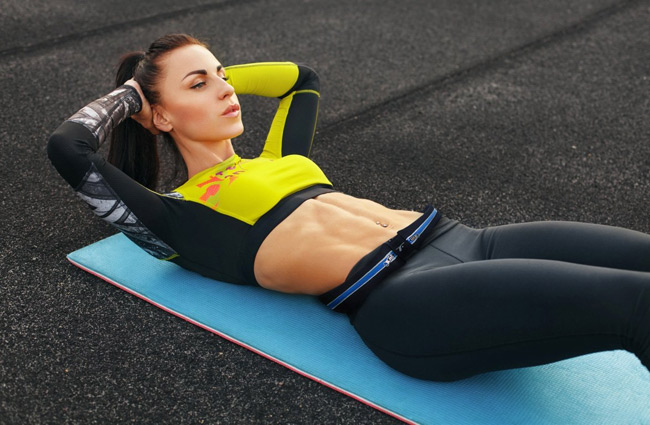
Lifting your body from the core will shape mid-section muscles. There are many popular modifications to this exercise like crunches and side sit-ups. To do a sit-up: Lie down on the floor. Have your knees bent and the balls of your feet and heels placed flat on the ground. Place your hands behind the lobes of your ears, or even hold your ears. Avoid grabbing the back of your head or neck, as this may cause injury down the road if you pull too hard or in the wrong direction. You can also cross your arms across your chest and touch your shoulders. Tighten your abdominal muscles by drawing in your belly button to your spine. Keeping your heels on the ground and your toes flat to the ground, slowly lift your head first, followed by your shoulder blades. Focus your eyes on your bent knees, all the while contracting the abdominal muscles. Pull up from the floor about half way. Hold the position for a second. Slowly bring the torso back to the floor but try to keep it slightly elevated off the ground. This means not to place your back flat to the ground but to keep a slight, yet relaxed, arch. Only do two to three sets if you are a beginner and slowly build up the amount over time, as your strength increases.
Lunges:
Lunges are great for working all the major muscles of the hips, glutes and thighs. For beginners, you can try this move while holding onto a chair or wall for balance. Stand with right foot forward, left foot back about 3 feet apart. Hold weights in each hand if desired and bend the knees to lower the body towards the floor. Keep the front knee behind the toes and be sure to lower straight down rather than forward. Keep the torso straight and abs in as you push through the front heel and back to starting position. Don’t lock the knees at the top of the movement. Perform 1-3 sets of 8-16 reps according to your fitness level and goals. Walking lunges are a great way to tone legs without using a machine.
Tuck-jump:
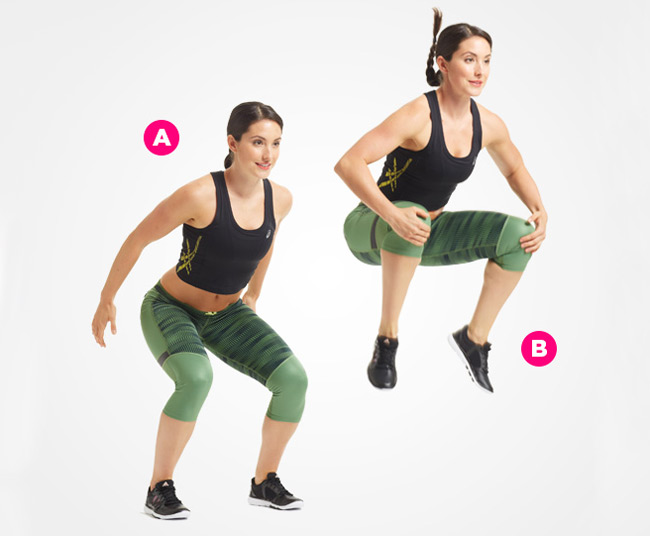
Begin by rapidly dipping down to about the quarter-squat level and immediately explode upward. Drive the knees high toward the chest and attempt to touch them to the palms of the hands. Upon landing, repeat the sequence, each time driving the knees upward and tucking the feet under the body. Perform multiple responses at a rapid rate with minimal ground contact. Muscle groups worked: abs. glutes, hamstrings, quads, calves
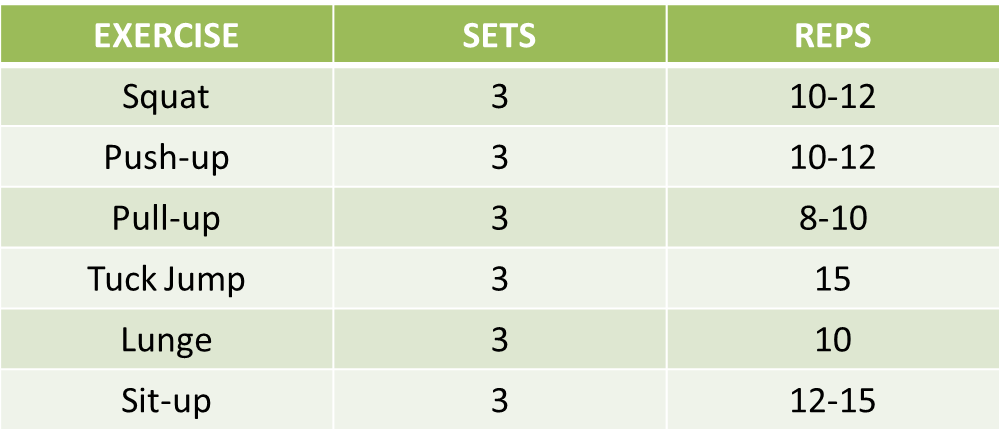
You can either incorporate these moves into your existing workout or add one or two days of power training to your weekly regimen.
Disclaimer
The Content is not intended to be a substitute for professional medical advice, diagnosis, or treatment. Always seek the advice of your physician or other qualified health provider with any questions you may have regarding a medical condition.