Choosing a cookware can be a tough job both for one’s own health, as well as that of the family. Quality cookware helps you maintain good health and, in some cases, even enhances flavor. Before making your next kitchen purchase, consider the reactivity of various tools and cookware and, whenever possible, favor inert or non-reactive. Or, as second choice, use moderately reactive pots and utensils. As possible, avoid more reactive cookware.
Listing Health Friendly Cookware:
- Earthenware and ceramic: These cookware are inert and emit a far-infrared heat, that’s most effective and beneficial heat for cooking, which enables a full range of subtle flavors to emerge. Excellent for lengthy simmering and baking
- Glass: coffee pots and casserole dishes are inert and affordable. Favor glass containers for storing food
- Bamboo: wooden spoons, chopsticks and crockery are non-reactive and modestly priced.
- Enamel: With proper care, a fine enamel pot lasts a lifetime, whereas inexpensive enamel cookware from variety stores has such a thin enamel layer that it chips easily and is not worth its purchase price. Once chipped, discard enamel kitchenware or enamel fragments will find their way into your food and the underlying metal will react with food. If it’s affordable, favor enamel pots.
- Stainless steel: Itis the least reactive metal, and the most versatile and healthful cookware option. Once stainless steel has been scratched, through normal scouring, the leaching of metallic ions is more noticeable.
- Cast iron: Besides durability and even heat distribution, cast iron cookware carry the advantage of ensuring that the eaters in your house get enough which the body needs to produce red blood cells—as it seeps off the cookware into food in small amounts.
- Copper: One other surface favored by chefs for sauces and sautés is copper, which excels at quick warm-ups and even heat distribution. Since copper can leak into food in large amounts when heated, the cooking surfaces are usually lined with tin or stainless steel.
Re-active Kitchenware: a Health Alert
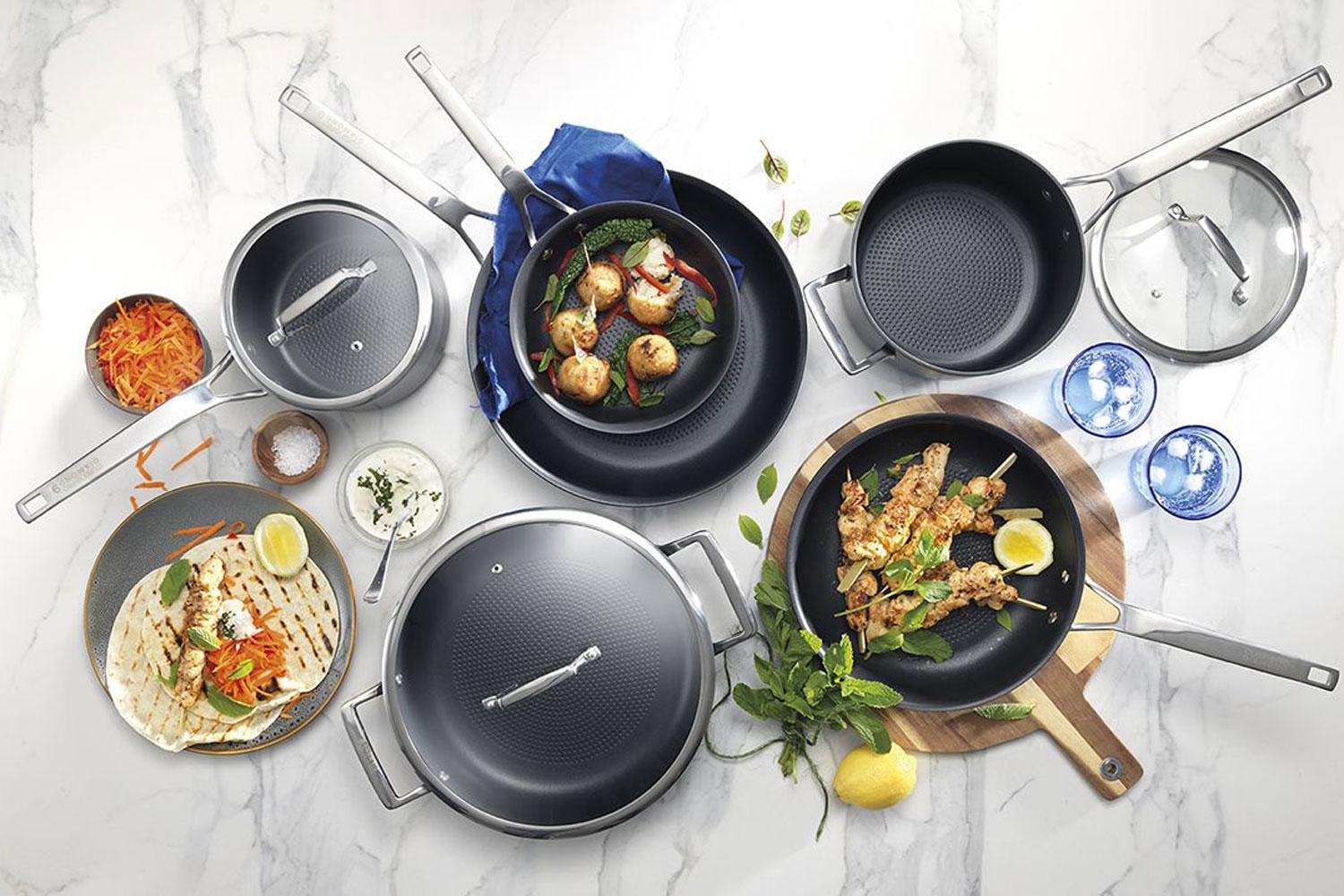
Non-stick Cookware: The first non-stick pans coated with polytetrafluoroethylene (PTFE), better known as Teflon, were introduced in the 1960s by DuPont, who marketed this convenient, easy-to-clean cookware as a revolution for the American kitchen. But now, 50 years later, experts are sounding major alarms about the potential dangers of cooking food in non-stick cookware. Studies have linked perfluorooctanoic acid (PFOA), a chemical used in non-stick PTFE coatings, to countless health problems including cancer, infertility, thyroid problems and ADHD in children. When you breathe kitchen air polluted with fumes from overheated Teflon, you’re at risk for developing flu-like symptoms (yes, “Teflon flu”). The long-term effects of routine exposure to Teflon fumes, and from Teflon flu itself, have not been adequately studied.
| Tips to use non-stick, to minimize toxicity: Never preheat nonstick cookware at high heat — empty pans can rapidly reach high temperatures. Heat at the lowest temperature possible to cook your food safely.Don’t put nonstick cookware in an oven hotter than 500 degrees.Use an exhaust fan over the stove. |
Aluminum: Cast aluminum is more stable and preferable to thin aluminum pans. Rather than wrapping a baked potato in aluminum foil, consider baking it directly on the oven rack or placing it in a covered casserole dish.
Plastic: Storage of food in plastic is not as much a problem as cooking in plastic, but even in this situation, glass containers with plastic lids would be safer than containers made entirely of plastic. The worst places to use plastic are in the microwave or in a pot of boiling water. You are safest microwaving in unleaded ceramic or tempered glass containers (like Pyrex), but not in plastic, even if the plastic is a harder, polycarbonate variety (number 7 on the recycling logo). According to The Mail, U.K. “Pregnant women who eat food that has been wrapped in plastic could make their unborn baby obese in later life, according to new research. Chemicals in plastic food wrapping and plastic feeding bottles are believed to interfere with the body hormones that regulate fat levels and help prevent obesity.”
Choose your cookware from among the old-fashioned kitchen stand-by – cast iron (under most circumstances), stainless steel, tempered glass, unleaded ceramic, and porcelain. All are still the best choices for cookware materials.
The most commonly used materials today – aluminum and plastic – can have detrimental effects on your health and should be avoided.
Disclaimer
The Content is not intended to be a substitute for professional medical advice, diagnosis, or treatment. Always seek the advice of your physician or other qualified health provider with any questions you may have regarding a medical condition.