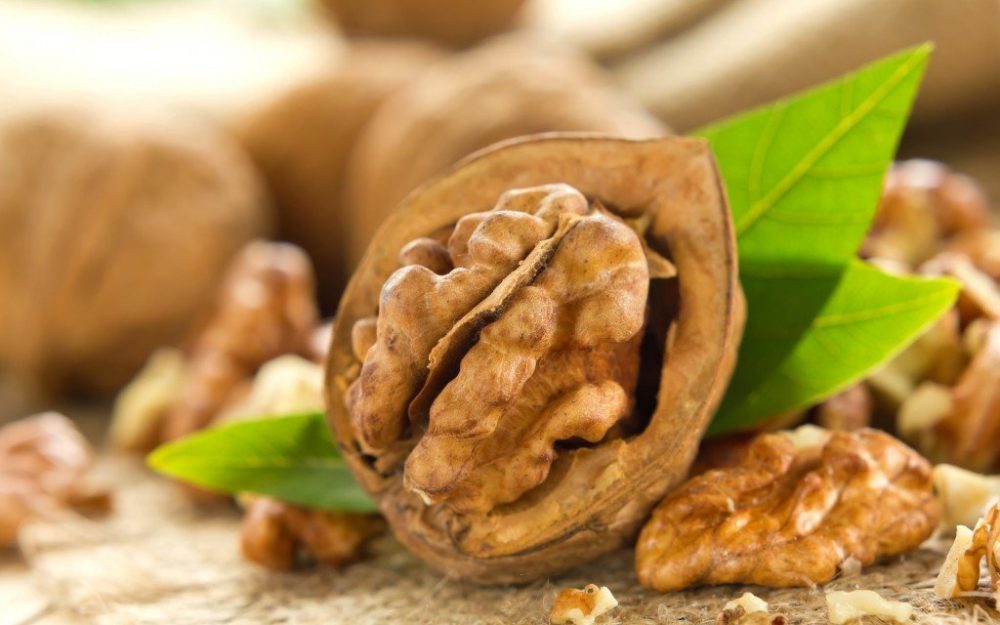
Grown in temperate climates, walnut trees belong to the Juglandacece family of deciduous tress. These are 15 different species of edible walnut. Commercially, the common, or Persian, walnut, the black walnut, and the butternut walnut are the most important. The kennel of a walnut is a rich source of nutrients, including unsaturated oils and essential fatty acids. Unusually for nuts, young walnuts contain some vitamin C.Walnuts have been used extensively in Chinese medicine to treat impotency and to improve the quality of sperm. These nuts are also thought to be useful for reducing symptoms of Inflammation in the back and knees.
It has been observed that in people who eat walnuts at least four times a week, deaths from heart attacks are half of those in people who do not eat walnuts regularly. Scientists have discovered that people who add walnuts to cholesterol – lowering diet can reduce their – low – density lipoprotein (LDL) cholesterol by an extra 16.4 per cent. This is probably due to the unsaturated fats in walnuts, especially linoleic acid. The latter is converted into gamma – linolenic acid and them into hormone – like prostaglandins, which help to keep the blood thin, prevent clots and blockages, relax the blood vessels, and lower blood pressure.
A regular intake of the B vitamins is known to be crucial for maintaining a robust nervous system. Walnuts supply good amounts of vitamin, B6, believed to be a useful substance for women who suffer regularly from premenstrual (PMS).
Walnuts, and nuts in general, are particularly good sources of copper, which is essential for keeping the immune system functioning correctly. A reduction in the amount of copper in the diet has been shown to adversely affect the immune system. Even small deficiencies of copper decrease the amount in the body of the substance called interleukin, which is needed to help the immune system fight bacterial and viral infections. A lack of copper reduces the effectiveness of this protective response.
Eating walnuts regularly in a good way to help to improve the general smoothness and softness of the skin. Walnuts oils contain linoleic acid, which helps to maintain the skin’s structure, keeping it watertight and well hydrated. Vitamin E and zinc, also found in walnuts, are good for the skin, too
