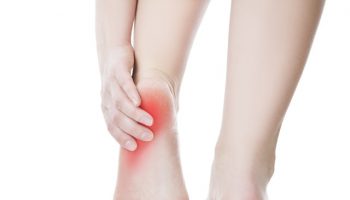
Do you experience heel pain while taking first steps getting out of bed or sitting for a long time. If yes, then there is quite a possibility you might be suffering from Planter Fasciitis. You may have less stiffness and pain after you take a few steps. But your foot may hurt more as the day goes on. It may hurt the most when you climb stairs or after you stand for a long time.
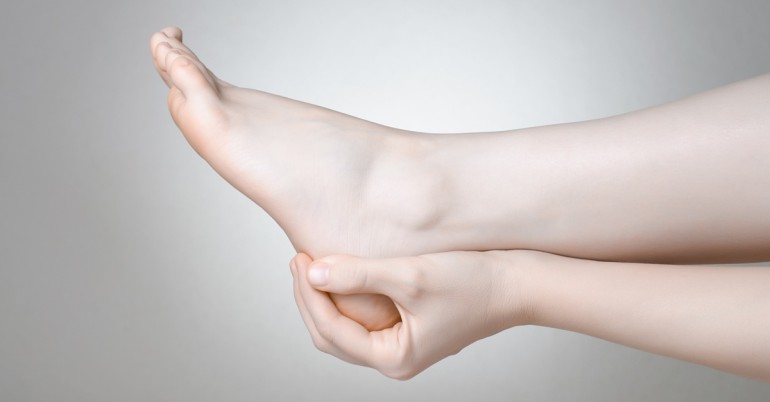
The plantar fascia is a thick ligament that runs across the bottom of the foot connecting the toes to the heel. If it becomes inflamed, extremely tight or tears slightly, it can cause slight to debilitating pain called plantar fasciitis.
It most often affects active men and women of ages 40 – 70. It is one of the most common orthopedic complaints relating to the foot.
Causes:
- The most common cause of plantar fasciitis is very tight Achilles tendon and calf muscles which leads to prolonged and / or high velocity pronation of the foot.
- This in turn produces repetitive over-stretching of the plantar fascia leading to possible inflammation and thickening of the tendon. As the fascia thickens it looses flexibility and strength.
- Other causes include low arch or high arched feet (pes planus / cavus) and other biomechanical abnormalities including over-supination.
- Excessive walking in footwear which does not provide adequate arch support has been attributed to plantar fasciitis.
- Being Overweight is another risk factor in developing the condition, due to the excess weight impacting on the foot.
Treatment:
Doctors generally advise rest, calf stretches, pain relievers and ice application in order to help the ligament heal. You might be advised to pick shoes with good arch support and a cushioned sole. Or try heel cups or shoe inserts (orthotics ). Try using them in both shoes, even if only one foot hurts.
Yoga Asana Intervention:
When it comes to stretching and strengthening of calve muscles there are many yoga poses.
- Adho Mukha Svanasana (Downward facing dog)
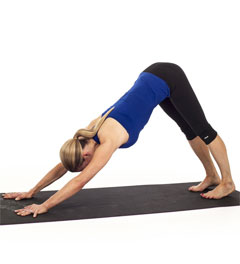 Come onto the floor on your hands and knees. Set your knees directly below your hips and your hands slightly forward of your shoulders. Spread your palms, index fingers parallel or slightly turned out, and turn your toes under. Exhale and lift your knees away from the floor. At first keep the knees slightly bent and the heels lifted away from the floor. Lengthen your tailbone away from the back of your pelvis and press it lightly toward the pubis. Against this resistance, lift the sitting bones toward the ceiling, and from your inner ankles draw the inner legs up into the groins. Then with an exhalation, push your top thighs back and stretch your heels onto or down toward the floor. Straighten your knees but be sure not to lock them. Firm the outer thighs and roll the upper thighs inward slightly. Narrow the front of the pelvis. Firm the outer arms and press the bases of the index fingers actively into the floor. From these two points lift along your inner arms from the wrists to the tops of the shoulders. Firm your shoulder blades against your back, then widen them and draw them toward the tailbone. Keep the head between the upper arms; don’t let it hang. It is important to keep pressing the heels into the ground, or you can end up tightening the ligament even more. This asana stretches the entire fascia and calf muscles.
- Parsvottanasana (Intense Side Stretch Pose)
This is an asymmetrical standing forward fold which brings a strong stretch to the hamstrings and glutes of the front leg while lengthening the calf muscles of the back leg. Begin in Mountain Pose (Tadasana). Step the right foot back so that it’s around four feet away from the front foot – closer if you are a beginner. The hips and pelvis are square to the front, so the backwards foot turns in around 45-60 degrees. Spend a few moments grounding all four corners of both feet firmly into the mat – this will set the foundation of the pose. Either take the hands to prayer position (into Anjali Mudra), behind the back, or, to lighten, hook the hands in the elbows. On an inhale, look gently upwards and broaden across the sternum, opening into the front of the body. On an exhale, and hinging from the hips, lower the flat spine downwards, sinking the forehead towards the knee. Keep the length in the front of the body and the naval drawn in gently as you come forward. Keep the spine long, even if this means just falling forwards a little way. Drop the head, and use every exhale to encourage the chest further towards the knees.
- Parsvakonasana (Extended Side Angle Pose)
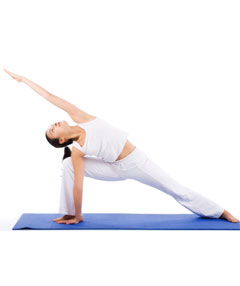 Stand in Tadasana against a wall, with your heels and your buttocks touching it. Place the block on the floor behind your right foot. Inhale, and spread your feet 1m (3.5 ft) apart. Turn your right foot out to the right, until it is parallel to the wall. Turn your left foot in slightly to the right. Press the outer edge of your left foot firmly on the floor, and bend the right knee, pushing your thigh down until your calf is at right angles to the floor. Stretch your left arm away from your left shoulder. Bend to the right, and place your right palm on the block. Stretch the left arm up, with the palm facing forward. Now rotate the arm and bring it toward your left ear. Your left thumb should touch the wall. Turn your head and look at your left arm. Maintain a continuous stretch from the left ankle to the left wrist. Press your outer left foot into the floor. Move your shoulder blades into your body, and extend your spine toward your head. Hold the pose for 30 seconds. Repeat the pose on the other side.
- Dandasana (Staff Pose)
Sit with your spine erect and your knees bent. Position the blocks on their broad sides on either side of your hips. Then place your palms on the blocks. Sit on your buttock bones. Straighten each leg, one at a time, and join the inner sides of your legs and feet. Lengthen the calf muscles, and stretch your knees and toes. Keep your knees straight. Press your palms down on the blocks and stretch your elbows and arms. Lift your abdomen, freeing the diaphragm of tension. Hold the pose for 1 minute. Beginners may find it easier to separate their feet slightly, and should hold the pose for just 30 seconds. This asana stretches and activates the muscles of the legs and prevents tiredness in the feet by stretching the muscles of the feet.
- Tadasana (Mountain Pose)
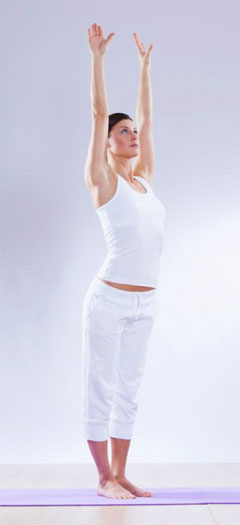 Stand erect with joining legs. Both interlocked fingers should be above head. Now gradually raise heels, stand on toes, and stretch up and down from heels but heels should not touch on the ground. Do it 20 times. 20 is one set, you have to do 4 to 5 sets. There should be high strain on calf muscles and little on navel area. No tension should be visible on face and head. Do this asana with proper technique, and then only you will get benefit.
 - Uttanasana (Standing Forward Bend)Start standing in Tadasana (straight in upright position), with feet together or hip distance apart. You may bend your legs slightly if your muscles or your spine are really tight. Now inhale and raise your arms forward parallel and up to line alongside your ears, with fingers pointing up and palms facing in. Exhale and bend from your hips, stretching arms and torso forward to a tabletop position, arms in line with your ears. Hold for two or three breaths before stretching downward on an exhalation. Keep arms alongside your ears and keep spine extended as much as possible. Place your hands wherever you can reach on your legs; if your can, take hold of your ankles or place hands on the ground. Hold in this position for two or three breaths. On an exhalation, draw your head in toward your legs, using your arms to assist you as your elbows open out to the sides and your spine rounds over legs.
You can remain in this position for 30 seconds to one minute. The beginners should not give more stress to any limb by stretching it for longer period.
Do not expect instant calf flexibility but instead work patiently over months, and even years, to slowly lengthen the calves.
NOTE: Check with your doctor about the possibility of stretching, yoga or physical therapy as part of treatment and recovery. If yoga is recommended, inform your yoga instructor of your condition.
Disclaimer
The Content is not intended to be a substitute for professional medical advice, diagnosis, or treatment. Always seek the advice of your physician or other qualified health provider with any questions you may have regarding a medical condition.