
Released by Oldways Preservation & Exchange Trust in 1993, the Mediterranean Diet Pyramid has won praise from many health experts. The traditional Mediterranean diet pyramid, is based on the dietary traditions of Crete, much of the rest of Greece and southern Italy circa 1960, structured in light of current nutrition research. For Americans, northern and eastern Europeans and others who want to improve their diets, this model provides a highly palatable, healthful framework for change.
This pyramid emphasizes a largely plant-based diet, low in saturated fats (primarily in animal foods) and trans fats (hydrogenated vegetable oils). The Mediterranean people who eat this diet have long life expectancies with low rates of chronic disease.
There are three major differences between the two pyramids: USDA Pyramid & Mediterranean pyramid. First, the Mediterranean makes physical activity the foundation to emphasize its importance. Second, unlike the USDA Pyramid, there is no meat group. The Mediterranean Pyramid separates animal- from plant-based protein and advises consumption of red meat only a few times a month. The third major difference concerns fat. The Mediterranean Pyramid distinguishes between healthy plant oils and the less healthy saturated and trans fats. Unless a person is overweight or inactive, research indicates no great need to curtail mono-unsaturated fat found in olive oil and other plant foods like nuts and avocadoes.
The important aspects of the Mediterranean diet are:
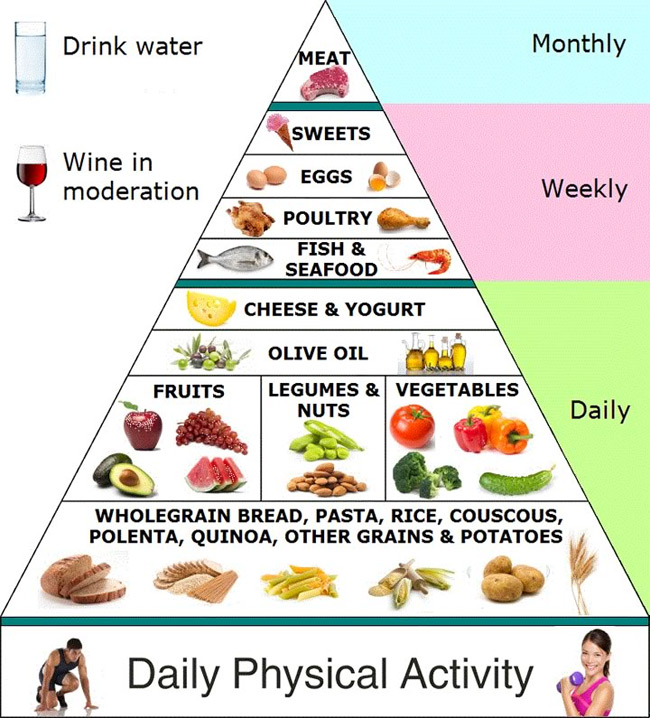
- An abundance of food from plant sources, including fruits and vegetables, potatoes, breads and grains, beans, nuts, and seeds;
- Emphasis on a variety of minimally processed and, wherever possible, seasonally fresh and locally grown foods (which often maximizes the health-promoting micronutrient and antioxidant content of these foods);
- Olive oil as the principal fat, replacing other fats and oils (including butter and margarine);
- Total fat ranging from less than 25 percent to over 35 percent of energy, with saturated fat no more than 7 to 8 percent of energy (calories);
- Daily consumption of low to moderate amounts of cheese and yogurt (low-fat and non fat versions may be preferable);
- Weekly consumption of low to moderate amounts of fish and poultry (recent research suggests that fish be somewhat favored over poultry); from zero to four eggs per week (including those used in cooking and baking);
- Fresh fruit as the typical daily dessert; sweets with a significant amount of sugar (often as honey) and saturated fat consumed not more than a few times per week;
- Red meat a few times per month (recent research suggests that if red meat is eaten, its consumption should be limited to a maximum of 12 to 16 ounces {340 to 450 grams} per month; where the flavor is acceptable, lean versions may be preferable);
- Regular physical activity at a level which promotes a healthy weight, fitness and well-being; and
- Moderate consumption of wine, normally with meals; about one to two glasses per day for men and one glass per day for women (from a contemporary public health perspective, wine should be considered optional and avoided when consumption would put the individual or others at risk.)
Because current scientific thinking more strongly supports a mostly plant-based diet, health experts hope the USDA will change its pyramid and guidelines accordingly when a revision is due in 2005. Click here, for more essential information about the Mediterranean diet and Mediterranean foods.
Related links
Disclaimer
The Content is not intended to be a substitute for professional medical advice, diagnosis, or treatment. Always seek the advice of your physician or other qualified health provider with any questions you may have regarding a medical condition.