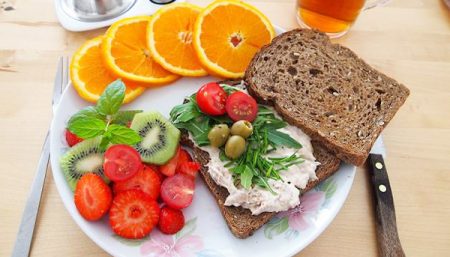
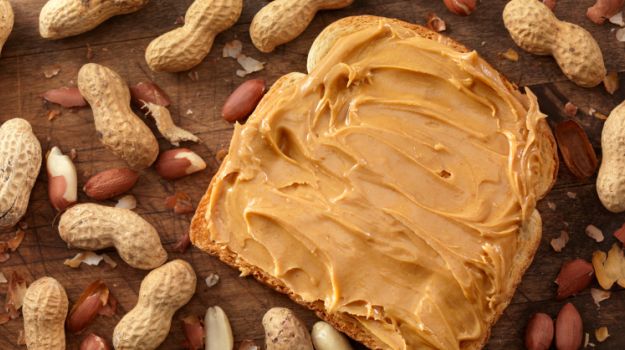
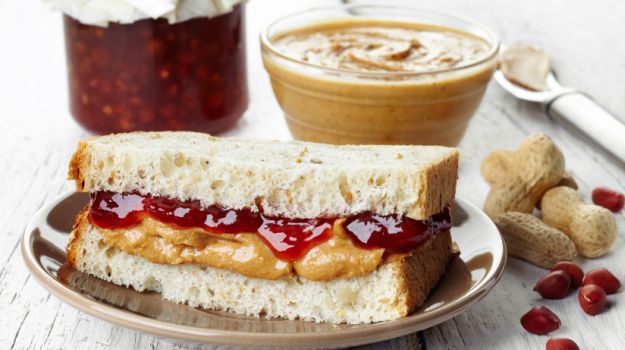
The peanut, Arachis hypogea, is really a legume – same as a bean or pea. Peanut butter makes delicious spread for breads, waffles, bagels, toast, crackers, apple slices, celery, or carrots. Spread it on plain or make some of the spreads at home. Store them in the refrigerator for up to a week.
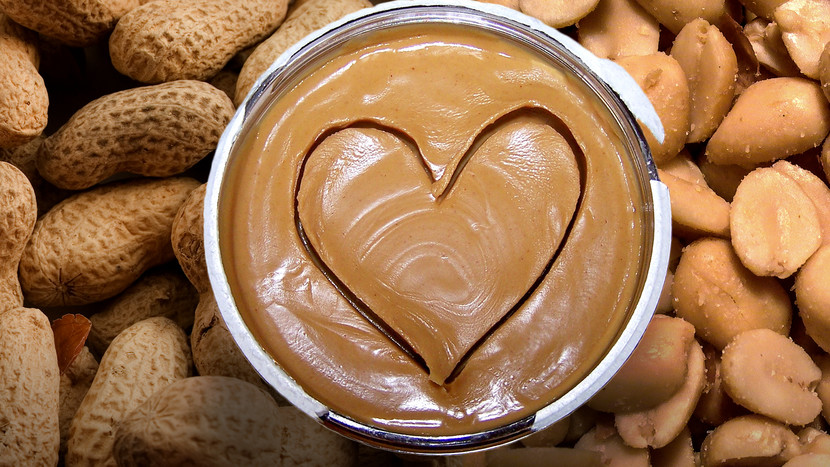
Nutritive Analysis
The total calorie content in 100 grams of peanut butter is 589 Cal.
The calorie breakdown for peanut butter is:
- 71% calories from fats
- 14% calories from carbohydrates
- 15% calories from protein
This means that the vast majority of calories come from fats, most of the fats contained are however monounsaturated, and have been shown to improve the cholesterol profile by lowering “bad” LDL cholesterol. The unsaturated fat content in peanut butter helps reduce the risk of heart disease by 25% (if you eat 1oz per day).
Peanut butter contains fairly high quantities of dietary fiber, amounting to about 8%, which again helps in regulating both blood cholesterol and blood sugar levels. Dietary fiber has also been shown to significantly reduce the risk of colo-rectal cancer (which is among the most common causes of death by cancer in civilized countries) and atherosclerosis (another common disease in the U.S. and Europe).
Proteins are present in high amounts (about 24% in weight), together with very important micro-nutrients such as Vitamin E, Vitamin B3 and large amounts of beneficial minerals such as iron,magnesium, potassium, copper and calcium. Vitamin E is one of the most powerful liposoluble antioxidants, shown to significantly reduce the risk of cancer and cardiovascular diseases; Vitamin B3 (also known as Niacin) is a water-soluble vitamin that aids in the recovery of cell DNA damage (thus protecting from cancer) and in improving sexual bodily functions by assuring the proper secretion of sexual hormones.
The minerals peanut butter contains are in variable amount (raw peanut butter with crushed skin contains much higher amounts than refined “nut-only” butter): iron is essential for the correct functioning of your red blood cells, while calcium promotes healthy bones and shields against muscle spasms. Although not among the richest foods in potassium, peanut butter still contains fairly good amounts of it, and research has indicated that diets rich in potassium reduce the risk of hypertension(bananas are, however, a better source of potassium, try making a banana and peanut butter sandwich!).
The most unique property of peanut butter, though, is its high content in Resveratrol, a substance that’s been shown to have very strong anti-cancer properties. In a randomized, cross-over, double-blind study involving 22 subjects, a high monounsaturated diet that emphasized peanuts and peanut butter decreased the risk of cardiovascular diseases by 21% compared to the average American diet.
Another peculiar substance contained in peanut butter is p-coumaric acid, a polyphenol that helps combat oxidative stress (a syndrome believed to cause some neurodegenerative and cardiovascular diseases). Scientific sources such as the Food Chemistry concluded that roasting peanuts leads to a higher content in p-coumaric acid by as much as 22%.
Preventing Gallstones and Alzheimer
In a test conducted during 20 years, on 80,000 female subjects by the Nurses’ Health Study, it was observed that women who eat least 1 ounce of nuts, peanuts or peanut butter each week have a 25% lower risk of developing gallstones. This quantity can easily be reached by eating one peanut butter sandwich per week!
According to the Journal of Neurology, Neurosurgery and Psychiatry, the niacin contained in peanuts, when eaten regularly, provides protection against Alzheimer’s disease.
In addition to this, peanut butter contains much higher quantities of antioxidants than apples or carrots.
Preventing weight gain
All things considered, peanut butter deserves a place in a healthy diet for the vast range of important nutrients it contains.
Because of its high fat and caloric content, however, some doctors argue that obese people should consume only little amounts of it: there is a lot of controversy about this, and there are many studies claiming that eating nuts more than twice a week actually reduces the risk of weight gain. One of these studies was published on the journal Obesity, it involved 8865 adult men and women in Spain and was carried out during a 28-month period: the subjects who ate nuts at least twice a week were 31% less likely to gain weight (> 5kg) than the others.
Note: Please keep in mind this is not medical advice, you should consult your doctor before adding peanut butter to your diet (especially in light of some people being highly allergic to peanuts).
Disclaimer
The Content is not intended to be a substitute for professional medical advice, diagnosis, or treatment. Always seek the advice of your physician or other qualified health provider with any questions you may have regarding a medical condition.