You have a substantial number of options when it comes to getting and staying in shape. The days of combining a boring resistance training session with a cardiovascular workout are gone. With plyometrics circuit training, you can spice up your workout and add flare to your exercise regimen. This is of utmost importance when you are trying to get in great shape because adding variety to your workout keeps your body working at full force. And when your body works its hardest, you realize the greatest gains.
Upper body plyometric drills allow maximum power to be generated because, unlike barbells or dumbbells, the medicine ball can be released into the air. Plyometric drills can be used to convert an athletes maximal strength training into sport-specific power helping to further improve performance. It is logical for athletes to seek to increase the rate of force development, because most sports involve fast movements for which forces must be generated quickly.
During a medicine ball throw the mass of the ball is moved – a 3-5kg ball being the weight most commonly used by athletes. The force required to produce this movement comes from the arm muscles, mostly the pectorals, deltoids, triceps and latissimus dorsi.
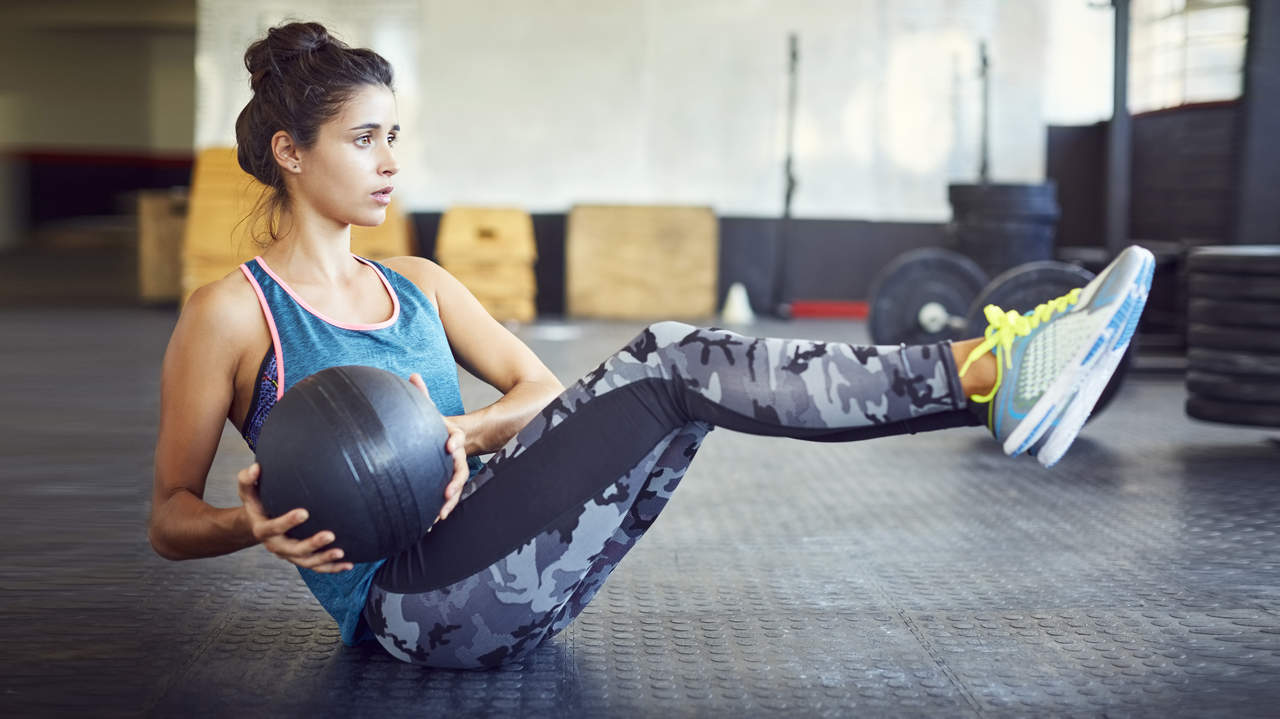
In a study, subjects were tested for shoulder external rotator and elbow extension power before and after a six-week medicine ball throwing programme, using one specific exercise involving both sets of muscles. They had to stand, catch a 1kg ball in one hand with the arm horizontally abducted and extended, adduct and flex the arm across the body (eccentric phase) and then rapidly abduct and extend the arm releasing the ball. This throwing movement involves the external shoulder rotators (the posterior shoulder muscles) and the arm extensors (the triceps). Retesting revealed a significant increase in elbow extensor power, but not in external rotator power. The researchers suggested that the greater muscle mass of the posterior shoulder by comparison with the triceps meant that the training was more effective for the latter than the former.
How to Perform Plyometric Exercises?
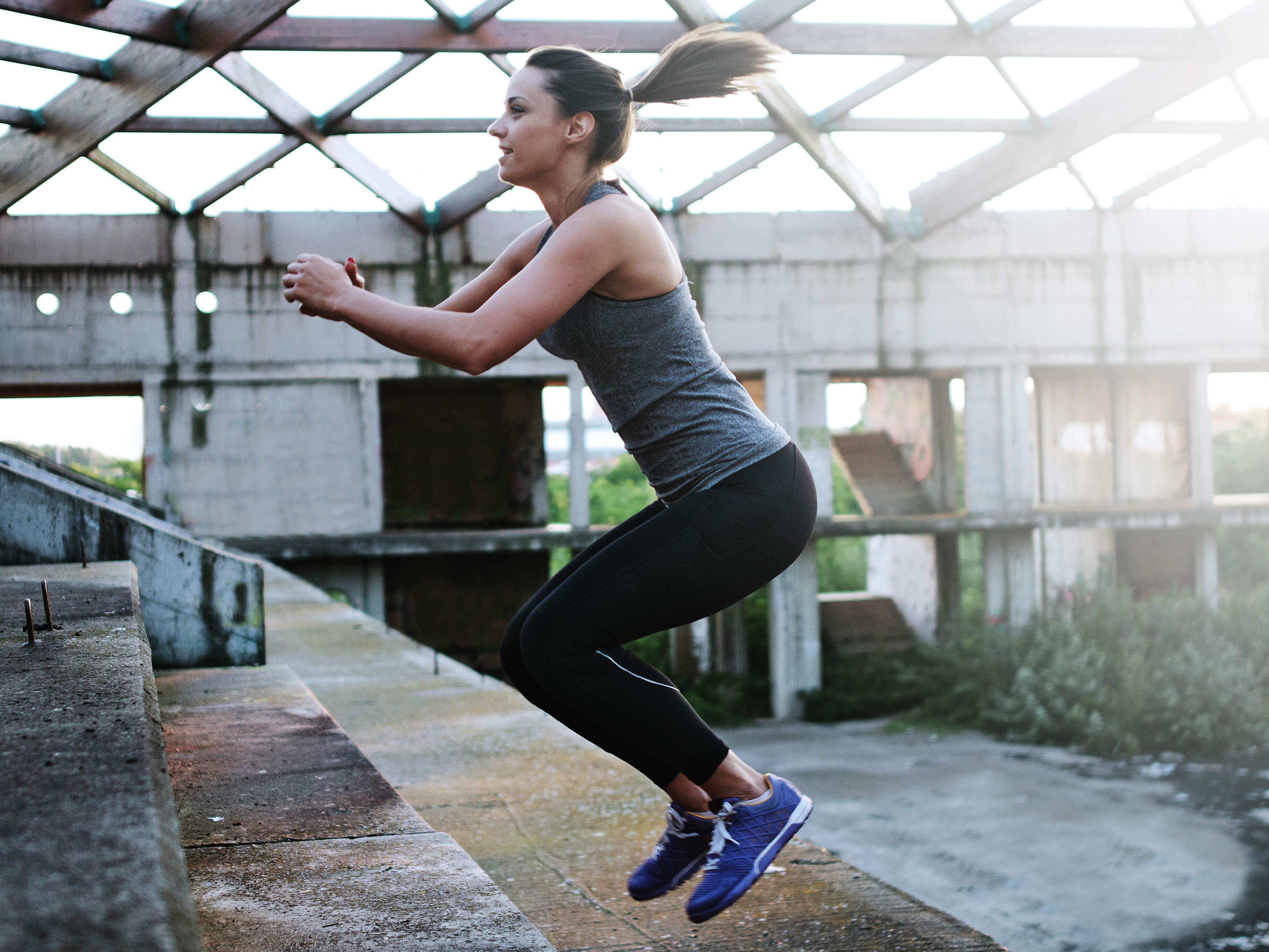
As mentioned earlier, plyometric training exercises are high intensity exercises that are used for increasing strength, power and speed. Many of these exercises involve jumping, hopping and bounding. One should be aware that since these are high intensity exercises, one can get injured, if the exercises are not performed properly. Many of the plyometric exercises involve jumping from a box to floor and rebounding to the box and vice versa, or from one box to another higher box, etc. It is recommended that plyometric strength training exercises should be performed by only those who are physically fit. Beginners should perform low intensity plyometric exercises initially.
Although this program focuses on upper body power, it is necessary to understand that the energy for each exercise comes from the ground. Therefore, in many of the exercises the lower body and core get considerable residual training.
Plyometric Push-Ups
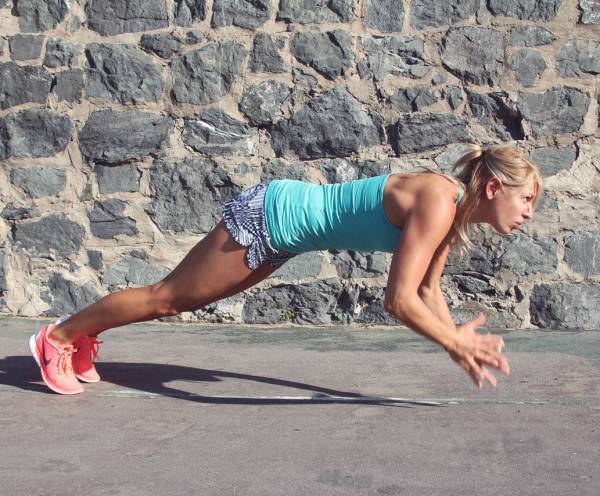
- Start by getting into a push-up position.
- Lower yourself to the ground and then explosively push up so that your hands leave the ground.
- Catch your fall with your hands and immediately lower yourself into a push-up again and repeat.
Note: alternatively you can lower your chest close to the floor, push yourself up forcefully so your hands leave the ground and clap your hands together. Land your hands back in the starting position and repeat.
Overhead Throws
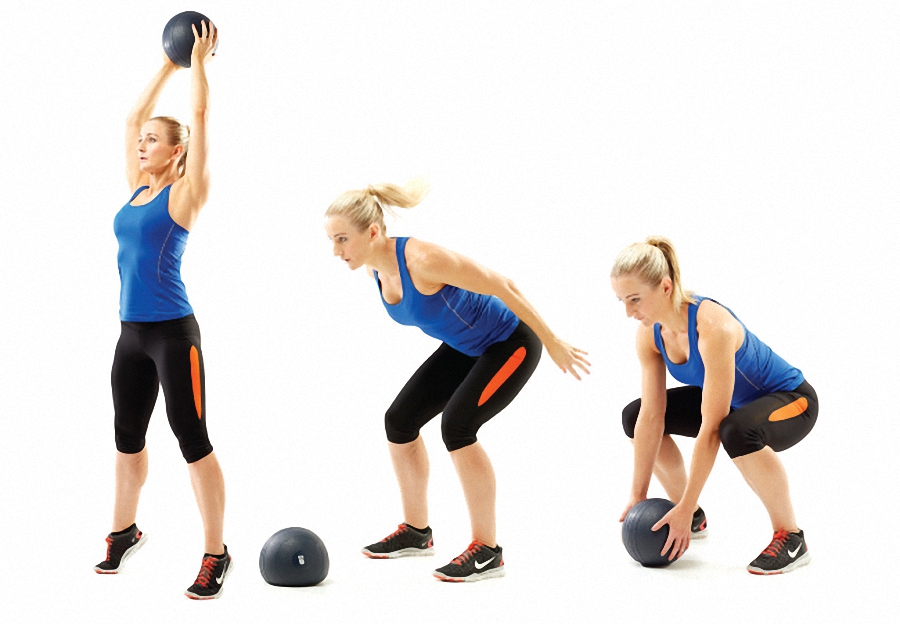
- Stand with one foot in front (staggered stance) with knees slightly bent.
- Pull medicine ball back behind head and forcefully throw ball forward as far as possible into the wall.
- Catch ball on the bounce from the wall and repeat according to your level of fitness. Keep the time between pulling the ball back and starting the throw (transition phase) to a minimum. Can also be completed with a partner instead of a wall.
Slams
- Stand with feet parallel, shoulder-width apart and knees slightly bent.
- Pull medicine ball back behind head and forcefully throw ball down on the ground as hard as possible.
- Catch the ball on the bounce from the ground and repeat according to prescribed repetitions.
Plyo Dips
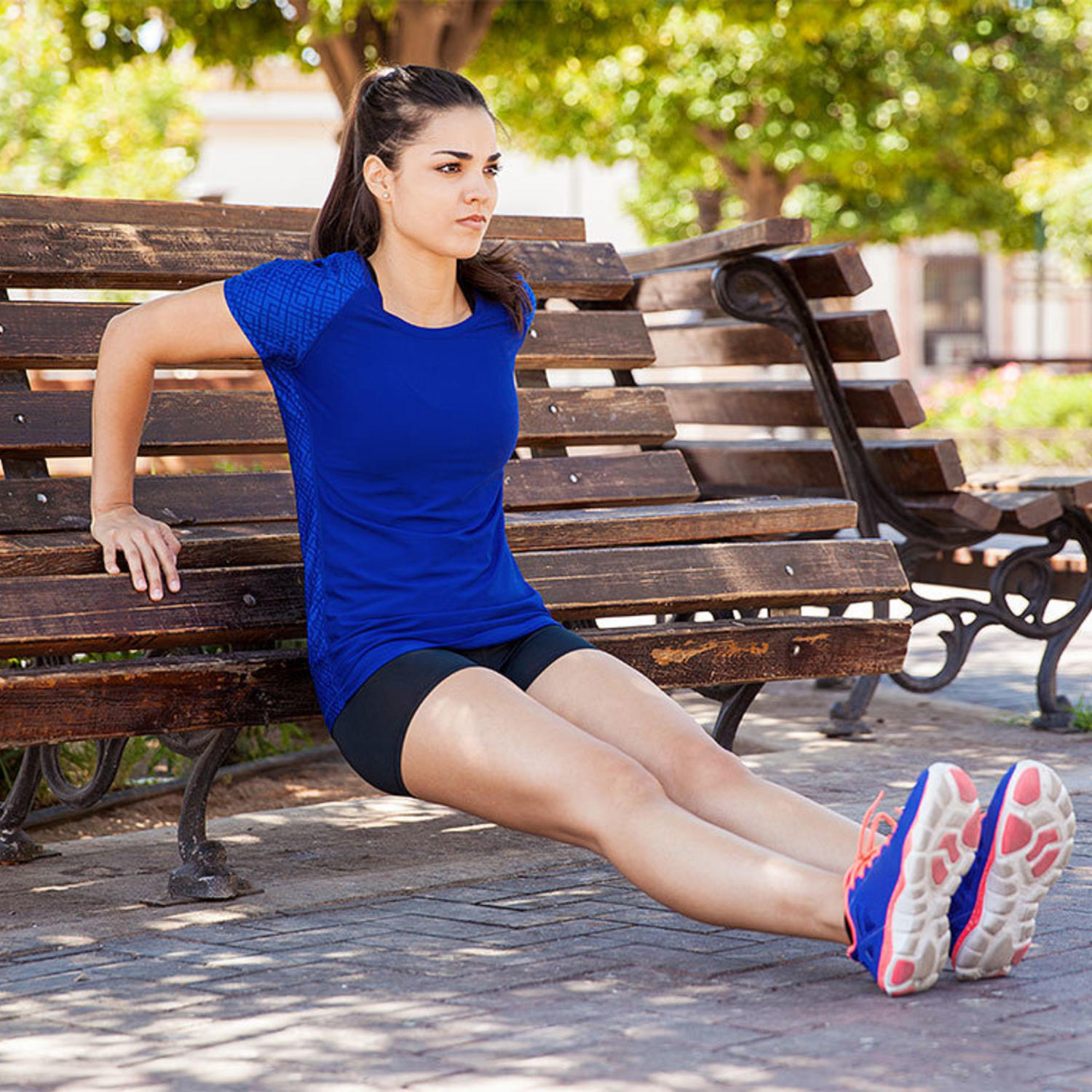
- Begin the movement in a normal triceps dip position in the lower phase, explosively power yourself upwards to a straight arm position,
- Aim to raise your hands 4 – 6 inches off the bench, making sure your hands land back down on the bench as you lower.
- Remember to record how many repetitions and sets you can perform, so that you will so how your getting fitter and stronger in all areas
Arch Chop
- Stand holding medicine ball with hands on each side of ball. Place feet wide apart pointing approximately 45° outward and knees slightly bent. Bend over and place ball near outside of one foot.
- Raise ball up to side and up over head so torso is upright. Bend over to opposite side and lower ball down to outside of other foot.
- Repeat with opposite movement alternating raising and lowering ball back and forth between sides.
- Start slow, gradually increasing speed throughout set.
Side Throw (with partner)
- Stand facing partner throwing distance apart with left foot forward. First person holds medicine ball
with both hands near chest, left shoulder slightly forward, right hand behind ball, and left hand in front of ball.
- Partner has arms up and shoulders square ready to receive ball.
- First person throws medicine ball to partner’s chest forcefully extending right arm and shoulder forward. Partner catches ball with both hands, recoils ball to right of body, and immediately throws ball back to first person’s chest in same manner. First person catches ball and repeats volley.
- Continue throwing on left side with right foot and shoulder forward.
- Perform prescribed repetitions or for time.
Plank Shuffle
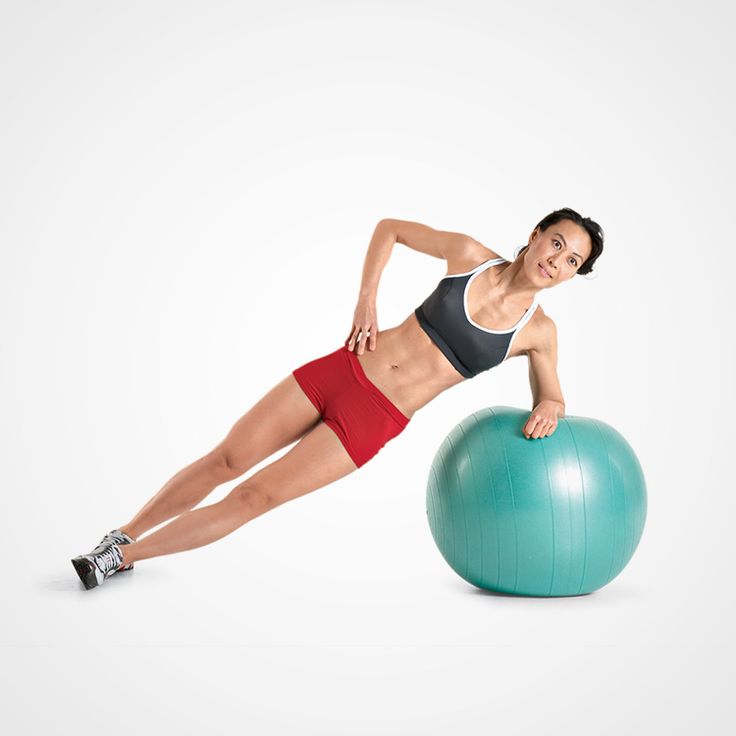
- Kneel before medicine ball. Place left hand on top of ball and right hand on floor slightly wider than shoulder width away.
- Position upper body above both hands with right arm straight and left arm bent with hand on ball. Straighten body and place forefeet back away from ball on floor shoulder width apart.
- Push upper body up onto ball so right hands is place on top side of ball next to left hand. Immediately place left hand onto floor slightly wider than shoulder width away.
- Immediately shift upper body to original side with the opposite movement. Repeat by alternating sides.
Note: It is imperative that an adequate strength base is developed before attempting plyometric training. One must remember that an essential component to plyometric training is high intensity efforts. This higher intensity is accentuated during compressive exercise like explosive push-ups. These percussive exercises put an enormous amount of stress on all of the associated structures (i.e. muscles, tendons, ligaments, bones, etc.). If these anatomical structures are not properly developed, an injury is guaranteed if these types of plyometric exercises are undertaken.
Disclaimer
The Content is not intended to be a substitute for professional medical advice, diagnosis, or treatment. Always seek the advice of your physician or other qualified health provider with any questions you may have regarding a medical condition.