Yoga for postnatal mothers should focus on the back, core muscles, and pelvic floor – areas that tend to weaken after pregnancy and childbirth. Greater emphasis needs to be placed on relaxation and deep breathing exercises, especially while feeding the baby or dealing with sleepless nights.
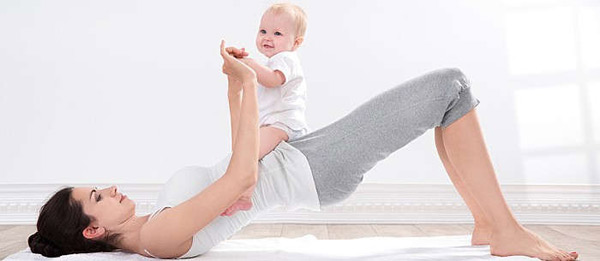
Consult your doctor before starting a yoga session after pregnancy. Usually, a six-week gap is recommended after a normal vaginal delivery, and a little longer if you had a caesarean
Deep Breathing
While pregnant, breathing exercises are used as a tool to open the body and make room for the growing baby, facilitating a smoother birth. After childbirth, the situation is reversed: the primary aim is to close the lower part of the body, pull the stretched muscles inwards and upwards, and strengthen them so they hold the spine, pelvis, and abdominal organs in the correct alignment.
Breathe in deeply, imagining the energy of the breath being drawn up through the base of your body into the abdomen. As you breathe out, pull in your waist, drawing your navel up and closer to your spine at the back. Repeat for 15 min without a pause.
Rainbow Pose
Sit cross-legged. Interlace your fingers and stretch your arms out in front of you, pushing your palms away from your body. Bring arms up overhead and trace big circles in the air with hands and arms. Keep your sit bones grounded, stretch through your spine, and breathe deeply. Do this 3 times in each direction.
Wag the Tail
On your mat or rug, come onto all fours with knees hip-width apart and directly below your hips. Keep your hands flat on the floor with fingers spread wide. Gently take your hips over to the right side, while at the same time, turn to look over your right shoulder towards your right hip.
Inhale as you return your body and head to the centre. Exhale as you take your hips to the left side, while at the same time turning to look over your left shoulder. Repeat several more times on each side. Remember to exhale as you move to the side, taking deep breaths. Inhale as you return to the centre. When you’ve finished, just come back to the centre and rest for a few moments.
Downward Dog (Adho Mukha Svanasana):
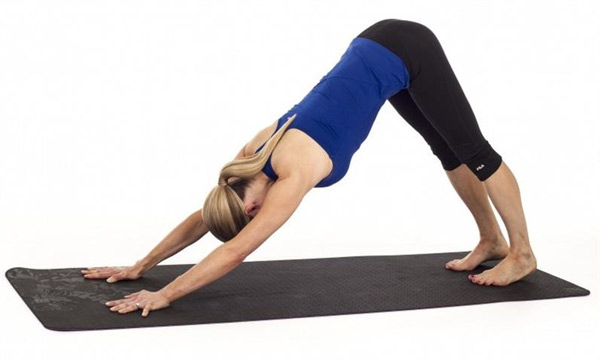
Begin on your hands and knees. Your wrists should be underneath your shoulders, and your knees underneath your hips. Inhale as you tuck your toes under your heels. Then exhale to lift your hips, coming into an upside-down “V” shape called Downward Facing Dog.
Spread your fingers wide and create a straight line between your middle fingers and elbows. Work on straightening your legs and lowering your heels toward the ground. Your heels should be slightly wider than your toes, so the outside edges of your feet are parallel with the outside edges of your mat. Relax your head between your arms, and direct your gaze through your legs or up toward your belly button. Work on holding for five breaths.
Child Pose (Balasana)
Sit on your knees with your feet together and buttocks resting on your heels. Separate your knees about the width of your hips. Place your hands on your thighs, palms down. (This is the vajra-asana or Thunderbolt Pose). Inhale deeply, then exhale as you bring your chest between your knees while swinging your arms forward. Rest your forehead on the floor, if possible, and then bring your arms around to your sides until your hands on resting on either side of your feet, palms up.
Breath gently through your nostrils as you hold the posture. Hold for about one to two minutes. Then return to the asana upright kneeling position with your back straight and your hands on your thighs. Repeat the posture at least one more time.
Crocodile Twist
Lie on your back with knees bent. Extend arms out to the side. Bring both knees together over to the right side of your body and turn your head left. Hold for 5 deep breaths. Repeat on the left side, taking the head to the right. Ensure both shoulders stay on the floor.
Wide-leg Circles
Lying on the back, with one leg raised and reaching through the ball of the foot, draw big circles with the leg while minimizing movement in the pelvis and back. With practice, you may circle both legs simultaneously, grounding the pelvis at all times.
Corpse Pose (Savasana)
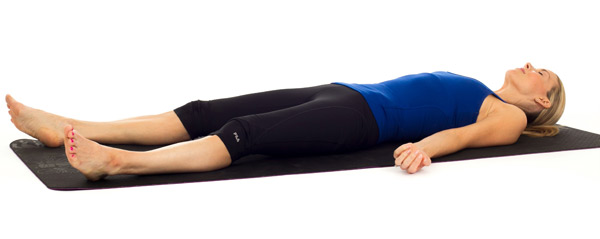
Savasana seems very simple on the outside. But this yoga posture can be very difficult when the mind is racing. To do Savasana, lie down on your bed on your back. Allow your arms and legs to splay outward. Turn your palms up. Relax your body. Relax your mind. Breathe. Don’t try to control your thoughts. Simply let them flow, and observe them quietly.
A regular regimen of physical exercise, coupled with a low-fat diet, may be undertaken during lactation without detrimental effects to the health of the mother or to the growth of the infant. The benefits of weight and fat loss, especially from the lower body, and improved mental outlook and long-term prevention of certain chronic diseases clearly outweigh any risks.
Disclaimer
The Content is not intended to be a substitute for professional medical advice, diagnosis, or treatment. Always seek the advice of your physician or other qualified health provider with any questions you may have regarding a medical condition.
