With all the advances in medical care and technology, it is safer today than ever before for most women in later age to become pregnant at 40. There are still some increased risks associated with later-age pregnancy that you should know if you fit into this category.

The Facts
Standard medical teaching indicates a higher risk for pregnancy complications in women over the age of 35. These complications can be categorized as follows:
- Medical illnesses affecting the mother and fetus
- Genetic abnormalities and birth defects
- Pregnancy loss
- Complications of labor and deliveryAs age increases beyond age 35, so does each of these risks. Nevertheless, proper preparation before pregnancy and early prenatal care can help assure the best outcome.
Maternal and Child Illnesses
Certain medical conditions occur more frequently in pregnant women over 40, including diabetes, high blood pressure, and thyroid disorders. Fortunately, these conditions can be diagnosed and controlled prior to pregnancy, and many of the medications used to treat these disorders can be safely used during pregnancy. If you currently take medication and you are planning a pregnancy, talk to your doctor. A change in medication or an adjustment of dosage may be necessary.
If not properly treated, maternal illnesses can adversely affect the fetus. Eclampsia is a serious complication that can occur during pregnancy. It may cause high blood pressure, swelling of your face and hands, and protein in your urine. Subsequently, it can impair your nervous system and cause seizures, stroke, or other serious complications. Uncontrolled high blood pressure can also restrict fetal growth and in severe cases, can result in stillbirth.
Undiagnosed diabetes can carry with it a higher risk of birth defects, and poor blood sugar control during pregnancy can result in abnormal fetal growth. Early prenatal care and judicious use of medication can lower these risks significantly.
Genetic Defects
As women age, their eggs do not divide as well, and genetic problems can occur. The most common genetic disorder is Down syndrome. Down syndrome is caused by the presence of an additional chromosome that causes mental retardation and defects of the heart and other organs. While the risk is still relatively low, it does go up significantly at age 35 and older.
While the general population of childbearing women has a 3% chance of delivering a child with a birth defect, after age 40 this risk rises to between 6% and 8%. The likelihood of having a baby with Down’s syndrome is approximately 1 in 365 at the age of 35. This number increases to 1 in 100 by the age of 40 and up to 1 in 40 at the age of 45.
There are two tests now available for detecting chromosome abnormalities relatively early into the pregnancy:amniocentesis and chrorionic villus sampling (CVS). These tests do create a slight risk for miscarriage. If you choose to have the testing done and there is an abnormality, you will have to decide if you want to continue or terminate the pregnancy.
Pregnancy Loss
Pregnancy loss also increases with advancing age. Approximately 50% of early (first trimester) miscarriages are due to genetic abnormalities of the fetus. Overall, pregnant women experience miscarriage 15% of the time. After age 40, this incidence nearly doubles. There is also a moderate increase in stillbirths after age 40 due to a combination of medical complications affecting pregnancy and lethal birth defects.
Complications of Labor and Delivery
Complications of labor and delivery that are seen more frequently in women over 40 include:
- Premature labor
- Premature separation of the placenta resulting in hemorrhage
- Placenta previa
- Meconium-stained amniotic fluid
- Postpartum hemorrhage
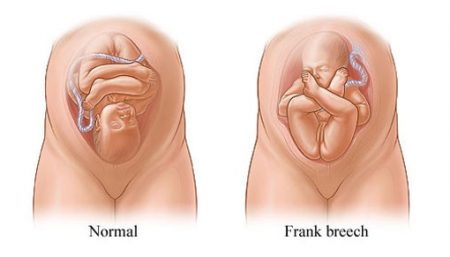
- Malpresentations As a result, the rate of Cesarean section is considerably higher in this age group.
Multiple Births
There The incidence of having twins or triplets is increased in later life pregnancy even without infertility drugs. Multiple-birth pregnancies are considered higher risk.

Lowering the Risks
Although the risks associated with pregnancy after 40 are numerous and sometimes unavoidable, there are several strategies that women over 40 can use to reduce these risks.
- See your doctor
- First and foremost, make an appointment to see your doctor before you get pregnant. This “preconception” visit will give your doctor the opportunity to diagnose and treat any disorders that might otherwise go undetected prior to the initial prenatal visit.
- A thorough evaluation prior to pregnancy will allow your doctor to give you an idea of your individual risk. There may be cases in which pregnancy will be ill-advised. However, for the majority of women over age 40, early prenatal care and good health habits will result in a healthy baby and a happy mother.
Get Healthy
The idea is to be as healthy as you can BEFORE you get pregnant. This includes:
- If you smoke, quit.
- Avoid alcohol – alcohol can increase the risk of certain birth defects and interfere with proper fetal growth.
- Avoid caffeine – even moderate caffeine intake may increase your risk of miscarriage.
- Eat a well-balanced diet. This means one that is rich in fruits, vegetables, whole grains, and low-fat dairy and other protein sources. If you need help, ask your doctor for a referral to a registered dietitian.
- Start a prenatal vitamin prior to pregnancy and stick with it. The folic acid in prenatal vitamins is known to reduce certain birth defects and the iron supplement will combat anemia.
- Exercise regularly, but moderately. Exercise is good for toning muscles and limbering joints, thereby decreasing the normal aches and pains associated with pregnancy. If you don’t exercise already, check with your doctor before starting an exercise program.
Get Tested
If you are concerned about the risk of genetic defects, ask your doctor about tests that can help identify these types of problems. Blood tests are available to screen for some genetic disorders; a “triple screen” blood test may be obtained to evaluate the risk of neural tube defects and Down’s syndrome.
Genetic amniocentesis or chorionic villus sampling is routinely offered to women after the age of 35. Amniocentesis is usually done in the third or fourth month of pregnancy and involves removal of amniotic fluid from the womb for genetic testing. There is a minimal (0.5%) risk of miscarriage associated with this test. This risk is outweighed however by the slightly larger risk of having an undetected abnormality.
Chorionic villus sampling can be done earlier in pregnancy and involves the removal of a minute amount of placental tissue, which can then be tested for genetic abnormalities. Discuss the risks and benefits of these tests with your doctor early on so that you will have ample time to make an informed decision.
Disclaimer
The Content is not intended to be a substitute for professional medical advice, diagnosis, or treatment. Always seek the advice of your physician or other qualified health provider with any questions you may have regarding a medical condition.