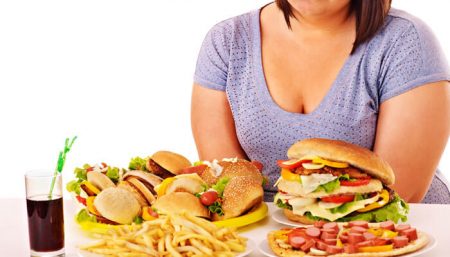
With 64 percent of Americans overweight or obese, the experts are debating what kinds of foods put on the pounds. A balanced diet is the best way to prevent cancer and heart disease while managing your weight.

What’s making americans over- weight – the fat or the carbohydrates? People all across the country are debating this issue. Do you lose weight by eliminating most of the fat in your diet? Or do you shed those pounds by eliminating the carbs and filling up on protein along with the saturated fat that comes with it?
“The answer is that you do neither,” says Dr. Ritva Butrum, AICR’s Vice President for Research. “If you want to lose weight and stay healthy, you have to eat fewer calories and exercise more, not simply cut whole categories of foods from your diet.”
The stakes in this debate are high because certain kinds of fat are linked to higher long-term risk for cancer and other chronic diseases. On the other hand, certain types of carbohydrates – particularly vegetables and fruit – are linked to lowering that risk.
Choosing Healthful Fats and Carbs
Originally, health experts recommended reducing overall fat intake for heart health and lower weight. However, recent research shows that some fats, used in moderation, may have health benefits. Highly monounsaturated fats like olive and canola oil are considered to be “heart healthy.” Similarly, laboratory tests suggest that omega-3 fatty acids (found in fatty fish, flaxseed, walnuts, and canola and soybean oils) may help protect against cancer.
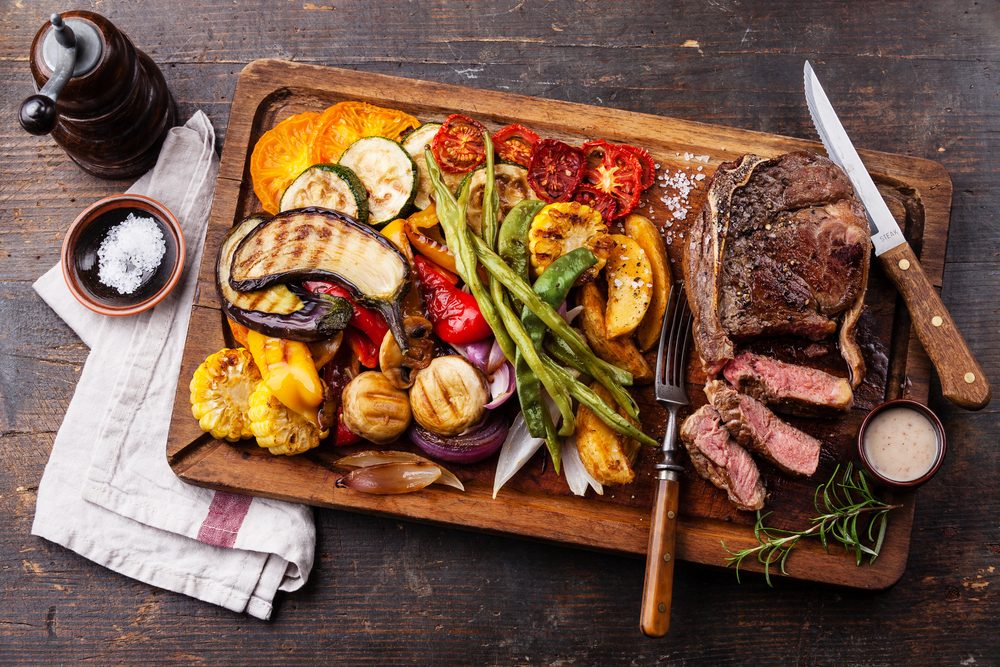
The questionable fats that some cancer research studies show to be hazardous are saturated fats from animal proteins, such as red meat, whole milk and butter. Health experts also advise avoiding products using “partially hydrogenated vegetable oil,” which contain harmful trans-fatty acids. Most margarine also contains trans-fats, but after public pressure, some companies created versions that do not; just check the labels.
At the same time, some scientists argue that refined carbohydrates like white sugar, white rice and processed cereals raise insulin levels. In turn, this leads to overeating and storage of excess fat at the waist and hips.
On the other hand, unrefined carbohydrates such as whole wheat, brown rice and bran cereals are digested more slowly and contain dietary fiber that solid research evidence shows is linked to lower colon cancer risk.
The cancer-fighting vitamins and phytochemicals in fiber-rich vegetables, fruits, whole grains and beans are another important health benefit. Dismissing these foods simply because they are carbohydrates is short-sighted, Butrum says.
“Abandoning fruits and vegetables because they also contain carbohydrates could prove disastrous to your health. A much wiser course is to eat moderate portions of the types of carbohydrates and fats that are good for long-term health,” she explains.
AICR’s rule of thumb makes it easy to choose the right foods in the right proportions. Look at your plate: 2/3 (or more) should be filled with vegetables, fruit, whole grains and beans; and 1/3 (or less) should hold lean animal protein. This proportion of plant foods to meat and dairy will provide more health-promoting fats and carbohydrates and fewer potentially harmful ones.
Eat Less and Exercise More for Weight Loss
For those concerned about weight loss, reducing portion size and increasing physical activity level is the best course. Experts believe that promotional practices such as “supersizing” and “value marketing” have confused people about reasonable portion sizes. As a result they are consuming approximately 148 more calories per day than they were two decades ago. These added calories could amount to a weight gain of 15 pounds per year.
As you compose your meals to be 2/3 plant-based foods and 1/3 animal protein, gradually reduce the size of portions. Ask yourself how many of those standard serving sizes go into the portions you usually eat, and use them as a guide to adjust your diet to be more healthful. Reduce your portion sizes gradually. Then add more physical activity to your schedule, and weight loss will probably result.
If your weight does not decrease after a few weeks of reduced portion sizes and increased activity, contact your physician or a registered dietitian for an individualized plan. For more information about proportion and portion size, call 1-800-843-8114 and request a copy of The New American Plate brochure.
Input by: The American Institute for Cancer Research is one of the nation’s largest cancer charities, focusing exclusively on the link between diet and cancer. The Institute provides a wide range of education programs that help millions of Americans learn to make dietary changes for lower cancer risk. AICR also supports innovative research in cancer prevention and treatment at universities, hospitals and research centers across the U.S. The Institute has provided over $65 million in funding for research in diet, nutrition and cancer. AICR is a member of the World Cancer Research Fund International.
Disclaimer
The Content is not intended to be a substitute for professional medical advice, diagnosis, or treatment. Always seek the advice of your physician or other qualified health provider with any questions you may have regarding a medical condition.