ASSEMBLE HEALTHFUL, COOLING ENTRÉES IN MINUTES
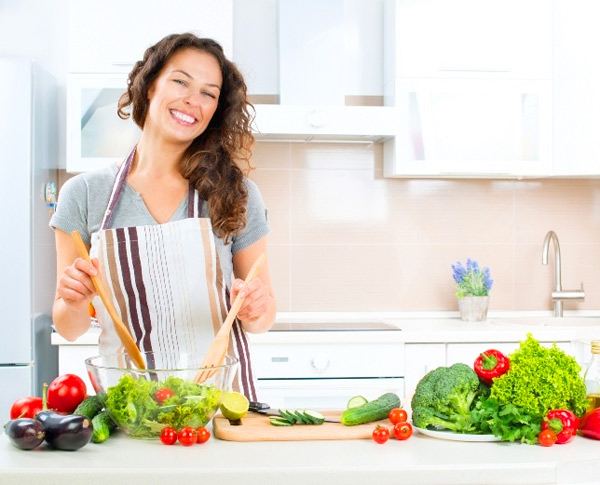
When it’s too hot to cook, some people resort to fast food, home deliveries, or other packaged meals that are usually high in fat and calories but low in nutrients. Instead, advises the American Institute for Cancer Research (AICR), the health-conscious can use its new, no-cook recipes to assemble quick meals that are easy on cooks and waistlines but full of eye appeal and protection against many chronic illnesses.
“Light but filling salads make perfect entrées in hot weather,” says Melanie Polk, RD, AICR’s Director of Nutrition Education. “With AICR’s easy recipes and a little effort spent slicing, opening cans, mixing and assembling, you can quickly create a colorful, rich-flavored meal that’s not only nutritious and low-fat, but also packed with lots of substances that protect us from chronic health problems like cancer and heart disease.”
Polk believes that variety is the secret to making a salad rich in flavor, color and healthful substances. “Just as an entrée has great appeal when it has many colors, flavors and textures, a dish with a wide variety of ingredients, especially vegetables and fruits, has more disease-fighting substances whose powers are boosted by their interaction. There are hundreds of these special substances, called phytochemicals, so the greater variety you get, the better your health protection.”
The Phytochemicals in Vegetables and Fruits Are Key to Health Protection
Researchers tell us that individual vegetables and fruits are distinctive in the particular phytochemicals they contain,” says Polk. “For example, the vegetables you typically find in a salad – leafy greens, tomatoes, bell peppers – offer different phytochemicals, each with its own array of health benefits.”
Just one serving of dark leafy greens is estimated to contain over 100 different phytochemicals. Scientists don’t yet understand exactly how they all work, but they do know we can maximize their effectiveness by including them, along with a wide variety of other vegetables and fruits, in our daily meals.
Dark, leafy greens like romaine lettuce and spinach contain lutein and zeaxanthin, powerful antioxidants that have been linked to reduced risk of age-related macular degeneration and lung cancer. Other good sources for these phytochemicals include corn, asparagus and eggs.
Bell peppers are a good source of phytochemicals called phenols, especially coumarins and terpenes, which help fend off cancer. Red bell peppers also contain lutein and zeaxanthin.
Tomatoes are rich in lycopene, considered the most powerful antioxidant in the carotenoid family. Lycopene is thought to reduce the risk of prostate cancer and possibly breast cancer as well.
Researchers funded by AICR believe it is the action of many of these phytochemicals, perhaps thousands, regulating and enhancing each other that boost our defenses against chronic disease.
For this reason, health experts recommend eating a wide variety of vegetables and fruits every day.
When It’s Too Hot to Cook, Open, Slice, Mix and Assemble
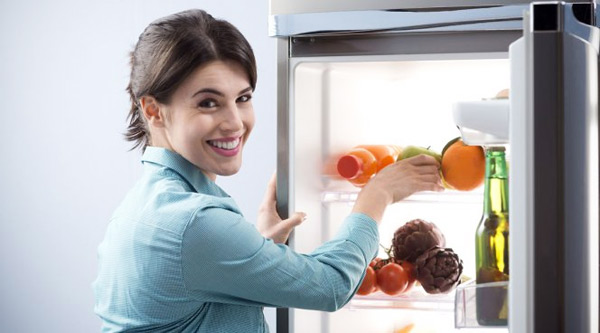
“Your refrigerator and pantry shelves probably contain everything you need to put together a main-course salad,” says Polk.
“A summer salad can be as simple as opening cans, cutting up vegetables and fruits, mixing a dressing and assembling the various elements – all in just about 30 minutes.
“Many families keep leafy green lettuce, tomatoes, cucumbers and bell peppers on hand. Your pantry shelves could hold other salad ingredients that can be stored a long time.” Many vegetables and legumes are sold in jars or cans: asparagus, artichoke hearts, corn, chickpeas, beans, olives and specialty items like roasted bell peppers and hearts of palm.
“Don’t forget that canned as well as fresh fruit work well in salads,” adds Polk, “but use water- or juice-packed versions, or rinse those that only come in a sugar syrup.”
“Leftovers can also be used,” Polk notes, “from cooked grains like rice, bulgur and couscous to chicken, fish and other meats.” Refrigerated cooked grains may need to be briefly revived in the microwave. Dried Asian noodles like bean thread and rice noodles only need to soak briefly in hot water to reconstitute and soften.
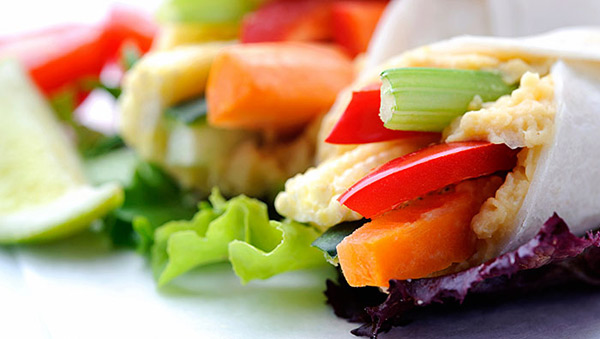
“Ingredients can be mixed together to form a tossed salad or, for a change of pace and festive, eye-catching appeal, arrange them in mounds on either individual plates or a large serving platter lined with leafy green lettuce,” suggests Polk. “Just keep in mind that the most healthful proportion to use is one-third for the meat or other animal protein and the other two-thirds of the plate for vegetables, fruits, beans and grains.”
The following Recipes contains rich south-of-the-border flavor and color, and makes a refreshing but filling one-dish meal.
The American Institute for Cancer Research (AICR) is the nation’s third largest cancer charity, focusing exclusively on the link between diet and cancer. The Institute provides a wide range of consumer education programs that help millions of Americans learn to make dietary changes for lower cancer risk. Web address is www.aicr.org
Disclaimer
The Content is not intended to be a substitute for professional medical advice, diagnosis, or treatment. Always seek the advice of your physician or other qualified health provider with any questions you may have regarding a medical condition.
