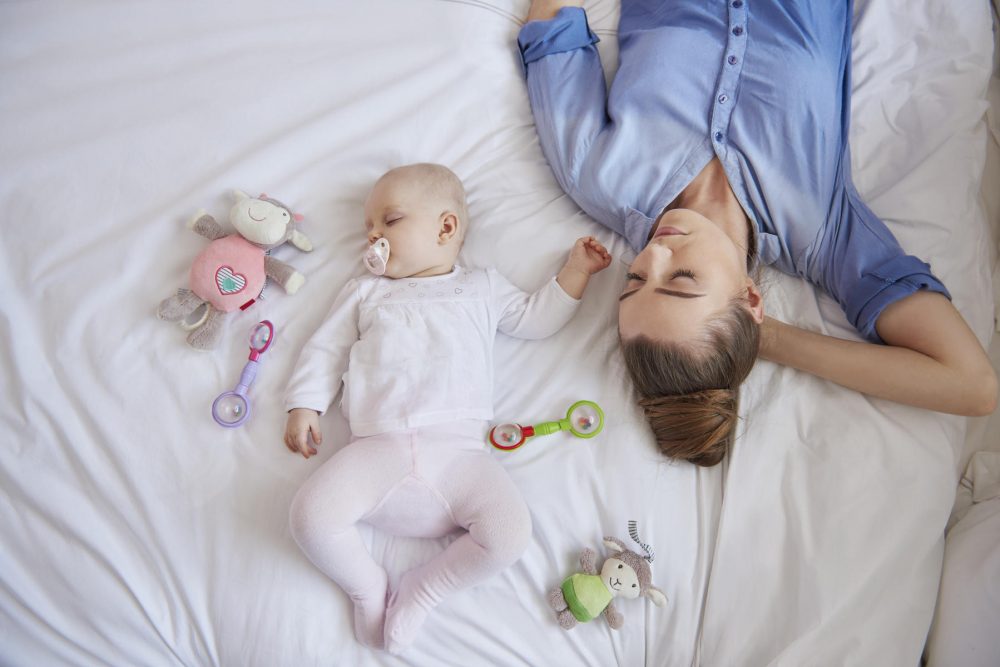
In his book, Sleep Thieves, author Stanley Coren states that parents lose between 400-750 hours of sleep during baby’s first year of life, which is the equivalent of losing 50-94 full 8-hour nights of sleep. As recent research suggests, the toll it takes on the child and the parents is no laughing matter.
Research conducted by Kaiser Permanente/Harvard Medical School on sleep loss and weight gain shows that new moms with non-consolidated sleep are three times more likely to weigh an extra 11 pounds by baby’s first birthday. Moms whose babies keep them up at night are also more likely to suffer from postpartum depression and new dads suffer too, as the ongoing stress leads to a disconnect between the parents. Attention, memory, creativity, decision-making, problem solving and general performance levels are all affected by sleep loss which impacts both parents’ performance at work. Sleep deprivation also negatively impacts health–weakening the immune system, elevating blood pressure, and increasing inflammation.
All new mothers experience some sleep loss following child birth due to plunging estrogen and progesterone (Wiley-Blackwell).
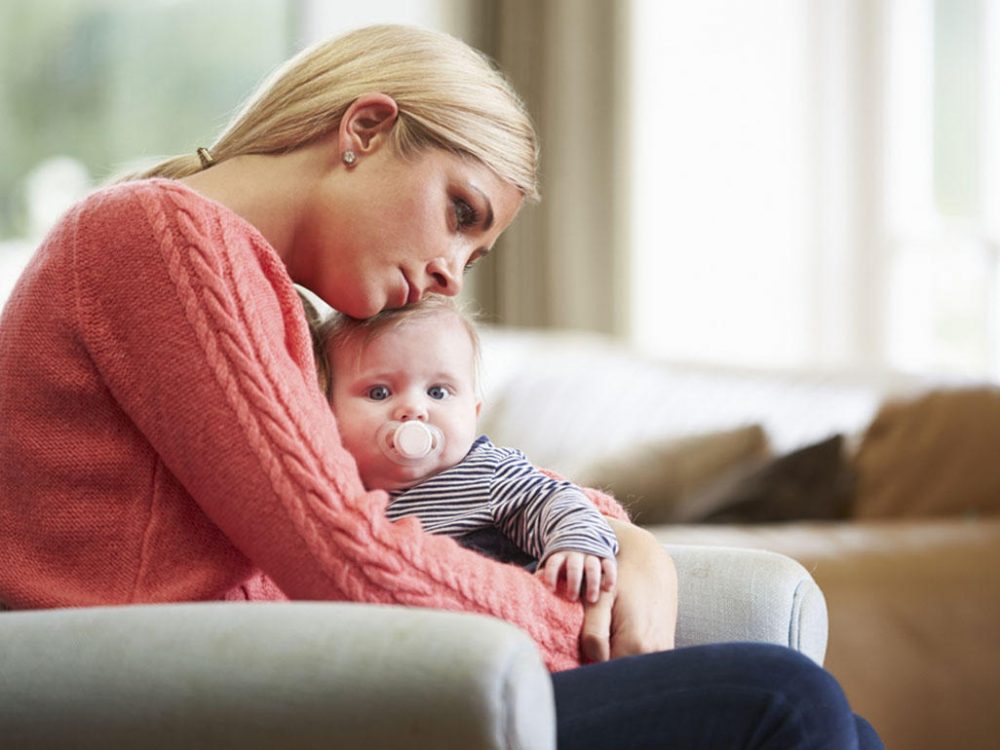
| The first couple of months are the most sleep deprived. Postpartum women are caught in a paradox. Their hormones cause them to lose sleep, along with a newborn that is trying to adjust and needs middle of the night feedings. The resulting sleep loss can cause depression, and as sleep quality worsens depression symptoms increase. Going without sleep leads to a sense of being out of control, frustration, and increased anxiety. |
Tips For Getting a Good Sleep
Although there is simply no replacement for a good night’s sleep, here are some simple ways of coping with sleep loss in the short term.
- Mothers with newborns should take advantage of any opportunity to take a nap– Enlist the help of family or friends willing to baby-sit so you can nap. Eventually a time does come when babies start sleeping for longer periods of time and wake up less often. Once you’re at the point that your baby is sleeping more regularly during the night, it’s important to take care of yourself.
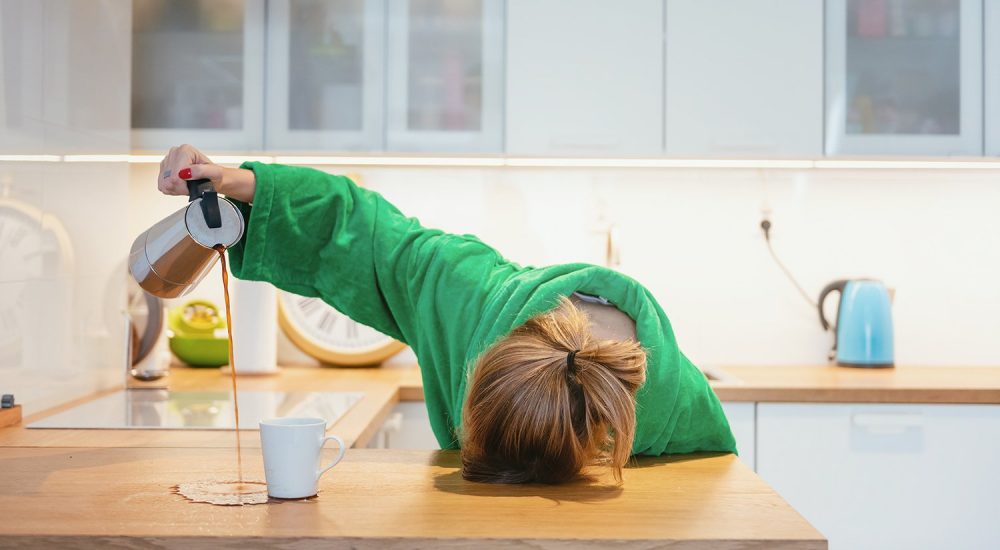
- Try to avoid drinking caffeine after noon. It could affect your ability to get to sleep at bedtime. If you’re breastfeeding, you’ll have to watch your caffeine intake. Try a tall glass of cold water as a substitute pick-me-up.
- Don’t watch TV right before bed– Many people use the television to fall asleep or relax at the end of the day. Not only does the light suppress melatonin production, but television can actually stimulate the mind, rather than relaxing it. Try listening to music or audio books instead, or practicing relaxation exercises. If your favorite TV show is on late at night, record it for viewing earlier in the day.
- Lower the temperature of your bedroom– Your body needs to cool down in order to fall asleep and stay asleep, so do what you can to make your room cool.
- Avoid alcohol and nicotine– Many people think that a nightcap before bed will help them sleep. While it may make you fall asleep faster, alcohol reduces your sleep quality, waking you up later in the night. To avoid this effect, so stay away from alcohol in the hours before bed. Nicotine is a stimulant, which disrupts sleep. Additionally, smokers actually experience nicotine withdrawal as the night progresses, making it hard to sleep.
- Don’t drink fluids within two hours before bed- Drinking lots of water, juice, tea, or other fluids may result in frequent bathroom trips throughout the night. Caffeinated drinks, which act as diuretics, only make things worse.
- Avoid taking a hot bath before bed– There is a lot of advice that says take a hot bath right before bed to relax yourself, but since the body needs to lower its temperature in order to fall asleep a hot bath will actually keep you up. If you find a hot bath relaxing, finish your bath at least two hours before your bedtime so that your body has enough time to cool down. Make sure to give your body at least an hour to cool down after a bath and prior to going to bed.
- Establish bedtime routine. Also wake up and go to bed at the same time each day. Exercise every day (but not right before bed).
- Exercise can help you fall asleep faster and make sleep more restful– Don’t just “exercise”, but do so intensely, to the point of feeling physical exhaustion. At the end of the day, this is probably the single best thing for helping induce deep, restorative sleep. When I say “intensely”, I mean intense relative to your capability. For some this may mean running 5 miles, for others it may mean a brisk 20 minute walk that elevates the heart rate. Physical tiredness is absolutely essential to getting a good night’s sleep. Relaxing exercises such as yoga or gentle stretching can help promote sleep.
- Avoid large meals right before bed– Try to make dinnertime earlier in the evening, and avoid heavy, rich foods within two hours of bed. Fatty foods take a lot of work for your stomach to digest and may keep you up. Also be cautious when it comes to spicy or acidic foods in the evening, as they can cause stomach trouble and heartburn.
- Try not to worry about unfinished chores or other business. Staying up late, losing sleep doesn’t help. It just makes you more tired the next day and less productive. When you’re trying to survive dishes, laundry, vacuuming, etc. are not that important. If you have anxiety explore options like counseling, stress management, or speak to a doctor about medication or supplements.
- Use blackout or heavy curtains- The darker it is, the better you’ll sleep. Cover electrical displays, use heavy curtains or shades to block light from windows, or try an eye mask to cover your eyes.
If you are finding it hard to fall back asleep, try a relaxation technique such as visualization, deep breathing, or meditation, which can be done without even getting out of bed. Remind yourself that although they’re not a replacement for sleep, rest and relaxation still help rejuvenate your body. Remember, breastfeeding is best for your baby. It supplies all the nutrients your baby needs. It’s also best for your waistline. Breastfeeding burns about 500 calories a day, so if you watch what you eat, you’ll lose about a pound a week.
Sweet Dreams!
Ref:
Disclaimer
The Content is not intended to be a substitute for professional medical advice, diagnosis, or treatment. Always seek the advice of your physician or other qualified health provider with any questions you may have regarding a medical condition.