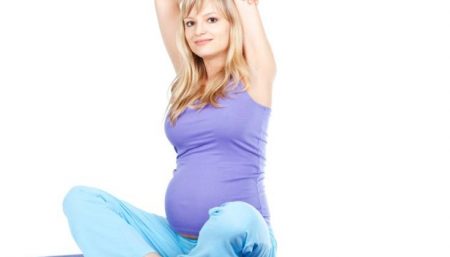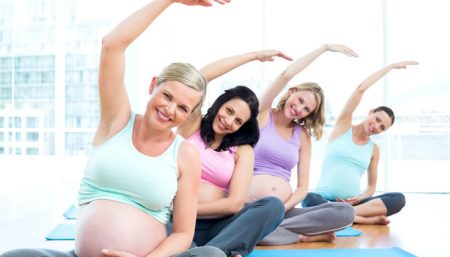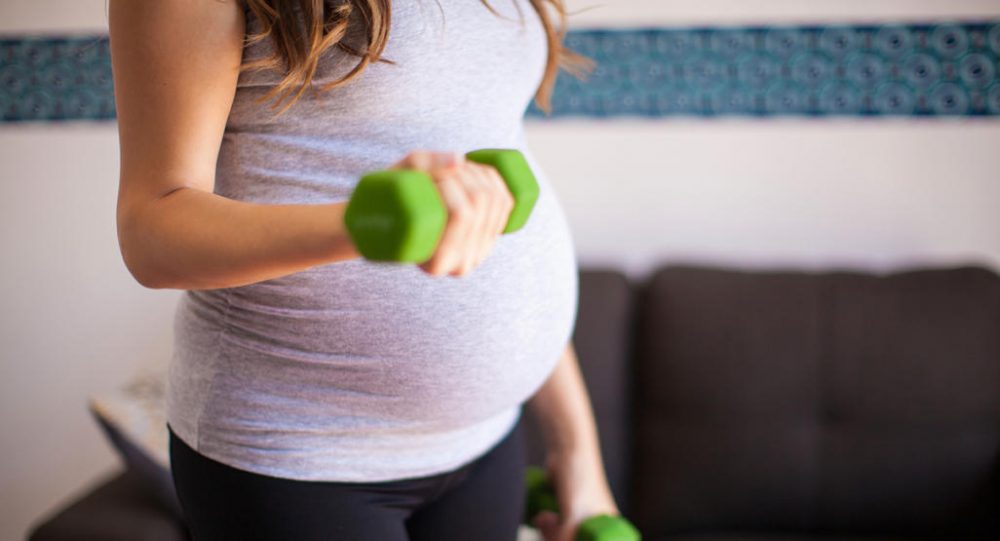
Many women would like to continue strength training during pregnancy, but are hesitant due to the seemingly inconsistent and diverse opinions on the subject. In recent years, however, a growing number of professionals from the medical and exercise science communities have te ndered specific advice for pregnant women interested in strength training.
According to Updated Guidelines for Exercise During Pregnancy
- 8 to 10 muscular strength exercises can be performed for one to two sessions per week on nonconsecutive days. One aerobic training session can be replaced by a muscle strengthening session in the weight room or at home,
- The guidelines also recommend using lighter weights with more repetitions. “Heavy weights may overload joints already loosened by increased levels of the hormone relaxin during pregnancy.”
Walking lunges, which may raise the risk for injury to pelvic connective tissue, and free weights, which may hit the abdomen when used, should be avoided. Instead, the use of resistance bands has been recommended.
In addition, lifting while flat on one’s back, in the second and third trimesters, may cause the uterus to compress the inferior vena cava, into which blood from the pregnant uterus flows. “This increased pressure can be transmitted to the placenta and could compromise fetal blood flow in the gas-exchange area, thereby limiting oxygen supply to the fetus.” Instead, these movements can be performed at an incline.
The Valsalva maneuver, that is, forcefully exhaling without releasing air, can rapidly increase blood pressure and intra-abdominal pressure and also may decrease oxygen flow to the fetus. Rarely, the Valsalva maneuver may result in a decrease in blood pressure.
If you feel muscle strain or excessive fatigue, modify the moves and reduce the frequency of the workouts. Pregnancy is not the time to perform heavy weightlifting, but muscle strengthening according to the new guidelines will burn calories and increase the resting metabolic rate.
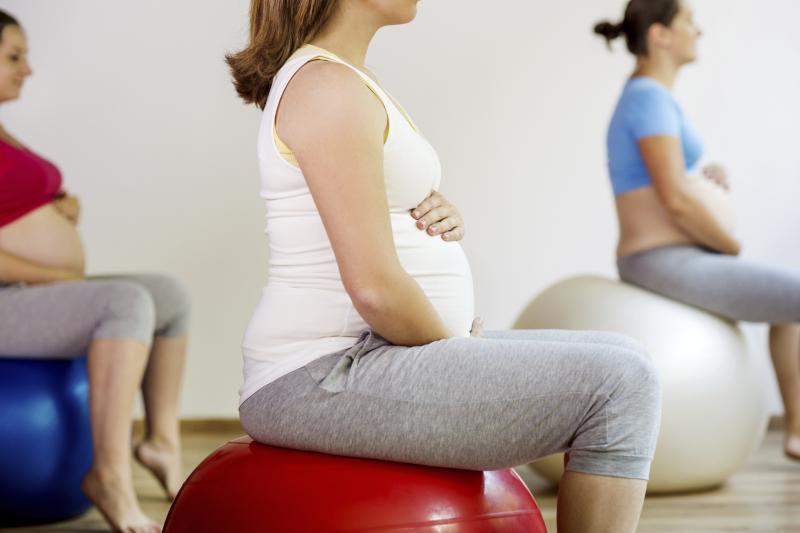
Your Routine
Exercise during pregnancy is most practical during the first 24 weeks. During the last 3 months, it can be difficult to do many exercises that once seemed easy. This is normal.
If it has been some time since you’ve exercised, it is a good idea to start slowly. Begin with as little as 5 minutes of exercise a day and add 5 minutes each week until you can stay active for 30 minutes a day.
Always begin each exercise session with a warm-up period for 5–10 minutes. This is light activity, such as slow walking, that prepares your muscles. During the warm up, stretch your muscles to avoid stiffness and soreness. Hold each stretch for at least 10–20 seconds.
After exercising, cool down by slowly reducing your activity. This allows your heart rate to return to normal levels. Cooling down for 5–10 minutes and stretching again also helps you to avoid sore muscles.
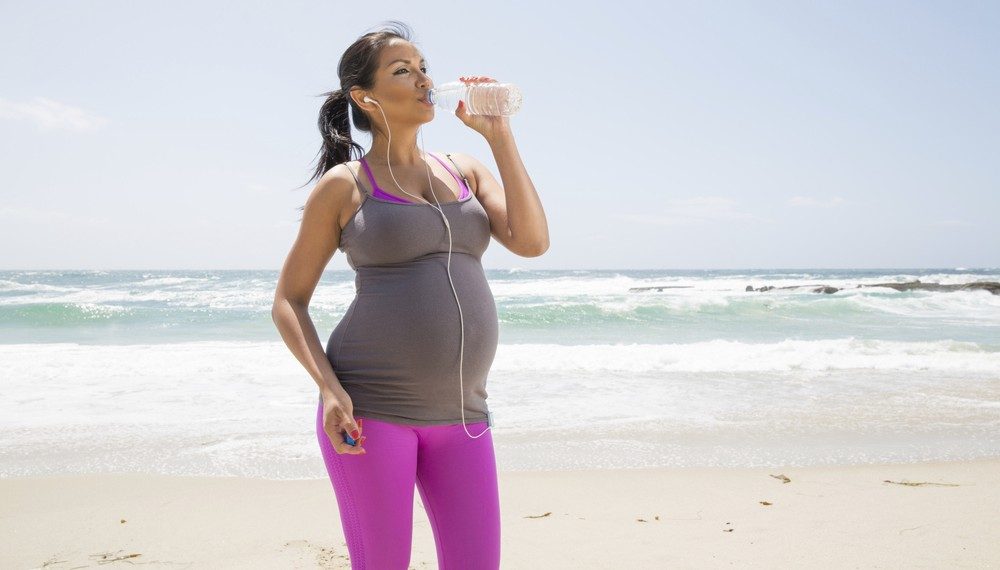
BASIC GUIDELINES AND PRINCIPLES FOR STRENGTH TRAINING FOR PREGNANT WOMEN
- Women possessing any of the American College of Obstetricians and Gynecologists (ACOG) contraindications for aerobic exercise during pregnancy should not participate in strength training .
- Women who have never participated in a strength-training programshould not initiate one during pregnancy.
- No ballistic movements should be employed during pregnancy. Pregnant women experience joint and connective tissue laxity, raising their susceptibility for injury while performing resistance exercises.
- Women should be encouraged to breathe normally during strength training. Oxygen delivery to the placenta may be reduced during any act of breath holding (i.e., the performance of a Valsalva maneuver).
- Maximal lifts and heavy resistances should be avoided, especially after the first trimester when increasing amounts of the hormone relaxin are present. Since relaxin increases tissue laxity, the performance of heavy lifts later in pregnancy may increase the risk of injury to the joints, connective tissue and skeletal structures of an expectant woman. An exercise set consisting of at least 12 to 15 repetitions without undue fatigue should ensure that the resistance level is not too great during any particular strength exercise.
- A strength-training workout consisting of a single set of a series of exercises, collectively involving all of the major muscle groups, should be performed two times per week.
- As a training effect occurs, it is recommended that overload be achieved initially by increasing the number of repetitions and, subsequently, by increasing the amount of resistance.
- Strength training on machines is generally preferred to using free weights since machines tend to require less skill and can be more easily controlled.
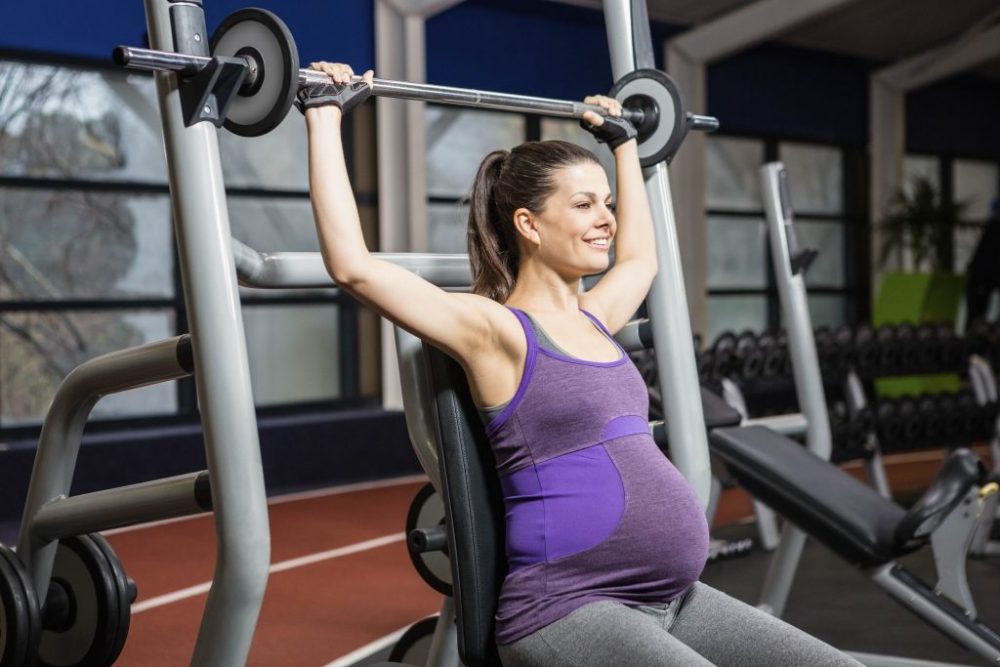
- If a particular strength exercise produces pain or discomfort, it should be discontinued and an alternative exercise should be performed.
- A pregnant woman should immediately consult her physician if any of the following warning signs or complications appear: vaginal bleeding, abdominal pain or cramping, ruptured membranes, elevated blood pressure or heart rate, or lack of fetal movement.
CONTRAINDICATIONS FOR EXERCISE DURING PREGNANCY
Absolute Contraindications
- Heart disease
- Ruptured membranes
- Premature labor
- Multiple gestation
- Bleeding
- Placenta previa
- Incompetent cervix
History of three or more spontaneous abortions or miscarriages.
Relative Contraindications
- High blood pressure
- Anemia or other blood disorders
- Thyroid diseases
- Diabetes
- Palpitations or irregular heart rhythms
- Breech presentation in the last trimester
- Excessive obesity
- Extreme underweight
- History of precipitous labor
- History of intrauterine growth retardation
- History of bleeding during present pregnancy
- Extremely sedentary lifestyle
Disclaimer
The Content is not intended to be a substitute for professional medical advice, diagnosis, or treatment. Always seek the advice of your physician or other qualified health provider with any questions you may have regarding a medical condition.