As you get older, your pelvic floor muscles get weaker. Women who have had children may also find they have weaker pelvic floor muscles.
The pelvic floor is a large hammock of muscles stretching from side to side across the floor of the pelvis. It is attached to your pubic bone in front, and to the the tail end of your spine behind. The openings from your bladder, your bowels and your womb all pass through your pelvic floor. Your muscles near your pelvis are very important to stretch. They get tight very quickly and can become a serious problem if not handled. The pelvic floor muscles can be separated into lifting, opening and closing muscles. These muscles all have a role to play in the elimination process with the opening and closing muscles being used at the actual time of going to the toilet. The lifting muscles support the organs in the pelvis as we move about and exert ourselves during the day — walking, standing, lifting, sneezing and toileting. They help keep the rectum and bladder in the ‘right place’ so that we can pass urine and faeces efficiently and without straining. They give support during childbirth and are important in love making. They can be damaged or weakened by:
- Childbirth– Evidence suggests that problems can start during pregnancy and not just after birth. Women who have had multiple births, instrumental births (with forceps or ventouse), severe perineal tearing or large babies (birth weight over 4kg) are at greater risk of pelvic floor muscle damage. If you’re trying to get fit after the birth of your baby, don’t do straight-leg sit-ups and double-leg lifts. These put severe pressure on your pelvic floor and your back.
- Straining to pass stools – Chronic or repeated straining on the toilet (associated with constipation) can lead to pelvic floor weakness and/or prolapse of the organs into the vagina or to a rectal prolapse (the rectal lining protrudes from the anus). It is important to teach the underlying bowel problem and good toileting habits.

- Spinal problems
- Chronic coughs and sneezing– Chronic coughing for any reason (for example, asthma, bronchitis or a smoker’s cough) increases the risk of urinary incontinence and prolapse.
- Being overweight– Being overweight increases the risk of leaking urine and may place greater strain on the pelvic floor.
- Heavy lifting- Heavy lifting can create pressure on the pelvic floor and ultimately lead to prolapse. Women in certain professions such as nursing or courier services are at particular risk. Women performing heavy weight training at a gym can also be at risk of straining the pelvic floor.
- High impact exercise Women involved in high impact sports such as basketball, netball or running are at increased risk of leaking urine. This applies to elite athletes as well.
- Age Pelvic floor muscles tend to get weaker with increasing age. Pelvic floor muscle exercises can help strengthen them at any age.
Strong pelvic floor muscles can help you to:
- overcome incontinence
- reduced risk of prolapse (i.e. ‘sagging’ of internal organs)
- Support the baby during pregnancyy
- prepare for, and recover from, childbirth
- increased sexual sensation and orgasmic potential; and
- increased social confidence and quality of life.
- Help to stabilise and support the spine
Identifying the Pelvic Floor muscles
First try to find your pelvic floor muscles, by one of these ways:
- Try to tighten your muscles around your vagina and back passage and lift up, as if you’re stopping yourself passing water and wind at the same time.
- A quick way of finding the right muscles is by trying to stop the flow of urine when you’re in the toilet. Don’t do this regularly because you may start retaining urine. Once you’ve found the muscles, make sure you relax and empty your bladder completely.
- If you’re not sure you are exercising the right muscles, put a couple of fingers into your vagina. You should feel a gentle squeeze when doing the exercise.
Why should I do pelvic floor muscle exercises?
The reproductive system lies with in the lower part of the abdomen and is protected by the bony pelvic girdle. This area needs to be open and relaxed so that energy can circulate freely through the reproductive system and conception is unhindered. Regular movement of the pelvis brings energy, flexibility and strength to this area.
Besides, regular pelvic floor muscle exercises make the muscles that support your pelvic organs stronger and helps you use the muscles more effectively. Women who have a problem with urine leakage have been able to eliminate or greatly improve this problem just by doing pelvic floor muscle exercises each day.
Pregnant and postpartum women who do pelvic floor muscle exercises have significantly less urine leakage.
Exercises to work the pelvic floor
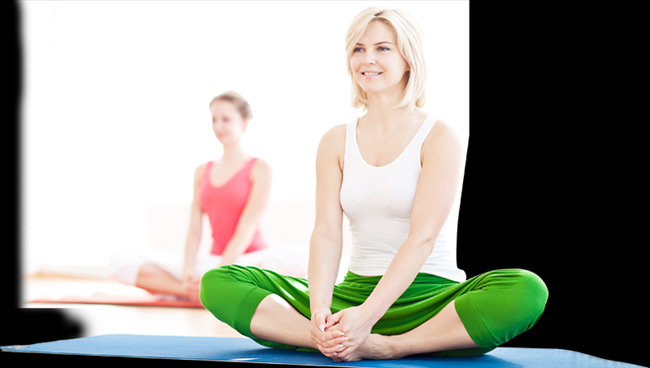
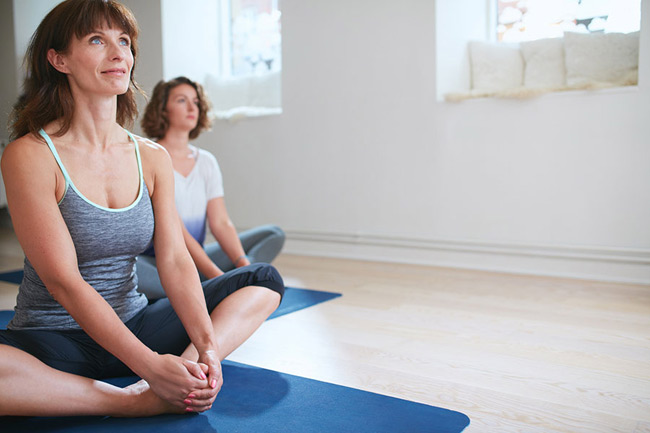
- A helpful stretch to loosen you inner thighs is called the butterfly stretch. You may be familiar with this but you should know how to do it correctly. Sit on the floor on your butt. Stretch your legs straight out and then bring your feet in towards your pelvis. Put the bottoms of your feet together and pull them into your body. You can also lean over to feel a more effective stretch.
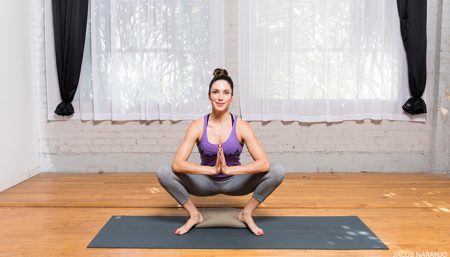
- Another stretch is the side split. Stand up with your feet slightly farther out to the sides. Slowly push each of them farther away from your body. Go down as far as you can to the floor. Hold your lowest position for a count of ten. After that, it is easier to just fall onto your butt and then get up.
- This stretch is called the Eye Of The Needle stretch. You will feel a pull in your outer buttocks. Lie down on your back and putt both of your feet in the air. Put one of your legs on top of the other’s thigh. Keep the straight leg high in the air. Now grab the back on your straight leg and pull it into your body. Repeat this with both legs.
- Pelvic stretch-Sit on the edge of a sturdy chair with feet apart and set firmly on the floor. Place your hands on your thighs above your knees, with fingers turned in and elbows turned out. Lean forward, bend your elbows and take your upper body weight on your thighs. This frees the pelvis-think of it as a bowl and tip it forward at the front “rim” (the pubic bone) and up at the back “rim” (where the sacrum joins the spine). Open the front of the body by spreading your arms with palms up, lifting your chest and tucking your pelvis under so that the front pelvic “rim” rises and the back “rim” is lowered. This movement stretches the spine and releases tension. It also tightens the lower abdominal muscles that hold the pelvis in place. Repeat these two movements several times and practice frequently in order to increase mobility in the pelvic area.
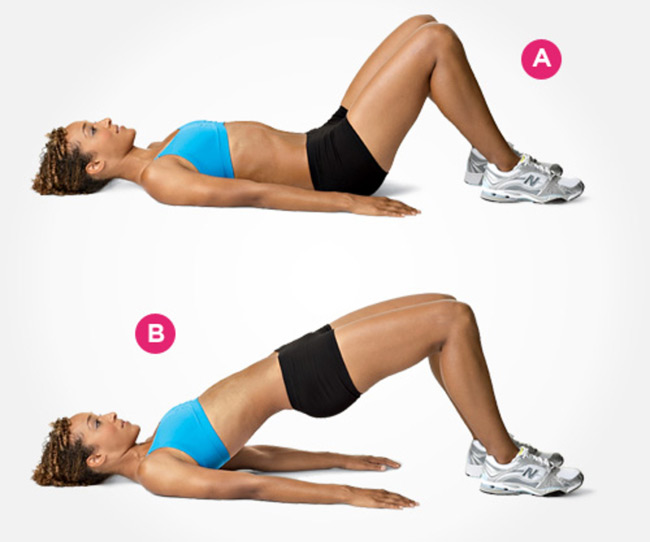
- The most well-known pelvic floor exercises are the Kegels. Squeeze and draw in the muscles around your back passage, vagina and front passage and lift up inside as if trying to stop passing wind and urine at the same time. Try to hold the muscles strong and tight as you count to 8. Now let them go and relax. You should have a distinct feeling of letting go. Repeat the “Squeze, Lift and Hold” movement and let go It is best to rest in between each lift up of the muscles. If you can’t hold for a count of 8, just hold for as long as you can. Repeat this “Squeeze, Lift and Hold” contraction as many time as you can, up to a limit of 8-12 contractions. Try to do three sets of 8 to 12 squeezes each, with a rest in between.
The pros of pelvic floor exercises
- They’re simple.
- They’re cheap.
- They’re effective.
- You can do them when sitting, standing or lying down.
- You don’t need any special equipment.
- You can do them with or without vaginal cones.
The downside of pelvic floor exercises
- You have to keep doing them for the rest of your life.
- It can take up to 15 weeks before you see any difference.
- If you haven’t noticed a difference after three months, see your continence adviser again to check whether you’re doing them correctly or if there’s another problem.
Important Tips for pelvic floor muscle exercises
- Each contraction should involve a concentrated effort to get maximum tightening. To strengthen your pelvic floor muscles, sit comfortably and squeeze the muscles 10-15 times in a row.
- Try to contract only the pelvic muscles. (If you feel your abdomen, thighs or buttocks tightening then relax and aim just for the pelvic muscles by using a less intense muscle contraction. If it seems impossible not to tighten the abdomen, thigh, or buttock muscles, then concentrate on full relaxation and try gentle flicks? of the pelvic muscles, working the muscles to higher layers with each flick.)
- Be sure to breathe while holding the muscles contracted.
- When you get used to doing pelvic floor exercises, you can try holding each squeeze for a few seconds. Every week, you can add more squeezes, but be careful not to overdo it, and always have a rest in between sets of squeezes.
- Practice fully relaxing the muscle for at least 10 seconds between each contraction.
- Experiment with contracting the muscles in many different positions (standing upright, lying, sitting, on hands and knees, feet together, feet apart).
Do not forget to, record your progress. You might want to keep a daily diary of whether or not you have had a leaking accident. Over the weeks you should begin to see a decrease in the frequency and amount of unwanted urine loss. Another way to check your progress is to see whether or not you can slow or stop your urine stream when you are going to the bathroom. We recommend that you try this no more than once a week. As your pelvic muscles get stronger you will find that you are able to stop the stream more quickly.
Disclaimer
The Content is not intended to be a substitute for professional medical advice, diagnosis, or treatment. Always seek the advice of your physician or other qualified health provider with any questions you may have regarding a medical condition.