Here are 10 key things you can start doing right away to help keep you healthy and feeling young.
 Toss the smoke. Lung cancer, heart disease, stroke, high blood pressure, osteoporosis. The list of age-related diseases that smokers are at higher risk for goes on and on. Not to mention the wrinkles and stained teeth that make you look far older than your years. If you don’t smoke, raise your right hand and swear you never will. Then give yourself a pat on the back. If you do smoke-stop. Within minutes of puffing your final cigarette, your blood pressure and pulse rate drop to normal. And after just 24 hours, your risk of having a heart attack decreases.
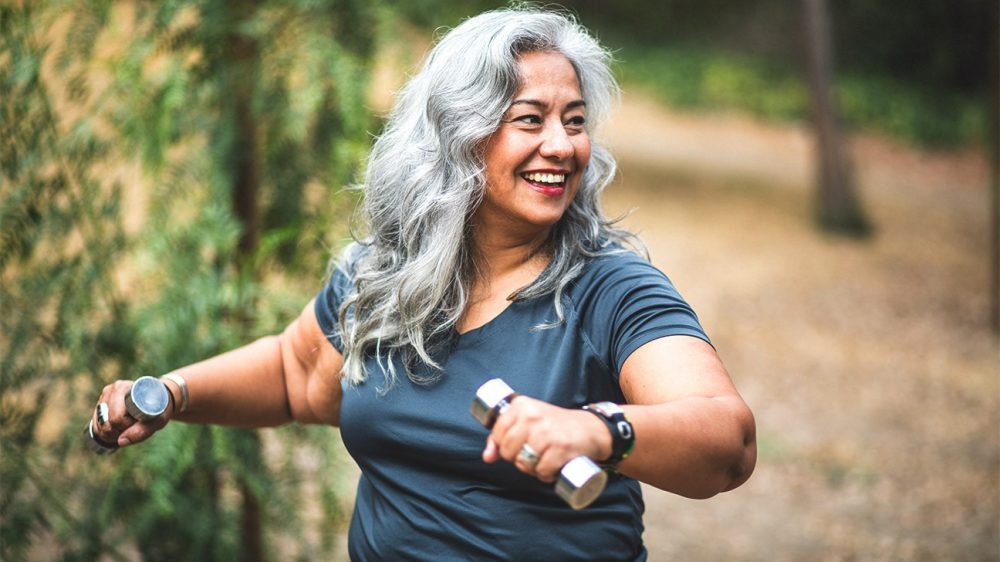
 Add activity. Close to five million adults say they don’t do anything physically active in their leisure time. Now that’s a lot of couch potatoes. And it turns out that more women are inactive than men. Everyone knows exercise is good for you–so why are so many women still stuck on the sofa? Perhaps you haven’t found a fun activity that keeps you coming back for more. Or maybe you think you don’t have the time. But it takes a lot less time than you probably realize.
The current recommendation for physical activity is something that virtually all of us can do. That’s 30 minutes of accumulated moderate physical activity most days of the week. Walking the dog, gardening, housework-they all count. In fact, regular exercise helps prevent everything from heart disease and diabetes to breast cancer and osteoporosis.
 Control your weight. It’s no secret that we tend to put on pounds as we grow older. A growing middle may seem like a harmless, natural part of aging, but it’s not. That add up fast. If you weighed 125 at age 20, that means you’ll tip the scale at 160 by the time you’re 70. That rate of weight gain puts you at risk for a number of diseases including diabetes, heart disease, arthritis, and even gallstones. Losing weight isn’t easy. So your best bet is not to gain it in the first place. Focus on maintaining your weight rather than trying to lose the extra pounds after you’ve already gained them. If you’ve already put on some pounds, try losing just 10. Even small reductions can go a long way in helping improve your condition if you have a problem like arthritis or high blood pressure.
 Pile your plate with fruits and veggies. That’s right. One key to living a long, disease free life can be found in the produce section of any grocery store. In fact, a study of 52 Italians aged 70 and older found that the healthy one hundred and some things ate more than twice as many vegetables as the younger folks. Eating five servings of fruits and vegetables a day is associated with lower risks of several diseases, including cancer and stroke. Researchers have identified all sorts of healthy components in our produce. Not only are fruits and vegetables a natural source of antioxidants, vitamins, minerals, and fiber-they also contain phytonutrients like quercetin, lycopene, flavonoids, and ellagic acid, which are potential heart protectors and cancer fighters.

 Eat a low-fat diet. Too much fat does a lot of nasty things to our bodies. First, it can clog up the arteries in our hearts and block blood vessels in our brains, putting us at risk for heart disease and stroke. Excess fat can also over stimulate our gallbladders and create the right conditions for painful gallstones. And of course, too much fat can make us, well, fat, which increases our risk for other diseases like cancer and diabetes.
Most experts agree that a low-fat diet should get no more than 25 percent (and preferably less) of its calories from fat. But not all fats are bad. The main one to limit in your diet is saturated fat, found in foods like meat, butter, and dairy products. Researchers say that the best way to cut down on saturated fat is to limit meat servings to 3 or 4 ounces a day, use little or no butter, switch to low-fat dairy foods, and cook with corn, canola, or olive oil. Other fats to be wary of include the trans fatty acids found mostly in margarine and prepackaged snacks. They may be just as unhealthy for our hearts as saturated fat. You can cut your trans fatty acids by using trans-free margarine instead of regular margarine and by limiting the amount of snack foods you eat that contain partially hydrogenated oil.
 Fill up on fiber. Eating a high-fiber diet may lower your risk for several diseases, including heart disease, diabetes, high blood pressure, obesity, and diverticulosis. Several small studies suggest that filling up on fiber can lower your risk of colon cancer. How does fiber protect against such a variety of diseases? For one thing, it acts like a sponge as it passes through our bodies, soaking up potentially harmful substances like cholesterol and binding to extra estrogen in the digestive tract, then removing them in our stool. Fiber also fills us up so we eat less. The problem is that most people only get 11 to 13 grams of fiber a day-that’s about half of the 25 to 35 grams experts recommend. To give your plate a fiber face-lift, add more foods like fruits, vegetables, beans, and whole-grain breads, cereals, rice, and pasta.
 Supplement your diet. Our bodies need vitamins, minerals, and other important nutrients to function at their best. And if we all ate a low fat diet high in fruits and vegetables every day, we’d probably get enough of these vital nutrients. But many of us don’t. That’s why it’s important to take a multivitamin/mineral that provides the Daily Value for most nutrients. Think of it as an insurance policy for those days when our diet isn’t up to snuff. Another good reason to take a multi is the mounting evidence that supplementing your diet in this way may help you ward off disease. That may be because nutrients like folate, vitamin B6, vitamin E, and betacarotene have all been found to promote heart health. Folate may also help prevent colon cancer, cervical cancer, and strokes. Vitamin D lowers your risk for colon cancer, cervical cancer, and strokes. Vitamin D lowers your risk for colon cancer and osteoporosis. Calcium may reduce rectal cancer risk along with preventing osteoporosis. Vitamin C and magnesium can help strengthen your bones and keep your blood pressure in check. The trace element selenium can protect a man’s prostate from cancer. And beta-carotene has been shown to prevent cancer in lab animals.

 Limit yourself to one drink. While having one alcoholic drink a day may lower your risk of death, especially from heart disease, more than one may put you at risk for a whole host of other diseases including breast cancer, stroke, and osteoporosis.
 Get screened. Most women get a Pap smear once a year as part of their annual gynecological exam. But that’s not the only potentially lifesaving test a woman should regularly have done. After age 40, a mammogram (earlier if there’s a family history of breast cancer) and skin-cancer screening, for example, should also be included in every woman’s yearly checkup.
 Know your risk factors. Many diseases run in families. So it’s wise to know what that means for you. If a parent or sibling has had a condition like colon or breast cancer, for example, you should get the recommended screenings even at a younger age. The same goes for breast cancer or diabetes. No matter what your family history, you should have your blood pressure and cholesterol checked regularly. For cholesterol, that means every 5 years if your levels are normal. “Normal” is defined as having a total cholesterol of 150 or lower, with a total/high–density lipoprotein (HDL) ratio of 4.0 or lower. That ratio, which tells you how much of your total cholesterol is HDL, or “good” cholesterol, is a better predictor of heart disease . If your cholesterol numbers are high, you should have them taken again in 4 months.
 When it comes to your blood pressure, the American Heart Association suggests that you have it checked at least once every 2 years. An optimal reading is less than 120 over 80, and normal is less than 130 over 85. If you’ve had a higher reading, decide with your doctor how often you should have it checked.
You could be eating a healthy diet but still have high cholesterol, if it runs in your family. That’s why you should have both your blood pressure and cholesterol checked regularly. High BP levels are associated with increased risk of serious conditions such as heart disease and stroke. If your levels are high, there are things you can do to lower them-like exercising and switching to a low-fat diet. In some cases, your doctor may want to put you on medication to help lower your levels.
Disclaimer
The Content is not intended to be a substitute for professional medical advice, diagnosis, or treatment. Always seek the advice of your physician or other qualified health provider with any questions you may have regarding a medical condition.