Cooked vegetables are usually served as side dishes, but the American Institute for Cancer Research (AICR) suggests that there are other more novel and interesting ways to incorporate vegetables into a meal. The Institute offers advice, tips and easy-to-make recipes that turn puréed vegetables into low-fat, low-calorie dips, sandwich spreads, or sauces that complement meats, whole grains, or even other vegetables.
“Some people think of puréed vegetables as baby food,” says Melanie Polk, AICR’s Director of Nutrition Education, “but dishes like mashed potatoes and whipped sweet potatoes are popular adult comfort foods.” The creamy, silky-smooth texture of these purées can also be achieved with other vegetables, which can add extra color, variety and “mouth-feel” to a meal.
“Trying new ways to serve vegetables is a smart health strategy,” Polk adds. “Americans get far less than the recommended number of daily servings of vegetables, so introducing new ways to serve them can help achieve important health goals.”
Vegetables: Low on America’s Dietary Totem Pole, but High in Health Protection
A 1999 study by the U.S. Department of Agriculture (USDA) found that the potato – whether fresh, French fried, or turned into chips – was America’s most widely eaten vegetable, with iceberg lettuce in second place, followed by tomatoes, carrots and onions. The deeply-colored green and yellow vegetables rich in disease-fighting substances represented only 0.4 percent of Americans’ daily servings.
Polk says, “Most Americans are missing out on many vegetables unique in the health-protective substances they offer. Ideally, we need to eat five to nine servings of a wide variety of vegetables and fruits for optimum health and lowered risk of cancer.”
“When it comes to preventing cancer, eating more vegetables is second only to quitting smoking in its importance as a protective measure,” says Dr. John D. Potter, M.D., Ph.D., head of the Cancer Prevention Research Program at the Fred Hutchinson Cancer Research Center. Dr. Potter headed an AICR expert panel of scientists who reviewed more than 4,500 studies on the connection between diet and cancer. They found convincing evidence that diets high in vegetables and/or fruits protect against many different types of cancers.
Puréed Vegetables Offer New Ways to Create Flavor and Texture
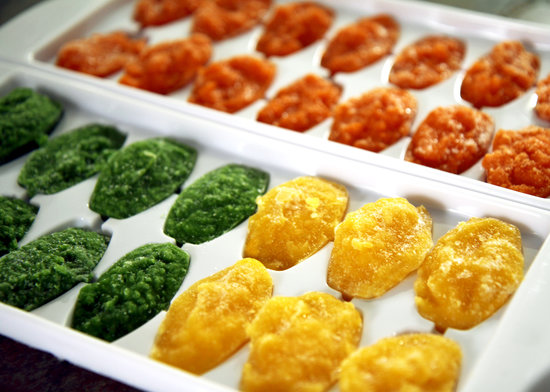
“Vegetables are easily puréed in a blender once they have been cooked until tender,” says Polk. Those rich in fiber, like sweet potatoes and carrots, make a rather thick purée that then needs to be thinned, usually with a little oil, broth, milk, or cream. How much thinning, and therefore liquid, is needed depends on the end product. A sauce or coulis (an almost-liquid purée used as a flavoring, sauce, or garnish) may require more liquid, while a dip for chips or raw vegetables, or a sandwich spread, needs very little.
“Depending on how thick or thin they are, puréed vegetables can be used in many different ways,” Polk points out. In addition to sauces, dips, cracker spreads and sandwich fillings, they can be used as toppings for pasta or pizza as well as entrées and vegetable side dishes. Vegetable purées also work as the base for an “instant” soup when heated with broth or milk.
“Some vegetables benefit from a liquid that will boost richness and flavor,” observes Polk. Broccoli, spinach and turnips profit from the addition of extra virgin olive oil, milk, or cream. Substituting evaporated skim milk and de-fatted dairy cream (called “non-fat cream”) for full-fat dairy products will help keep the fat and calorie count low.
Other vegetables, like sweet potatoes, carrots and beets, have an inherently rich, sweet taste. A light broth or stock, preferably de-fatted, will provide the thinning needed without masking the natural flavors of these vegetables.
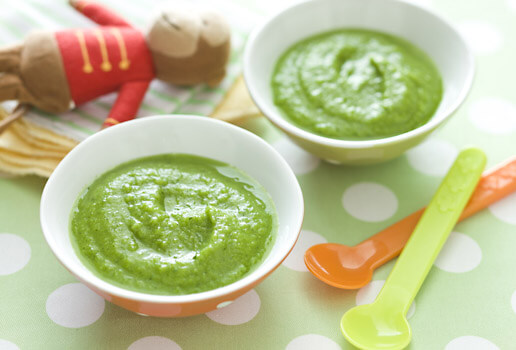
Even those who don’t count broccoli as a favorite food will enjoy the vegetable in this combination with cannellini (white kidney) beans. Although originally created as a dip for raw vegetables and chips, the addition of slightly more olive oil – sometimes as little as a few drops – will turn it into a sandwich spread or filling for a tortilla roll-up.
Puréed Broccoli with Roasted Garlic
- 1-4 peeled garlic cloves, or to taste
- 3 tsp. extra virgin olive oil, divided
- 1/8 tsp. dried crushed red pepper, or to taste (optional)
- 2 1/2 cups broccoli florets
- 1 cup canned cannellini (white kidney beans), rinsed, drained
- 1 Tbsp. fresh lemon juice, or to taste
- 1 Tbsp. fresh chives, finely minced (or1 tsp. dried chives, crushed)
- Salt and freshly ground white pepper, to taste
- Tabasco or hot sauce, to taste (optional)
Preheat oven to 350 degrees. Combine garlic, 1 tsp. oil and crushed red pepper in small foil packet, sealing well. Bake until garlic is tender, about 35 minutes. Cool slightly.
Meanwhile steam broccoli florets in microwave until very tender, about 2 minutes. Rinse with cold water to stop cooking process. Drain. Transfer to blender or food processor.
Add cannellini, lemon juice, chives, garlic mixture and remaining olive oil and purée until smooth.
Season to taste with salt, pepper and hot sauce.
For appetizers, purée can be used as a dip for spears or sticks of raw vegetables like bell pepper, celery and zucchini, or can be spread on crackers. To serve as part of a light meal, spread purée on pita bread or tortillas to make roll-ups. (Slightly more olive oil may be needed to make the purée more “spreadable.”)
Purée can be stored in covered container in refrigerator up to three days. Bring refrigerated purée to room temperature before serving. Makes 1 1/2 cups purée. Per quarter-cup serving: 63 calories, 3 g. fat (less than 1 g. saturated fat), 8 g. carbohydrate, 3 g. protein, 3 g. dietary fiber, 98 mg. sodium.
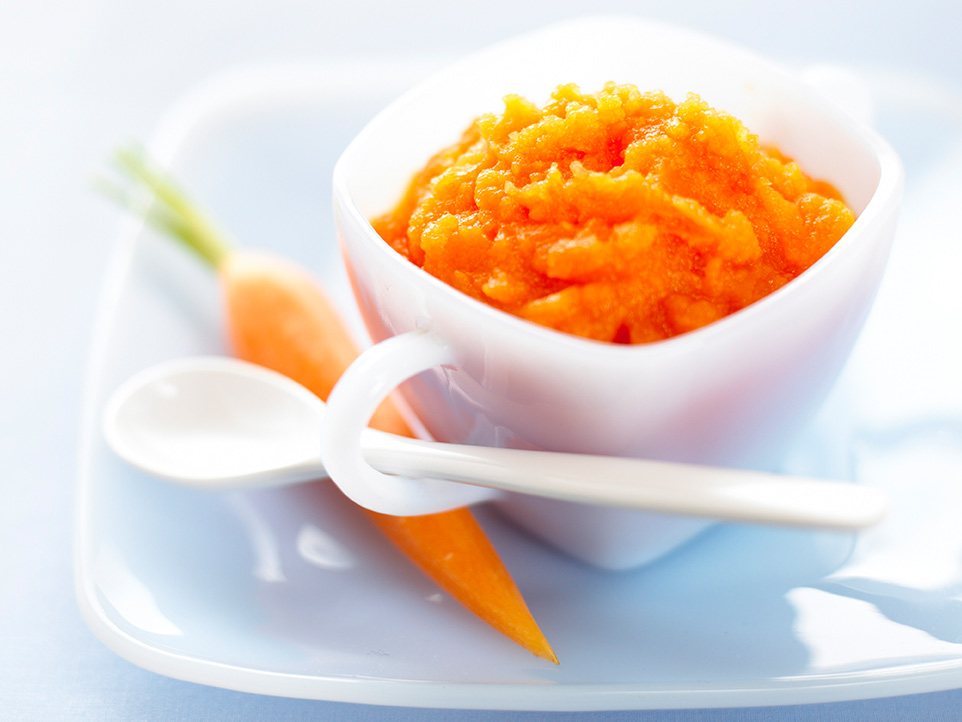
Their natural rich sweetness and complementary colors make squash and carrots an appealing combination. A variety of spices and flavorings enhances the vegetables’ inherent rich taste in the following purée.
Butternut Squash and Carrot Purée
- 1 Tbsp. extra virgin olive oil
- 1 medium onion, diced
- 3 carrots, peeled, thinly sliced
- 3 1/2 lb. butternut squash, peeled, seeded, cut into 1/2-inch pieces
- 1 cup fresh orange juice
- 1-2 Tbsp. pure maple syrup, to taste
- 1/2 tsp. ground nutmeg, or to taste
- 1/4 tsp. ground coriander, or to taste
- Salt and freshly ground white pepper, to taste
Heat large, deep skillet (preferably non-stick) or Dutch oven over medium-high heat. Add 1 Tbsp. oil and warm until hot. Add onion and sauté until just tender but not browned, about 4 minutes. Add carrots and sauté until coated, about 1 minute. Add squash and sauté until beginning to soften, about 8 minutes.
Pour orange juice over vegetables. Cover and simmer until vegetables are soft, about 25 minutes. Uncover and simmer until all liquid evaporates, about 5 minutes. Stir in maple syrup. Cool slightly. Working in batches, purée mixture in blender or food processor until smooth. Mix in nutmeg and coriander. Season to taste with salt and pepper.
Transfer to serving bowl. (Can be made 2 days ahead if covered and stored in refrigerator. Heat gently in saucepan or microwave to re-warm.)
Makes about 5 cups of puréed vegetable.
Per half-cup serving: 105 calories, 2 g. fat (less than 1 g. saturated fat), 23 g. carbohydrate, 2 g. protein, 5 g. dietary fiber, 18 mg. sodium.
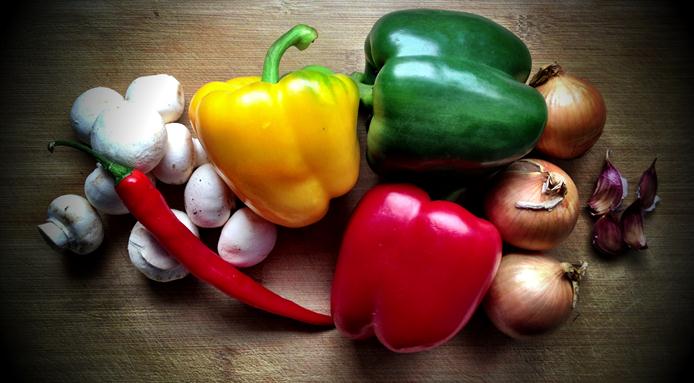
The following combination of puréed and sautéed bell peppers makes an interesting melange that can be used in a wide variety of ways: as a side dish, a topping for other dishes – including vegetables, whole grains and pizzas – or as a combination sauce/garnish for an entrée. The use of yellow, red and orange peppers creates a rich, intense color for the purée.
Golden Pepper Combo

- 2 pounds yellow bell peppers (about 8), stemmed, seeded and quartered
- 1/2 teaspoon chili powder, or to taste
- 1 tsp. extra virgin olive oil
- 2 red bell peppers, cut into 1/4-inch- thick strips
- 2 orange bell peppers, cut into 1/4-inch- thick strips
- 1/4 cup finely-chopped flat-leaf parsley, washed and dried before chopping (optional)
Roast quartered yellow peppers, skin sides down, in preheated broiler (about 2 inches from heat) or in 500 degree oven, placing them skin-side down on rack set on a baking sheet. (Spray rack with cooking oil spray before using. Roasting can also be done on gas burner over open flame, using long-handled tongs.
Roast until tender and skin is wrinkled and darkened or charred.
Transfer peppers to large bowl, cover tightly with foil and let vegetables steam 10 minutes to help loosen skins. Reserve any juice accumulated in bottom of bowl during the steaming. Rub off skins of peppers with hands or a paper towel. (It is not necessary to remove every speck of skin.)
Transfer peppers and reserved juice to blender or food processor and purée with chili powder.
In a large non-stick skillet, heat olive oil over medium-high heat until hot but not smoking. Add red and orange pepper strips and sauté, stirring frequently, until golden brown and tender, about 5 minutes. Season to taste with salt and pepper.
While pepper strips are sautéing, reheat roasted pepper purée over low heat until hot.
Serve puréed and sautéed pepper strips mixed together as an accompaniment for an entrée or as a topping for pizza or focaccias, or over a cooked starchy vegetable like pasta, rice, or couscous. The peppers can also be used as a topping for steamed vegetables like broccoli, cauliflower, or Brussels sprouts. The purée can be used as a sauce for meat, fish or poultry entrées, with the pepper strips as garnish.
Makes 1 cup purée and 2 1/2 cups sautéed pepper strips.
Per quarter-cup serving: 112 calories, 2 g. fat (less than 1 g. saturated fat), 24 g. carbohydrate, 4 g. protein, 4 g. dietary fiber, 8 mg. sodium
The American Institute for Cancer Research (AICR) is the nation’s third largest cancer charity, focusing exclusively on the link between diet and cancer. The Institute provides a wide range of education programs that help millions of Americans learn to make dietary changes for lower cancer risk. AICR also supports innovative research in cancer prevention and treatment at universities, hospitals and research centers across the U.S. The Institute has provided over $62 million in funding for research in diet, nutrition and cancer. AICR’s Web address is www.aicr.org . AICR is a member of the World Cancer Research Fund International.
Disclaimer
The Content is not intended to be a substitute for professional medical advice, diagnosis, or treatment. Always seek the advice of your physician or other qualified health provider with any questions you may have regarding a medical condition.