Now that you have a better idea of why healthy eating is so important to weight loss, here are 10 small food changes you can make that will add up to big changes in your health and waistline.
 Eat no more than two ounces of regular (full-fat) cheese a week.
Why change?
Cheese is one of the top three sources of artery-clogging saturated fat in the average American’s diet. (The other two: beef and milk.) It wasn’t always that way. From 1970 to 1994, we more than doubled our cheese intake, from 11 to 27 pounds per person per year. That’s over half a pound (8 ounces) a week. The biggest jump: mozzarella, the pizza cheese.
Each ounce of full-fat cheese has four to six grams of saturated fat. And an ounce is just 1 1/3 slices of American, 1/4 cup of shredded or a 1 ―-inch cube of hard cheese. It’s about what you’d get in one slice of a medium pizza. If you’re a typical cheese eater and you cut back to two ounces a week, you’ll save almost five grams of saturated fat a day.
How to do it:
- Order your sandwiches, burgers, salads, etc., without cheese.
- Order your pizza with half the cheese (and try mushrooms, onions or other veggies instead of meat)
- If you don’t like the taste of fat-free cheeses, try a reduced-fat brand like Cracker Barrel 1/3 Less Fat, Cabot Light or Borden Low-Fat American.
- Look for “light” mozzarella, which has half the fat of regular. “Part skim” mozzarella only saves one gram of sat fat per ounce.
 Switch from ground beef to veggie burgers, chicken breast or ground turkey.
Why change?
Americans eat too much red meat. And cutting back isn’t just important for your heart. Red meat is also linked to a higher risk of cancers of the colon and prostate. Why single out ground beef? Because it’s almost always fatty, and we eat so much of it. Ground beef’s popularity has surged in recent years because hamburgers are cheaper and quicker to cook than roasts or steaks. In fact, 40 percent of all the beef we consume is now ground. Yet it contributes more than 60 percent of the saturated fat that we get from beef.
Switch from a typical (quarter pound) burger to a veggie or ground turkey breast burger and you’ll dodge more than a third of a day’s saturated fat. And one less burger means one less potential source of E. coli bacteria.
How to do it:
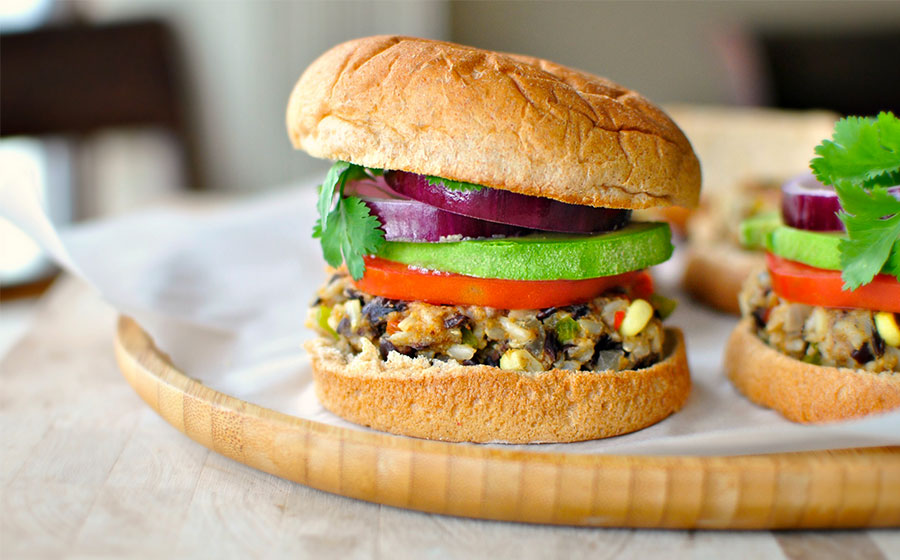
- Try a meatless Boca Burger or Gardenburger, a broiled marinated Portobello mushroom or chicken breast on a crusty roll, or a ground turkey breast.
- For your meatloaf, meatballs, chili, spaghetti sauce, etc., try ground turkey breast or (meatless) Harvest Burgers or Gimme Lean.
- At fast food restaurants, order a grilled chicken sandwich (hold the mayo) or a veggie or chicken wrap or pita. If you have to have a burger, order the smallest one on the menu.
- Don’t be fooled by food labels that sound lean. A “quarter pound” burger made from ground beef that’s labeled “80 % lean” uses up a third of your day’s saturated fat allowance. To be “low-fat” (no more than three grams of fat per serving), ground beef would have to be “97 % lean.”
 Switch from butter or stick margarine to a low-fat tub margarine.
Why change?
According to the manufacturers, about 65 percent of the margarine and butter used at home ends up on bread. What could be simpler than dipping your knife into a lower-fat tub margarine? Margarine is a major source of fat and saturated fat in the average person’s diet. Add in margarine’s artery-clogging trans fat and the trouble is double. For each tablespoon of lower-fat tub margarine you use instead of regular margarine, you save four grams of heart-damaging fat. Use it instead of butter and you save seven grams. That’s a third of a day’s limit in a couple of swipes of the butter knife.
How to do it:
- Switch to a lower-fat tub like Smart Beat, Fleischmann’s Lower Fat or Promise Ultra.
- If you’re stuck on butter, make it a light, whipped brand. You’ll save seven grams of fat per tablespoon, four of them the artery-clogging kind.
- For cooking and baking, low-fat margarines may splatter or make your crusts soggy because they contain more water. If you need a full-fat margarine, try Promise’s new trans-free spread (stick or tub).
 Switch from high-fat hot dogs, sausage, ham, bacon or bologna.

Why change?
Americans are pigging out. Processed meats like hot dogs, sausage, ham and bacon are the second leading source of fats and the fourth leading source of saturated fat in the average American’s diet. They’re also the second biggest supplier of sodium.
A ham sandwich (with mayo) from a typical deli has 670 calories–more than half a day’s fat (40 grams) and saturated fat (12 grams) and nearly a whole day’s sodium (2,200 mg). A BLT is almost as bad. In supermarkets, it’s a snap to find lower-fat processed meats.
How to do it:
- Buy low-fat or fat-free bologna and hot dogs made by Healthy Choice, Oscar Mayer, Hormel and others.
- Try Louis Rich or Oscar Mayer turkey bacon or low-fat ham.
- Try low-fat sausage made by Healthy Choice and others.
 Switch from whole or 2% milk to 1% (low-fat) or skim (fat-free).
Why change?
Milk adds a significant amount of saturated fat and cholesterol to the average person’s diet. One-percent (low-fat) and skim (fat-free) milk aren’t to blame. Whole (3.3 % fat) and 2% (now called “reduced-fat”) make up 75 percent of the milk we consume. Each glass of skim that you drink instead of whole milk saves five grams of sat fat–a quarter of a day’s worth. Switch from a glass of whole to 1% or from 2% to skim and you save three grams of saturated fat. With a daily limit of 20 grams, that’s not trivial.
How to do it:
- Just move on down the dairy case, from the whole or 2% milk to the 1% or skim.
- Close your eyes. Studies show that when blindfolded consumers were tested, nine out of ten said that they liked the taste of either 1% or skim.
 Limit foods with 480 milligrams of sodium or more per serving to one a day.

Why change?
Cutting sodium from 4,000 milligrams to 2,000 milligrams a day would lower average blood pressures by about two points, enough to save more than 10,000 lives a year from heart attacks and strokes. Throwing away your saltshaker isn’t the best way to do it. The lion’s share (75 percent) of the sodium we consume comes from restaurant and processed foods, such as soups, pizza, frozen dinners, lunch meats, hot dogs and ham.
At the supermarket, “Nutrition Facts” labels tell you how much of a day’s sodium a serving contains. Limit foods with more than 480 milligrams (20 percent of the Daily Value) per serving to just one a day.
Unfortunately, restaurant foods are loaded with sodium and not loaded with labels. Even healthier restaurant meals, such as McDonald’s Grilled Chicken Deluxe or a serving of spaghetti with tomato sauce, have more than 1,000 milligrams of sodium. And just about any Chinese or Mexican restaurant entree hits 2,000 milligrams.
How to do it:
- Read labels. Look for foods with a little sodium as possible.
- Don’t judge sodium by taste. At McDonald’s, the French fries have less sodium than any of the sandwiches. Some salty foods, such as potato chips, have no more sodium than breakfast cereals or bread.
- Buy healthy versions of salt-laden foods: “Healthy” can’t appear on the label if the food contains more than 480 milligrams of sodium per serving.
 Eat at least three servings of vegetables at dinner each night and two servings of fruit as snacks each day.
Why Change?
Heart disease, stroke, blindness (caused by degeneration of the retina), cancers of the lung, colon, stomach, esophagus, mouth and throat and possibly the bladder and cervix. How many reasons do you need?
Experts recommend four or five servings of vegetables and four or five servings of fruit a day. Yet the average American is stuck at about three vegetables–one of them white potatoes and a measly 1 2/3 fruits. Amazingly, on any given day, half of all Americans eat no fruit at all. For many people, the easiest way to get enough is to have three servings of vegetables at dinner and squeeze in a couple of servings of fruits as snacks.
How to do it:
- It’s easy to reach your goal, because servings are small: half a cup of most vegetables, one cup of salad, and one piece of most fruit.
- Sauté spinach, broccoli, etc., in a little olive oil and garlic.
- Steam or microwave Brussels sprouts, green beans, asparagus or broccoli and coat with lemon juice, mustard and a touch of oil.
- Sauté sliced onion, peppers and mushrooms, and serve over pasta or stuff in a flour tortilla, a toasted whole-wheat pita or a four-egg (one yolk) omelet.
- Bake a sweet potato until it’s soft and caramelized inside.
- Keep handy bags of frozen fruit or vegetables in the freezer. Take fresh or dried fruit to work.
- Stick with whole fruit. Juice isn’t bad, but whole fruit has more fiber and fewer calories.
 Eat at least three servings of whole grains each day.
Why change?
You get more fiber, vitamin E, vitamin B-6, magnesium, zinc, copper, manganese and potassium in whole wheat than in refined enriched white flour. You may also get a lower risk of heart disease, diverticulosis, cancer and diabetes.
The fiber in whole grains also helps prevent constipation (no trivial matter in a nation that spends more than $600 million a year on laxatives). Yet the average American still consumes just 12 grams of fiber a day-much less than the 20 to 30 grams recommended by the National Cancer Institute. Americans get more fiber from bread than from any other food. We could get even more. At most, 20 percent of the bread sold in the United States is whole grain.
How to do it:
- A serving of bread is just one slice. So every sandwich gives you two servings.
- Buy whole wheat instead of white, wheat, multi-grain, bran, French, Italian, rye or pumpernickel (they’re mostly white flour). Second best are breads with whole wheat listed before any other flour.
- Try a whole grain breakfast cereal, such as shredded wheat, Grape-Nuts, Cheerios Wheaties or Total. Most other cereals (corn flakes, Special K, Rice Krispies and Product 19, for example) aren’t whole grain.
- Try bran cereals like raisin bran, All-Bran or 100% Bran. Technically, they’re not whole grain, but they supply the part of the grain we often lose. Most bran breads have too little bran to matter.
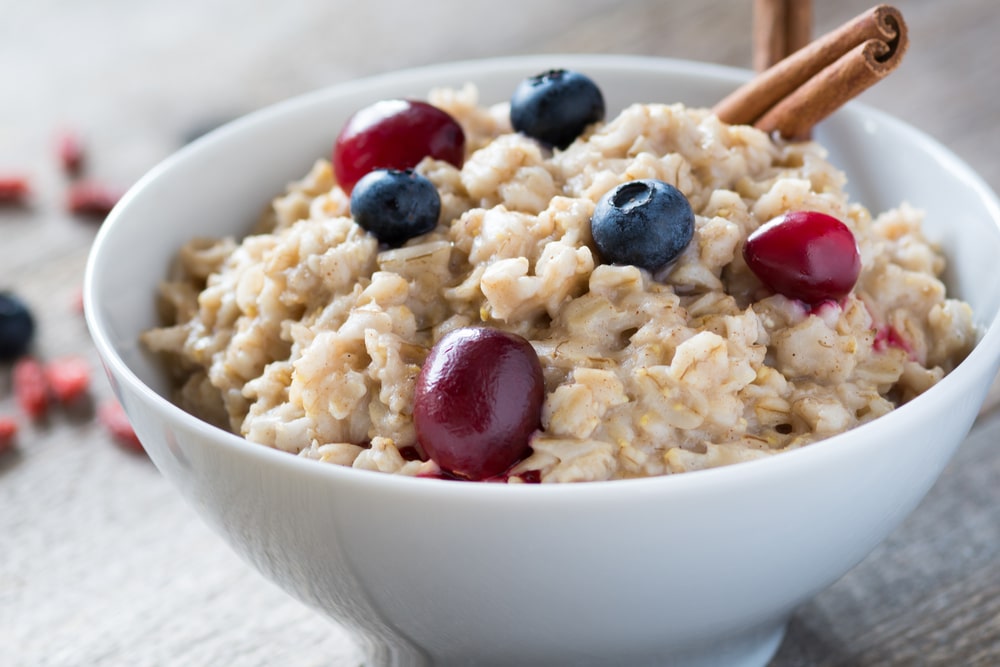
- Try hot cereals like oatmeal, Wheatgerm, Ralston or Roman Meal.
- Try whole-grain crackers like Triscuits or Finn Crisps.
- Experiment with whole-wheat pasta, couscous, kasha or brown rice.
 Eat at least four servings of beans, lentils or peas each week.
Why change?
Like other vegetables, beans, lentils and peas have fiber and phyto-chemicals, which may cut the risk of cancer, heart disease, diverticulosis, diabetes and constipation.
Unlike other vegetables, beans, lentils and peas can step in for meat, poultry, eggs or other protein foods. Meats, etc., can raise the risk of heart disease and possibly cancer. The average American eats less than one cup of beans a week. It’s easy to double that to at least four half-cup servings.
How to do it
- Try bean dips with low-fat tortilla chips.
- Add canned (rinsed) garbanzo beans to your salad.
- Try lentil, split pea or bean soup (plus a roll and salad) for lunch.
- Heat some drained, rinsed black beans and serve over rice, with salsa on top.
- Try Middle Eastern hummus (made of chickpeas) on a sandwich or as a dip; Indian dal (made of split peas or lentils) as a side dish; or Mexican bean burritos.
 Switch from soft drinks to seltzer, orange juice or skim milk.

Why Change?
In 1976, soft drinks passed milk to become the most popular beverage in America. They haven’t looked back. The average American now consumes more than 50 gallons of soda a year. That’s nearly double the beer, more than double the milk or coffee and six times the fruit juice and tea we drink. To make matters worse, more than 75 percent of the soda we chug is the empty-calorie, heavily sweetened, non-diet variety. Each 12-ounce can of regular soda has about ten teaspoons of sugar, 160 calories–and nothing else. Instead of low-fat milk that can help prevent osteoporosis, or fruit juice that may help prevent cancer, the average American blows 180 calories a day on “liquid candy.”
How to do it:
- If you want to cut calories, drink flavored (or regular) seltzer or sparkling water. Diet soft drinks are also low-cal, but uncertainty about the safety of artificial sweeteners may spoil their flavor.
- If you have calories to spare, drink fruit juice. Orange leads the pack, with vitamin C folic acid, potassium, magnesium and vitamin B-1. Grapefruit is a good second, while the omnipresent grape and apple belong at the bottom of the nutritional barrel.
- Make your own healthy soft drink. Mix OJ and seltzer together.
Disclaimer
The Content is not intended to be a substitute for professional medical advice, diagnosis, or treatment. Always seek the advice of your physician or other qualified health provider with any questions you may have regarding a medical condition.