
A yoga research on 126 women revealed that, the ladies taking yoga exercise experienced a 12% betterment in physical weakness, physical functioning, and quality of living unlike those in the program who didn’t take the yoga classes. Yoga lessons had been shown to enhance the stress degrees and sense of well-being of breast cancer patients.
Benefits of yoga for breast cancer patients
- Yoga, without a doubt, is helpful to patients coping with breast cancer, particularly in fighting side effects from cancer treatment. It enables them to handle the lingering unwanted effects of surgical procedures, chemotherapy and radiation.
- After doing yoga exercise, the patients have more energy
- Fewer daytime sleepiness
- Improved physical functioning
- Superior overall quality of life.
- On a quality-of-life score, the women in the yoga group improved their social well-being scores by more than three points on average.
- The women feel more relaxed and the breathing exercises seem to be especially helpful for dealing with nausea.
In a randomized controlled trial on” Effects of yoga on symptom management in breast cancer patients” a significant positive correlation was observed between physical and psychological distress and fatigue, nausea and vomiting, pain, dyspnea, insomnia, appetite loss, and constipation. A significant negative correlation was observed between the activity level and fatigue, nausea and vomiting, pain, dyspnea, insomnia, and appetite loss.
Yoga for Patients:
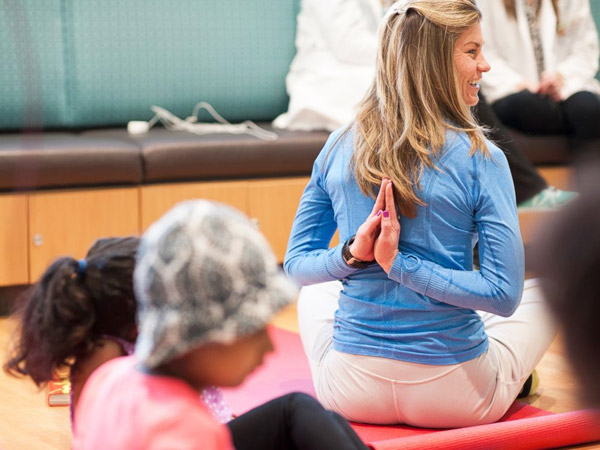
The use of yoga for breast cancer is not an alternative treatment or solution to cancer, but it is an effective complimentary therapy and rehabilitative treatment. A short program of yoga can offer tremendous effect because of the meditative practices, breathing exercises, and stretching poses and movements.
The use of a transcendental meditation technique is helpful for breast cancer patients. It is a simple, natural, effortless procedure practiced 20 minutes twice each day while sitting comfortably with the eyes closed. It’s not a religion, philosophy, or lifestyle. The Transcendental Meditation technique allows your mind to settle inward beyond thought to experience the source of thought — pure awareness, also known as transcendental consciousness, or the unified field. This is the most silent and peaceful level of consciousness — your innermost Self. In this state of restful alertness, your brain functions with significantly greater coherence and your body gains deep rest.
The transcendental meditation technique reduces stress and improves emotional well-being and mental health in older breast cancer patients. |
Women with cancer undergo extreme physical, mental and emotional stress and this stress weakens the immune system. In an effort to reduce the toll this takes on their health, yoga is an effective method to reduce stress by using a series of postures and controlled breathing exercises.
Yoga for breast cancer survivors
Try to bring as much balance and freedom of movement to your collarbones, shoulder blades, and humerus as possible; the head of your arm bone. Learn to move your shoulder girdle through its complete range of movement

- Urdhva Hastasana (Upward Salute) – Remember to keep your arms shoulder width apart and push your shoulder blades away from each other.
- Urdhva Namaskarasana (Upward Prayer Position) – This pose will give a better elevation to your shoulder girdle and an external rotation to your upper arm.
- Paschima Namaskarasana (Prayer Position behind your back) – This pose will help with internal rotation of your arm.
- Gomukhasana (Cow Face Pose) – This pose helps in external rotation, elevation, and internal rotation of your arms. Once you clasp you hands behind your head, your arm bones, automatically, move or adduct toward each other.
- Garudasana (Eagle Pose) – This pose demands that both your arms move into full adduction and that your shoulder blades go into full protraction. This will help to open up your shoulder blades.
To build strength in your upper body, pay attention to the position of your arms in standing poses such as Virabhadrasana I, II, and III (Warrior Poses I, II, and III) and Trikonasana (Triangle Pose). This will call for holding your arms out in space against the force of gravity.
Wait before doing poses that are weight-bearing on the upper body. Urdhva Dhanurasana (Upward Bow Pose), Dwi Pada Viparita Dandasana (Two-Legged Inverted Staff Pose), and Pincha Mayurasana (Forearm Balance) can be problematic until healing occurs and strength returns.
Most importantly, be very gentle. Start on the path of recovery with slow, aware steps.
Yoga, without a doubt, is helpful to patients coping with breast cancer, particularly in fighting side effects from cancer treatment. Nevertheless, whether certain types of yoga or selected poses tend to be more good for breast cancer patients is an open concern. The results suggest beneficial effects with yoga intervention in managing cancer- and treatment-related symptoms in breast cancer patients.
Disclaimer
The Content is not intended to be a substitute for professional medical advice, diagnosis, or treatment. Always seek the advice of your physician or other qualified health provider with any questions you may have regarding a medical condition.