Regular practice of different yoga poses increases the RBC production as well as purifies the blood.
Anemia is one of the common conditions affecting human being especially women around the world. In general anemia is considered to be a condition characterized by lack of blood. But medically anemia can be referred as a condition where the iron content or hemoglobin of blood decreases below the normal level.
Yoga can help in increasing RBC count in two ways. One is by making use of breathing exercises and the other is by doing special asanas.
Breathing exercises like Ujjayi, Suryabhedana, Anuloma Viloma and Kapalbhatti increases circulation of blood and improve functioning of the entire circulatory system.
According to various yoga gurus anemic patients should start their yoga session with Pranayama followed by Trikonasana. Other yoga poses for anaemia are Sarvangasana, Paschomittanasana, Uttanpadasana, Viparita-karani-mudra and various shavasanas.
Breathing Exercises:
Ujjayi or The “loud breathing” consists of drawing air in through both nostrils with the glottis held partially closed. This partial closure of the glottis produces a sound like that heard in sobbing, except that it is continuous and unbroken. Ujjayi breathing has many variations. For example, we can breathe in through the throat, then completely close one nostril and breathe out through the other nostril, which is only partly closed. This technique is called an anuloma ujjayi. In a pranayama technique called viloma ujjayi, we breathe in through the nostril and breathe out through the throat. This technique is used to lengthen the inhalation. In ujjayi pranayama it is important to follow this rule: when we regulate the breath through the nostril, we never breathe through the throat at the same time.
Suryabhedana Pranayama
- Sit in Padmasana or Sidhasana.
- Inhale slowly and deeply through your right nostril, your left nostril shut with your ring finger and little finger.
- Next, close your right nostril with the thumb of your right hand. and then exhale through your left nostril, keeping your right nostril closed.
- Repeat the act 5 – 10 times.
Anuloma Viloma
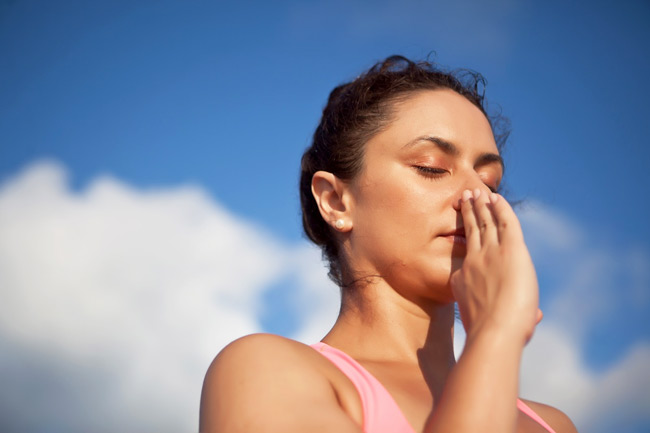
In Anuloma Viloma, you adopt the Vishnu Mudra with your right hand to close your nostrils. Tuck your index and middle finger into your nose. Place the thumb by your right nostril and your ring and little fingers by your left.
- Inhale through the left nostril, closing the right with the thumb, to the count of four.
- Hold the breath, closing both nostrils, to the count of sixteen.
- Exhale through the right nostril, closing the left with the ring and little fingers, to the count of eight.
- Inhale through the right nostril, keeping the left nostril closed with the ring and little fingers, to the count of four.
- Hold the breath, closing both nostrils, to the count of sixteen.
- Exhale through the left nostril, keeping the right closed with the thumb, to the count of eight
Kapal bhatti
Kapal Bhatti / Kapal Bharti controls breathing and increases oxygen level in the blood, thus increasing body capacity and the lung capacity. It also detoxifies the body of toxins. Kapal Bhatti Yoga Exercise has a big effects on the body body weight and helps weight control.
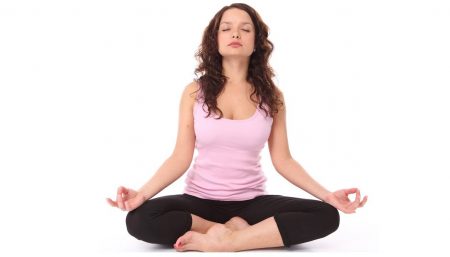
- Take lotus Yogic position.
- Take short breaths in and out with force. Try and do as many as possible without any part of your body feeling stressed.
- When you begin to feel pain in back or spine take rest.
- Repeat this breathing for at least 4-5 times for 15 minutes a day.
As you practice it daily, you will start to enjoy the rhythm established between the abdomen and the stomach.
Other yoga poses for anemia
Sarvangasana
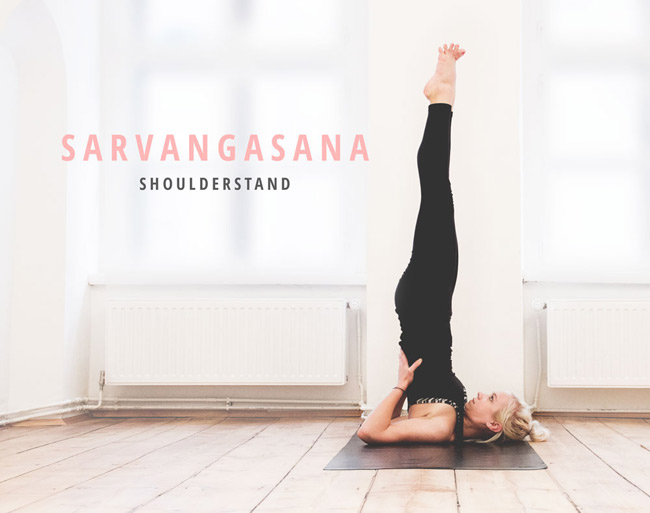
Sarvangasana helps promote good circulation, as it directs the flow of the entire lower body towards the heart.
- Lie down flat on the floor, on your back, palms by your side facing
- Exhale and lift your legs up 30, then 60, then 90 and then around 130 degrees so they are extended behind your head.
- Stay in this position, breathing normally, for a few seconds.
- Now, gradually, exhale again, and straighten your legs up to 90 degrees, lifting your buttocks as well. Support the back of your trunk with your palms, keeping elbows on the floor. Gradually, walk your hands towards your shoulder blades, as you lift your body higher.
- Your elbows may tend to move outwards. Bring them in, so they are straight in line with your shoulders.
- You will notice that your hips tend to jut out backwards, while your feet tend to come forward over the head. This is not the right way to do it. Work at it so your body is in a straight line. Your hips, feet and shoulders should be aligned, so push your feet back and bring your hips and tailbone forward. Remember, this exercise is not as much about effort as it is about balance.
- Lift your body as high up as possible. Sarvangasana is a shoulder stand, so your body should be resting on your shoulders and not on your back.
- Hold this position for as long as possible.
- Remember to exhale while lifting your body up, but once your body is up, you can breathe normally. There is no need to hold your breath.
- Time yourself, so you can see how long you can remain in this position. The next time, try and balance your body for a little longer.
Paschimottanasana
This looks simple, but is in fact one of the most difficult asanas to do.
- Sit on a mat with your legs stretched straight out in front of you.
- Breathe OUT. Slowly bend forward, trying to touch your feet. Don’t bend your knees.
- If you feel a constriction while bending, straighten up slightly and then try and bend further forward.
- Don’t push yourself too hard. You may not be able to get very far if you are a beginner. Don’t get impatient and push yourself too hard. You will only injure your muscles. Just bend forward as far as you can go.
Uttanpadasana
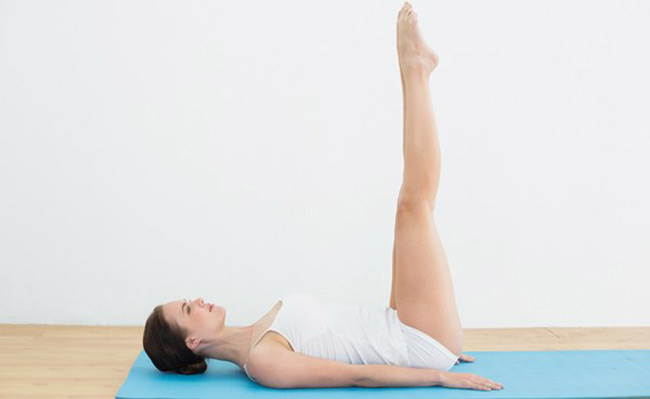
Uttanpadasana reduces the stomach, strengthens the thighs, waist, hips, back and spinal cord.
- Lie down in Shavasana, legs together, hands by the side of your body, palms facing the floor.
- Now start raising your legs and hold them at 30 degrees. Continue normal deep breathing.
- With right leg up, the left foot starts traveling down slowly, till the left heel touches the floor.
- Start raising your left foot till it joins your right foot at 30 degrees. Now left leg remains up and right foot starts traveling down till the right heel touches the floor. Relax.
- Now start raising your right foot till it joins your left foot, knees straight toes out stretched and slowly bring both feet down till both heels touch the floor and relax.
Note : There should be no jerk at this point.
Viparita-karani-mudra
Redirects the flow of blood from feet to heart with pull of gravity for detoxification
- Come into the pose from Salamba Sarvangasana
- Bending at the hips, bring the feet overhead.
- Keeping the chest wide and the shoulders grounded, drop the hips down behind you.
- Slide the hands down the back towards the buttocks for support.
- Bring the legs back to vertical if possible.
- Hold the pose for 20 to 30 seconds.
- Either continue on with other Sarvangasana variations or return to Salamba Sarvangasana and come down out of the pose, using the arms to control yourself as you roll down through the back.
- Slide off the blankets towards the head until the shoulders come to the floor and the hips are raised on the blankets. Rest there for a few breaths.
- Roll over onto the right side and press yourself up.
Shavasana
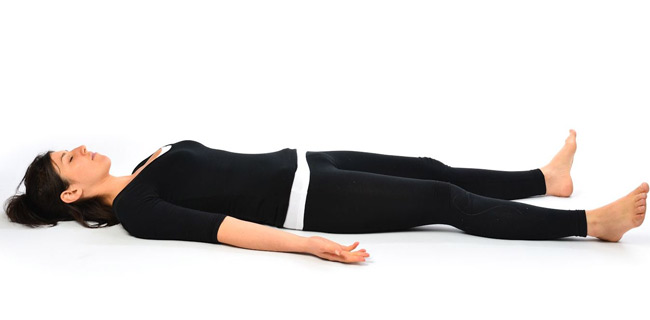
Corpse Pose is practiced at beginning and end of every yoga session. This makes you energetic to enter the yoga session in the beginning. At the end of the session, Shavasana would get your away from all the fatigue that your doing of other postures might have generated.
- Get your yoga mat fully unfolded and then lie just flat on your back. Legs would be straight and together but not touching each other. The position of the arms would be also straight with palms facing the ceiling.
- Do relax all the facial muscles and start taking breaths slowly and deeply. The closed eyes help in concentrating on the posture.
- Relaxation is the prime goal of Savasana. So start relaxing your body. When we pay attention to any of our limb, that limb feels some rest. So start relaxing from the head area and then travel through the whole body downward.
- Once you are aware of whole of your body, you would be in Corpse Pose in full. Remaining in this posture for five to ten minutes would be better. You can prolong this posture as long as you wish, as this asanas would never give your fatigue.
In addition to practicing yoga, eat lots of citrus fruits and green vegetables. Oranges, blueberries, strawberries, lemon are all excellent source of vitamin C. This vitamin helps in boosting the immune system thus helps in development of RBCs.
Disclaimer
The Content is not intended to be a substitute for professional medical advice, diagnosis, or treatment. Always seek the advice of your physician or other qualified health provider with any questions you may have regarding a medical condition.