
Andrea Oddos is a Doctor of Psychology and Cognitive Neuroscience, as well as a licensed Neuropsychologist. Her doctoral research focused on the electroencephalographic correlates of well-being enhancement induced by different non-ordinary states of consciousness, including Ericksonian hypnosis, mindfulness meditation, and MOSAIC therapy. Her work explored how these therapeutic approaches influence brain regions strongly associated with markers of psychological well-being.
Alongside her academic and clinical career, Andrea is deeply committed to promoting mental health awareness and evidence-based approaches to psychological well-being. She is also highly active in sports and maintains a lifestyle centered around fitness, running, and regular mindfulness meditation practice.
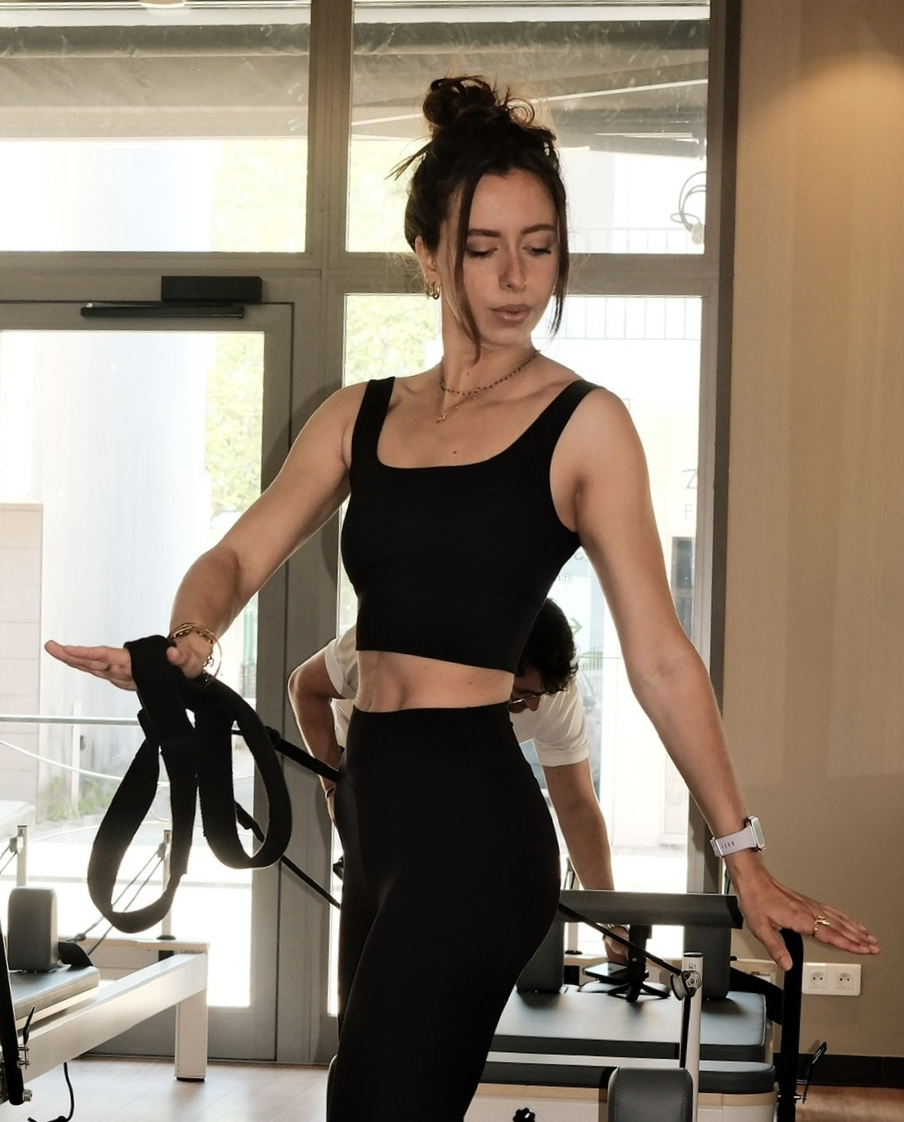
In 2026, Andrea was awarded the title of Miss Landes-Béarn as part of the official Miss France competition. She is also the creator and host of the podcast “Nuances,” where she discusses topics related to psychology, cognitive biases, mental health, and personal development, with the aim of making scientific knowledge accessible to a broader audience.
Women Fitness President Ms. Namita Nayyar catches up with Andrea Oddos – an exceptionally talented and accomplished Doctor of Psychology and Cognitive Neuroscience, licensed Neuropsychologist and winner of beauty pageant ‘Miss Landes-Béarn’. Here she talks about Ericksonian hypnosis, mindfulness meditation, and MOSAIC therapy, her beauty pageant achievement and her success journey.
Namita Nayyar:
Your doctoral research specifically looked at the EEG correlates of well-being during hypnosis, meditation, and MOSAIC therapy. If you had to describe the “brainprint” of well-being to a layperson, what does it actually look like on a screen?
Andrea Oddos:
The brain print of well-being is not a single “happiness spot” in the brain. What we tend to see is a brain that is well balanced and well-coordinated.
In EEG, one marker often associated with well-being is slightly greater activity in the left frontal brain than in the right, a pattern linked to positive engagement with life rather than a focus on threats or worries.
More broadly, brain imaging suggests that well-being emerges when different brain networks work together efficiently. I often compare it to an orchestra: well-being is not one instrument playing louder, but many instruments playing in harmony.
Namita Nayyar:
Why did you choose these three specific modalities (Ericksonian hypnosis, mindfulness, and MOSAIC) for your research? What makes each of them uniquely effective in reshaping neural pathways, and how do they complement each other?
Andrea Oddos:
I chose Ericksonian hypnosis, mindfulness meditation, and MOSAIC therapy because they share a common humanistic philosophy: they focus on people’s inner resources, self-awareness, and capacity for change.
From a research perspective, they are particularly interesting because they can induce non-ordinary states of consciousness that may help people relate differently to their thoughts, emotions, and experiences. Rather than “rewiring” the brain in a simplistic sense, these approaches appear to mobilize and modulate brain networks involved in attention, emotional regulation, and self-perception.
I see them as complementary pathways toward well-being: mindfulness cultivates present-moment awareness, hypnosis facilitates access to personal resources and imagination, and MOSAIC helps people connect with desired internal states and solutions. Together, they offer different ways of fostering psychological flexibility, balance, and well-being.
Namita Nayyar:
How has your research changed the way you practice as a Neuropsychologist today? Do you prescribe “brain training” differently for a patient with anxiety versus a patient with depression based on what you discovered?
Andrea Oddos:
My research has reinforced the idea that there is no single neural pathway to well-being. Two people may present with similar symptoms, yet the underlying cognitive, emotional, and neurophysiological processes can be quite different.
As a neuropsychologist, this has made me less focused on symptoms alone and more interested in understanding the person’s patterns of attention, emotional regulation, and relationship to their internal experiences.
So, I don’t think in terms of applying a fixed “brain training” protocol for anxiety versus depression. Rather, I try to identify which capacities need the most support. Someone with anxiety may benefit from approaches that help reduce hyper vigilance and cultivate a greater sense of safety, while someone with depression may need support reconnecting with motivation, engagement, and positive experiences.
What my research ultimately taught me is that the goal is not simply to change brain activity, but to help people develop greater flexibility. When people become more flexible in how they relate to their thoughts, emotions, and experiences, well-being tends to follow.
Namita Nayyar:
As the host of “Nuances”, you tackle cognitive biases. What is the single most destructive cognitive bias you see affecting people’s mental health in 2026, and what is the neurological trick to override it?
Andrea Oddos:
If I had to choose one cognitive bias that has the greatest impact on mental health today, I would probably say the negativity bias. From an evolutionary perspective, our brains are naturally wired to pay more attention to threats than to opportunities. That tendency helped our ancestors survive, but in today’s world it can lead us to overestimate risks, dwell on failures, and overlook positive experiences.
What makes this bias so powerful is that it often feels like reality rather than a bias. People may genuinely believe they are seeing things objectively, when in fact their attention is selectively drawn toward what is wrong, uncertain, or threatening.
The good news is that we can counterbalance it. The “neurological trick,” if there is one, is not to force positive thinking, but to deliberately train attention. Practices such as mindfulness or simply taking time to notice positive experiences help the brain give more weight to information that it would otherwise ignore.
In other words, mental well-being is not about seeing the world through rose-colored glasses. It’s about seeing the full picture rather than only the negative parts of it.
Namita Nayyar:
You started the podcast “Nuances” to make science accessible. What is the biggest misconception about the brain that you are constantly debunking for your listeners?
Andrea Oddos:
One of the biggest misconceptions I often debunk is the idea that the brain is fixed, that our personality, emotional patterns, or difficulties are hardwired and cannot really change.
What neuroscience has shown over the past decades is quite the opposite. The brain is plastic, meaning it continuously adapts throughout life. This doesn’t mean we can become anything we want overnight, but it does mean that our experiences, habits, relationships, and even the way we direct our attention can gradually shape how the brain functions.
That’s why I find the concept of neuroplasticity so powerful. It offers a scientific basis for hope. It reminds us that change is possible, not because of wishful thinking, but because the brain itself is designed to learn, adapt, and reorganize.
If there’s one message I hope listeners take away from “Nuances”, it’s that understanding the brain should not make us feel trapped by our past, it should help us appreciate our capacity to evolve.
Namita Nayyar:
As a scientist, you speak in data; as a host, you speak in stories. How do you translate complex neuropsychological concepts into actionable advice without losing the scientific integrity?
Andrea Oddos:
I see stories and data as complementary rather than opposing forces. The challenge is to use stories as illustrations, not as evidence. When I communicate complex neuropsychological concepts, I try to start with the science, and then translate it into simple language and practical examples. My goal is not to oversimplify, but to make the underlying principles understandable and useful. The key is to focus on evidence-based principles that people can apply in their daily lives, rather than offering quick fixes or one-size-fits-all solutions.
I also think it’s important to be transparent about uncertainty. In science, we rarely deal in absolutes. So rather than saying, “this is how the brain works,” I prefer to say, “this is what the current evidence suggests.”
Namita Nayyar:
Is there a specific episode or guest that fundamentally changed your own perspective on mental health or personal development?
Andrea Oddos:
Because the podcast is still very new, I wouldn’t say there has been a single episode that fundamentally changed my perspective.
What has already struck me, however, is how often very different conversations converge on the same idea: mental health is rarely about fixing a single problem. It’s usually about learning to relate differently to ourselves, our emotions, and our experiences.
As a scientist, I tend to think in terms of mechanisms and evidence. As a host, I’m constantly reminded that behind every concept or dataset, there is a human story. The podcast has reinforced my belief that science is most valuable when it helps us better understand the complexity of human experience, rather than reducing it to simple explanations.

Namita Nayyar:
Winning the title of Miss Landes-Béarn is a massive achievement. From a neurological perspective, how did you prepare your brain for the stress, scrutiny, and pressure of a major competition like Miss France?
Andrea Oddos:
I think the most important thing was not trying to eliminate stress, but learning to regulate my relationship with it. Events like Miss France involve a high level of uncertainty, evaluation, and social scrutiny; three things that naturally activate our threat-detection systems. The challenge is not to stop feeling stress, but to prevent it from taking over.
What my research has taught me is that attention is one of our most valuable mental resources. Under pressure, where we place our attention often matters more than the pressure itself. For me, practices such as mindfulness and intentional training were valuable because they helped me repeatedly bring my attention back to what I could control: the present moment, my preparation, and my values, rather than the outcome itself.
In a way, preparing for Miss France was less about building confidence and more about building psychological flexibility.
Full Interview is Continued on Next Page
This interview is exclusive and taken by Namita Nayyar, President of womenfitness.net, and should not be reproduced, copied, or hosted in part or in full anywhere without express permission.
All Written Content Copyright © 2026 Women Fitness
Disclaimer
The Content is not intended to be a substitute for professional medical advice, diagnosis, or treatment. Always seek the advice of your physician or other qualified health provider with any questions you may have regarding a medical condition.
