
Namita Nayyar:
You’ve mentioned that a woman can weigh more and still be slim, athletic, and healthy. Do you still weigh yourself today? If so, how has your relationship with the number on the scale changed?
Audrey Martin:
Yes, I still weigh myself sometimes, but my relationship with the scale completely changed.
Today I understand that body weight depends on so many factors:
- Muscle mass
- Bone density
- Hormones
- Water retention
- Height
- Inflammation
- Stress
- Sleep quality
- Genetics
- Body composition
Two women can weigh exactly the same and look completely different. One thing I always try to show online is that a woman can weigh much more than society expects and still be lean, feminine, athletic and beautiful.
I often post old videos and photos of myself when I weighed around 74–77 kg because at that time I was extremely muscular, strong and healthy. Most people are shocked when they realize that because visually they assume much lower numbers.
That’s exactly why I think people need to stop obsessing over the scale and start understanding the body more deeply.
Namita Nayyar:
Your content contrasts fearless adventure (skydiving, extreme sports) with a very feminine aesthetic (self-care, appearance, elegance). Why is it important for you to show that strength and femininity can coexist without contradiction?
Audrey Martin:
I love showing that femininity and strength can coexist because I think society still tries to separate those things too much. There’s still this stereotype that feminine women should only do “soft” activities while sports like boxing, scuba diving, skydiving or adventure are somehow masculine. I completely disagree with that mentality.
I love beauty, elegance, skincare, fashion and dressing femininely while also loving boxing, adrenaline, adventure and physical challenges. I do extreme sports because they make me feel alive. They force me to overcome fear and prove to myself that I’m stronger than I thought. Every time I face something difficult, my confidence grows because I realize I’m capable of more than I imagined. And I think women should never feel forced to choose between softness and power.
Namita Nayyar:
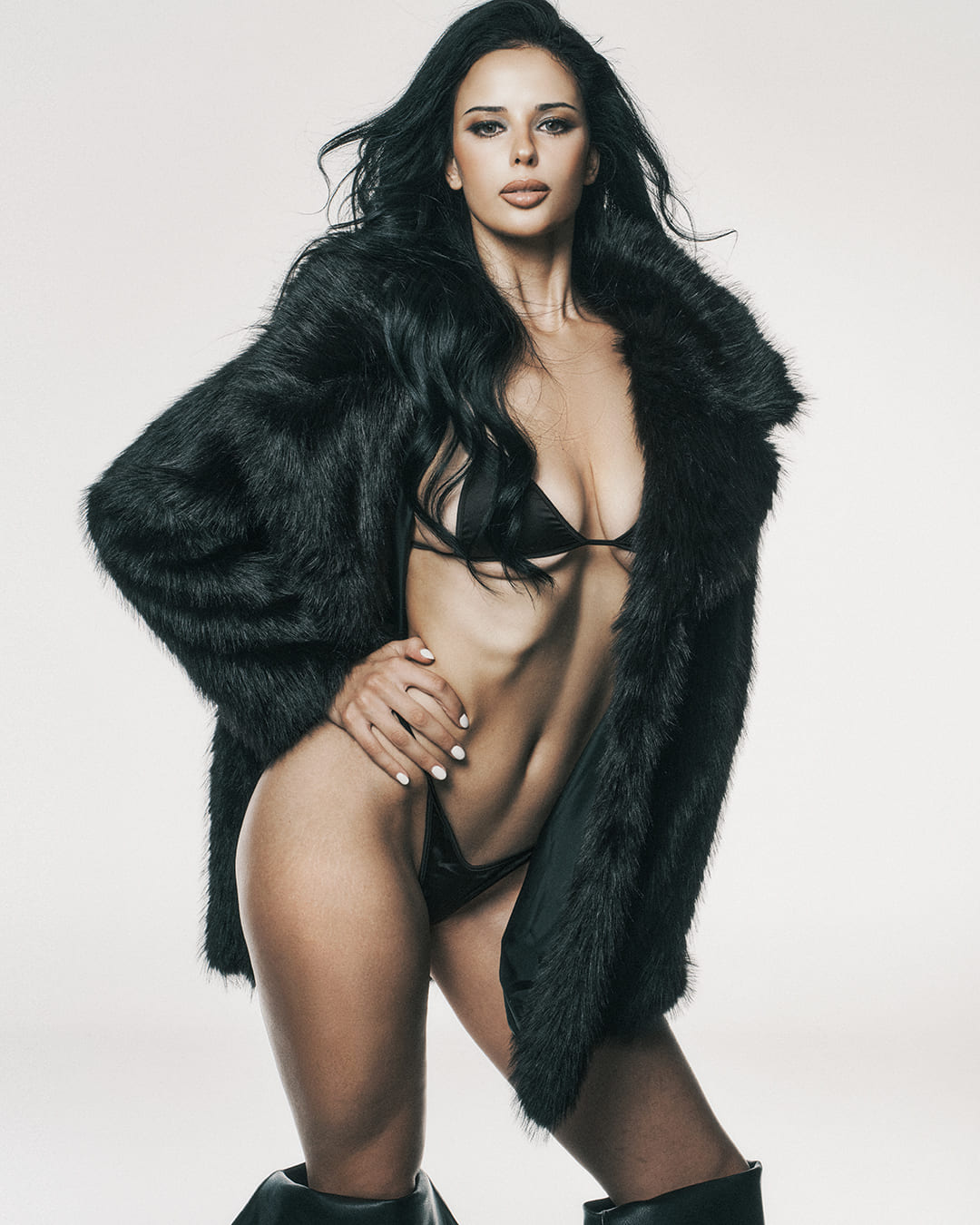
Given your history with food disorders, how do you approach nutrition now? Do you follow a specific dietary structure (e.g., intuitive eating, macro tracking, Mediterranean diet) – and what does a typical day of eating look like for you?
Audrey Martin:
Today my relationship with food is much healthier and more balanced. For many years I counted calories very strictly, and honestly, I don’t think calorie tracking itself is unhealthy. It can actually be a very useful tool when used correctly because it helps people understand nutrition and reach physical goals more efficiently.
The problem starts when discipline turns into obsession.
There was a period where I became extremely obsessive. I would remove extra blueberries or grains of rice from my plate because my meal weighted 205g instead of 200g. That is no longer healthy.
Today I focus much more on balance and intuition. I still understand calories and macronutrients very deeply because I’ve studied nutrition for over ten years at this point, but now I try to approach food in a healthier and more flexible way. I no longer plan every single meal obsessively.
Usually I simply buy fresh and healthy ingredients two or three times per week and naturally create balanced meals throughout the day:
- Enough protein
- Vegetables
- Fruits
- Healthy fats
- Carbohydrates
- Fiber
Because of my years in South Korea, my diet became a mix between Mediterranean and Korean cuisine.
Living in Korea also changed my relationship with overeating because the culture there generally focuses a lot on balance, moderation and consistency.
Namita Nayyar:
Living in South Korea, known for its innovative skincare, what is your current skincare routine? Are there any K-beauty products or rituals you swear by?
Audrey Martin:
Living in South Korea completely transformed my relationship with skincare and self-care.
Before moving there, I never paid much attention to skincare. But Korean beauty culture taught me that taking care of your skin is not about perfection — it’s about consistency, prevention and self-respect.
My routine is relatively simple but very hydration-focused.
During the day I usually do:
- Double cleansing
- Toner
- Vitamin C serum
- Moisturizer
- Sunscreen every single day
Some of my favorite Korean skincare brands are:
- Round Lab — especially their famous sunscreen, which I always bring back from Korea for myself and my family
- Torriden — I love their hyaluronic acid hydration line
- Manyo — especially the Pure Cleansing Oil and cleansing foam
- Sulwhasoo — for more nourishing and luxurious skincare
- Aestura — especially for barrier repair and hydration
- Centella-based products because they calm and repair my skin so well
- COSRX — which I think is one of the best Korean brands for simple but effective skincare.
Korea also made me fascinated by aesthetic clinics and non-surgical treatments because their technology is incredibly advanced.
Some of the most famous Korean aesthetic treatments I became interested in include:
- Rejuran — the famous “salmon DNA” treatment for collagen and skin healing
- Ultherapy — for lifting and tightening
- Shurink — ultrasound lifting treatment
- Pico laser treatments — for pigmentation and skin tone
- Skin Botox — often used in Korea for pore tightening and smoother skin texture.
What I love most about Korean beauty culture is that it focuses on healthy-looking skin and natural maintenance rather than dramatic changes.
Namita Nayyar:
With all the travel, extreme climates (Arctic to Amazon), surfing and swimming, how do you maintain your hair health? Do you have a specific routine or product that protects it?
Audrey Martin:
Honestly, my hair is probably the area where I’m least disciplined. Because I train, swim and sweat constantly, I wash my hair very often and sometimes I’m honestly too tired to care for it perfectly. There are definitely nights where I come home exhausted from the gym or swimming and accidentally sleep with wet hair, which I know is terrible.
Most of my favorite products are actually Japanese and Korean. I love Dr. FORHAIR from Korea, especially for scalp care, and Japanese brands like Fino and &Honey for hydration and repair. Lately I also became interested in herbal scalp treatments and natural remedies for hair growth that I discovered while living in Korea.
I’m definitely trying to become better at taking care of my hair because constant travel, chlorine, stress and heat styling can damage it a lot over time.
Namita Nayyar:
If you could sit down with your 14-year-old self, the one who first developed anorexia, what would you say to her – and what would you physically show her about your life today?
Audrey Martin:
If I could sit down with my 14-year-old self, the first thing I would tell her is: everything will eventually be okay.
I honestly don’t regret the difficult parts of my life because, as painful as they were, they shaped me into the person I became today.
I grew up without a father, and my mother worked constantly to support three children, so many things in life I had to learn completely on my own. Nobody really taught me how to regulate emotions, make healthy decisions or deal with difficult situations. So many times in life, I acted first and understood the consequences later.
Because of that, I don’t hate my younger self for making mistakes. I would never tell her to stop trying things or protect her from every painful experience because I genuinely believe people learn through experience.
I would simply sit next to her and say:
“If you believe in something, do it. You will make mistakes. You will suffer. You will sometimes feel lost. But little by little, you will become stronger and learn how to handle life.” I wouldn’t even show her who she becomes in the future because part of growth does not know whether things will work out or not.
And honestly, even today I still make mistakes sometimes. But that’s life. I don’t want a perfect life without mistakes. I want a life where I continue evolving, learning and becoming better.
Namita Nayyar:
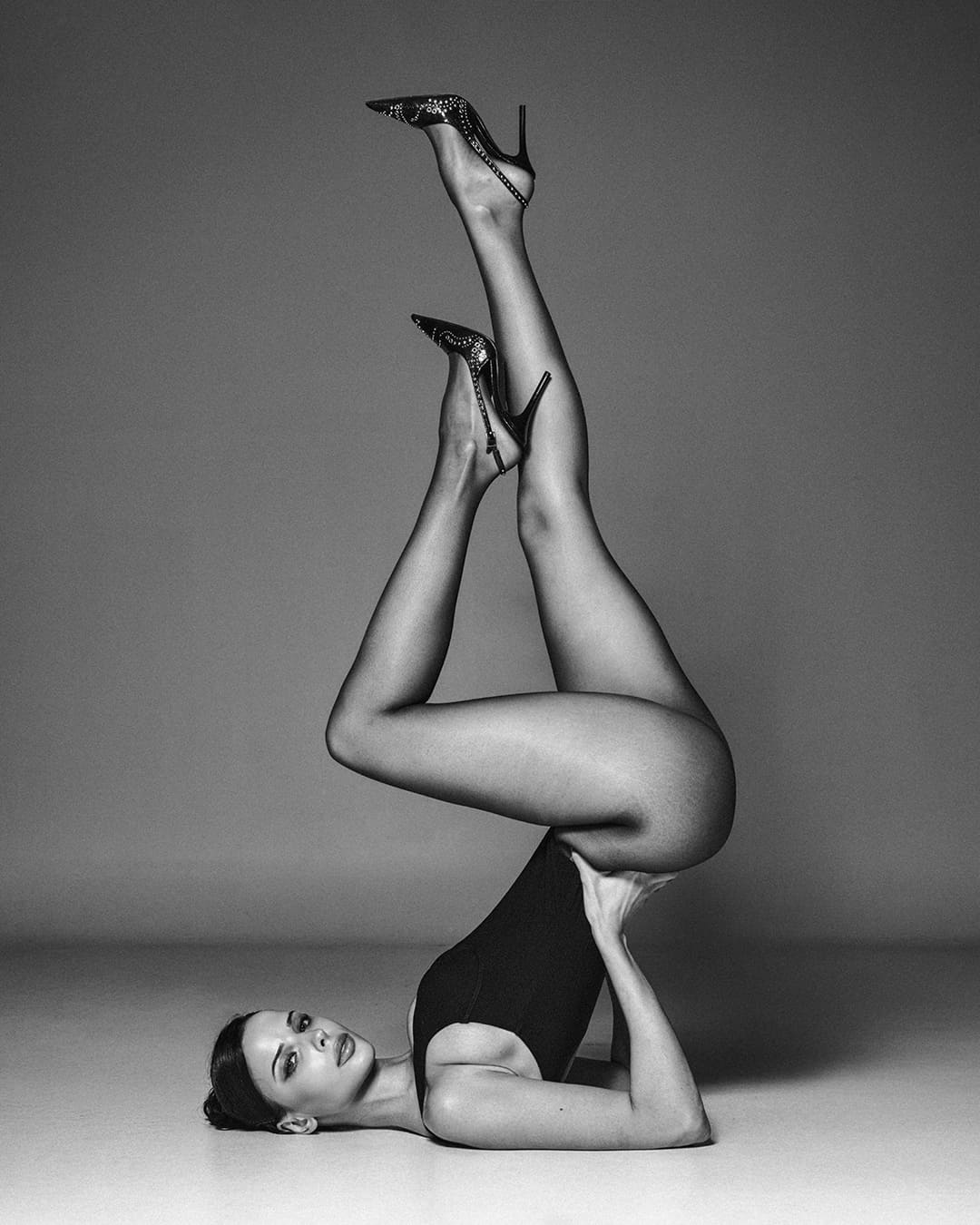
You went from being controlled by the scale to becoming someone who genuinely cannot imagine life without movement. What is the single biggest mindset shift that made that transformation possible?
Audrey Martin:
The biggest mindset shift for me was replacing fear with knowledge. The more I studied nutrition, hormones, metabolism, fitness and how the body actually works, the more my unhealthy (wrong) beliefs slowly disappeared.
I think ignorance can be very dangerous because when we don’t understand how something works, fear fills the empty spaces. For years I genuinely believed the scale controlled my value as a person because I didn’t understand how complex the human body actually is.
I realized that the number on the scale alone means almost nothing without context. Knowledge became my way of fighting fear.
I replaced irrational fears with facts, and slowly my relationship with my body became healthier because I finally understood what health actually means.
Namita Nayyar:
Have you ever had a relapse or a difficult mental health day in recent years? If so, how do you now navigate those moments without falling back into old patterns?
Audrey Martin:
Yes, absolutely. Healing is never linear. One of the hardest periods of my recent life was when I was temporarily unable to return to South Korea because of visa-related administrative issues. Emotionally, it was devastating because Korea had become home to me. My life, my closest friendships, my routine and my relationship were all there.
At first I panicked and felt extremely overwhelmed because I realized how emotionally attached I had become to that country. But over time, I processed the situation calmly and maturely. I don’t believe in destroying yourself emotionally every time you make a mistake. I think making mistakes is human. What matters understands the problem, taking responsibility and fixing it.
That’s how I approach almost everything in life now:
- Understand the mistake,
- Accept it,
- Learn from it,
- Fix it,
- Move forward calmly.
During the months I spent outside Korea, I also tried to focus on the positive side of the situation. I reconnected with my family in Italy, traveled through countries I still wanted to experience more deeply and focused more on work and personal growth.
At the same time, my Korean boyfriend stayed by my side through everything, and I think facing difficult moments together made our relationship even stronger.
Disclaimer
The Content is not intended to be a substitute for professional medical advice, diagnosis, or treatment. Always seek the advice of your physician or other qualified health provider with any questions you may have regarding a medical condition.
