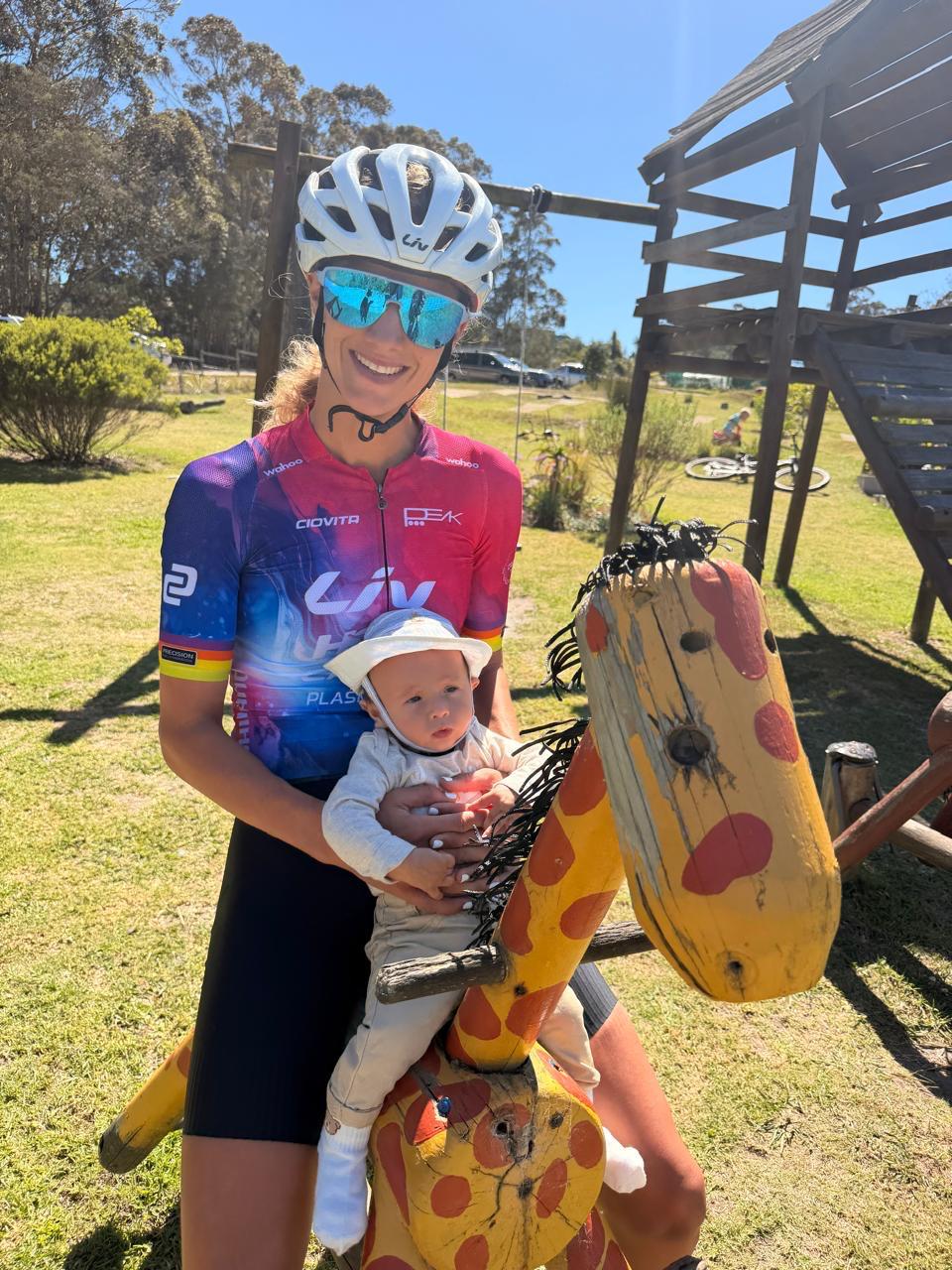
Namita Nayyar:
You won the Ironman 70.3 European Championship in 2022 and later earned world bronze. At that level, what separates podium finishers from champions?
Emma Pallant-Browne:
There’s definitely a big gap between finishing third and winning. When I was second at my first 70.3 World Championship, watching Daniella Ryf win made me hungry. I studied what she was doing to become more competitive.
Once you win a championship, the challenge changes—you know the level required, and your biggest competitor becomes the person you see in the mirror every day.
Motherhood & Mental Strength
Motherhood introduced a new challenge—and a new source of power. Rather than stepping away from elite competition, Emma embraced this chapter as another evolution of strength, proving that motherhood and ambition can thrive together.
Namita Nayyar:
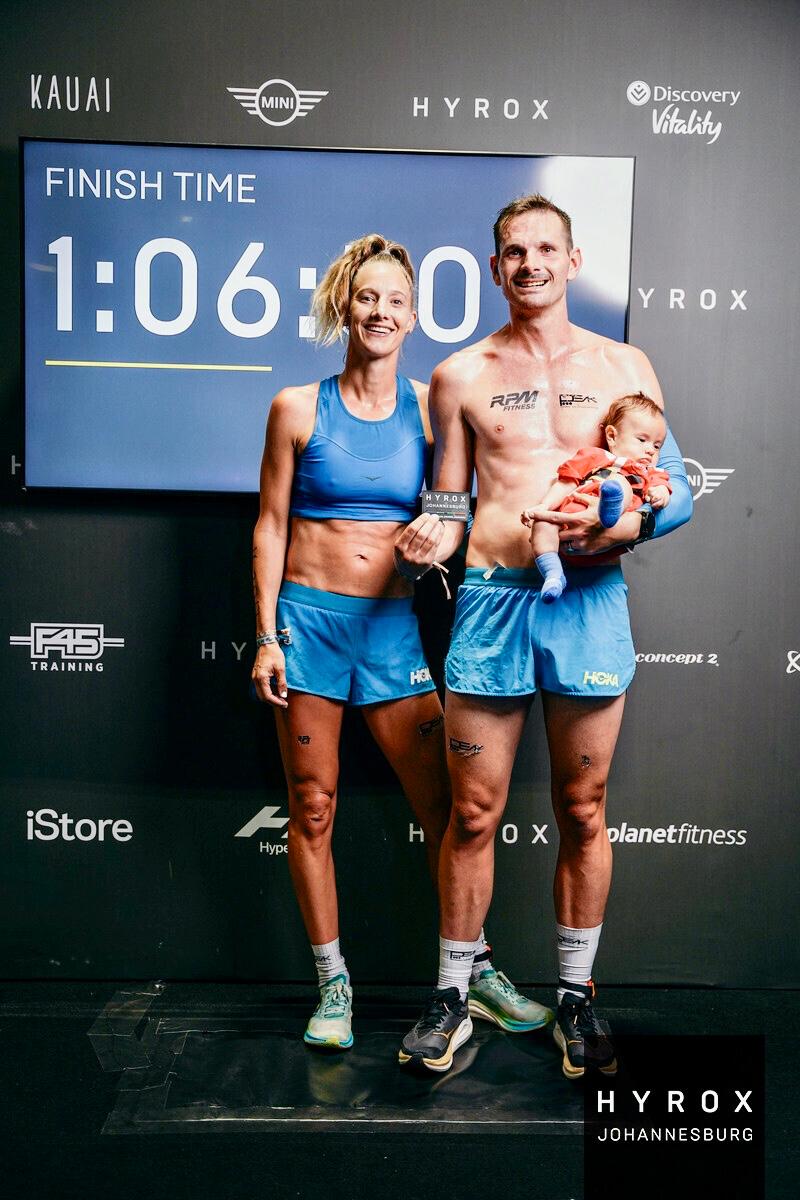
You ran 7 km the day before giving birth. What did pregnancy teach you about trusting your body?
Emma Pallant-Browne:
The biggest lesson was not to follow a rigid plan. Your body is incredibly intelligent and gives you clear signals through heart rate and how you feel.
I expected to swim until birth, but swimming became difficult first. Then cycling became uncomfortable. Running actually felt fine throughout, even though it got slower. I simply kept listening to my body.
Namita Nayyar:
How has becoming a mother made you mentally stronger as an athlete?
Emma Pallant-Browne:
I now have a stronger motivation than ever—to inspire Locky. I want him to grow up seeing me work hard and love what I do. In the darkest training moments, when you need to dig deeper, I think of his face. That gives me strength.
Namita Nayyar:
Walk us through a typical training day now versus pre-motherhood.
Emma Pallant-Browne:
Before pregnancy, life revolved around training, recovery, sleep, and nutrition. Sleep was a huge priority.
Now sleep is the biggest change! Locky can wake up five times a night, so six hours feels like a great night. My husband and I rely heavily on teamwork. We tag-team childcare so we both get our key sessions done. It’s definitely a balancing act, but we make it work.
Training, Nutrition & Recovery
Peak performance is built on consistency. Behind every race result lies a carefully managed routine of training, recovery, fueling, and discipline—each element playing a vital role in sustaining excellence.
Namita Nayyar:
For our fitness readers, what does one of your toughest quality sessions look like?
Emma Pallant-Browne:
Right now I’m focused on running.
Morning: 10-minute warm-up, then 10 × 1 km with 1-minute recovery, followed by 5-minute cool-down.
Lunchtime: Stretching, foam rolling, and glute activation.
Evening: 3 sets of 8 × 400m with 30 seconds rest, descending pace each set from 80 seconds to 70 seconds.
Disclaimer
The Content is not intended to be a substitute for professional medical advice, diagnosis, or treatment. Always seek the advice of your physician or other qualified health provider with any questions you may have regarding a medical condition.
