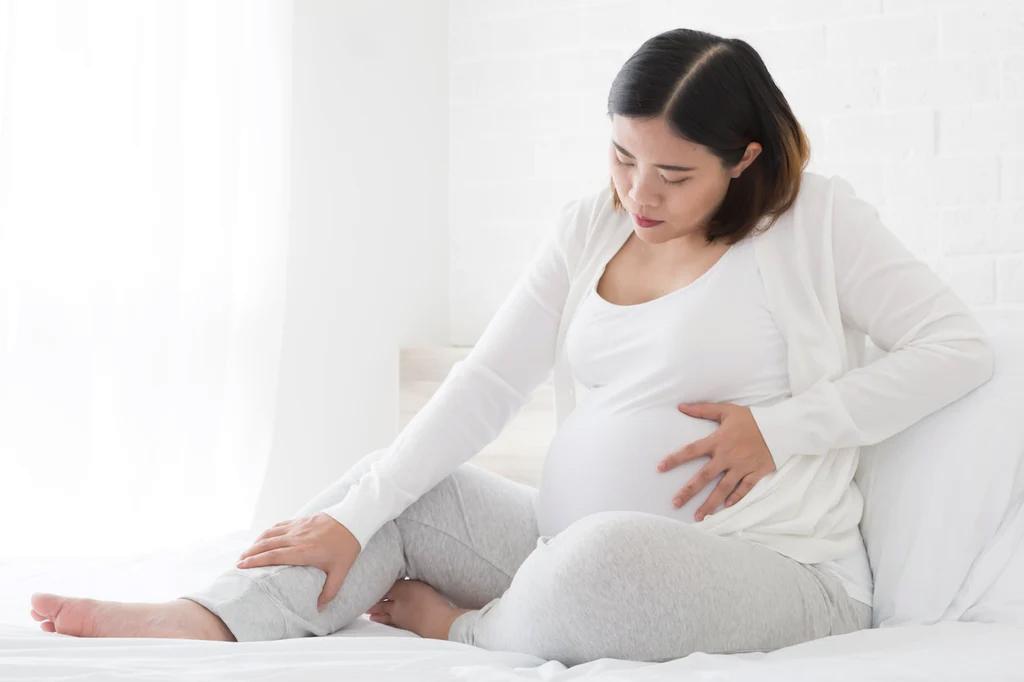
Tips to Cope with Leg Cramps
These suggestions may help you relieve leg cramps.
- Wear maternity support hose during the day.
- Take warm baths.
- Have your partner massage your legs at the end of the day or whenever you feel like it.
- Take acetaminophen (Tylenol ®) for pain.
- Extra vitamin E is helpful, too.
- Rest on your left side.
- Use a heating pad on low for up to 15 minutes (no longer) on the cramps.
- Avoid chocolate – it reduces the bodies absorption of calcium.
Your activities can also contribute to cramping. Avoiding standing for long periods of time. Don’t wear tight or restrictive clothing.
Swollen Ankles
Many women find that their ankles and feet swell as their pregnancy progresses. This swelling is caused by the increasing pressure an enlarging uterus puts on the veins that carry blood from the legs to the heart. To help improve the circulation in your legs, try to lie down and put your feet on a raised pillow several times throughout the day, or sit with your feet elevated as often as possible. Limiting salt on your diet and wearing support stockings may also be helpful.
Skin Changes
Your skin may change in a number of ways during pregnancy. Patches of darker skin may appear on your face. This condition, called “chloasma or, sometimes, mask of pregnancy,” will fade when your hormone levels return to normal. In some women, a dark line appears that run from the naval to the public hair. This dark line is also caused by hormones and will fade after delivery. As your skin expands over your growing abdomen and breasts. Stretch marks may be permanent, on most women they fade with time.
Dental Problems
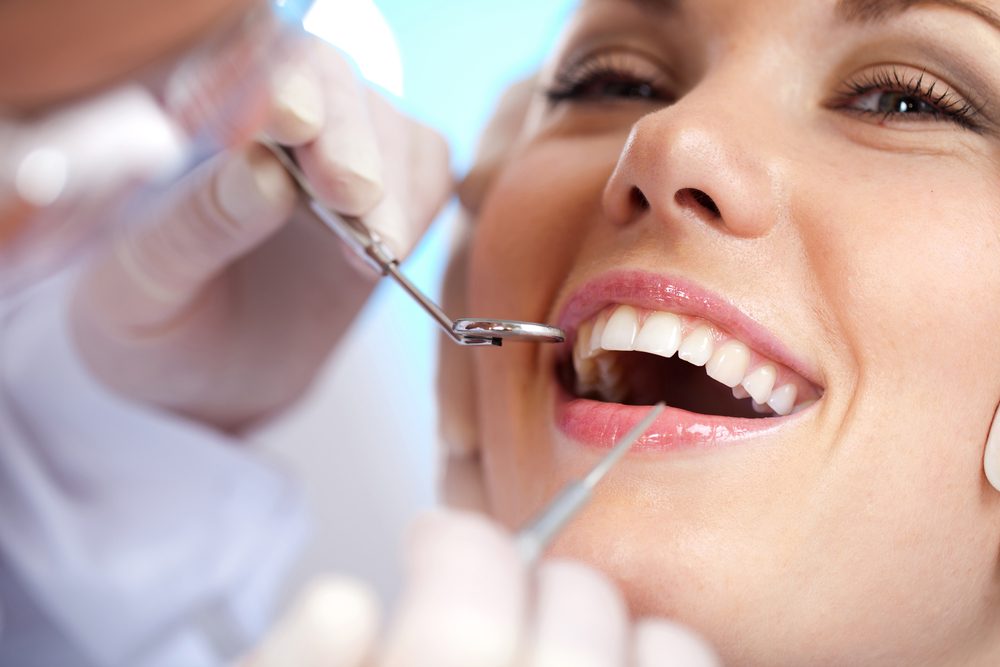
Hormonal changes during pregnancy sometimes cause sore swollen gums. In extreme cases, eating becomes painful. Therefore, it is important to see your dentist at least once during your pregnancy for a checkup and cleaning. To prevent gum inflammation and pain, brush and floss your teeth at least twice a day. Try to limit sweets and avoid snacking throughout the day to help reduce the buildup of a bacteria-containing substance called plaque. If your gums become painful or bleed when you brush your teeth, see your dentist. You may need a special type of cleaning or gum treatment. If not treated, some forms of gum disease – gingivitis (inflammation or bleeding of gums, usually resulting from infection) or periodontitis (infection of tissues surrounding the tooth) – may lead to unnecessary loss of health.
Dental x-rays are considered safe during pregnancy but are only done when required for a specific purpose, such as to rule out a serious medical problem, such as an abscess (an infected, pus- filled sac) in the gums. If you need to have an x-ray, your abdomen will be shielded with a lead apron to protect the fetus from exposure to radiation. Your dentist will delay routine x-rays until after your pregnancy.
Disclaimer
The Content is not intended to be a substitute for professional medical advice, diagnosis, or treatment. Always seek the advice of your physician or other qualified health provider with any questions you may have regarding a medical condition.