
Namita Nayyar:
Can you walk us through your typical training routine? How do you balance strength, endurance, and skill training?
Katja Stam:
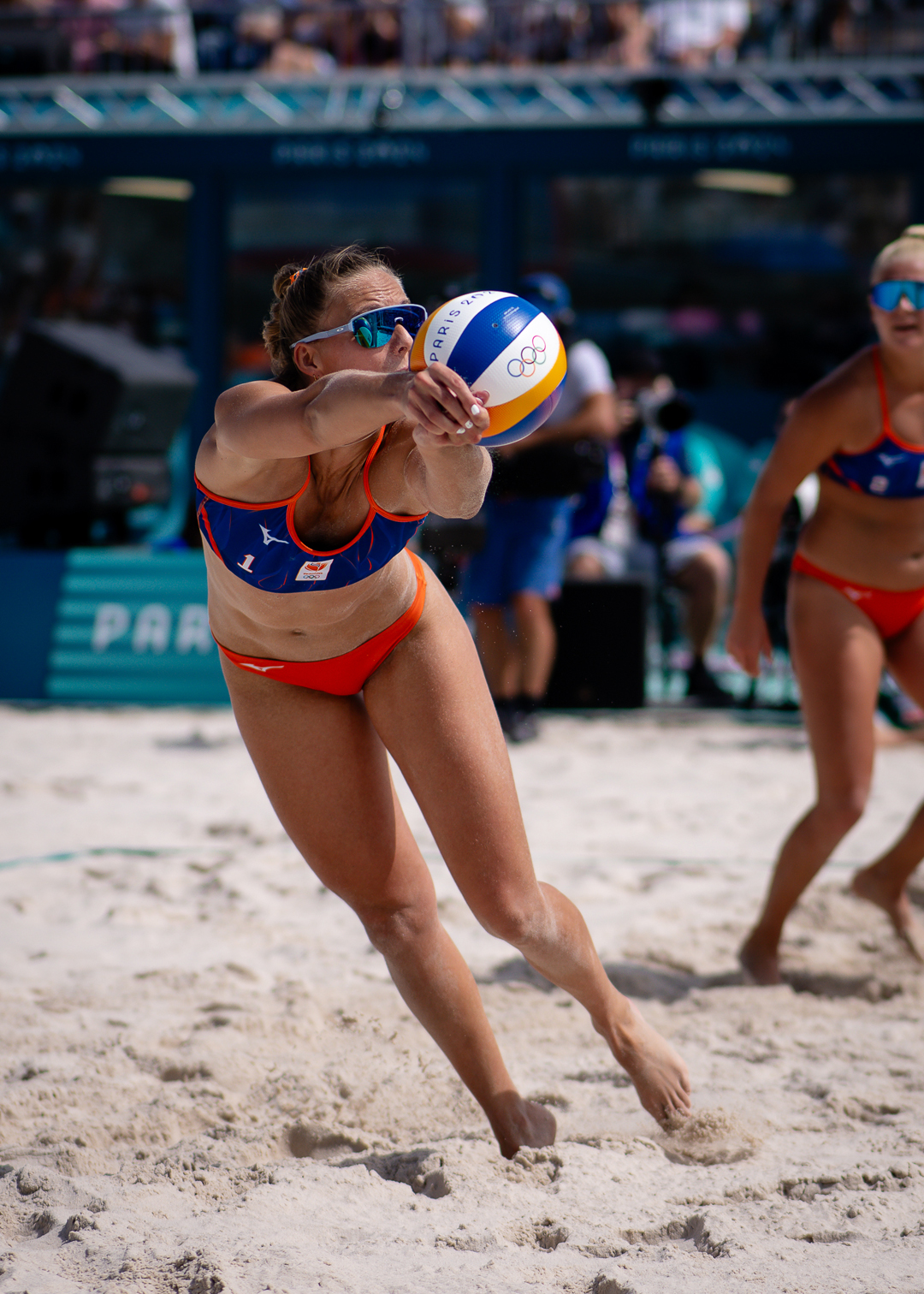
As a beach volleyball player you need to be an all-round athlete. You need to be fast, jump high, but also is strong to hit balls as hard as possible and it’s also a very technical sport where all the players need to do everything. Other than indoor volleyball where every player has their own expertise. This means we train our bodies in a lot of different ways.
We train around 12 times a week. In a week we have strength training, ball sessions, physical sessions on the sand with medicine balls for example, conditioning sessions on the sand or on the bike and injury prevention sessions/yoga sessions. I think this is the total package you need to become or stay a fit beach volleyball athlete.
Namita Nayyar:
How important is diet and nutrition in your performance? Can you share any nutrition tips for aspiring athletes?
Katja Stam:
I think it is really important. I’m playing in a lot of different circumstances. Warm, cold, rain, wind, sun but also being in higher areas for example means adjustments for my nutrition. The most important tips I want to share are that you should always be aware of 2 things. 1. Did I eat/drink enough to have energy for my whole training? Do I need to have more or do I take something with me during my training? 2. Did I have enough to recover and was it on time? I always try to get my recovery in as soon as possible so I can recover faster for my next training.
Namita Nayyar:
What specific exercises or drills do you recommend for developing the agility and strength required in beach volleyball?
Katja Stam:
For me it’s important to do at least 3 strength sessions a week where I train all muscle groups and I make it important to have variations to keep getting a stimulus from it. I’m also aware of some extra care for my ‘weaker’ spots which are mostly my knees.
Therefore I use a lot of isometric exercises like wall sits or lunge holds. And some heavy slow resistance exercises like sled drag. For agility I would say you need to train that in the gym as well. So instead of ‘just’ doing a back squat in control, you can choose to focus to be as fast as possible in the concentric phase of the exercise. Later you can transfer this to for example you’re starting speed in the sand to catch a tennis ball or play beach volleyball.
Namita Nayyar:
How do you recover after intense matches and training sessions? Do you have any favorite recovery techniques or therapies?
Katja Stam:
I have a lot of different ways to recover. As I already said, I think nutrition is an important part of it. Besides that, I use a lot of physio and massage treatments every week. Not only if I’m injured but also to prevent it. I also do a lot of stretching before and after training and matches. And I try to do yin yoga at least once a week to also focus on breathing as a part of a good recovery.
Disclaimer
The Content is not intended to be a substitute for professional medical advice, diagnosis, or treatment. Always seek the advice of your physician or other qualified health provider with any questions you may have regarding a medical condition.
