Namita Nayyar:
Making your Olympic debut on February 7, 2026, against Switzerland. Take us back to that moment. What was going through your mind during the national anthem before your first shift on Olympic ice?
Kristin O’Neill:
There was so much buildup to this first shift. So many firsts at the games prior to actually starting the tournament. The opening ceremonies, all the new gear, the village, not to mention the 10 years prior that I dreamt of stepping onto Olympic ice. So, to say it was an emotional first step would be an understatement. It was a dream come true and I’m proud of myself for taking it with confidence.
Namita Nayyar:
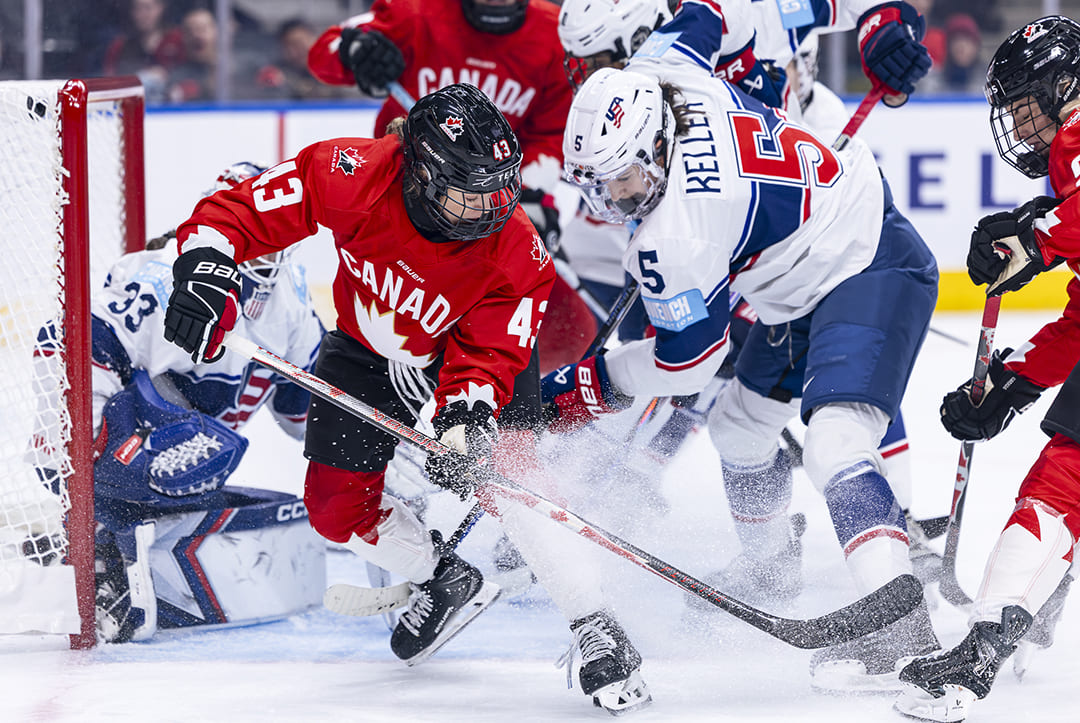
You scored Canada’s opening goal in the quarterfinal against Czechia, and then scored the first goal of the gold medal game against the United States—a beautiful shorthanded backhand. Can you walk us through the play on that gold medal goal? What did it feel to score on that stage, even in a heartbreaking loss?
Kristin O’Neill:
I was nervous. I believe it was my first or second shift of the game, right into the penalty kill. This was nerve wracking, stressful but also for me… comforting. What a weird word to use when you’re shorthanded in the Olympic finals, but to me the penalty kill is my thing. I remember Laura Stacey getting a loose puck on the wall, after the defense tried to keep the puck in.
While Laura raced for the puck, I had a second while I thought about changing. As soon as I recognized the opportunity to beat their D up the ice, I skated as fast as I could. Laura reached the puck first and made a lateral pass through the first defenseman back. I caught the puck on my forehand and took it straight to my backhand beating the USA goalie. As a I scored, I got tripped up in the goalies stick and fell into the boards. Something about the falling celebration made the moment that much more memorable.
Namita Nayyar:
Being part of a team that included legends like Marie-Philip Poulin, how did you and the other younger players on the team—like Sarah Fillier and Julia Gosling—feed off their experience while also bringing your own energy to the roster?
Kristin O’Neill:
The leaders and experience in the locker room are absolutely second to none. I have grown so much as a person and player because of the leaders in that room like Poulin, Turnbull, Jenner, Fast, and Laroque. They cultivated an environment where younger players like us feel confidence; feel like we can be our true selves without judgment.
Namita Nayyar:
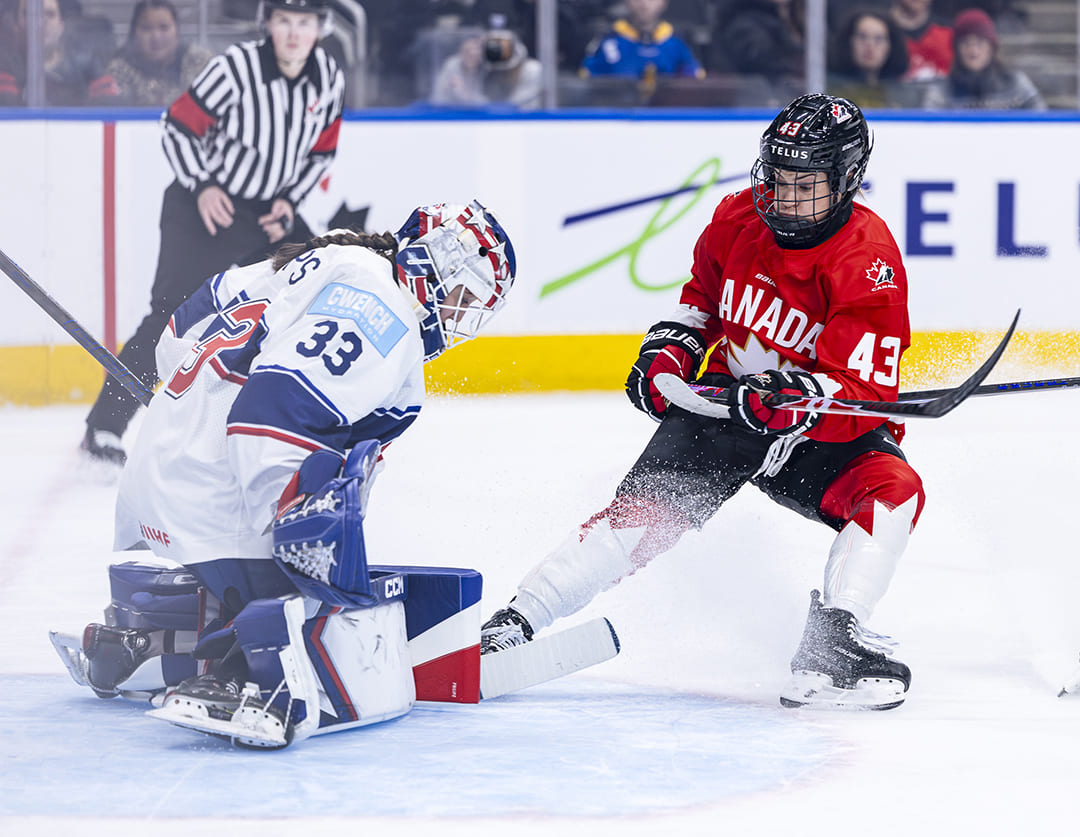
Your game is built on relentless speed and an aggressive fore check . What does your off-season training regimen look like to build the stamina required to maintain that pace for a full 60-minute shift and an 82-game season?
Kristin O’Neill:
Off ice training is very important to me. I love the grind of the off season, and I believe that this it is something that gives me an edge. Ever since I was a young athlete, I have enjoyed challenging myself in this area. My off-season trading regimen looks a little different every year, but the elements stay the same.
It’s built from a foundation of power, speed, and strength. Usually, it entails working out 5-6 times per week, 4 times in the gym with a dynamic and mobility based warm up, a strength or power based middle and ends with either a conditioning or endurance based exercise. Running or biking is usually involved at least twice per week as well.
Namita Nayyar:
Faceoff dominance requires immense upper body and grip strength. Are there specific exercises or drills you incorporate into your workouts to maintain that advantage in the dot?
Kristin O’Neill:
I believe that you don’t always have to be the strongest player to win a face off, although i strive to be the strongest player I can be, I am not the biggest. Over the years, the small stature has allowed me to develop a very low stance in the face off dot, and I believe this has a lot to do with my face off success.
Disclaimer
The Content is not intended to be a substitute for professional medical advice, diagnosis, or treatment. Always seek the advice of your physician or other qualified health provider with any questions you may have regarding a medical condition.
