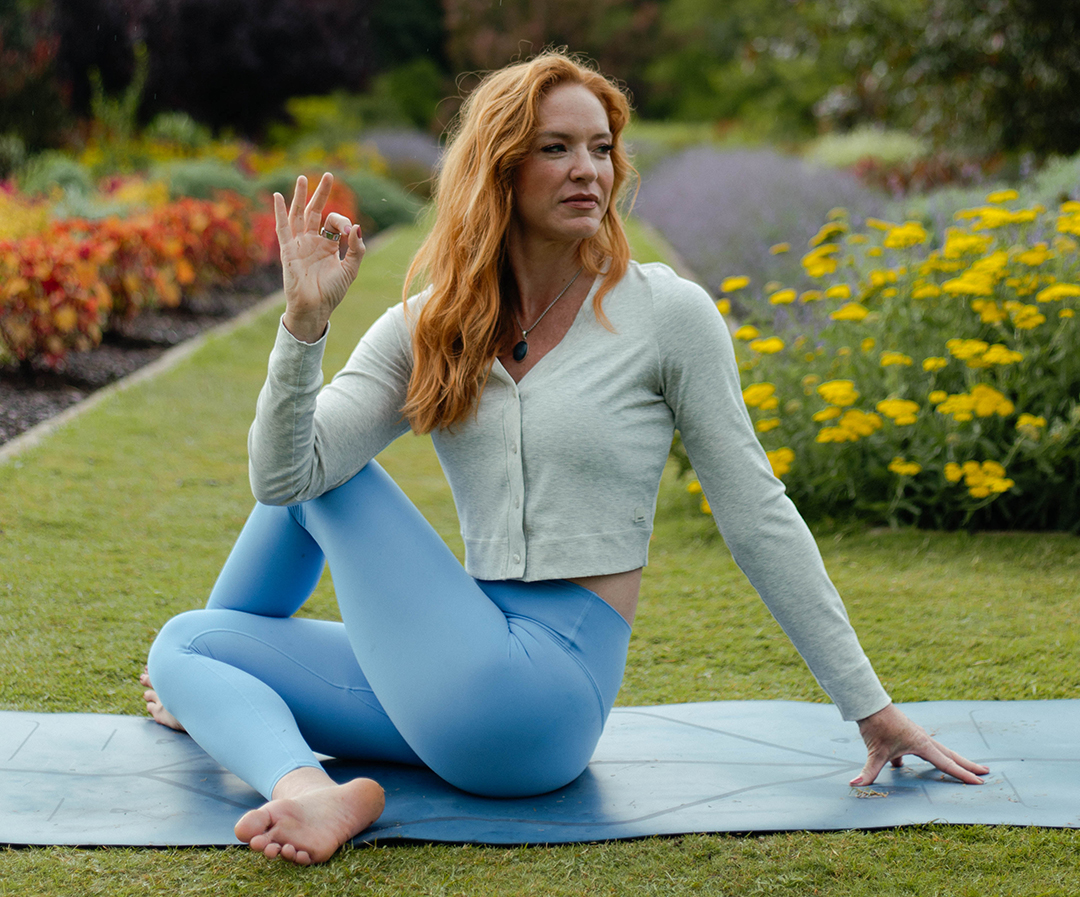
Yoga teacher and nervous system educator Lindsey Ewert survived a hit-and-run that left her with a traumatic brain injury and PTSD — and it changed everything she thought she knew about the body.
In this Women Fitness interview, she shares what she’s learned about dysregulation, recovery, and building a life that feels genuinely well, from the inside out.
From Surviving to Understanding: A Personal Turning Point
Lindsey Ewert doesn’t remember exactly what first drew her to yoga — it was too long ago. What she does remember is what she was searching for: a way to quiet her mind. Sweaty, challenging classes gave her brain something to focus on. For an hour, she could simply be in her body, even before she had the language to describe it.
Everything shifted after she survived a hit-and-run that left her with a traumatic brain injury and PTSD.
“Like many people, I had taken my nervous system for granted because it had always worked in the background. Suddenly, I found myself stuck in survival mode.”
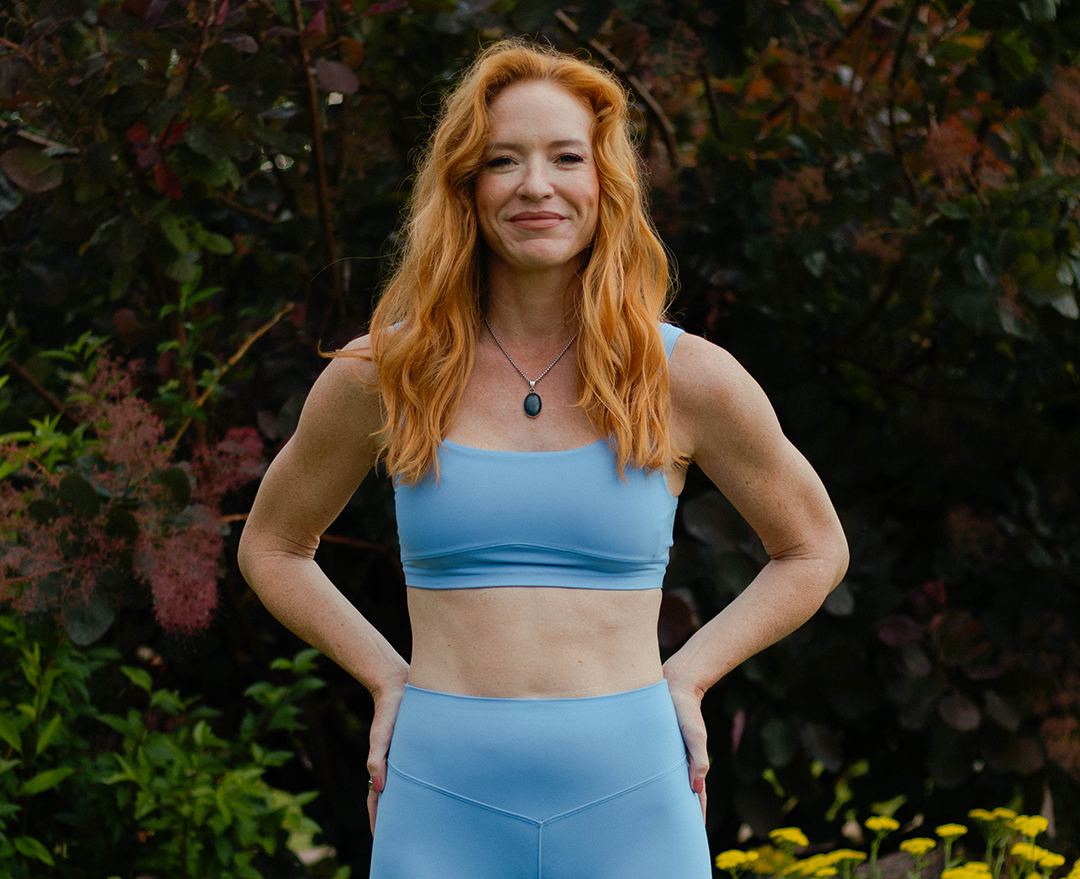
Her body felt constantly on high alert. She couldn’t settle, couldn’t relax, and often didn’t feel safe in her own skin. Recovery led her first to qigong and sound healing, and eventually back to yoga — which became one of the few places she could reconnect with herself, even for just a few minutes at a time. Those minutes slowly grew longer, and became the foundation for rebuilding safety from the inside out.
That lived experience now shapes every class she teaches. Her goal was never the “perfect” pose — it’s helping people feel safe, connected, and at home in their bodies again.
The Subtle Signs Your Nervous System Is Asking for Help
One of the biggest misconceptions Lindsey encounters is that stress and nervous system dysregulation are the same thing. They’re not. A regulated nervous system can weather real stress and still find its way back to baseline. Dysregulation is what happens when the body loses that ability to return.
The signs, she says, are often quiet and easy to miss:
- Feeling exhausted after very little physical or mental effort
- Chronic tension in the jaw, shoulders, or hips
- Shallow breathing or an easily startled response
- Staying “constantly busy” because slowing down feels uncomfortable
- Feeling “wired but tired,” or lying awake with a mind that won’t switch off
- Increased reactivity or snapping at loved ones over small things
- Feeling disconnected from the body, or losing touch with hunger, thirst, and fatigue cues
- Heightened sensitivity to light, sound, or busy environments
None of these signs alone means someone is dysregulated. But together, they can be clues that the body has been carrying too much for too long — and noticing them with curiosity instead of judgment is often the first real step toward healing.
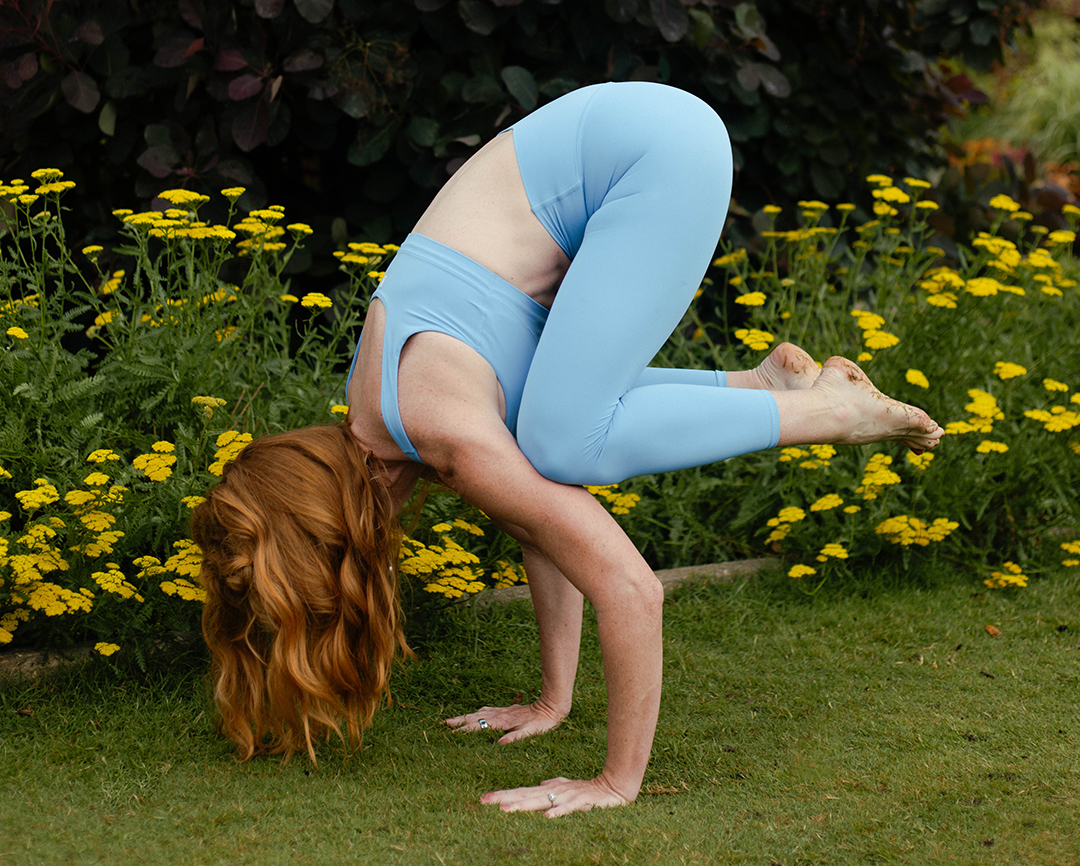
How Breath and Movement Signal Safety to the Brain
For someone new to yoga, Lindsey’s advice is simple: you don’t need to be flexible, calm, or even feel connected to your body to begin. You only need to be willing to notice.
Chronic stress pulls our attention outward — anticipating the next problem, replaying the past, just trying to get through the day. Yoga gently invites attention back to the present.
Breath is where she likes to start, because it’s one of the few automatic body functions we can consciously influence. Slowing the breath and lengthening the exhale sends the brain a clear signal: the threat has passed. Paired with slow, intentional movement, the body begins to experience safety instead of urgency.
Yoga also strengthens interoception — our ability to notice what’s happening inside the body — so we catch signals of tension or overwhelm earlier, before we’re completely depleted. That awareness creates choice: the ability to respond to the body instead of simply reacting to stress.
“The goal isn’t to force yourself to relax or to ‘fix’ your nervous system. It’s to create small moments where your body can experience safety, curiosity and connection.”
Nourishment, Not Restriction: Eating for Nervous System Health
Nutrition, Lindsey explains, provides the raw materials the brain and nervous system need every day. Rather than pushing a restrictive diet, she encourages people to think in terms of nourishment:
Worth including: high-quality protein, colorful fruits and vegetables, healthy fats (olive oil, avocado, nuts, seeds), fiber-rich foods, and omega-3s from foods like salmon. Consistent hydration matters just as much — she personally favors mineral-rich spring water for its natural electrolytes and trace minerals, sipped throughout the day rather than only when thirst hits.
Worth watching: excessive alcohol, highly processed foods, added sugar, and too much caffeine — all of which some people notice leave them feeling more anxious, jittery, or fatigued.
The goal isn’t perfection. It’s awareness — noticing how food actually makes you feel, and recognizing that regulation isn’t about one magic food or one perfect practice. Nutrition, movement, sleep, and stress management all reinforce one another.
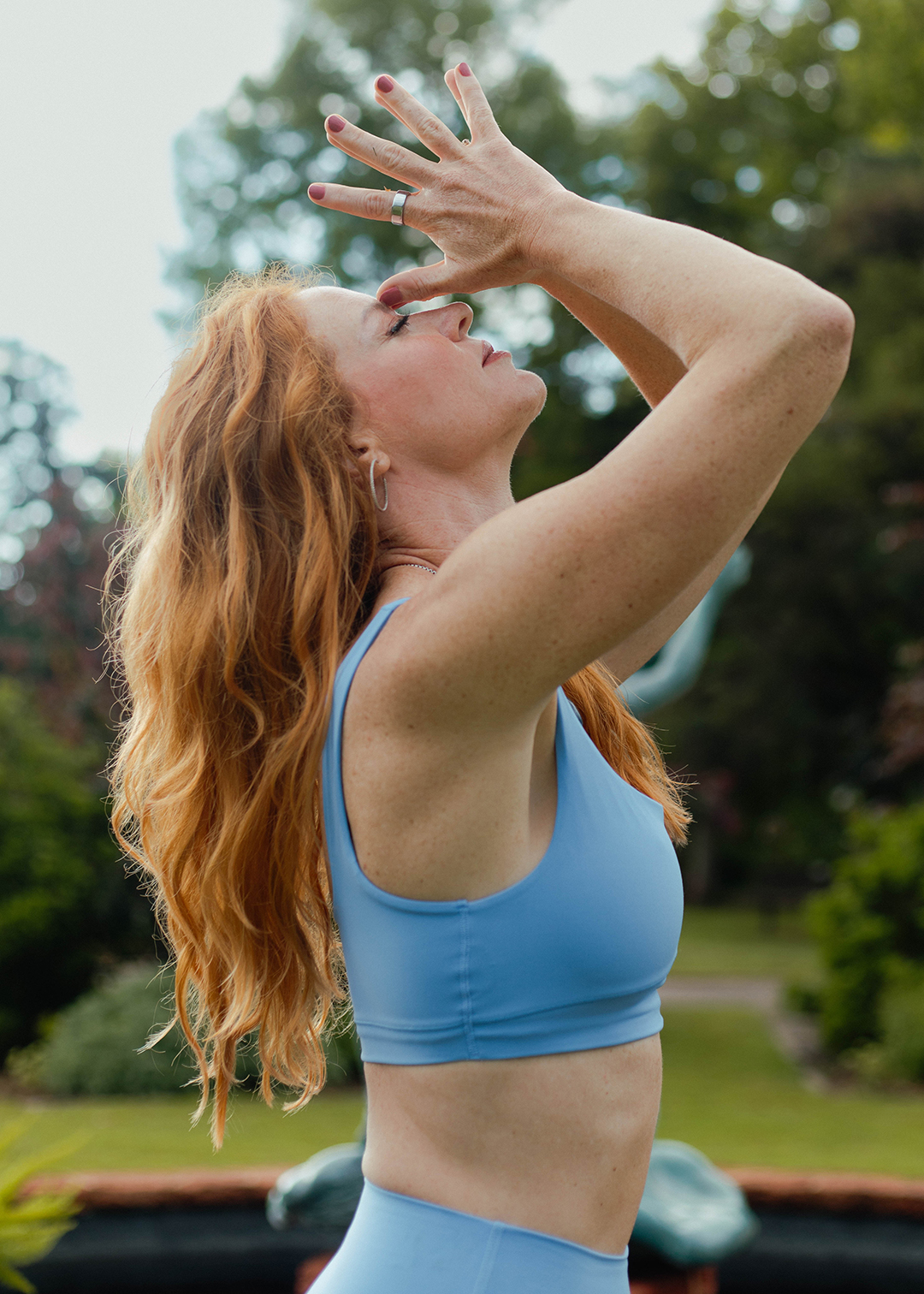
Busting the Biggest Myths about Trauma-Informed Yoga
Perhaps the most common misconception Lindsey hears is that nervous system regulation means feeling calm all the time. It doesn’t. A healthy nervous system isn’t one that avoids stress — it’s one that can respond to a challenge and then return to balance.
Early in her recovery, down-regulating — creating calm through breathwork, gentle movement, restorative yoga, and sound healing — was exactly what she needed. But true recovery, she learned, wasn’t only about becoming calmer. It was about becoming more adaptable. Eventually she needed to intentionally introduce healthy activation — strength training became central here — and then practice returning to a regulated state afterward.
She’s also quick to push back on the idea that trauma-informed yoga is only for people who’ve experienced major trauma:
“Everyone has a nervous system, and everyone benefits from feeling safe, having choices and learning to trust their body. To me, trauma-informed yoga isn’t about changing the poses — it’s about changing the way we teach.”
Her goal was never to eliminate stress, but to widen her window of tolerance — so she can fully show up for her two young sons, her business, and her own life, rather than watching from the sidelines.
Honoring the Body through Every Life Stage
From menstruation through pregnancy, postpartum, perimenopause, and menopause, Lindsey’s guiding question is simple: What does my body need today? Bodies are never static, yet many women expect themselves to move and recover exactly as they did years earlier.
Some seasons call for strength and challenge. Others call for rest, mobility, and gentler movement — and neither is superior to the other. Not every workout needs to leave you exhausted; some days that’s a vigorous strength session, other days it’s a walk, restorative yoga, or rest without guilt.
The more we practice listening to the body through yoga, the better we get at recognizing what we actually need — a relationship with ourselves that becomes especially valuable during seasons of change.
Inside Lindsey’s Daily Fitness Ritual
Rather than pushing through, Lindsey’s ritual begins with checking in: Am I energized and ready for strength training? Do I need mobility, a walk, or a slower practice?
Her days typically include:
- Hydration and 20 minutes of morning sunlight before screens
- Strength training several days a week, for physical, mental, and emotional resilience
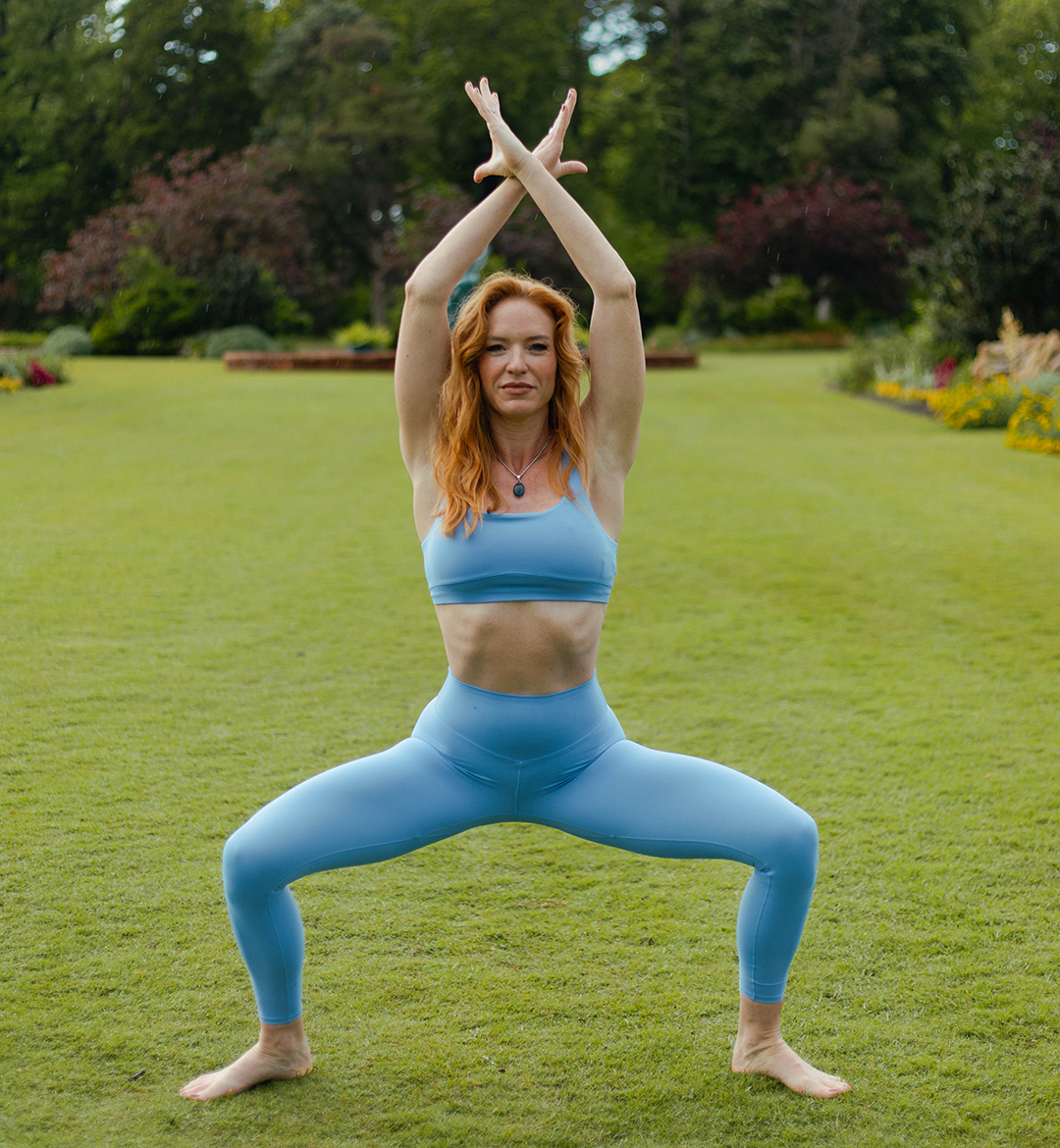
- Regular yoga practice — not as her only form of exercise, but to stay connected to her body
- Qigong, for its gentle, grounding, flowing movement
- Meditation and sound healing, including live sound baths and gentle piano music at home
After moving, she now asks herself a different question than “did I push hard enough?” — instead: did this support the life I want to live? Some days that’s heavy lifting or a sweaty flow. Other days it’s restorative yoga or walking her kids to school. Movement, she says, is care — not punishment.
Evening Rituals for Better Sleep
Good sleep, Lindsey believes, begins long before bedtime. Rather than trying to force a busy mind to switch off, she spends the last hour of her day sending her body cues that it’s safe to slow down:
• Hot herbal tea or a magnesium-based electrolyte drink
• An Epsom salt bath with candles and incense, or a simple face mask ritual
• A Yoga Nidra meditation, guided body scan, or calming piano music
• Restorative poses — legs up the wall, supported child’s pose, or supported bridge with slow diaphragmatic breathing
The goal isn’t to force sleep — it’s to create an environment where the body feels safe enough to do what it already knows how to do. Consistency, she notes, matters more than perfection; the nervous system responds to patterns.
Try It Yourself: A 5-Minute Nervous System Reset
Lindsey shared this simple qigong-inspired practice, called the Counter Swing, that anyone can do at home or at work:
- Stand with feet hip-width apart, gently shifting weight from foot to foot, then return to center.
- Inhale through your nose and open your arms wide, letting your chest expand.
- Exhale through your mouth and sweep your arms across your body — one arm sweeping in front, the other behind.
- Alternate which arm leads with each repetition, letting your breath guide the pace rather than forcing it.
- If this doesn’t feel natural, simplify: gently bounce through the knees or shake out your arms and legs while breathing slowly.
As you move, quietly repeat: “I am safe enough.” After three to five minutes, come to stillness. Notice your feet, your breath, and your body— without judging whether you feel “better.” Just stay curious about what’s shifted.
Message for Women Fitness 27th Anniversary
Marking Women Fitness’s 27th anniversary, Lindsey offers this reflection:
“True wellness isn’t something we achieve — it’s something we practice. It’s built in the small choices we make every day: how we move, how we nourish ourselves, how we speak to ourselves and how we respond when life doesn’t go according to plan.”
She hopes women will stop measuring their worth by appearance or achievement, and instead ask: Do I feel at home in my body? You don’t need to be perfectly healed, fit, or confident to start living — life is happening now, and your body deserves partnership, not criticism.
Strength and softness can coexist. And no matter where you’re starting from, the nervous system has a remarkable capacity to adapt, heal, and grow.
“We spend so much time trying to control our bodies that we forget they’re trying to communicate with us… My hope is that more women become curious instead of critical.”
Instagram : https://www.instagram.com/yogactually/
Disclaimer
The Content is not intended to be a substitute for professional medical advice, diagnosis, or treatment. Always seek the advice of your physician or other qualified health provider with any questions you may have regarding a medical condition.
