Yoga is often associated with flexibility and balance, but true strength begins with support. One of the most effective tools for building strength, stability, and body awareness is something almost everyone has access to — a wall.
Using the wall doesn’t make a practice easier. It makes it smarter. The wall offers instant feedback, helping refine alignment, improve posture, and engage muscles more efficiently. When the body feels supported, it moves with greater clarity and confidence.
“Support doesn’t weaken a yoga practice; it often makes it stronger.”
Wall work builds strength in a sustainable way. By reducing the fear of losing balance, the nervous system can settle, allowing muscles to activate without unnecessary tension. The result is steadier legs, stronger hips, more stable shoulders, and improved overall body awareness.
This sequence begins with standing poses to build heat and strength, then transitions into deeper hip work before finishing with restorative support. Repeat the standing poses on both sides to create balanced strength and stability.
As you move, maintain steady breathing and choose a range that feels strong yet sustainable. The wall is there to support your body — not to push it beyond its natural limits.
Website Link – www.emilymccaffertyphotography.com
Instagram – www.instagram.com/emilymccaffertyphotography/
Facebook – www.facebook.com/emilymccaffertyphotography/
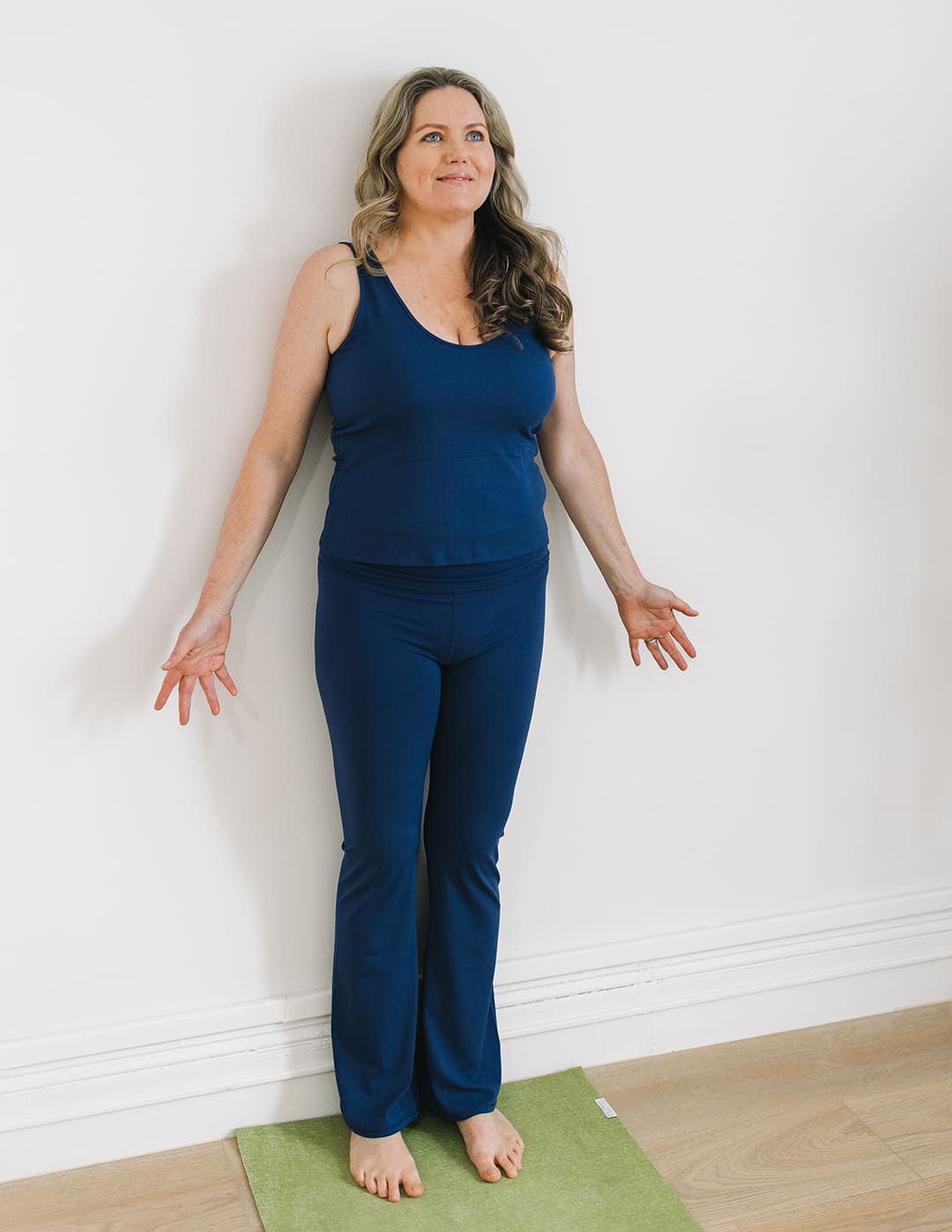
1- Wall Mountain Pose (Tadasana)
Caption: Stand with your back gently against the wall, heels grounded and spine lengthening upward.Benefits: Improves posture, alignment awareness, and balanced weight distribution.
Website Link – www.emilymccaffertyphotography.com
Instagram – www.instagram.com/emilymccaffertyphotography/
Facebook – www.facebook.com/emilymccaffertyphotography/
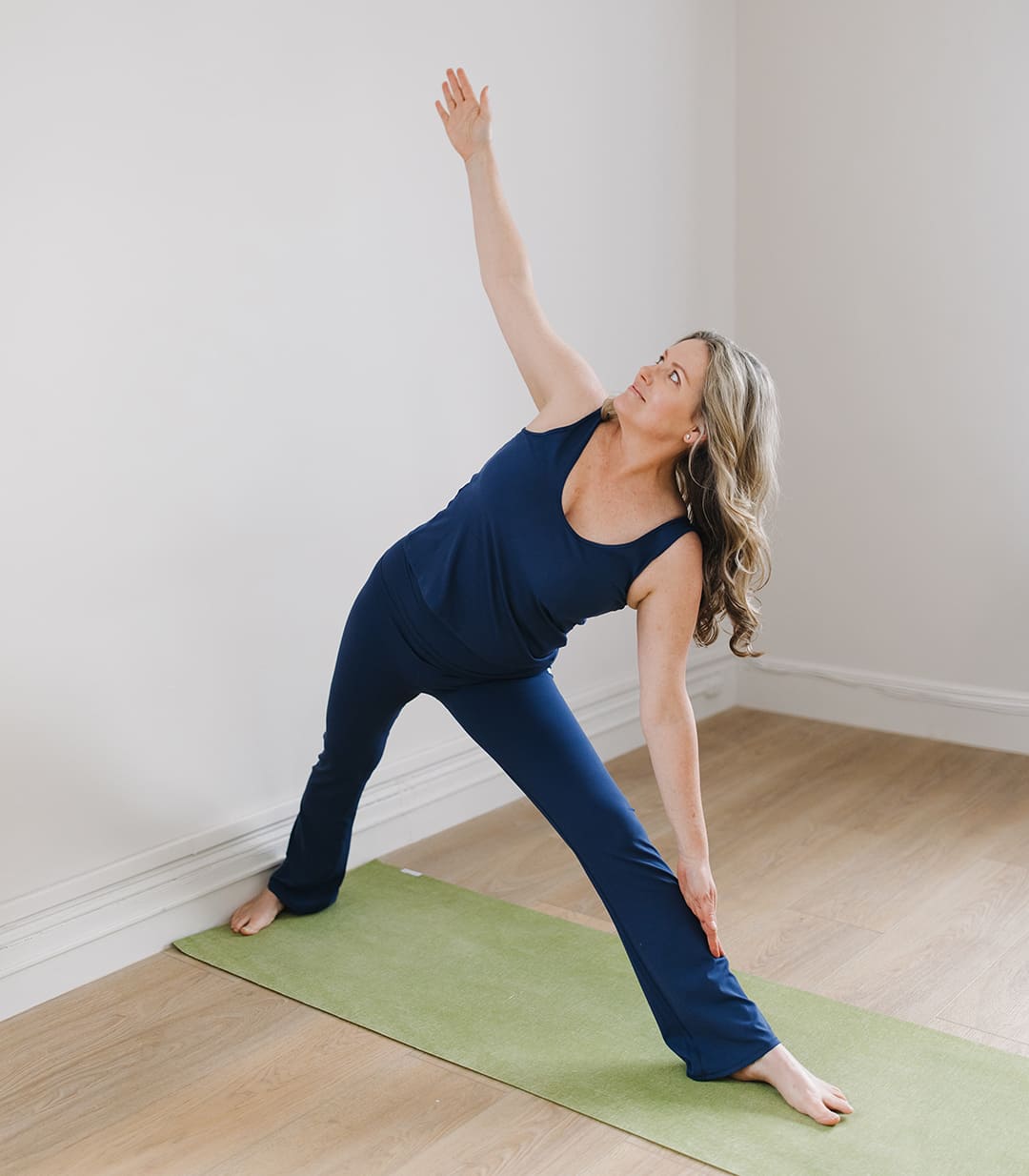
2- Wall Triangle Pose (Trikonasana)
Caption: Step the back heel lightly to the wall and extend through both arms to create length along the side body.
Benefits: Strengthens the legs while improving balance and spinal mobility.
Website Link – www.emilymccaffertyphotography.com
Instagram – www.instagram.com/emilymccaffertyphotography/
Facebook – www.facebook.com/emilymccaffertyphotography/
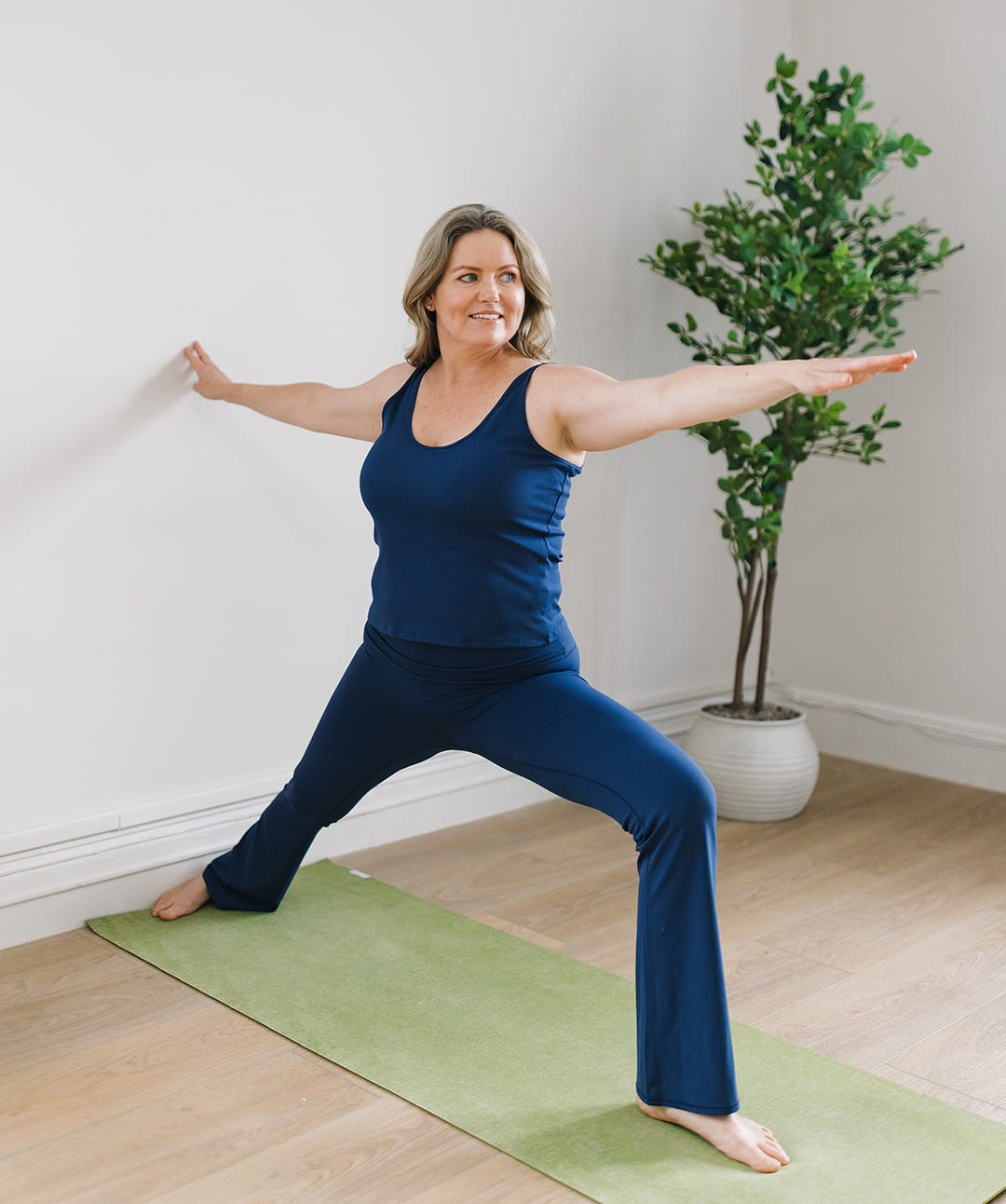
3- Wall Warrior II (Virabhadrasana II)
Caption: Press the back heel into the wall as you bend the front knee and extend the arms wide.
Benefits: Builds leg strength, hip stability, and grounded confidence.
Website Link – www.emilymccaffertyphotography.com
Instagram – www.instagram.com/emilymccaffertyphotography/
Facebook – www.facebook.com/emilymccaffertyphotography/
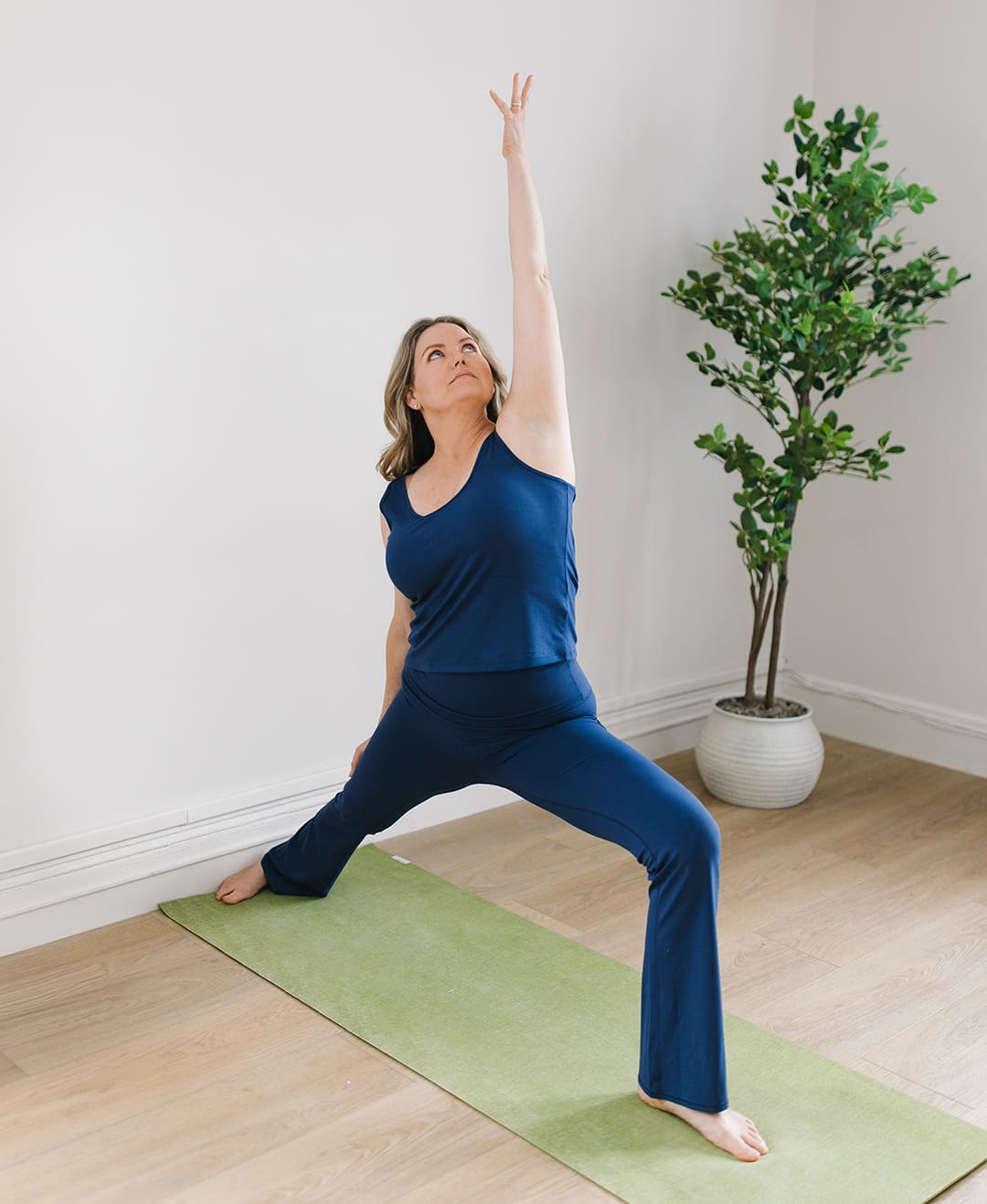
4- Wall Dancing Warrior
Caption: From Warrior II, keep the back heel rooted and reach the front arm overhead for a supported side stretch.
Benefits: Opens the hip flexors and side body while maintaining lower-body strength.
Website Link – www.emilymccaffertyphotography.com
Instagram – www.instagram.com/emilymccaffertyphotography/
Facebook – www.facebook.com/emilymccaffertyphotography/
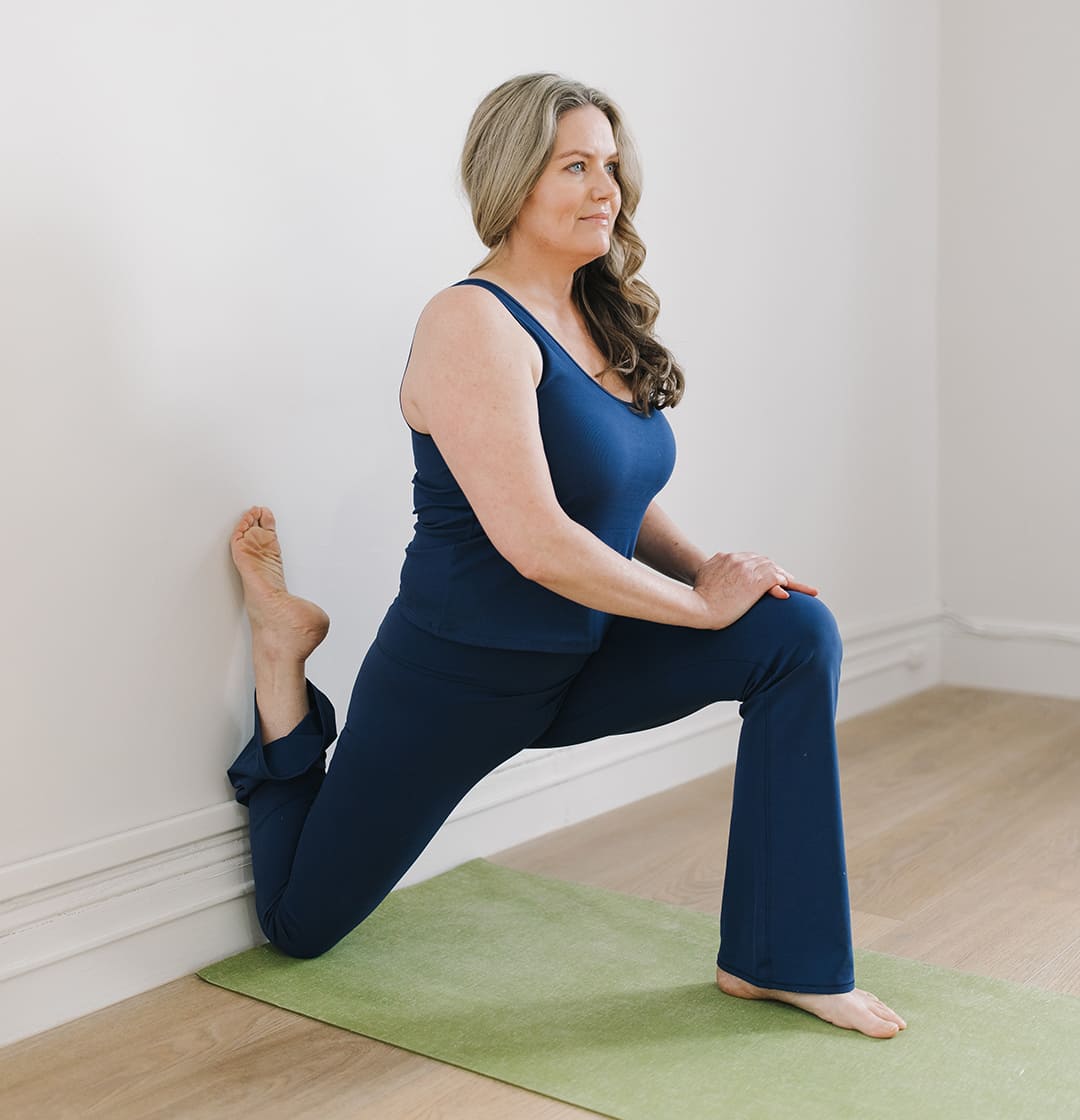
5- Wall Quad & Hip Flexor Stretch
Caption: Place one knee near the baseboard with the back foot on the wall and lift the torso to adjust intensity.
Benefits: Stretches the quadriceps and hip flexors in a controlled, scalable way.
Website Link – www.emilymccaffertyphotography.com
Instagram – www.instagram.com/emilymccaffertyphotography/
Facebook – www.facebook.com/emilymccaffertyphotography/
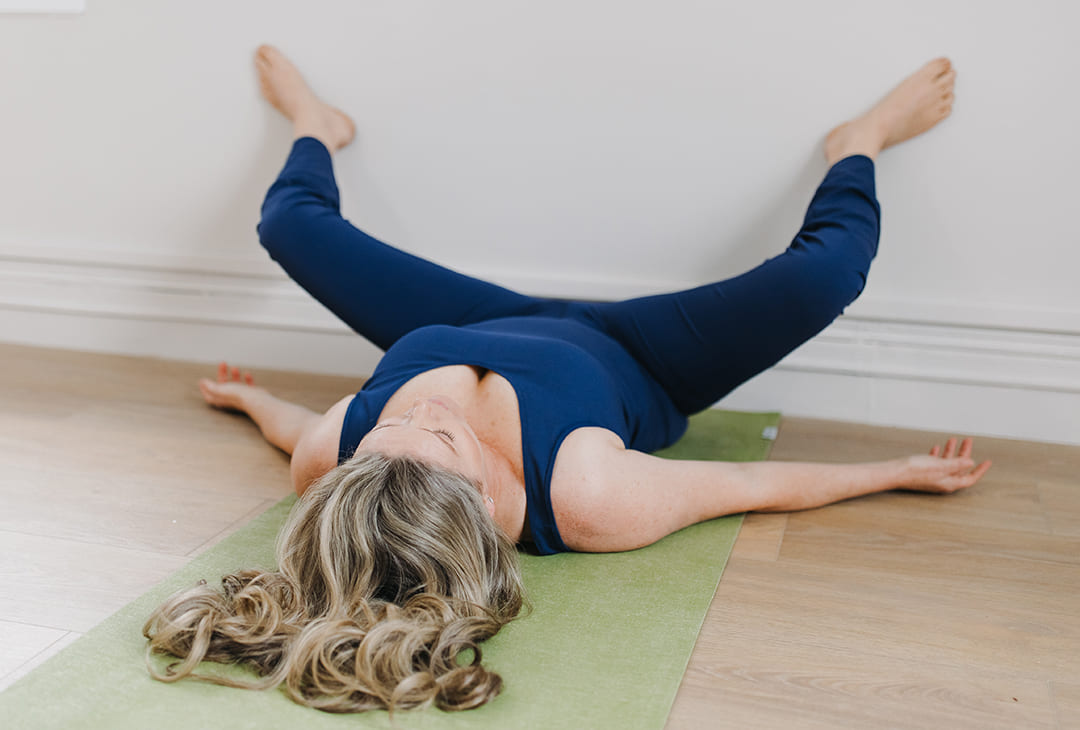
6- Wall Frog Pose
Caption: Lie on your back with the soles of the feet pressing into the wall as the knees gently open.
Benefits: Releases the inner thighs and hips while encouraging relaxation.
Website Link – www.emilymccaffertyphotography.com
Instagram – www.instagram.com/emilymccaffertyphotography/
Facebook – www.facebook.com/emilymccaffertyphotography/
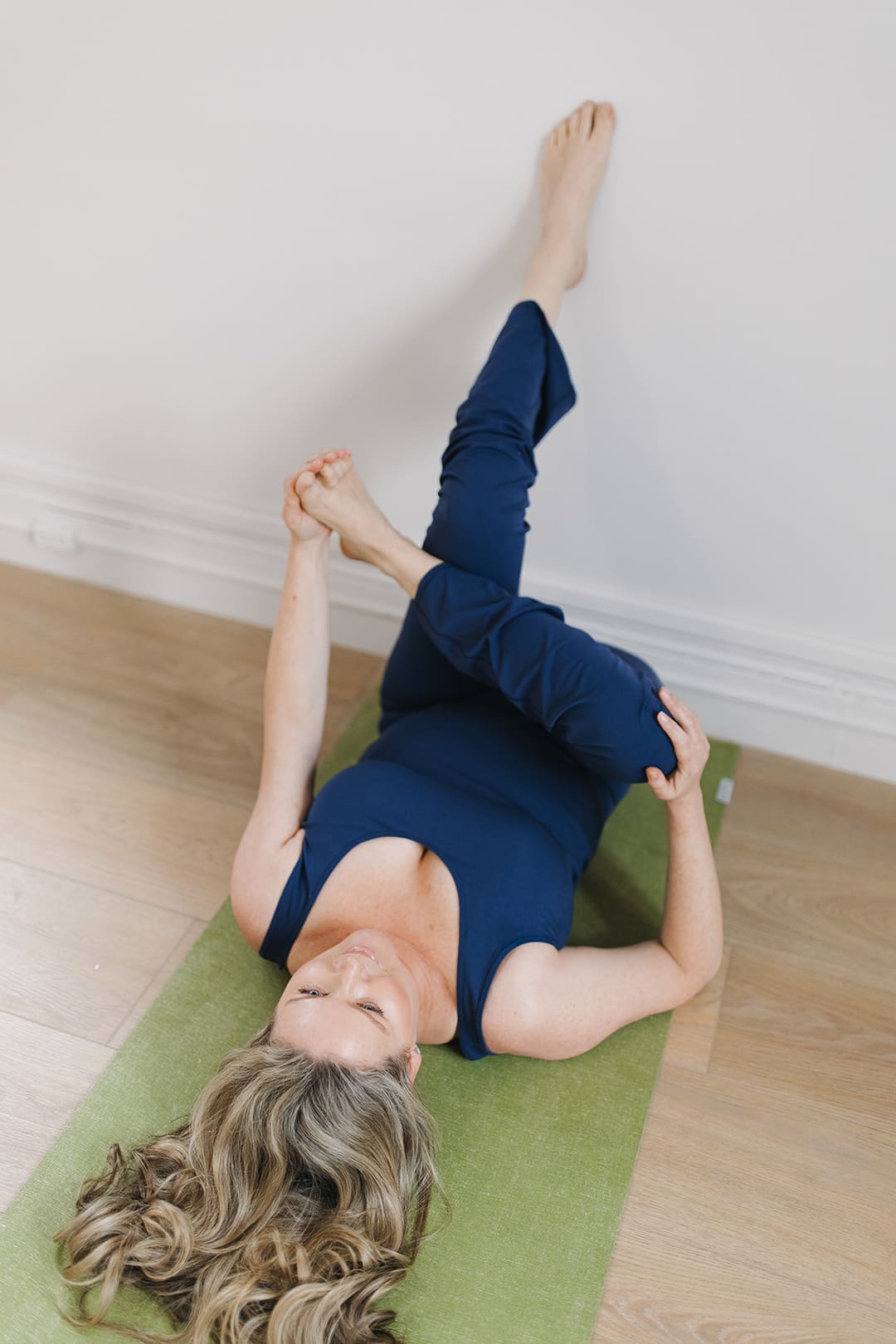
7- Wall Thread the Needle
Caption: Cross one ankle over the opposite thigh and press the supporting foot into the wall.
Benefits: Targets the outer hips and glutes while supporting the lower back.
Website Link – www.emilymccaffertyphotography.com
Instagram – www.instagram.com/emilymccaffertyphotography/
Facebook – www.facebook.com/emilymccaffertyphotography/
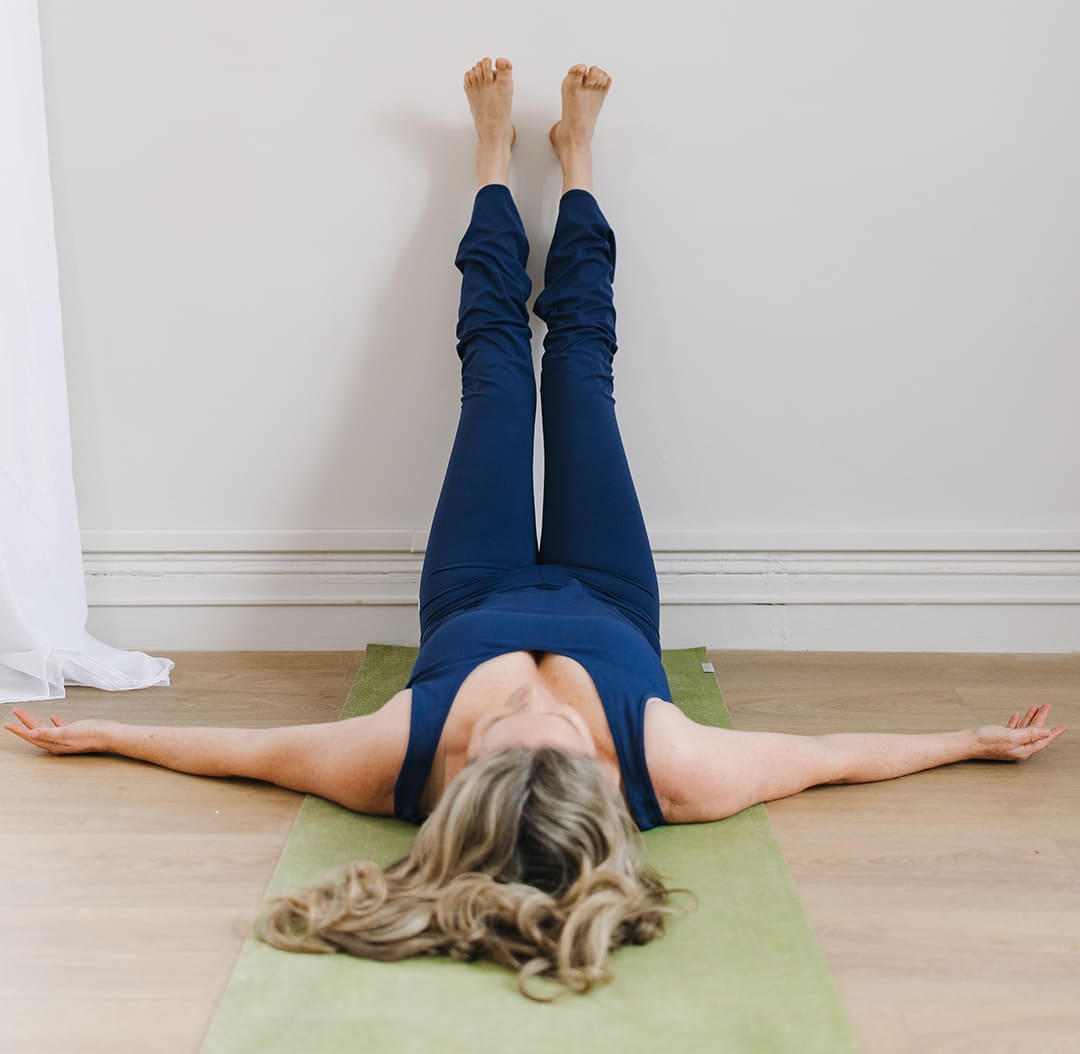
8- Legs Up the Wall (Viparita Karani)
Caption: Lie on your back and extend both legs up the wall, arms relaxed by your sides.
Benefits: Encourages circulation, reduces fatigue, and supports recovery.
Yoga on the wall is adaptable, accessible, and surprisingly powerful. Whether building strength through standing work or unwinding into supported floor poses, the wall provides steady guidance. Over time, this practice builds more than muscle — it builds resilience, confidence, and trust in your body.
Disclaimer
The Content is not intended to be a substitute for professional medical advice, diagnosis, or treatment. Always seek the advice of your physician or other qualified health provider with any questions you may have regarding a medical condition.
