What is a scar? A mark that is left on the skin after a wound or an injury to the surface of the skin has healed.
The scarring process is part of the wound healing mechanism in which our body utilizes to heal after injury to the skin. The initial phases of wound healing include control and cessation of bleeding and sealing the wound to prevent bacteria penetration and wound infection. Collagen, a naturally occurring protein in the body, is then used to actually repair and close the wound. Most new scars, called immature scars, appear red and angry during the first three months of formation. With time and healing the final scar resembles a fine line, flat, matching the surrounding skin color and over time, becoming minimally perceptible.
Types of scars
The different types of scars include:
- Flat, pale scars – these are the most common type of scar and are due to the body’s natural healing process. Initially, they may be red or dark and raised after the wound has healed, but will become paler and flatter naturally over time. This can take up to two years.
- Hypertrophic scars – red, raised scars that form along a wound and can remain this way for a number of years.
- Keloid scars – these are caused by an excess of scar tissue produced at the site of the wound, where the scar grows beyond the boundaries of the original wound, even after it has healed.
Pitted (atrophic or “ice-pick”) scars – these have a sunken appearance. - Contracture scars – these are caused by the skin shrinking and tightening, usually after a burn, which can restrict movement.
Dos & Don’ts
There are steps you can take — and mistakes to avoid — to help heal skin with as little residual scarring as possible. The key to lessening scarring is to decrease the amount of work the body has to do to heal the scar
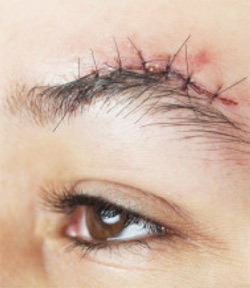 Get stitches if needed. Cuts that are spread apart or are deep often heal better when they are stitched by a medical professional. Keep in mind that stitches must be sewn as soon as possible, while the injury is fresh. If too much time elapses, the wound may become contaminated with germs or bacteria, and a doctor may not want to stitch it closed because of the threat of infection. Also, the wound may start to partially heal, which can hinder successful suturing. See a doctor in a timely manner and let him decide the best treatment for the wound.
- Keep the wound moist. Apply petroleum jelly to the wound and cover it with a non-stick bandage. This can speed healing and minimize scarring.
- Don’t fall for the false advertising of scar creams. You might have heard that vitamin E can help reduce scarring, but this has not been proven in a high-quality study (a double-blind, placebo-controlled trial). In fact, no over-the-counter product claiming to prevent scars has been scientifically shown to significantly improve scarring.
- Massage the wound. The active massage by with vitamin E helps reorganize the immature collagen bundles forming during the repair of the injury. The moisturizer decreases the friction on the tender new scar while massaging also moistens the region, as moisturizing glands are not yet functioning in a new scar.
- Avoid the sun. Keeping the scar away from sunlight can help minimize discoloration.
- Let it heal naturally. Don’t use hydrogen peroxide too frequently as it can cause continual irritation and slow the healing process. And don’t pick at scabs. Scabs are nature’s biologic dressing,. Picking off a scab repeatedly when a wound is trying to heal will slow healing and increase scarring.
- Be patient. Healing takes time — possibly a long time. The first phase of healing takes three months, followed by a second phase that lasts another three months. After one year of the injury, the scar has basically formed, but even then it will still change and appear different a year after that.
The truth is, scars never stop changing and improving unless they are keloid scars, which continually worsen unless treated by a physician.
If scarring is unsightly, uncomfortable or restrictive, treatment options may include:
|
Reference:
Disclaimer
The Content is not intended to be a substitute for professional medical advice, diagnosis, or treatment. Always seek the advice of your physician or other qualified health provider with any questions you may have regarding a medical condition.