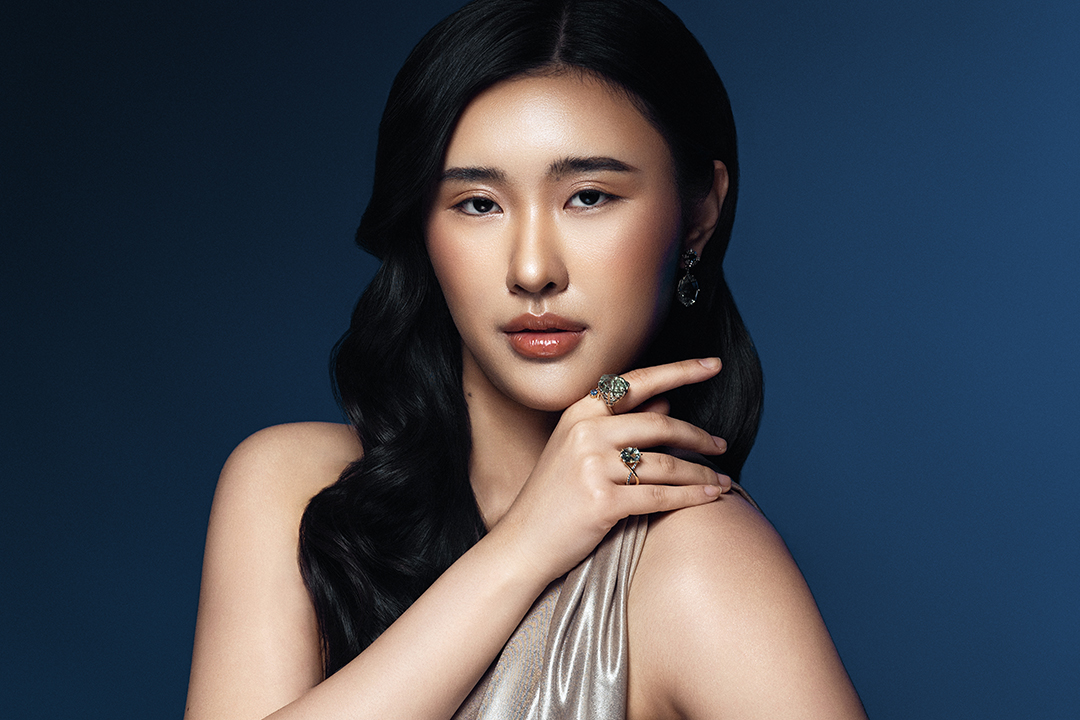
Namita Nayyar:
A Message from Yeong Kim for Mother’s Day 2026: If you could write a one-minute letter to either your own mother or to the metaphorical “mother” of modern structural elegance (e.g., Coco Chanel or Rei Kawakubo), what would it say about legacy, honor, and the transmission of strength?
Yeong Kim:
If I were to write a letter, it would not be grand in its language, but deliberate in its meaning.
You taught me that strength is not something that needs to be constantly demonstrated. It exists quietly, in repetition—in the decisions made when no one is observing. Because of you, I learned how to remain intact in environments that are inherently unstable, how to move without becoming displaced.
There were moments when I did not fully understand the weight of what you were giving me. But over time, I realized that what you passed down was not simply resilience, but discernment—the ability to recognize what is worth preserving.
In an industry that constantly shifts its standards, that ability has become my anchor. If I am able to carry anything forward, it would be that sense of internal alignment. Not as something visible, but as something that endures across time and circumstance.
That, to me, is legacy.
Namita Nayyar:
Your look requires both the ethereality of a runway model and the structural rigidity of an editorial pose. What is your specific fitness regime to maintain that tension? (Please include: weekly workout split, reps/sets where relevant, and any non-traditional training like Pilates, reformer, or isometrics.)
Yeong Kim:
My approach to fitness is less about intensity and more about continuity and awareness. As a model, I am required to maintain a certain duality—fluidity in movement, yet precision in structure. To support this, I focus on practices that cultivate both control and release.
Hot yoga and meditation are central to my routine. They allow me to develop strength within stillness, rather than through external force. In those environments, I am able to refine alignment, breath, and internal focus simultaneously.
I do not rely heavily on high-impact training such as running or intensive personal training. Instead, I am drawn to disciplines that emphasize quiet endurance—where the body is trained not through excess, but through consistency.
Maintaining a body fat percentage around 17–18% is not approached through restriction, but through balance. The goal is not to impose control on the body, but to create conditions where it can regulate itself efficiently.
For me, physical training is ultimately an extension of mental discipline. It is less about shaping the body, and more about understanding it.
Namita Nayyar:
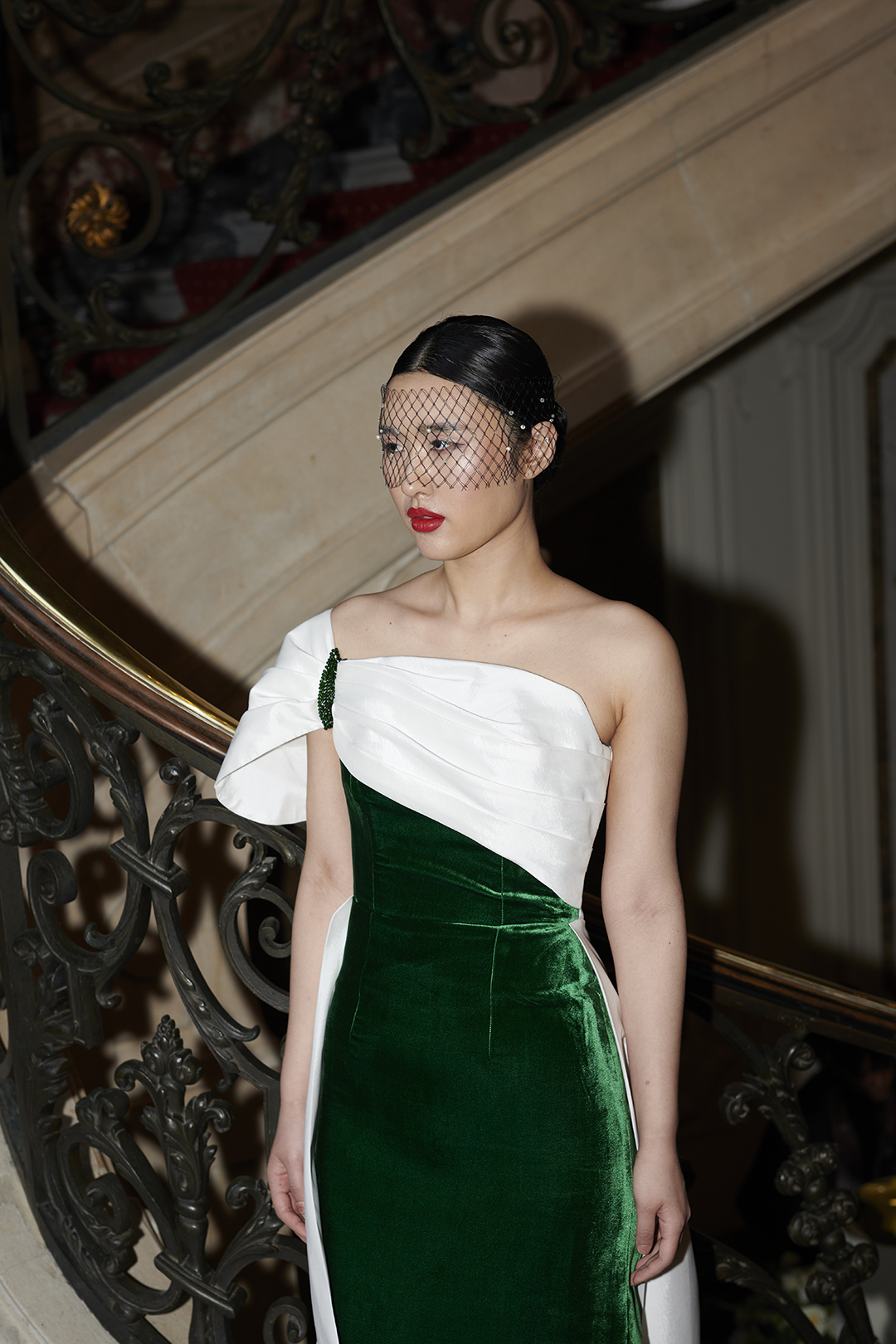
Describe a typical exercise routine the day before a Paris Fashion Week show versus a day off in Seoul. How does it differ in intensity and intention?
Yeong Kim:
The day before a show is highly dependent on the garments I will be wearing, as each look demands a slightly different physical presentation. If the styling involves exposure of the abdomen or lower body, I implement what is often referred to as a “water out” protocol. This involves significantly reducing water intake to minimize retention, as well as avoiding fermented or bloating-inducing foods. In Korea, I occasionally use facilities such as jjimjilbangs to accelerate the release of excess water through heat exposure.
However, if the look is more covered and does not require that level of refinement, my approach is more moderate. I maintain simple intake— primarily coffee, eggs, and protein-focused meals—to sustain energy while keeping the body visually stable.
The intention is not to drastically alter the body within a short period, but to fine-tune how it presents under specific lighting, fabric, and silhouette conditions. It is a subtle calibration rather than an extreme transformation.
Namita Nayyar:
Your diet must fuel high-budget production leadership while maintaining a fashion-edit silhouette. Walk us through a full day of eating (breakfast, lunch, dinner, hydration protocol) and any strategic fasting or nutrient timing you use.
Yeong Kim:
From a nutritional perspective, modeling requires a level of precision that extends beyond general dietary habits. It is not simply about maintaining a certain physique, but about sustaining cognitive clarity, physical consistency, and adaptability across varying conditions.
My approach begins with stability. I avoid extreme fluctuations in intake, as they tend to create unpredictability in both energy levels and physical appearance. In the morning, I prefer light, easily digestible foods—typically a combination of protein and natural sugars—to gently activate metabolism without creating heaviness. Lunch is the most structured meal of the day, where I incorporate a balanced ratio of complex carbohydrates, lean protein, and essential fats.
Dinner is intentionally minimal. The focus is on recovery rather than intake, allowing the body to rest without excessive digestive demand.
Hydration is consistent but strategic. It is adjusted depending on upcoming schedules, particularly before shoots or shows where visual precision is critical.
I also consider nutrient timing. Certain foods are introduced or reduced depending on whether the priority is energy output, visual sharpness, or recovery. Ultimately, nutrition becomes less about restriction and more about responsiveness—understanding how the body reacts, and adjusting accordingly.
Namita Nayyar:
Back-to-back runway seasons (Paris, Seoul, and Manila) mean extreme climate and styling changes. What is your non-negotiable skin care ritual for repairing barrier damage after a show using heavy foundation or latex-based structural makeup?
Yeong Kim:
After shows involving heavy foundation or latex-based makeup, my focus shifts from removal to restoration. The skin, at that point, is not simply “dirty,” but compromised.
I begin with a gentle, layered cleansing process to dissolve product without disrupting the skin barrier. Harsh or overly aggressive cleansing tends to create further imbalance, especially during fashion week when the skin is repeatedly stressed.
Following cleansing, I prioritize hydration and barrier repair. This includes products designed to reinforce the skin’s natural protective function, rather than temporarily altering its appearance. I avoid excessive exfoliation during these periods. While it may seem beneficial in the short term, it often leads to increased sensitivity over time.
The goal is to return the skin to a neutral, stable state. Not perfected, but balanced. Consistency in this process is what ultimately preserves long-term skin health.
Namita Nayyar:
For hair: How do you maintain the “minimal luxury” aesthetic when your hair is washed, heat-styled, and sprayed daily during Fashion Week? Do you use any specific scalp treatments or bond-building systems?
Yeong Kim:
Hair, during fashion week, undergoes a significant amount of stress—frequent washing, repeated heat styling, and continuous product application. Because of this, my approach is centered on preservation rather than correction. I focus primarily on scalp health, ensuring that it remains calm and balanced despite constant manipulation. A stable scalp creates the foundation for healthier hair overall.
When possible, I incorporate bond-repair treatments to reinforce the internal structure of the hair. However, I avoid overloading it with products, as excess can often lead to buildup and further damage. Outside of work, I minimize additional styling. The intention is to allow the hair to recover in its most natural state.
Maintaining a “minimal luxury” aesthetic, in this sense, is not about constant refinement, but about protecting what is already there.
Disclaimer
The Content is not intended to be a substitute for professional medical advice, diagnosis, or treatment. Always seek the advice of your physician or other qualified health provider with any questions you may have regarding a medical condition.
