I sit with my 20-year-old daughter in our kitchen. She is home from college and telling me about her periods: the heavy bleeding, bloating and severe cramps that sometimes take her breath away. She tells me about being curled up in a ball in her dorm room, too much pain to move, and feeling so weak from the bleeding that she thought she might pass out.
Her doctor told her it was “normal.”
Later that same week, I sit in my office and listen to women of all ages talk about what happens to their body and mind around their cycle: rage, irritability, anxiety, depression, bloating, fatigue and pain. For some women, these symptoms have been part of their lives since their very first period. For others, they appear or intensify during pregnancy and postpartum, perimenopause or other seasons of hormonal change.
Our menstrual cycles can affect far more than our reproductive system. Hormonal shifts can influence how we feel about our bodies, how we sleep, our energy, our mood, and even how we experience ourselves. Our bodies go through so much as women throughout our lifespan. It can feel powerless at times and like we are at war with our own body.
Yoga gives us a way to respond to the menstrual cycle and our body rather than fight against it.
Certain asanas can offer relief in the moment: creating space in the body, easing muscular tension, and inviting us to slow down. Yoga can calm our nervous system and balance our mood. But I believe the deeper benefit comes from practicing yoga regularly. Over time, we become more attuned to our body’s signals and more willing to listen rather than just push through.
Yoga shouldn’t replace medical care for significant menstrual symptoms, of course. But a regular mind-body practice can support stress reduction, emotional regulation, body awareness, and overall well-being.
Long-term menstrual wellness isn’t about finding one perfect pose for your period. It’s about learning to listen to your body throughout every cycle and season of your life. When we show up consistently to tune in with our body, we learn to honor what our body is needing each day. Over time, these create resilience and balance both physically and emotionally.
Here are some of my go-to asanas along with my favorite meditation for menstrual relief:
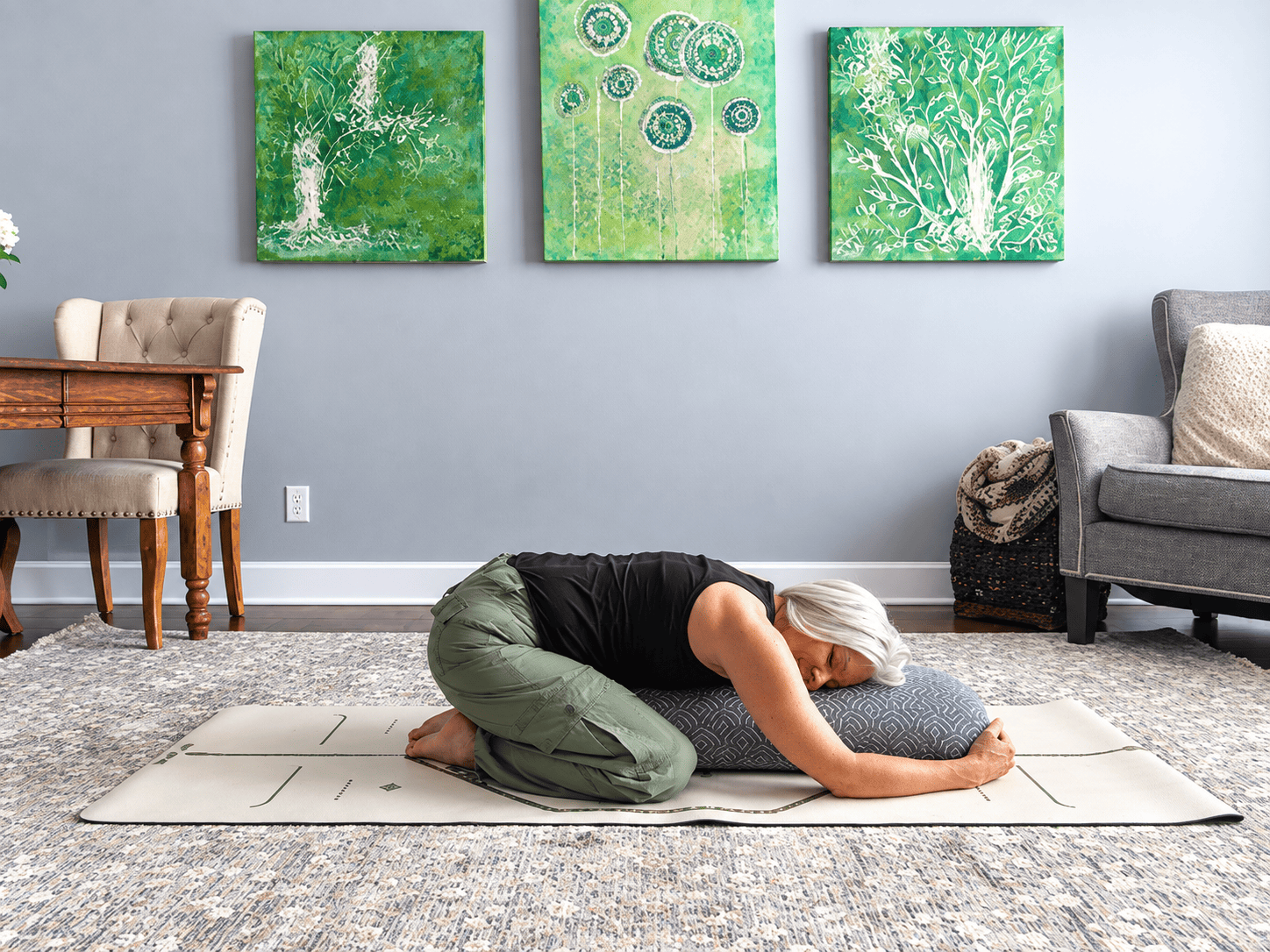
Child’s pose on a Bolster
- Bring your toes together, knees wide. Place a bolster or cushion between your knees.
- Slowly walk your hands down to rest your body on the cushion.
- Allow yourself to rest in this pose for 3-5 min or as long as you need.
Benefit: Child’s pose releases tension in the low back. Gentle pressure to the abdomen releases tension of cramping. Feeling the support of the ground and bolster calms the nervous system to improve irritability, anxiety, and sleep.
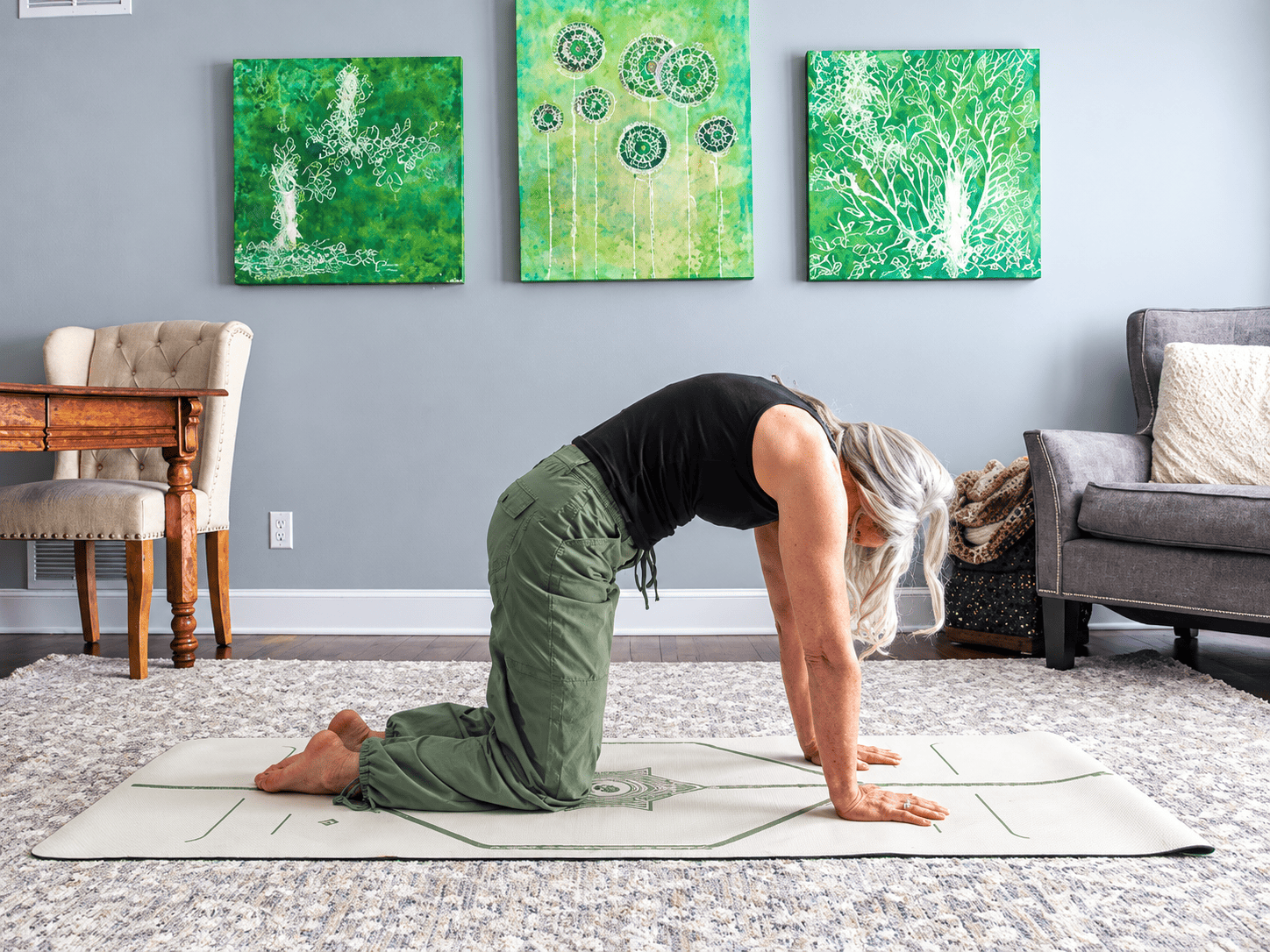
Cat-Cow
- Come to all fours on your mat. Place your hands directly under your shoulders and your hips directly above your knees.
- On your inhale, allow your belly to drop toward the floor, filling it with air. Turn your gaze up toward the sky.
- On your exhale, pull your belly toward your spine, pushing all the air out of your lungs and rounding through your upper back.
- Try slowing down your usual pace to allow more of a release.
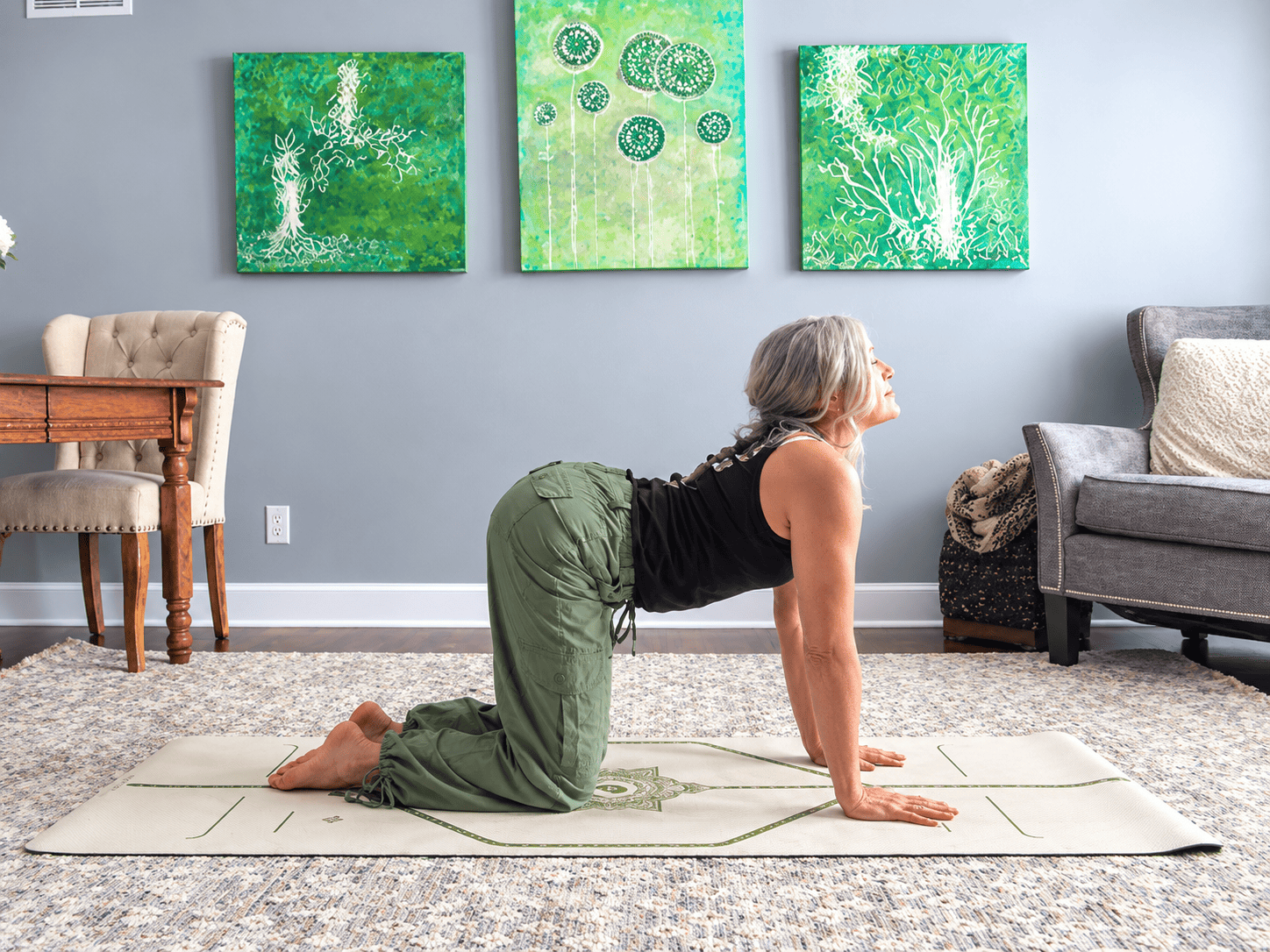
Benefit: This moving pose invites heavy emotional energy and the build-up of stress to release. At the same time, it releases tension in both the back side and the front of the body.
Lizard pose
- Come to a kneeling position on the mat. Step one foot forward while the opposite knee stays on your mat.
- Option to place a bolster underneath your hands to raise the floor and provide balance and support.
- Begin shifting your weight forward to find a stretch in the front of the hips. Gently move back and forth, bending and straightening the front leg.
- Then find stillness in a lunge position.
- Repeat on the opposite side.
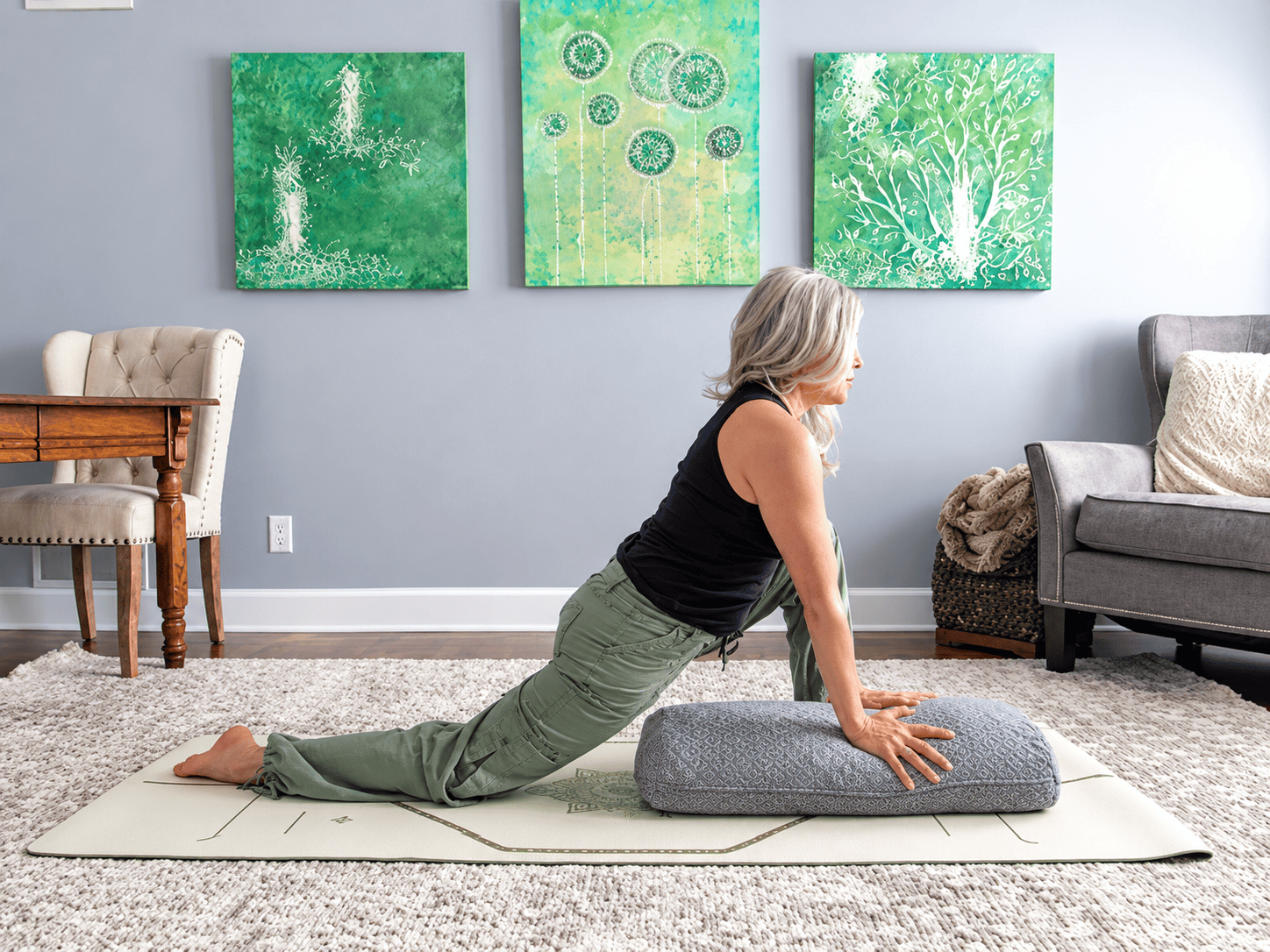
Benefit: During our cycle, we need a gentler approach to movement. While many of the poses listed here invite stillness, this one allows for gentle movement to uplift your energy and combat fatigue. It also stimulates energy movement through the abdomen and pelvis and calms the nervous system.
Seal or Crocodile Pose on a Blanket
- Lying on your stomach, place the top edge of a folded blanket right at the base of your ribs.
- Allow your legs to extend behind you, feet wider than the hips. Release any holding on through the glutes or legs.
- Option to support your upper body on your elbows or lie down with your forehead resting on stacked hands.
- If the blanket creates too much pressure, you can remove it and do the pose with your abdomen directly on the mat.
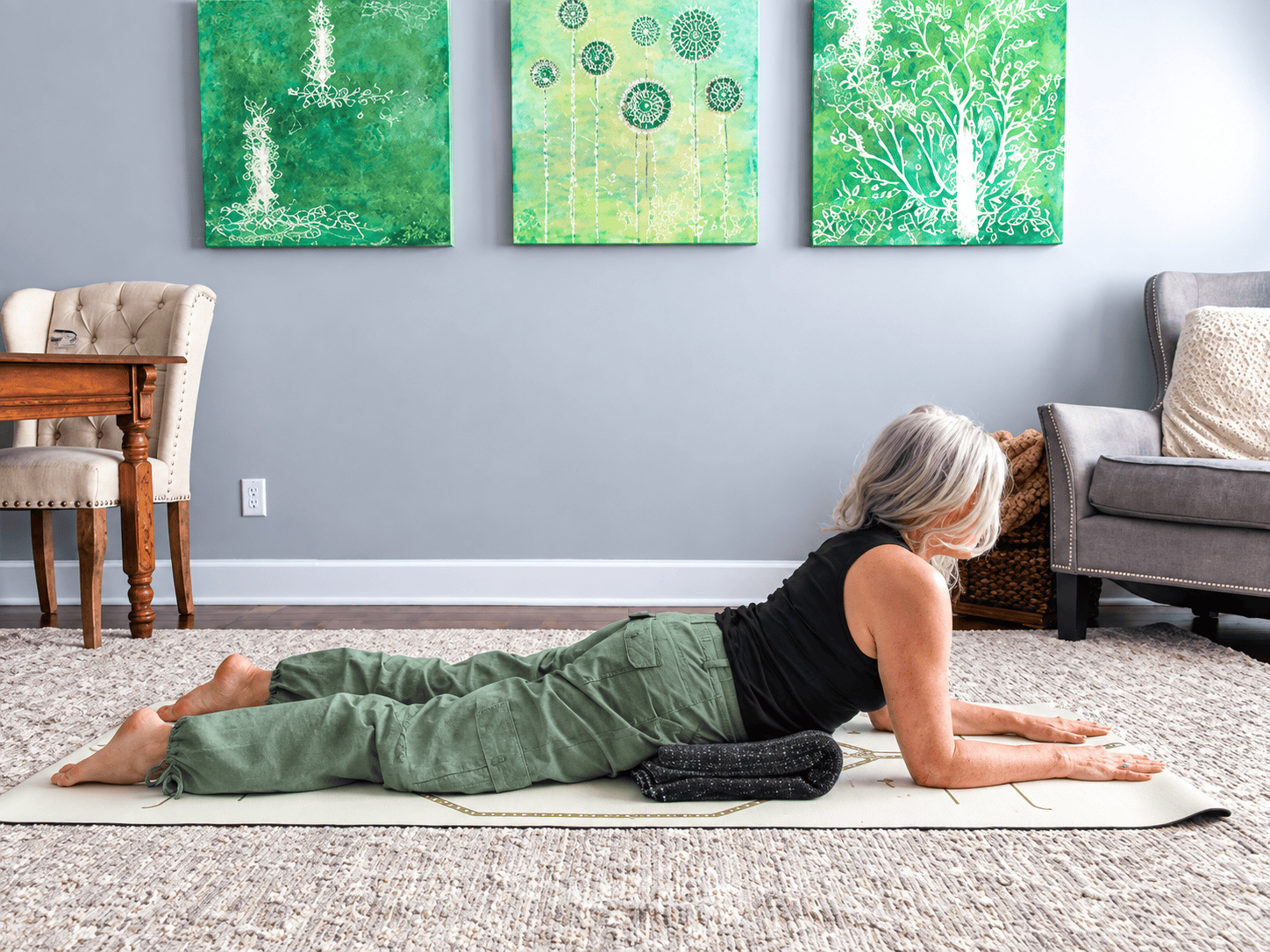
Benefit: This gentle stretch through the front of the body and the pressure of the blanket promotes digestion and decreases bloating.
Pigeon pose
- From downward-facing dog, bring one knee forward and lower your body to the mat. Allow your upper body to be supported on a bolster.
- If your hip is lifted off the ground, place a rolled blanket under it for more support.
- Stay in the pose for several minutes. Connect with your breath and allow your nervous system to settle.
- Repeat on the opposite side.
Benefit: This pose releases heavy emotional energy that we can hold in our body. It calms the nervous system and allows for a release of the muscles through the low back and pelvis helping reduce cramping and bloating.
Reclined Butterfly on a Bolster
- Sitting on your mat, place the bolster directly behind you with the short edge against your low back.
- Place the soles of your feet together and allow your knees to fall out to each side. Lay your upper body back on the bolster.
- Note: Option to stack another cushion or blanket on top of the bolster if you need more support. Place blocks or blankets underneath each knee. Or let your legs be straight on the mat, just wider than hips and allow the feet to fall out to each side.
- Allow yourself to find the most comfortable supported position for your body and stay in the pose for several minutes.
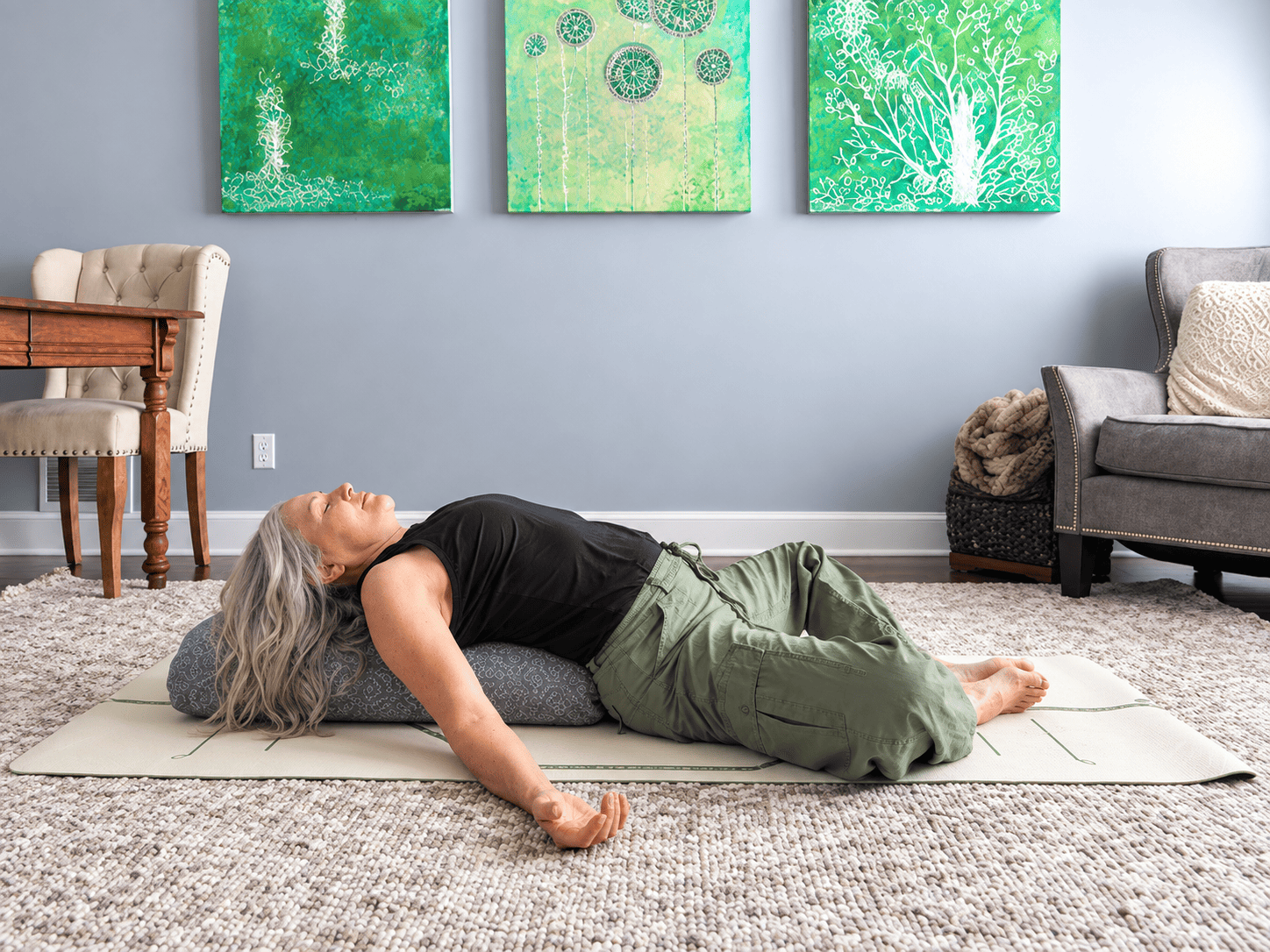
Benefit: This pose allows for a gentle stretch through the front side of the body, allowing cramps to ease and digestive bloating to release. When the body feels fully supported, our nervous system can come into a state of calm.
Supported Bridge
- Lie on your back. Place your feet on your mat hip-distance apart, bending at your knees.
- Press up through the feet to lift the hips and place a bolster underneath your low back.
- Rest your hips down on the bolster and allow your arms to fall out to each side.
- Stay here for several minutes.
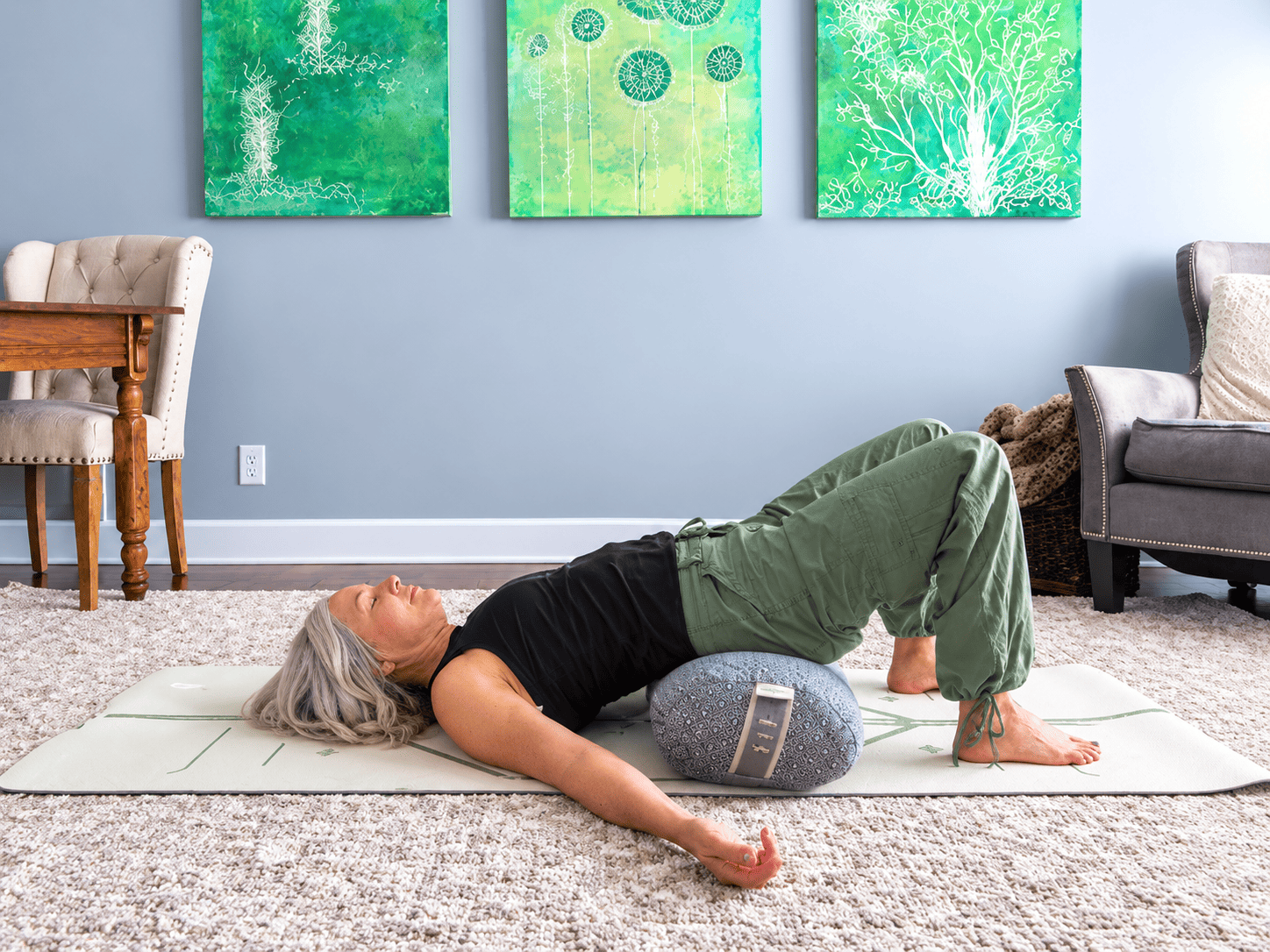
Benefit: This pose creates space in the pelvis and releases muscle tension and cramps. It eases digestion and releases bloating. Emotionally, it allows you to calm and release emotional tension and irritability.
Legs up the Wall with Bolster
- From supported bridge, bring your legs directly up, feet toward the ceiling. Alternatively, you could lean your feet against the wall.
- As long as your feet are above your head, you will get the benefit of this pose.
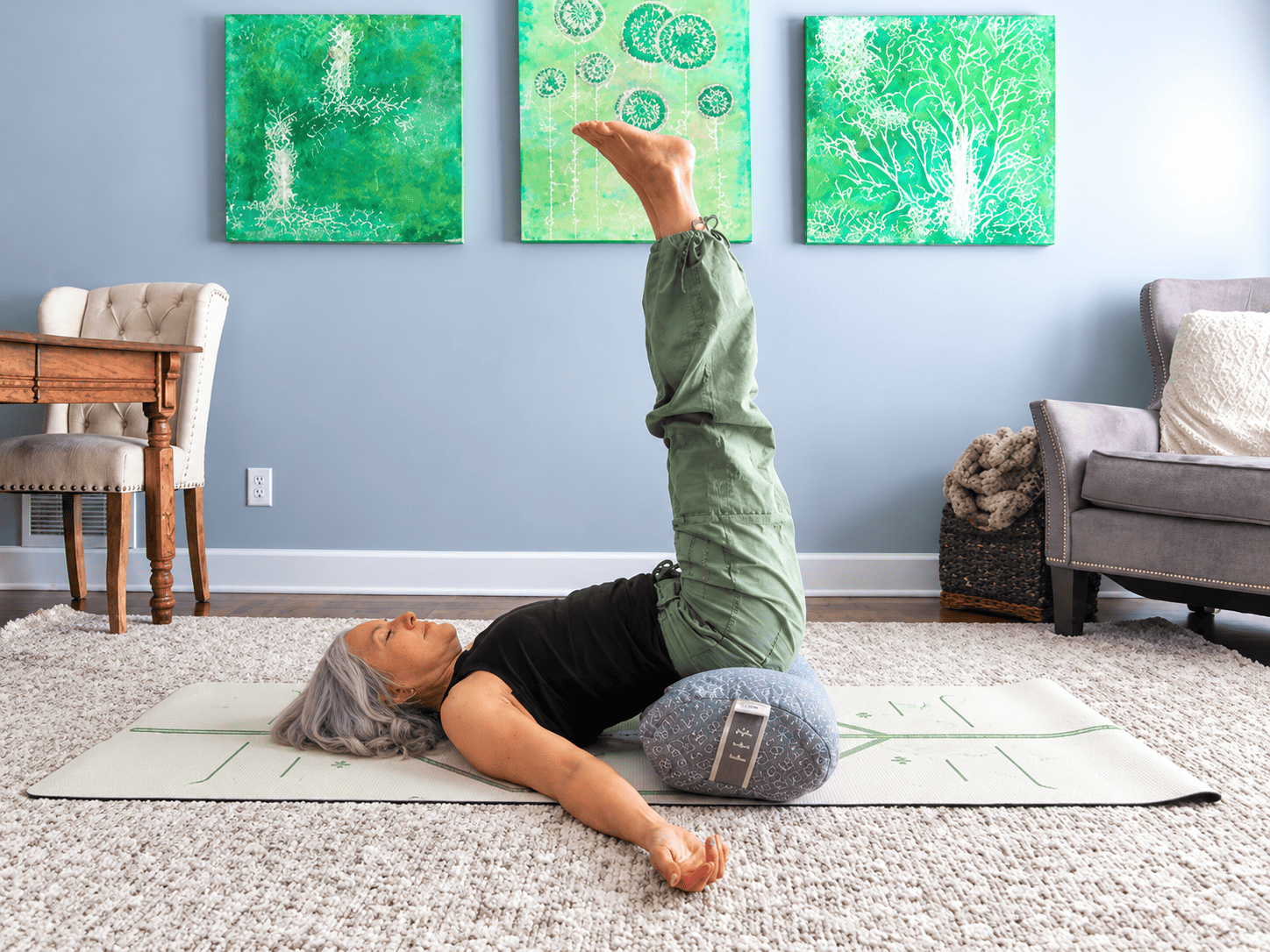
Benefit: This pose stimulates the parasympathetic nervous system, which is our relaxation response. When we hold this pose for just a few minutes, our nervous system will automatically calm, reducing anxiety and preparing us for sleep.
Supported Savasana:
- Lie on your back. Place a bolster underneath your knees. Bring your shoulder blades down your back and rest your shoulders comfortably on the mat.
- Or place a blanket or pillow on your abdomen, either near the chest or further down on your lower belly. Tune in to which feels better.
- If the added pressure of the pillow does not feel comforting, place it off to the side.
- The most important thing is to honor what feels good in your own body today.
- Stay in this pose for several minutes. Allow your breath to be long and even or consider using a guided meditation like the one listed here for added benefit.
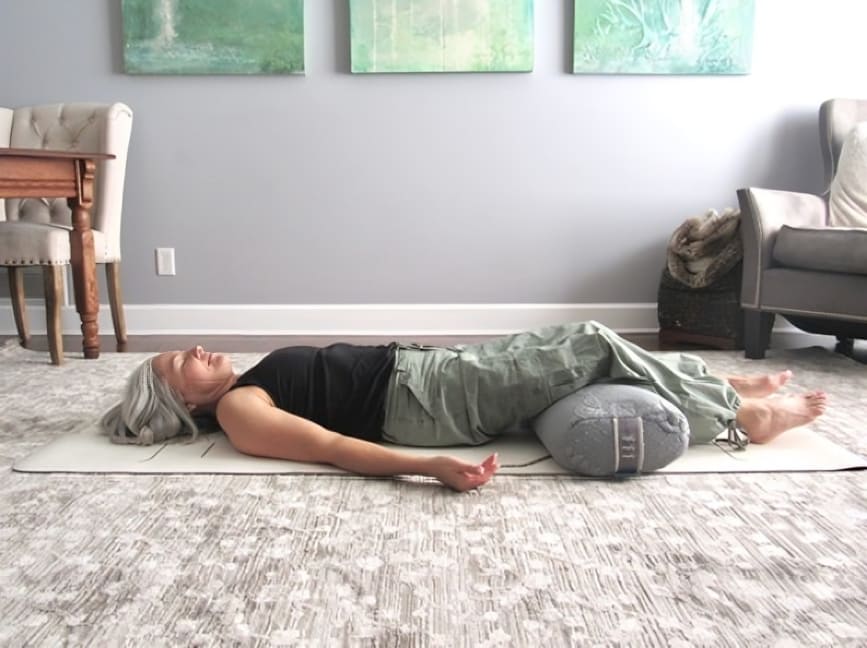
Benefit: Rest; our body needs more rest during our menstrual cycle. This pose allows your nervous system to come into relaxation. It reduces muscle tension, cramps, and prepares us for sleep. It allows our minds to calm and our mood to balance.
Release the Weight of the World meditation (https://insig.ht/oTiJARwzY5b)
- Allow yourself to be fully supported and comfortable.
- Close your eyes and let the track guide you through calming breath, visualization, and compassionate affirmation.
Intention: This meditation is intended to release inflammation, bloating, and puffiness in the body. Through breath and visualization, you will release heightened stress, reduce cortisol, promote lymphatic drainage, and come into a state of calm. This meditation ends with affirmations of gratitude and compassion for all our body does for us.
A note about severe symptoms:
If menstrual pain, bleeding, depression, anxiety or mood changes are severe enough to interfere with daily life, talk with your healthcare provider. Conditions such as PMDD and endometriosis are real and treatable, and you don’t have to simply accept debilitating symptoms as “part of being a woman.”

Bio:
Tiffany Borst, MA, LPC, RYT-500, is a psychotherapist, meditation coach, and yoga instructor in Columbia, MO, USA. She has spent more than 30 years treating the most severe anxiety, OCD, PMDD, and trauma through a holistic blend of Yoga, meditation, and psychology. She is passionate about helping women discover their most calm, confident, joyful Self. Tiffany is the owner of Tiffany Yoga & Psychology and the author of “Becoming Your Highest Self: A Guided Journal”. You can find her recorded meditations on Insight Timer, or find her on Instagram @tifborst or her website www.tifborstyoga.com.
Disclaimer
The Content is not intended to be a substitute for professional medical advice, diagnosis, or treatment. Always seek the advice of your physician or other qualified health provider with any questions you may have regarding a medical condition.
