Presbyopia is a refractive error which results from a disorder rather than from disease. After age 40, the lens of the eye becomes more rigid and does not flex as easily. The result is that it is more difficult to read at close range.
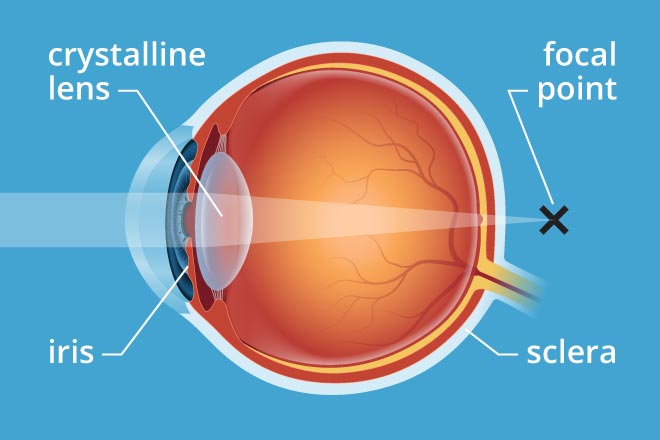
 CAUSE : Starting around age 40 the eye’s lens begins to lose its elasticity. The layers of tissue accumulate on the lens – the part of your eye that focuses on light. Eventually the cells become so densely packed that the lens loses its ability to change shape when you shift the gaze from far to near and gradually progress until it is unable to focus close up. The causes of presbyopia can vary from person to person, but below are some of the variables that may affect one’s near vision:
- Genetics
- Age
- Stress
- Personality type. There are emotional factors that effect how one’s vision develops.
- Diet
WARNING SINGS:
- Blurred vision at normal reading distance. May also start experiencing problems seeing between 16 inches and three feet away as presbyopia progresses.
- Eye fatigue along with headaches when doing close work.
- Some signs of presbyopia include the tendency to hold reading materials at arm’s length.
If you’re nearsighted able to see near things more clearly presbyopia may not affect you until your late 40s or early 50s. But if you’re farsighted (able to see distant things more clearly) you can expect presboypia to settle in, much sooner than that .
Diagnosis & Tests:
A general eye examination will be performed, including measurements to determine a prescription for glasses or contact lenses.
Tests may include:
- Visual acuity – measures the smallest letters that you can read on a standardized chart at a distance of 20 feet.
- Refraction test – an eye exam that measures a person’s ability to see an object at a specific distance
- Muscle integrity
- Slit-lamp – an instrument used with a high-intensity light source that can be focused to shine as a slit. It is used with the biomicroscope (an optical instrument that is like a microscope with two eyepieces).
- Retinal examination
TREATMENT
Presbyopia is commonly treated using corrective lenses cover the cornea, the such as eyeglasses or contact lenses. In some cases, the addition of bifocals to an existing lens prescription is sufficient.
With the use of contact lenses, some people choose to correct one eye for near and one eye for far. This is called “monovision” and eliminates the need for bifocals or reading glasses, but can interfere with depth perception.
Just keep in mind. If you opt for extended wear contacts you need to be vigilant about possible corneal problems. Remove the lenses promptly if your eyes becomes uncomfortable teary or red, your eyelids gets inflamed or your visions changes.
Squeezing out perfect vision
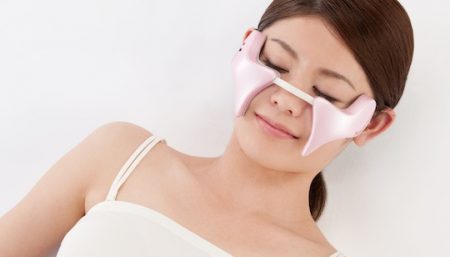
A tiny artificial eye muscle may soon do the work of conventional glasses, helping both the near and the farsighted achieve perfect vision. Research from the University of new Mexico, in Albuquerque, announced in March 2002 that they were developing a ‘smart eye band’ that can be sewn onto the tough white outer part of the eyeball. From there, the device can temporarily squeeze the eyeball into the shape best suited for overcoming specific vision problems. For example, slightly elongating the eyeball brings close-up objects into focus, helping the farsighted to read.
The artificial muscles consists of a synthetic compound covered by a gold coil that is activate by a magnetic field. The user controls the action with a switch hooked like a hearing aid over the ear. With nothing more than a press of a button, you can change your focus from the newspaper in front of you to the action outside the window with no loss of clarity – and there’s no looking around for where you left your glasses. The researchers hope the advice will be available in there to five years.
PREVENTION.
Presbyopia is a normal part of the natural aging process, hence it is difficult to prevent its occurrence. A combination of visual therapy, nutrition, and lifestyle changes can help slow down the progression of presbyopia, and possibly even improve vision.

- Manage chronic stress in your life. Chronic, long-term stress has been shown in numerous studies to contribute to serious disease, and is suspected to cause such eye diseases as glaucoma. Managing this stress would go a long way towards helping preserve one’s health and vision. There are a number of great techniques including biofeedback,meditation, yoga and tai chi.
- Eat healthy. Many studies have confirmed that a regular diet that includes green, leafy vegetables and grains, can significantly lower one’s likelihood of getting eye disease, particularly macular degeneration and cataracts.
- Maintain a regular, aerobic exercise routine. Fast walking 4-5 times a week is excellent.
- If you are a computer user, avoid long hours of focus on the screen.
- Clean eyes twice daily with clean water
Visit an eye specialist at least once a year in case of a normal vision or twice in case a person is suffering from diabetes.
Disclaimer
The Content is not intended to be a substitute for professional medical advice, diagnosis, or treatment. Always seek the advice of your physician or other qualified health provider with any questions you may have regarding a medical condition.