Acne is a rash, usually on the face, due to blockage and inflammation of glands in the skin. While not a life threatening condition, acne can be upsetting and disfiguring. Severe, acne can lead to serious and permanent scarring. While most people outgrow acne by their early 20s, some – especially women – have acne into their 40s or 50s.
Cause of Acne
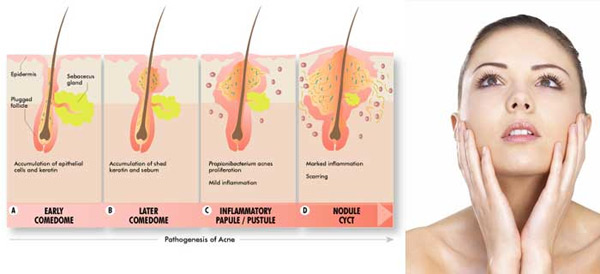
Acne is caused by the over-production of sebum, an oily substance secreted by the sebaceous glands in the skin. Normally, the sebum drains into hair follicles and flows out through the follicle openings on the skin’s surface, thereby keeping the skin lubricated and supple. However, when the glands produce excess sebum, the follicles become blocked. If the sebum remains clogged in the follicle openings, it hardens and becomes dark, forming plugs called blackheads. In some cases, follicles are sealed by an excess of keratin, the tough, fibrous protein produced by the skin cells. When this happens, the trapped sebum hardens into white lumps, called whiteheads, under the surface of the skin. In both types of blockage, bacteria multiply in the sebum, causing inflammation of the surrounding issues.
- Acne starting at puberty is thought to result from increased sensitivity to androgens (male sex hormones), which are present in both boys and girls and levels of which are raised during puberty. Androgens cause the sebaceous glands to increase their output of sebum.
Rapid production of P. acnes - There may be a genetic factor since acne can run in families.
- The use of anabolic steroids to improve performance in sports may also raise androgen levels.
- Other causes of acne vulgaris include hormonal disorders such as Cushing’s syndrome , which is due to an excess of corticosteroid hormones.
- In girls, outbreaks may be affected by the hormonal fluctuations that occur during the menstrual cycle.
- The condition may also be exacerbated by the use of oil-based cosmetics.
Poor hygiene does not cause acne, although a build-up of oil and dead cells on the skin surface may increase the risk of blocked follicles and allow bacteria to multiply. There is no evidence that fatty foods, sweets, or chocolate either cause or aggravate acne.
Occupational acne is usually caused by long-term contact between the skin and oily clothes. The reasons for drug-induced acne are not know.
|
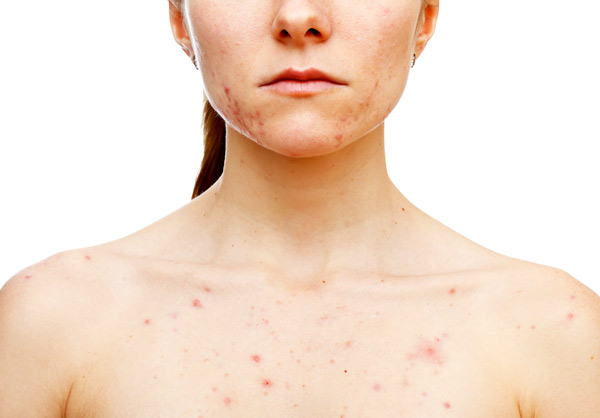
Types of acne Acne lesions range in severity from comedones (blackheads and whiteheads) to nodules and cysts. Here is a brief definition of acne lesions: Comedo (plural comedones) – A comedo is a sebaceous follicle plugged with sebum, dead cells from inside the sebaceous follicle, tiny hairs, and sometimes bacteria. When a comedo is open, it is commonly called a blackhead because the surface of the plug in the follicle has a blackish appearance. A closed comedo is commonly called a whitehead; its appearance is that of a skin-colored or slightly inflamed “bump” in the skin. Papule – A papule is defined as a small (5 millimeters or less), solid lesion slightly elevated above the surface of the skin. Pustule – A dome-shaped, fragile lesion containing pus that typically consists of a mixture of white blood cells, dead skin cells, and bacteria. A pustule that forms over a sebaceous follicle usually has a hair in the center. Macule – A macule is the temporary red spot left by a healed acne lesion. It is flat, usually red or red-pink, with a well defined border. A macule may persist for days to weeks before disappearing. When a number of macules are present at one time they can contribute to the “inflamed face” appearance of acne. Nodule – Like a papule, a nodule is a solid, dome-shaped or irregularly-shaped lesion. Unlike a papule, a nodule is characterized by inflammation, extends into deeper layers of the skin and may cause tissue destruction that results in scarring. Cyst – A cyst is a sac-like lesion containing liquid or semi-liquid material consisting of white blood cells, dead cells, and bacteria. It is larger than a pustule, may be severely inflamed, extends into deeper layers of the skin, may be very painful, and can result in scarring. Cysts and nodules often occur together in a severe form of acne called nodulocystic. |
WHAT ARE THE SYMPTOMS?
Acne vulgaris occurs in areas in of skin that have a high density of sebaceous glands. At puberty, the hair, face, and upper trunk normally become greasy due to increased production of sebum. However, in people with acne, oiliness is excessive. Acne tends to appear on the face, but other areas such as the upper back, centre of the chest, shoulders, and neck are also commonly affected. The disorder is usually more serve in winter and tends to improve in summer with increased exposure to sunlight. Lesions that are caused by occupational acne may appear on parts of the body that come into close contact with oily clothes, such as thighs. All forms of acne may produce some or all of the following types of lesion:
- Tiny blackheads.
- Small, firm white heads.
- Red pimples, often with yellow pus-filled tips.
- Painful, large, firm, red lumps.
- Tender lumps beneath the skin without obvious heads (cysts).
All of the types of lesion listed above may develop at any one time, but the severity of acne varies greatly from person to person. Deep-seated lesions may leave scars after they have healed.
TREATMENT
The key to getting rid of acne and preventing new ones from forming lies in knowing that:
- Resolution takes time.
- What works for one person may not work for another.
- A dermatologist’s help may be required.
Acne does not clear overnight. On average, 6 to 8 weeks are needed to see initial results. Once acne significantly improves or clears, continued treatment is needed to keep acne from re-appearing. If acne does not improve in 6 to 8 weeks, treatment may need to be adjusted as not every acne treatment clears every case of acne.
Besides, there is a range of treatment options to tackle the problem.
Hygiene
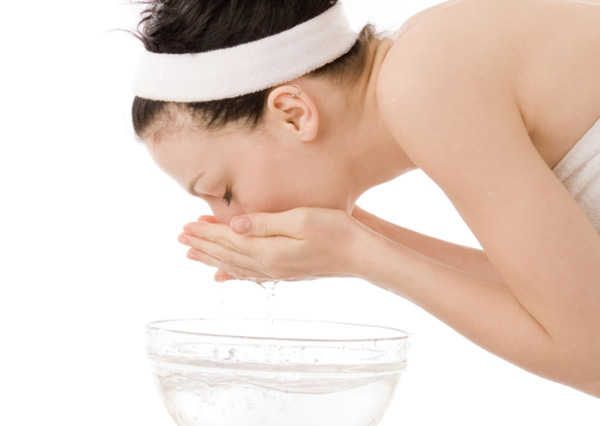
It’s important to keep spot-prone areas clean, so wash the affected area twice a day with an unperfumed cleanser. Antibacterial face washes and soaps specifically for greasy skins are also available. However, the skin needs a certain amount of oil to maintain its natural condition, so avoid aggressive washing with strong soaps.
Also try to avoid the temptation to pick at spots: over-enthusiastic squeezing can cause scarring. No home treatments for acne will work immediately. It can take weeks, if not months, for significant effects to be noticeable.
Over-the-counter medications
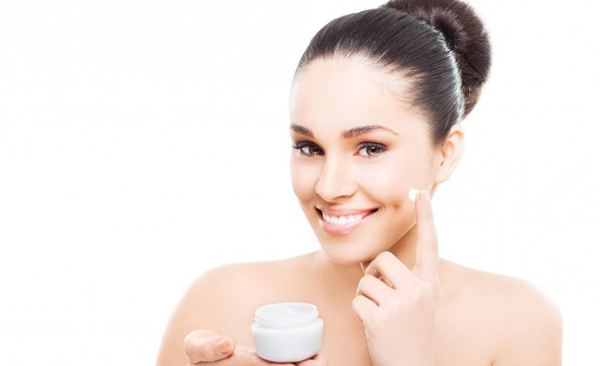
Lotions that contain benzoyl peroxide dry out the skin and encourage it to shed the surface layer of dead skin. Benzoyl peroxide also has an antibacterial action. Together, these effects make it harder for pores to become blocked and for infection to develop. Benzoyl peroxide can cause redness and peeling, especially to start with. This tends to settle down within a few days.
Resorcinol, a popular ingredient in over-the-counter acne medications helps in controling small acne lesions and is frequently combined with sulfur in over-the-counter products. Sulfur has been used for more than 50 years in combination with other agents, such as alcohol, salicylic acid and resorcinol and is found in many over-the-counter acne medications. An ingredient, effective in treating non-inflammatory acne lesions, is salicylic acid. It helps correct the abnormal shedding of skin cells and unclog pores to resolve and prevent lesions. Salicylic acid does not have any effect on sebum production or P. acnes.
Like benzoyl peroxide, salicylic acid must be used continuously. Once stopped, pores clog and acne returns. Salicylic acid is found in many over-the-counter acne products, including lotions, creams and pads. It may be irritating to the skin.
There are a range of other treatment options that can either be rubbed onto the skin (topical) or taken in tablet form (oral):
- Azelaic acid, which is an alternative to benzoyl peroxide, which may cause less skin soreness.
- Topical retinoids, which are medicines based on vitamin A, and are rubbed into the skin once or twice a day. They work by encouraging the outer layer of skin to flake off, and may cause irritation and skin peeling at the start of treatment. Disadvantages of this treatment include them making the skin hypersensitive to sunlight.
- A topical antibiotic lotion applied to the skin can be used to control the Propionobacterium acnes bacteria. Treatment needs to continue for at least six months. Preparations that combine an antibiotic with other acne medication are available.
Oral treatments
- Oral antibiotics (tablets), taken daily for around 3 months, can be prescribed for inflammatory acne. This acts to kill off the bacteria infecting the skin. The success of this treatment can be limited because the strains of bacteria are often resistant to the common antibiotics. It might take four to six months for the benefits to be seen. Antibiotics do not prevent pores from becoming blocked so treatment to prevent blackheads, such as benzoyl peroxide, is often also prescribed at the same time. Some people find that it’s a prolonged course of antibiotics is a nuisance. This explains whey some people do not always complete the course.
- Hormone treatment. For women, a standard combined oral contraceptive pill (containing an oestrogen and a progestogen) can improve acne symptoms. But in some women, it can also make symptoms worse. One particular type of Pill, called Dianette, contains a medicine called cyproterone acetate which cuts the amount of male hormone in circulation and be an effective treatment for acne.
- Isotretinoin (Roaccutane) is a powerful medicine known as an oral retinoid – which also exists in topical form. It tends to be used in severe forms of acne that have proved resistant to other treatments. It works by drying up oily secretions. There are a number of side effects of this drug including dryness of the skin, aches and pains and headaches. It can also damage an unborn baby if taken by a pregnant woman. For safety reasons, isotretinoin is only prescribed by hospital specialists.
There is no immediate cure for acne. However, scarring may be prevented if treatment is started at an early stage. Individual acne cysts may be treated with corticosteroid injections. If acne has already left noticeable scars, you may wish to consult a cosmetic surgeon and discuss techniques such as dermabrasion. In this procedure, the top layer of skin is removed under a general anaesthetic. The raw areas then heal to leave a more even layer of skin.
ACNE MANAGEMENT & PREVENTION
Following these simple self-help measures may help clear up acne and prevent further episodes:
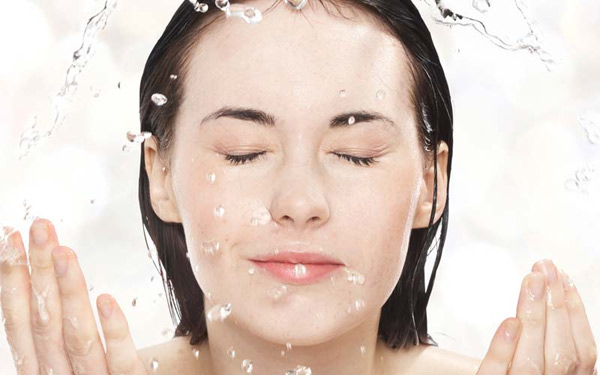
- Wash your skin twice a day with warm, but not hot, water and a mild cleanser. Do not scrub your skin too vigorously.
- Do not pick at pimples because this may make the condition worse and result in scarring.
- Apply a benzoyl peroxide cream daily to the affected areas.
- If you have occupational acne, keep work clothes clean to avoid prolonged contact with oils.
Related Links
Disclaimer
The Content is not intended to be a substitute for professional medical advice, diagnosis, or treatment. Always seek the advice of your physician or other qualified health provider with any questions you may have regarding a medical condition.