Skin is usually fairly elastic, but when with growth or rapid gain in weight really (like during puberty or pregnancy), fine lines may appear on the body, called stretch marks. Stretch marks occurs, when the tissue under your skin tears from rapid growth or stretching. When the skin is over-stretched, it produces too much collagen, which can form the “scars” called stretch marks. In essence, stretch marks represent a dermal scar in which the connective tissue (i.e. collagen and elastin) within the dermis is disrupted.
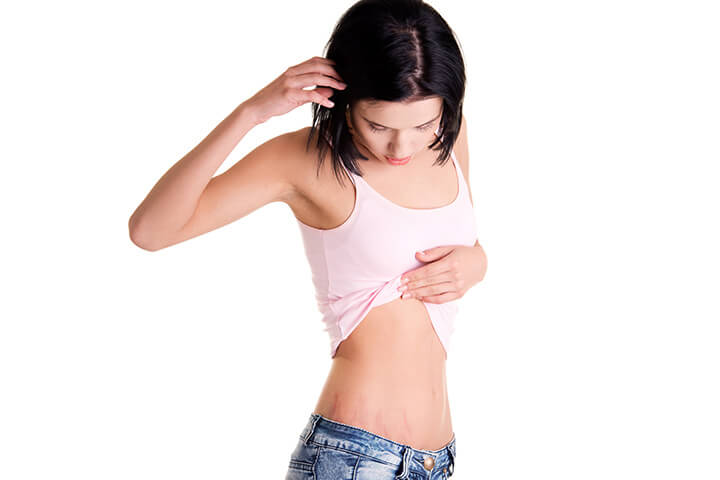
Around half of all pregnant women will develop stretch marks (striae gravidarum), usually in the third trimester, as the abdominal skin is forced to accommodate the growing uterus. Some pregnant women also develop marks on the breasts, hips, buttocks and thighs. Another common cause of stretch marks is rapid weight gain & weight loss. Depending on the skin type, fresh stretch marks can be pink, purple, brown or red. Over time, the stretch marks lose their bright colouring and become silvery, shimmering lines.
Symptoms
The evolution of a stretch mark includes:
- The skin is stretched beyond its capacity as in pregnancy and obesity.
- The underlying tissue tears
- The body responds by forming scar tissue
- The fresh stretch mark looks pink, red, brown or purple, over time, the colour fades & the stretch mark becomes a shimmering, silvery line
- The silvery line may look slightly indented.
- The scar is permanent.
 The visible layer of skin (epidermis) protects the delicate inner layers. The epidermis is made from several sheets of cells. Epidermal cells born in the bottom sheet push up through the layers to replace old, dead skin cells that are constantly sloughed off the surface. The epidermis also contains melanin, the pigment responsible for skin colour. Beneath the epidermis is the dermis. This deeper layer contains sweat glands, sebaceous glands, hair follicles, blood vessels and nerves. The dermis is made from two types of fibre: elastic fibres (elastin) for suppleness and protein fibres (collagen) for strength.
The overstretched dermis
Skin is remarkably flexible and can stretch substantially if given sufficient time. However, a rapidly growing foetus often means the abdominal skin is stretched further and faster than it can comfortably manage. The overtaxed fibres of the dermis tear at the points experiencing the greatest stress. Another common cause of stretch marks is rapid weight gain. Some people develop stretch marks during puberty, if their growth spurt is particularly fast. Whether or not a person develops marks seems to partly depend on their skin’s inherited characteristics. These are also more likely to occur if a person uses steroid-containing (such as hydrocortisone) creams or ointments on their skin for a long time (more than a few weeks). Other cause of stretch marks may include Cushing’s syndrome.
Prevention of stretch marks
Research is contradictory. Most studies maintain that creams and lotions can’t prevent stretch marks, but some trials have found significant successes with certain creams. Prevention suggestions include:
- Eat sensibly to avoid gaining excess body fat.
- Eat a highly nutritious diet to maintain the health of your skin.
- Wear a supportive maternity bra throughout pregnancy.
- Consider using creams that include centella asiatica extract, alpha tocopherol (vitamin E) and collagen-elastin hydrolysates
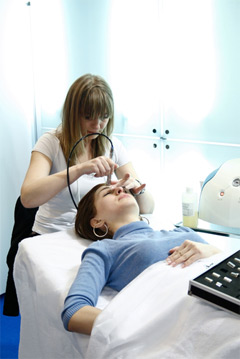
Recent studies found that these marks can be reduced with Pulsed Dye laser treatment and the regular application of creams containing retinoic acid or Retin-A. It must be stressed that retinoic acid should not be applied to the skin during pregnancy. There is currently no information on whether using retinoic acid is safe during breastfeeding . Another approach is to simply wait for the stretch marks to fade by themselves.
Although there are tons of products on the market that claim to eliminate stretch marks, the truth is you can’t make them go away without the use of a form of plastic surgery called microdermabrasion. If you are concerned about your marks, talk to a dermatologist.
Related Links
Disclaimer
The Content is not intended to be a substitute for professional medical advice, diagnosis, or treatment. Always seek the advice of your physician or other qualified health provider with any questions you may have regarding a medical condition.