


|
|
|
|
| |
|
Bodybuilding is:
"The process of
developing the musculature of the body through specific types of
diet and physical exercise, such as weightlifting, especially for
competitive exhibition." or "exercise that builds muscles through
tension"
So basically, if you've
ever lifted weights and/or used weight machines, or been on a diet
to change the composition of your body, you've been bodybuilding.
The first thing you need
to do is establish what your goals are, what you want to accomplish
through your fitness training. Based on what you come up with, you
will decide how many days you want to train per week.
Sarcopenia and the importance of resistance training
Sarcopenia
(pronounced sarko-peen-ya) is the "age-related" loss of muscle. The word comes
from the Greek, for "flesh reduction." Just like
osteoporosis and
arthritis,
"sarcopenia is a serious degenerative condition
that increases ones risks for falls and makes one more vulnerable to injury."
Characteristics Of a Good Weight-training Program
The maximum amount of time a weight
training session should last is 60 minutes. After 60 minutes the
levels of muscle building and fat burning hormones (like growth
hormone and testosterone) begin to drop. In addition, the glycogen
(stored carbohydrates) in your system, which is the fuel that your
muscles use to contract, is depleted.
Plyometrics: exercises to increase power
Plyometric training is specific work
to enhance explosive power. In other words, it involves a lot of
jumping. Plyometric training is used for sports that require short
bursts of power such as tennis, basketball, or skiing, but it's also
a good exercise for anyone who wants to increase her power.
The "Cutting Phase" in Body Building
Trying to gain muscle and lose fat at
the same time is impossible. It just can't be done. This is why most
women who are trying to do both at the same time see no results and
give up. You have to do gaining muscle and losing fat in phases.
Strategy for building muscle mass and muscle density
Fitness model or natural bodybuilder
look strikingly different because of a low body fat percentage and
enhanced muscle mass and muscle density. These are components which
can be built over time. You cannot just expect results within three
to four months and think you have done the necessary work.
The Secret To Well Toned Abdominals Muscles
Abs are your body's center of power
and provide core strength. Strong abs aid balance, help prevent
lower back injuries and promote good posture. Consistent abdominal
workouts (10-15 min, 4-5x per week) performed correctly are not just
for physical well being, but for aesthetics too. The secret to
developing great abs lies in treating your body as a complete unit.
Promoting Healthier
Body Image
Body Image is defined as the mental
representation of your physical self at any given point in time.
Body image refers to how you see yourself, how you feel others
perceive you, and what you believe about your physical appearance.
Body image is influenced more by self-esteem than by how physically
attractive you are to others. It is how YOU feel about and in your
body.
BUILDING LEAN BODY MASS
Chiseled abs, shapely legs, toned arms
- these can be yours when you increase your lean body mass and
decrease your body fat percentage. Rev up your metabolism, improve
your stamina and create the lean body you want by following these
steps. Read on....
Training for your Body-Type
Any body type can be developed with the
correct training and nutrition however people with different body types
will need to approach their training with different objectives, even
though they may all have the same goals.
Read on.....
Minimizing Sore Muscles
Arghh, the dull pain
from sore muscles, is a repeated complain from women involved in
fitness training! Hard exercise causes muscle damage. If you looked
under a microscope at your sore muscles after a hard workout you
would see torn and ruptured individual muscle cells, and breakdown
of the membranes between them. High intensity exercise causes muscle
soreness. Read on....
Zone-Tone method: understanding mind-muscle connection
The "Zone-Tone" technique, is the art
of mentally zoning in and pre-isolating specific muscles just before
an exercise to be executed while at the same time maintaining that
zone throughout the execution of the movement. This wonderful
technique is very easy to grasp and will deliver enormous benefits
to your fitness program.
The best way to train for size
Muscle strength in the adult human is relative to
cross section area (size). An equal cross-sectional area of muscle
from any average trained women or man has about the same 'strength'
(i.e.: can generate the same amount of force, 6 kg - cm2), there is
very little variation.
Read on.....
Choosing the WRONG Exercises
The exercises most bodybuilders
focus on the most, are the ones that cause the most problems. But
before we share with you what those exercise are, let’s talk real
quickly about what bodybuilding is.
Read on.....
TRAINING THE CHEST
More and more women in body building and
fitness are discovering the benefit of a healthy, chiseled
Chest. Improving the muscle tone in the area
of the chest behind the breasts is a great way to improve the look of the bust.
It is essentially a "lift" without resorting to using a scalpel. Read
on.....
Health And Fitness
Needs Of Women at 50+
Recent studies indicate that between the ages of 30 & 70 many of the
symptoms & conditions that were traditionally associated with normal
aging are in fact the result of sedentary lifestyles. Read on....
HEALTH AND FITNESS NEEDS FOR WOMEN AT 40
Favorable modification in the eating and exercise patterns of women
aged 40 and over is likely to have a positive effect on their
health. Experts recommend these tips for coping with the physical,
nutritional, social, mental and emotional needs of women at 40. Read
on....
Top 10 Misconceptions on Bodybuilding
Weight loss by women mostly produces muscle and bone loss. A
combination of low total calories, aerobic exercise, and decreased
protein intake will cause the body to literally strip muscle off of
your body. Read on.....
|
|
Getting
Started |
 |
|
|
Before getting started with body building there are certain aspects
that need to be clearly understood in order to avoid disappoint and
achieve desired results
-
Assess your body-
Every bodybuilder must
have a solid muscular foundation in order to have success in this
sport. With that being said, you need to firstly assess yourself
from this particular standpoint. In order to do this however, you
need to clearly understand what your goals actually are. This
applies to competitive and non-competitive bodybuilders alike
-
Set An Overall Mass Goal for Yourself,
I.E. 200 pounds and shredded
-
Achieve an understanding of how
close/far you are away from your goal.
-
Set up a Comprehensive plan to reach
that goal. I would suggest
using the articles and forums on this site to help you design your
plan. Brief examples:
-
A year long Plan
-
12 week bulks, 12 week cuts
-
Shorter bulks, I.E. 6 weeks and 4 week cuts
-
An overall fat loss program emphasizing lowering your body fat
percentage
-
A program designed to thin skin, etc
top
▲
|
|
The Formula
for
Gaining Lean Mass |
 |
|
|
Muscle mass is the most valuable asset of a bodybuilder.
Basically there is a formula associated with gaining mass. The
formula is the following:
S=D
x (T+N+R)
Where S is the success that you will achieve in your program,
D is the determination that you have to achieve success, T
is the training that you use, N is your nutritional program
and R stands for rest & recovery.
If the
bodybuilder stops following one of the components inside of the
parenthesis then you get a lesser value, which means that you will
not get optimal results. However note that if you don’t have any
determination you get a value of 0 which means that your whole
program will fail and you won’t get any results. The reason for this
is because determination is by far the most important factor in
determining the amount of success you will achieve in your
bodybuilding program. Why? Because if you are not determined enough
to make the sacrifices necessary to gain muscle, then any obstacle
that you encounter in the way will be used as an excuse to stop
following your program. However, if you are determined to reach your
goals, you will make whatever arrangements are necessary in order to
ensure that your training, nutrition and restful sleep remain
unaffected.
Now that we have
talked about the Formula for Success and the reason why
Determination is the key factor in making such formula work, lets
briefly cover the Training component. Nutrition and Recovery will be
covered in a future article.
top
▲
|
|
Principles |
 |
|
|
-
Days/week- Work each body part out no more than once every 5-7
days. I stick to once every 7 days, as it gives more time for rest
and growth, and also makes scheduling workouts easier. If
possible, work 1-2 body parts per workout, 3 at the utmost.
Training schedule might look like this: Monday-Chest,
Tuesday-Back, Wednesday-Rest, Thursday-Arms, Friday-Legs,
Saturday-Shoulders, Sunday-Rest. Working with weights five days a
week is effective and gives you an opportunity to rest after two
or three days consecutive days of heavy training. It is also
easier than four days per week because in five days, you cover all
the major muscle groups on a different day and don't have to
combine two muscle groups like shoulders and arms for example, in
the same day.
-
Duration- Keep your workout under 1 1/2 hours in length,
preferably under 1 hour. Sixty-ninety minutes in the gym is a
perfect amount to spend weight training. Any more than that can be
counter productive. Fitness activities like running, soccer, and
basketball, are ok to do for a longer period. With weight training
you are putting a lot of stress on your muscles, joints, and after
an hour or so, they become fatigued and can inhibit further
progress.
-
Order of exercises- Arrange your exercises to go from compound
movements, which involve multiple muscles, to isolation movements
employing only a few muscles. As such, always start your workout
with your major exercise, be it bench press, squat, deadlift,
pull-ups, military press, or another powerful, compound movement.
Remember, go from large to small when it comes to exercises.
Always go to failure on your last set of an exercise. You should
reach failure or near failure on your preceding workout sets, but
always go to failure on your last set.
-
Intensity- Intensity is the key aspect to achieving results.
The greater the intensity, the greater the progressive overload
and the greater the results will be, as the decrease in rest
between sets forces muscles to work harder whilst in partial
recovery. Without intensity you can lift as much as you like and
you will still only obtain very minimal results as the progressive
overload principal only works when muscles are hot. The basic way
of increasing intensity using weights is done by pyramiding
training i.e. where the weight goes up as the reps come down. This
system of training is the standard as muscles respond much better
to this progressive overload training, rather than simply
performing all sets and reps going straight into 85% of your 1
rpm.
-
Posture/Good form- Observe good form, always. It is alright to
let your form loosen some later in your set, but make sure you can
get at least 6 reps with near perfect form before you "cheat" a
little. Even then, it should be very slight, and still "good
form", no ass-in-the-air on bench, or body swing on curls. If you
have to cheat, the weight is too damn heavy for you. There is no
shame in acknowledging your level of strength, if the weight is
too heavy, lower it some, you're guaranteed a better workout, and
better gains.
-
Warm
up & Stretching- Always begin with a 10-minute warm-up.
Usually use a stair-stepper or jogging , for the first five
minutes to begin sweating. Spend the next five minutes on warm-up
exercises for the muscle group you will be working. The sets will
be light and consist of around 20 repetitions followed by
stretching the muscle you will be focusing on. Once you have
warmed up, stretched and ready to go you can begin with workout
sets.
-
Variation- Change your workout each time. Avoid doing the
same chest exercises or same number of reps, or same weight week
after week. Sometimes you can use barbells, other times mostly
dumbbells, and other times machines and cables. On top of that,
there are flat, incline, decline, supersets, drop sets, pyramids,
and other variations to target the same muscle group
-
Rest-
Your body needs rest and recovery time. Do not workout with
weights more than four days in row. Pros can get away with it
because they have been bodybuilding for 10-15 years and know how
their body will react to their training. They are usually also
using drugs that help their muscles recover and grow faster than
someone who is not using any anabolic bodybuilding drugs. Training
for more than 4-5 days a week might help you achieve some great
results, but there is a great chance for injury and fatigue from
overtraining. Therefore, weight training five days a week with two
rest days works very well , and is the most effective approach
to natural bodybuilding.
|
A
big thing to remember is that your muscles don't grow in the
gym, they grow when you rest. When you lift weights, you rip
apart the muscle fibres and your muscles fix themselves to be
stronger. You rip them up in the gym, but they don't fix
themselves to be stronger until you rest, so if you don't
rest, you won't get stronger. In terms of rest, most major
muscle groups take about 48h to recover, and your lower back
takes about a week to recover. Your calves and forearms are
used all the time for anything that involves you moving
something in your hand, or walking around, so they are used to
a lot of activity, so they recover faster, and have more
endurance. With that in mind, the most effective training
routine includes splitting up your muscle groups and taking
3-4 days to complete one full-body workout. Be careful not to
overtrain. Unlike most things you are taught, "less is more"
in weight training. Make sure you rest. |
top
▲
|
|
Training
methods |
 |
|
|
Bodybuilding techniques
are basic resistance training regimens designed to specifically
increase muscle mass (hypertrophy) as compared to techniques
utilized to increase sport specific requisites (speed, balance,
coordination, agility, reactivity, flexibility, strength, etc.).
Techniques described here involve hypertrophy of the muscle complex
i.e. muscle, tendon, ligament, joints, and bones. As you focus on
long-term goals, you must prepare the supportive structures to adapt
and change as our muscles are continually growing
Giant Sets
A giant set usually consists of a number of different exercises for
one particular body part done in tandem. Set one is preformed on one
exercise followed by set one on the next exercise and so on. Weight
is usually moderate and there is little to no rest between each
exercise. After one set, rest can occur up to two to three minutes.
Example: Triceps pushdowns - overhand grip, followed by triceps
pushdowns - underhand grip, then dumbbell kickbacks. The total,
composing one giant set.
Super Sets
A super set consists of a number of different exercises for two or
more body parts one after the other. Body part number one is
exercised, and then body part number two, etc. Weight is moderate to
heavy with minimal rest between exercises. Rest between super sets
is anywhere from two - five minutes. Example: Biceps and Triceps -
alternating standing curls with triceps French curls.
Stalled Reps/Sets
This method involves stopping the movement somewhere in-between
the start and finishing position, stalling there for a given time
period, and then finishing the movement. This can be done at the
beginning of the movement, midway through the movement or near the
end. Stopping the movement at the end of the movement is not as
beneficial unless resistance is still present (i.e. with a cable
system). The "stall" lasts anywhere from 3 - 10 seconds and can
occur at a given point all the time, or an alternate point each
time. Rest between stall sets is user dependant but can be anywhere
from 30 seconds to two min. Example: Preacher curls with a stall at
the midway point for 10 seconds before completing the range of
motion.
Eccentric
contractions (Negatives)
Eccentric contractions
are defined as muscle contractions in which the muscle lengthens as
opposed to shortening (concentric contractions). This can be
approached purposefully, with the aid of a partner, utilizing
maximal weight (30-40% more than ones maximal concentric lift) or be
done with any regular exercise regimen where the lifter concentrates
on the 'down' phase of the lift as well as the 'up' phase. Timing
during the lift is very slow, allowing for control, and minimum
amount of time is needed between reps. Time between sets is usually
greater, as one needs it for recovery. Example: Bench press with
weight exceeding your maximal press, slowly lower the bar to your
chest and with the help of a partner return the bar to the starting
position. Repeat. Word of caution: Eccentric contractions are known
to cause more muscle soreness than concentric contractions, and the
risk of injury is much greater due to the large amount of weight
utilized!
Progressive
The method is to use
more weight, but make fewer reps. So you begin with a weight a
little lighter than what you take usually and series after series,
you put more weight but do fewer reps. At the end, you'd be at 150%
of you usually weight with 4 of 5 reps.
Digressive
This is the opposite of
the progressive method. You begin with heavy weight and a few reps,
and series after series you'll put down weight but add reps. At the
end you'd be at your usually weight with 10 of 12 reps.
Forced Reps
Forced reps are a
process that involves working the muscle group to failure. Forced
reps take place with in a given set and can consist of maximal
weight to failure (less reps) or light to moderate weight (high
reps). Utilization of a lifting partner is essential to allow full
contraction of the muscle to occur. Minimal time is needed between
forced reps (as long as full muscle contraction occurs) and time
between sets utilizing forced reps is longer to allow greater
recovery. Example: Bench press at 90% of max for 6 - 8 reps
(employing a partner to help you through the full phase of
contraction).
21 reps
Twenty-ones is a
descriptive term based on the number of reps done in a given set.
The unique aspect of this method is that the set is actually broken
up into three different sets done consecutively, within the same
movement. The three different aspects of the set involve partial
range of motions within a full range of motion (see example). Each
aspect or portion of the full range of motion is done for a total of
seven, followed by the next portion of the full movement for seven,
and then finally by the last portion of the full movement, again for
seven. (7 + 7 + 7 = 21!) Obviously you could do Fifteens (5+5+5=15)
if you wanted to, but this technique is better known as Twenty-ones.
The exercise is done using moderate weight.
This is a specific
movement for the biceps.
You begin with a EZ barbell, the arms are right and you touch your
legs.
Make 7 reps, like a curl but stop when your arm are at 90°.
Without stopping the
series, make 7 reps going from 90° to the final position of the
curls movement.
And for ending the
series, make 7 reps of a completed curls, I mean from the legs to
the shoulders by flexing the arms.
Then you have done 1
series. Don't try to make a second one, you can't.
Do this movement with 60
percents of your usual weight.
Partial Reps, Restricted
ROM sets/reps
Partial reps or
restricted range of motion (ROM) sets is similar to Twenty-ones
except that the entire set is purposefully done through a partial
range of motion. Focus can be either on the concentric or eccentric
portion of the partial movement. This can be done anywhere within
the normal full range of motion such as at the beginning, the
middle, or the end. Weight is usually moderate to heavy and timing
between sets is anywhere from 30 seconds to two minutes. Example:
Lying Hamstring Curls - a set of 12 reps is done at the top of the
normal range of motion, starting from the hamstrings being fully
contracted and ending approximately midway through the normal range
of motion and repeating.
Training with someone
It's really a good way
to don't take to much time between the series of the exercises. And
you have someone to help you, so you can take much weight if you
want.
Of course don't get the
series if you feel to tired, it's the reason why you must know the
people you train with, because he can push you to good to fast, take
to heavy, and you have risks to hurt yourself.
But it's good also good,
because when you take too much time between 2 series, your muscles
getting cold and when you use the same weight to make a second
series, you can hurt yourself.
Retain the weight
Normally, you have to
push and take back the weight at the same speed. But much people go
fast when they take back the weight.
So when I say “retain
the weight”, I mean “go less fast that you normally must go”. The
way here is to stretch the fibres of the muscle, and also the muscle
himself. So you keep a better contraction in the muscle.
Going at the same speed
in the two directions of the movement is important to avoid hurt.
When you let fall the weight, you may hurt you. You break your
muscle, and let the dumbbells fall on you. So it's dangerous.
Pyramiding
Pyramiding is a general term used to describe a number of
different options. There is load or weight pyramiding, repetition
pyramiding, and rest or intermission pyramiding.
-
Load pyramiding
Load pyramiding occurs when each progressive set is done with
heavier weight and less repetitions. This can be done with minimal
or moderate rest between sets. Example: Bench press with sets,
reps, and weight as follows - Set 1- 100lbs 10 reps. Set 2- 120
lbs 8 reps, etc.
-
Repetition pyramiding
This form of pyramiding is done with a set amount of weight and
gradually increase repetitions by one or two per set. Example: Set
1- 150lbs, 10reps. Set 2- 150lbs, 12 reps. Etc.
-
Intermission pyramiding
This techniques progressively decreases the time between sets of a
given weight load. Example: Set 1- 120lbs, rest 1:00 minute. Set 2
- 120lbs, rest 30 seconds. Set 3 - 120lbs, rest 15 seconds.
Pyramiding can also be done within a given set. These are also
referred to as load sets (add sets) or drop sets (stripping, strip
sets).
top
▲
|
|
Assessing
Your X-Factor! |
 |
|
|
Every bodybuilder,
competitive and non-competitive alike strives for a beautiful
X-Frame. This is made up of five distinct aspects, each of which
you need to critique. Try to understand these concepts and then use
them to analyze each of these areas in your own body.
1. The Side Deltoid: You need to examine yourself and see how
developed your side deltoids are. If they are lacking then you need
to prioritize them now! I cannot over emphasize the importance of
this muscle when it is related to the entire body. The wider your
side delts the more complete your physique will be and the smaller
your waste will appear. Usually when people emphasize pressing
movements and neglect isolation movements, they end up with lagging
side delts. So emphasize exercises such as side laterals, upright
rows, overhead laterals etc.
what
this accomplishes: Makes your collar bone appear longer and your
waist look smaller.
2. The Upper Back: This area again adds width to your upper
body and must be fully developed at all costs. Nothing will widen
your upper back like pull-ups will. I mean nothing! If you are
basing your upper back routine purely on pull downs, then you are
sabotaging serious growth. First and foremost use pull-ups, and
secondarily use pull downs as these are the second greatest way to
build an upper back. Do them wide, close, wider, closer and
everyway in between!
what
this accomplishes: Accentuates your shoulder width, adds to width
itself and makes waist appear smaller.
3-4. Hips and Waist: These two areas are mostly a matter of
body fat percentage. The lower your BF, the smaller these areas
become. This should be accomplished by changing your diet so that
your body shifts into a fat burning mode. I.E. Lower starchy carbs
and slightly less calories. I discuss this in much greater detail
in my illusion article.
what
this accomplishes: Makes shoulders, back, and quadriceps appear
extremely larger. In edition it is the finishing signature to the
rest of your body.
5. Outer Quad Sweep: Most people lack the flair of the outer
quad sweep. However, this is just as important to the x-shape as
any other aspect of your physique! You see beautifully built outer
quads make your waist appear smaller, and as we all know this is
your finished product when you step on stage! If you find you are
lacking in this area try a this routine:
-
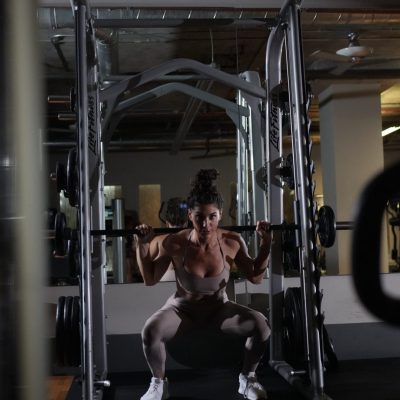
Free weight hack squats: 3 sets (12, 10, 8 drop the weight and
get 12)
-
Close Stance Squats with Heels Elevated: 3 sets (10, 8, 6)
-
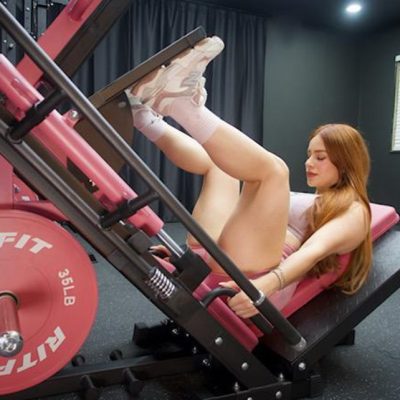
Machine Hack Squats: 3 sets (12, 10, 8 drop the weight and get 12)
note: if you don't have machine, use free weight hacks instead.
what
this accomplishes: Causes your waist to appear smaller and finishes
the x-shape off.
top
▲
|
|
You Must
Shock
Your Body Into Growth |
 |
|
|
Because gaining weight
for hardgainers is extremely difficult, the only way we will get
bigger is to shock our bodies into growth. We do this by:
-
Eating a lot of calories
-
Training with heavy weights
The
first shock is by eating more calories than your body is used to.
This is the most important factor in gaining mass. When you overload
your system with plenty of protein and fats, your body has no other
choice but to gain weight. The goal is to eat just enough calories
to allow your body to build more muscle, but not so many calories
that you gain a large amount of body fat.
The
second way we must shock our body is with weight training. Weight
training is the fastest way to get your body to build more muscle.
Dieting and weight training both work together. The weight training
overloads the muscles and stimulates growth, while the food you eat
provides the necessary building blocks to repair and build new
muscle tissue.
If
you don't eat correctly while weight training, you WILL lose muscle
tissue.
top
▲
|
| |
|