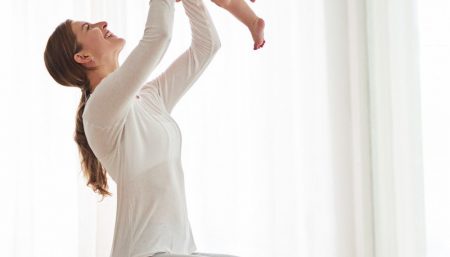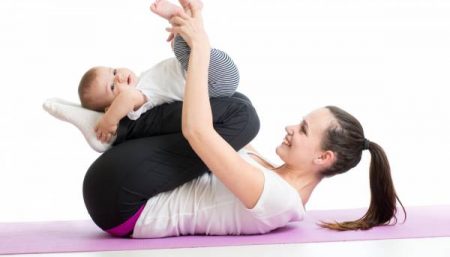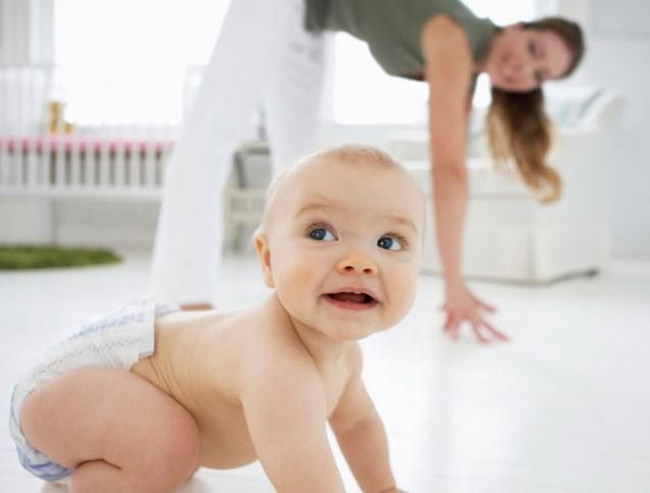
Moms-to-be can benefit from regular physical activity. The type of exercise one should opt for along with the duration and intensity of exercise will depend on the background. It is important to choose activities that utilize large muscle groups in rhythmic contractions that can be performed continuously.
Aerobic Training:
Low-impact activities such as walking, cycling, and water exercise (e.g., swimming, aerobic classes, and jogging) are recommended during the first few months postpartum. Water aerobics and jogging can be performed in waist- to chest-deep water, and the arms are involved. Regarding Training Heart Rate (THR), it should be 135-150 beats/minute or 23-25 beats/10 seconds. Start at the lower rate, and increase to the higher over a 1-month period. The duration of training in the THR zone should be 20-45 minutes/session. If limited on time or on days when strength exercise is also performed, a 20-minute duration is adequate as it provides the minimum threshold necessary for a cardiovascular training effect to occur. Longer durations are more beneficial for weight control purposes. Try to workout 3-7 days/week. Start at 3 days/week, and increase to at least 5 over a month period. Daily workouts are important for weight loss.
Resistance Training:
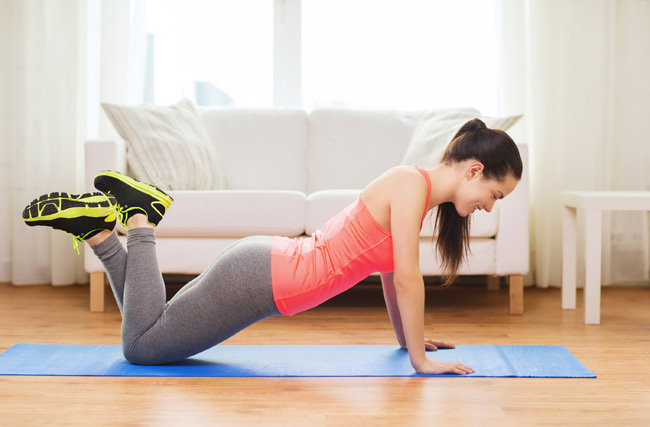
Strength (resistance) Training can prove beneficial for pregnant women. Areas most affected during pregnancy are the back, abdomen, chest, arms, shoulder, legs, calves and hips. Women tend to put on weight in and around these body parts. Pay special attention to signs of fatigue; reduce the resistance; decrease number of repetitions, but increase sets and use good biomechanics to avoid pain. Certain modifications might need to be incorporated into your workout routine.
Avoid any exercise which arches the lower back, rotating the body without bending knees, bicycling using shoulder stand, sit-ups with straight legs. Abdominal and pelvic floor exercises should be performed as part of the routine and repeated throughout the day. A good, stable posture should be maintained throughout the movements. It is recommended that 8-10 different strengthening exercises utilizing the major muscle groups be done at least twice a week. If a machine on which resistance can be adjusted is used, the setting should be heavy enough to allow at least 8-12 repetitions, depending on the exercise.
Flexibility Training:
Stretching needs to be an integral part of postpartum fitness regime. Stretching large muscles before vigorous exercise prepares the body for work. Stretches should be done in a slow manner- never overstretch and avoid bouncing. The muscles needing the greatest attention are those that may get shortened during pregnancy and may include those of the lower back, hip flexors, chest, hamstrings, inner thighs, and calves.
Best results are achieved when Flexibility Exercises are done following the aerobic phase of the workout and before strength exercise. Each of the positions should be achieved by slow movements and held at a point short of stretch pain for 15-30 seconds. Through deep slow breathing and concentration, the muscles are allowed to relax. When tension has subsided, the stretch angle can be increased slightly. A less flexible person should not feel pressured to bend farther than her own limitations allow since injury could occur.
A regular regimen of physical exercise, coupled with eating a low-fat diet, may be undertaken during pregnancy only after consulting your gynecologist.
Disclaimer
The Content is not intended to be a substitute for professional medical advice, diagnosis, or treatment. Always seek the advice of your physician or other qualified health provider with any questions you may have regarding a medical condition.