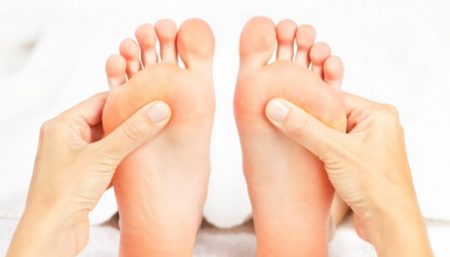
A painful and insidious condition of big toes that can lead to significant limitations in an athlete’s ability to perform and bend the toe. Arthritis is often described as a wearing out or erosion of the cartilage between the joints. With increased motion within the joints, there’s a gradual increase in the amount of erosion, causing greater damage within the joint.
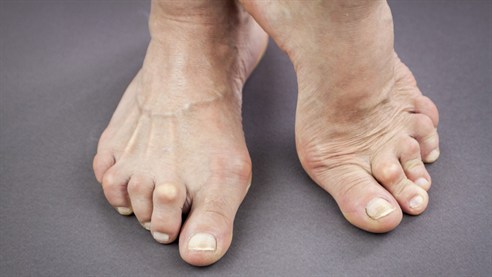
This disorder can be very troubling and even disabling, since the big toe is used whenever we walk, stoop down, climb up, or even stand. Many patients confuse hallux rigidus with a bunion, which affects the same joint, but they are very different conditions requiring different treatment.
This condition also occurs when the golf players apply excessive pressure to the big toe during the golf swing. Typically it will occur at the end of the follow through and will only happen on the dominant foot. In other words, if the golfer is right-handed, the right hallux will be the involved toe. This can cause a jamming of the toe into the top of the shoebox. With repetition, the subungual tissue will be injured and blood will form under the nail plate. This can cause pain due to the pressure the blood exerts on the nail bed. |
It begins with limited toe motion, being referred to as “hallux limitus.” But as the problem advances, the toe’s range of motion gradually decreases until it potentially reaches the end stage of “rigidus,” in which the big toe becomes stiff, or what is sometimes called a “frozen joint.”
Cause:
Movement of the big toe joint occurs typically in an up and down plane only (dorsiflexion and plantarflexion). The normal dorsiflexion is approximately 75 degrees and plantarflexion is 25 degrees.
Limited motion can be a result of :
- Heredity
- Faulty function (biomechanics)- imbalance in your foot structure and foot function
- Any traumatic incident, something as simple as jamming your toe, which may have occurred and caused localized inflammation within the joint.
Most people with flat feet or low arches are more susceptible to developing hallux rigidus deformity.
Symptoms:
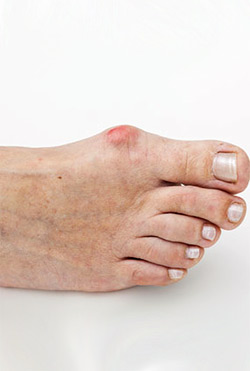
Pain about the first first metatarsophalangeal joint ( MTPJ) is the presenting symptom of patients who have hallux rigidus. The patient may or may not be aware of the limitation of joint motion. Given the limitation of dorsiflexion, patients may complain of increased difficulty with activities that require greater dorsiflexion demands, such as walking up an incline, squatting or running.
- Pain and stiffness in the joint at the base of the big toe during use (walking, standing, bending, etc.)
- Difficulty with certain activities (running, squatting)
- Swelling and inflammation around the joint.
- Pain and stiffness aggravated by cold, damp weather
As the disorder progresses, other symptoms including pain while at rest, limping or the inability to wear certain shoes (result of bone spur) will become more noticeable. The patient might complain dull pain in the hip , knee, or lower Back due to changes in walk. Limping might occur in severe cases.
Diagnosis:
The most common symptoms include pain and swelling within the joint. If diagnosed at early stage, you stand a better chance to remain comfortable and active for many years. The diagnosis of hallux rigidus is made after a thorough examination of your foot by an orthopedic surgeon which may also include diagnostic x-rays.
Treatment:
Early non-surgical treatment for mild cases of Hallux rigidus may include:
- Prescription foot orthotics
- Shoe modifications (to take the pressure of the toe and/or facilitate walking)- Shoes with a large toe box put less pressure on your toe. Stiff or rocker-bottom soles may also be recommended.
- Medications- Oral nonsteroidal anti-inflammatory drugs (NSAIDs), such as ibuprofen, may be recommended to reduce pain and inflammation.
- Injection therapy (corticosteroids to reduce inflammation and pain), and/or
- Physical therapy- Ultrasound therapy or other physical therapy modalities may be undertaken to provide temporary relief.
- Exercise: Regular athletes should be encouraged to perform passive range of motion exercises with an emphasis on dorsiflexion. The athlete should perform these exercises two or three times a day by grasping the base of the proximal phalanx of the great toe and maximally dorsiflexing the joint to tolerance at least 20 to 30 times.
As the symptoms subside the athlete can return to activity, you can protect the hallux from excessive dorsiflexion with taping. Apply the taping in a figure-eight loop around the proximal phalanx and attach it to the plantar surface of the foot.
Surgical Treatment
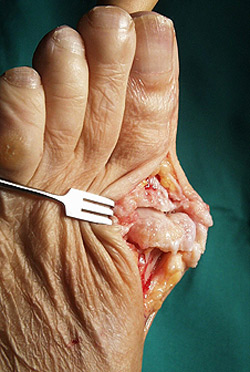 The surgical treatment for hallux rigidus is determined by the extent of the arthritis and deformity. For the more minor type of hallux rigidus, shaving the bump of the bone on top of the metatarsal is sufficient (a cheilectomy). As the stiffening of the big toe joint increases a cheilectomy is not sufficient and an additional bone cut may needed on the big toe itself, (an osteotomy of the phalanx).
As the arthritis increases, the ability of an osteotomy or cheilectomy to correct the problem, maintain motion, and prevent the arthritis from worsening is very limited. For these patients, either a fusion of the big toe (an arthrodesis) or removal of bone from the joint (an arthroplasty) is performed.
References:
Disclaimer
The Content is not intended to be a substitute for professional medical advice, diagnosis, or treatment. Always seek the advice of your physician or other qualified health provider with any questions you may have regarding a medical condition.