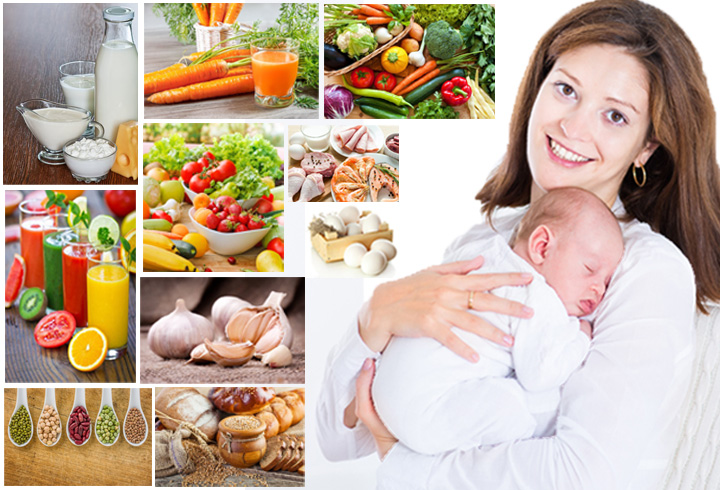
During this unique phase in the childbearing cycle, a breastfeeding mother will need to take some extra care to assure that she produces and provides to her infant abundant, high-quality milk. Because human milk represents the ideal food for young infants, it’s only natural to focus first on the type of diet a mother needs to consume in order to produce nutritious milk for her baby.
Enhanced Calorie Intake: Most lactating women will need to consume about 500 additional calories above their normal pre-pregnancy food intake. An individual mother’s calorie requirements can vary widely depending upon her basic metabolism and level of activity. Nutrition experts recommend that breastfeeding women consume 2,700 calories per day. However, recent studies of healthy lactating women in the industrialized world showed their actual intake of food to be approximately 2,200 calories per day while breastfeeding, or about 15 percent less than the recommended value. Fruits and veggies are a nutritious, low-fat source of calories, vitamins, minerals, and fiber. Make an effort to eat vitamin A-rich produce often, such as carrots, spinach, sweet potatoes, and cantaloupe.
Carbohydrate: A Lactating mother should consume 6-11 servings of grains most of which should come from the whole grain group as they contain more nutrients (vitamins and minerals) and also help prevent constipation.
Protein Intake: Eat more of protein rich foods. The basic rule says that you should eat I gram of protein each day for every pound you weight. Be sure you are including a healthy portion of protein with at least two meals each day. Meat, poultry, seafood, eggs, beans, nuts, tofu, and many dairy products are good sources of protein. The most recent Recommended Dietary Allowance (National Research Council, 1989) for protein during lactation promotes the addition of 15 g/protein per day to baseline needs for the first 6 months of full lactation and 12 g/d thereafter. These estimates are based on milk volumes of 750 mg/d for the first 6 months and 600 mg/d thereafter; the secretion of 1.1 g of protein/de throughout lactation, an efficiency of 0.7 in the utilization of dietary protein for milk protein production; and a factor of 0.3 to account for inter-individual variability.
Calcium needs for lactation remain elevated as in pregnancy. Continue to choose at least 3-4 calcium-rich foods daily. Teenage mothers should consume 4-5 servings. Recent evidence has confirmed the importance of adequate calcium intake in the prevention of osteoporosis (brittle bones) in later life. Dairy products are the best source of dietary calcium. Milk and milk products also provide protein, vitamins, and minerals.
Drink plenty of liquids each day: It is during lactation that the nursing mothers tend to feel thirstier, owing to the fact that part of their water consumption is utilized by the body for the formation of milk. It is here where it becomes necessary to increase your water intake by one quart per day, so that you are drinking a total of 2.5 to 3 quarts.
Remember:
- Limit your intake of sugar, salt, fat, and highly processed foods. t is not a wise idea to depend on junk food during the lactating period. The diet supplied to feeding moms should be low in fat content and high in fiber. Increased intake of fast food and dieting is sure to make you fat and unhealthy respectively.
- Avoid cigarette smoking as it can reduce mother’s milk production, and smoke is an environmental toxin effecting infant lung development.
- Say no to alcohol, as alcohol can retard the growth of your baby.
- Consult your doctor before taking any kind of medication.
- The protective benefits of breastfeeding are further enhanced when the mother excludes common allergic foods-milk and other dairy products, egg, fish, peanut, soy from her diet during pregnancy and lactation. The allergic risk to her baby is also reduced if the mother rotates her foods, avoiding eating any single food on a daily basis. I must emphasize that women who eliminate major food groups, such as dairy products, from their diet will need nutrition counseling by a registered dietitian or their physician.

Avoid rapid weight loss during breastfeeding.
Many new mothers are preoccupied with their body image and find the idea of rapid weight loss highly desirable. But trying to return too quickly to your pre-pregnancy weight by drastically reducing your calorie intake is likely to result in diminished milk production. Women who were at normal weight prior to their pregnancy are advised not to lose more than two pounds per month after the first month of breastfeeding. Overweight women can lose up to four pounds a month.
Related Links
- Infant Feeding Problems
- Health Concern During Pregnancy
- Top 10 high sugar foods to avoid
- Easy Ways to Trim down the fat
- Alcohol and Pregnancy
- In Touch With Your Baby
- Living With Changes
Disclaimer
The Content is not intended to be a substitute for professional medical advice, diagnosis, or treatment. Always seek the advice of your physician or other qualified health provider with any questions you may have regarding a medical condition.