With a few simple changes in your diet, you stand to gain detoxification and a boost in energy levels. Lay down your nutritional goals and keep them in mind, to achieve a healthy acid/alkaline balance within the body. It is always better to eat a more alkaline diet because high acid levels can upset the healthy functioning of the body. Through an analysis it was found that women generally tend to eat more acidic diet, build up of which can cause stress, disease, inactivity and poor diet.
Breakfast goals
A healthy breakfast kick-starts the metabolism. Try to include wholesome, nutrient-rich, easily digestible foods as they will boost your energy levels and help to fuel your body for the rest of the day. Avoid eating cooked food for breakfast (except porridge) and, whenever possible, go for foods in their uncooked, raw state – cooking tends to either add fat or destroy nutrients. Try to avoid wheat and don’t become reliant on toast or breakfast cereal, although they are fine a couple of times a week. If you buy breakfast cereal, choose a variety that is low in sugar and salt, and preferably organic.
Most important of all, vary your options. If you eat the same breakfast cereal every day, the body is not challenged and cannot absorb nutrients from it in the same way. Smoothies are a healthy breakfast option: simply blend the ingredients to make drinkable consistent.
- Try to eat breakfast portions of fresh vegetables every day.
- Drink at least 1.5 liters of water everyday.
- Eat four pieces of fruit every day.
- Eat three portions of fresh vegetables everyday.
Water
Drinking more water enables the body to function more efficiently and can even help shed weight as it enables the body to flush out retained fluids. The 1.5-2litres (21/2-31/2 pints) of liquid that you need to drink every day should be almost exclusively water, although you can include herbal tea and diluted unsweetened fruit juices. Tea, coffee, sweetened juices from concentrate, fizzy drinks and alcohol do not count as water.
Fresh fruit and vegetables
Packed with vitamins and minerals and essential to the healthy functioning of the body, fresh fruit and vegetables are easy to digest and energize and detoxify the body as well as boosting the immune system. Remember not to cook the goodness out of fresh produce, and to buy organic whenever possible.
Healthy breakfasts suggestions |
|
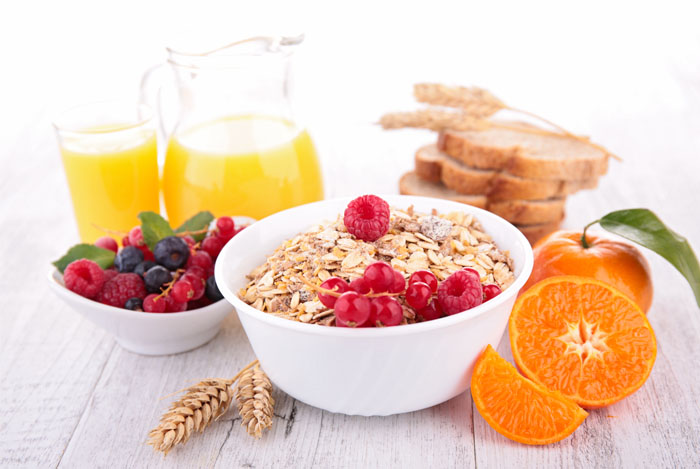
Wheat-free muesli- Use organic rolled oats for half the mixture and add natural unsweetened puffed rice, sesame seeds, almonds, sunflower seeds, linseeds, dried apricots, raisins and dried banana to make up the other half. Fresh fruit- Try melons, strawberries, bananas, blueberries, Kiwis and peaches: eat fewer oranges and grapefruits as they are more acidic. Add yoghurt, it preferred, but no more than twice a week. A detox smoothie- Blend fresh melon, kiwi, pineapple juice and ice. An energizing smoothie- Blend fresh pear, apple, kiwi, carrot juice and ice. The perfect breakfast smoothie- Blend fresh strawberries, banana, pineapple juice, orange juice, a little low- fat plain yoghurt and ice. Wholemeal toast- Spread with a little butter (not margarine) and honey or jam. Aim to eat butter no more than twice a week Porridge- Make with organic rolled oats, if possible. |
LUNCH GOALS

Take time out at lunchtime and relax while you eat. Chew your food thoroughly as this breaks it down earlier in the digestive process and enables the body to extract more nutrients from it. Try not to drink too much with your meal as this flushes the food through the body more quickly and prevents the body from digesting it as thoroughly. Drink most of your water mid-morning and mid-afternoon.
Lunch should be the most filling of your daily meals. At this time of day, the body is in full swing. A good lunch raises the metabolic rate and provides the body with energy it needs to sustain it for the remainder of the day. Try to eat complex carbohydrates such as rice, root vegetables, couscous and pasta as they are slow releasers of energy and ensure that you won’t experience energy highs and lows during the afternoon.
Check out these easy to make lunch ideas for some healthy recipe inspiration.
- Eat lunch every day, and eat it halfway through the day at regular lunchtime, not midway into the afternoon
- Limit lunches containing wheat to two per week
- Limit intake of tea and coffee to two cups in total per week.
Tea and coffee
Both tea and coffee dehydrate the body. As one of the main aims of the detox is to keep the body well hydrated so it can function at optimum efficiency, drinking large amounts of tea and coffee will not help achieve the desired effects. Substitute herbal teas or, ideally, water.
Healthy lunches suggestions |
|
Rice salads- Easy to prepare yourself: boil the rice with a little stock; add fresh herbs and chopped vegetables such as peppers, broccoli and mushrooms. Sushi- A healthy option, increasingly popular and even sold in some supermarkets. Raw vegetables with dips- Try carrots, celery, cucumber, broccoli and cauliflower, for Fresh salad- Experiment with leaves and vegetables of your choice; try adding pumpkin or sesame seeds; avoid cheese or mayonnaise dressings. Couscous salad- Make your own: add any combination of sliced grilled chicken breast, chick peas and vegetables such as steamed or grilled courgettes, aubergine, onion or peppers and fresh mint. Wholemeal pasta salads- Try cooked pasta with vegetables such as broccoli, spinach and mange tout, and fresh herbs. |
What makes a healthy lunch?
Fat content should be no higher than 15 per cent, of which saturates should make up no more than 5 per cent of the total calories.
All too often we reach for convenience food at lunchtime, and the obvious choice is the sandwich. The sandwich can be a healthy option, but look out for the following.
- The bread- Go for organic wholemeal bread, although rye bread is a tasty wheat-free option. Wholemeal bread is the least processed and the least acid-forming, and is less likely to give you a sugar rush, which means you won’t need a snack in the afternoon.
- The filling- Avoid cheese and hidden calories in the form of mayonnaise, butter and margarine. Try a salad filling with fish or chicken.
DINNER GOALS

The earlier in the evening you eat, the better. This allows the body time to digest food properly, while you are awake and active. If you eat and go bed soon after, it does not have enough time to digest what you have eaten before resting. Food sits in the body overnight, then passes out without being properly digested, or it can hang around too long in the body as undigested waste.
When you can’t eat early in the evening, make sure that the later you eat, the more alkaline the meal, as alkaline foods are easier to digest. If you know that you are going to eat less than two hours before going to bed, have a meal that does not contain meat, wheat or dairy products as these acid-forming foods are more difficult to digest. This way you are working with your body to give it what it needs when it needs it.
- Try to eat as early in the evening as possible, preferably at least two hours before you go to bed your evening meal and aim to make it less starchy.
- Make sure that only one of your meals each day contains wheat products such as bread, pasta and couscous.
- Increase the intake of dark green vegetables.
Less wheat
Wheat is not the most digestion-friendly food and by now you should be adjusting to eating less of it, replacing it with more fresh fruit and vegetables. Begin to phase wheat out of your evening meals now and experiment with replacements such as wild rice, millet, lentils and barley. These have a cleansing effect on the body because of their high fibre content and are an excellent source of protein, which the body needs to maintain and repair itself. You can also buy wheat-free pasta and bread.
Eat your greens
Children are told to eat their greens and the same applies to adults. Vegetables such as broccoli, spinach, kale, courgettes and asparagus all have antioxidant properties, as do red peppers and carrots.
Antioxidants are our first line of defence against ageing, heart disease, cancer and the harmful effects of stress. They neutralize free radicals, unstable substances that occur in the body as a by-product of oxidation, which can cause damage, especially to cell membranes.
Size is important
The body needs more energy during the day, when you are active, and less energy during the night, when you are asleep. Alter the size of your meals accordingly: make breakfast and lunch your bigger, heartier meals and keep your evening meal simple and more alkaline-based (see panel for suggestions). Try to include protein, vegetables and occasionally some carbohydrates. Enhance the flavour of food by experimenting with fresh herbs and spices rather than cooking with fat and oil. Remember that the fat in fish is good for you as it contains selenium, an antioxidant, which can help control cholesterol levels and may also help protect against cancer.
Healthy dinners suggestions |
|
Related Links
- Fighting Toxin Buildup Within the Body
- Allium Vegetables Linked to Lower Prostate Cancer Risk in Humans
- Diet and Detox
Disclaimer
The Content is not intended to be a substitute for professional medical advice, diagnosis, or treatment. Always seek the advice of your physician or other qualified health provider with any questions you may have regarding a medical condition.