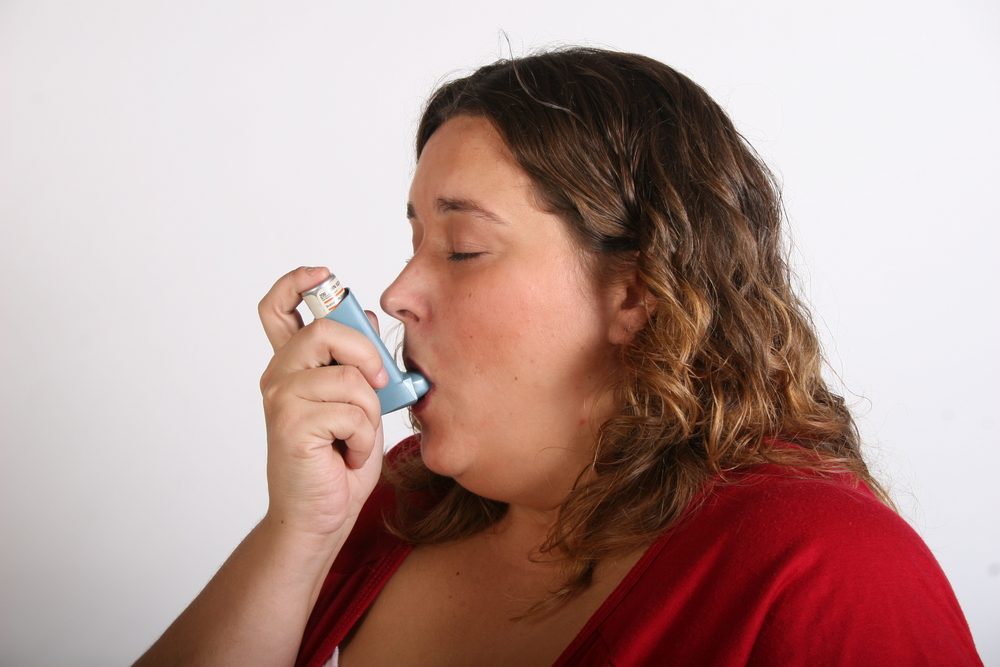
Obesity has been rapidly increasing in prevalence over the past two decades—in children as well as in adults. Although obesity is a recognized risk factor for type 2 diabetes mellitus, hypertension, atherosclerosis, and some forms ofcancer, evidence suggests that obesity may also contribute to or even cause asthma. For one, asthma prevalence is increased in obese persons. Furthermore, obese patients with severe asthma account for 75% of emergency department visits for asthma. On the other hand, when morbidly obese asthma patients lose weight, there is a decrease in asthma symptoms and severity.
Obese adults with asthma are more likely than their leaner counterparts to have severe, persistent disease, according to a new large study.
| Obesity appears to play a role in airway hyper-responsiveness and asthma severity. |
How does obesity affect Asthma?
Obesity affects the anatomy of both the lungs and airways. In children, for instance, the mechanical load of obesity can affect lung growth, resulting in smaller lungs and reduced pulmonary function. While weight loss improves lung function, it does not affect airway responsiveness.

Although the reason why obesity increases asthma severity is not entirely clear, evidence suggests that the hormone leptin, which is produced by fat cells and plays a role in weight regulation and asthma-related airway inflammation, may be involved. In contrast, plasma adiponectin levels are decreased in obese individuals but increase with weight loss. Adiponectin, while mainly having an effect on metabolism, has anti-inflammatory properties as well.
Obesity also may be a risk factor for airway hyper-responsiveness. Increased abdominal and chest wall mass in obese people causes lower functional residual capacity. And since lung volume is a major determinant of airway diameter, it is possible that these changes in residual capacity allow smooth airway muscles to shorten excessively when activated.
Another possibility is that obese persons breathe at higher frequencies—but substantially smaller tidal volumes—compared with non-obese individuals. As a result, the bronchodilatory effect of tidal strains is compromised and the obese person is predisposed toward increased airway responsiveness.
Chronic low-level systemic inflammation is present in obese persons—even in the absence of an inflammatory trigger. This inflammation is characterized by the presence of circulating leukocytes, cytokines, cytokine receptors, and chemokines. The inflammation appears to originate within the adipose tissue, and diseases common to obesity (eg, atherosclerosis and type 2 diabetes mellitus) also correlate with systemic inflammation.
Exercise Tips to fight Obesity:

- Light cardiovascular exercises like swimming,cycling, biking, yoga, treadmill, walking
- Low resistance weight training.
- Eat less, burn more
Tip: High intensity workouts are no-no (as they put pressure on the knees.)
Exercise Tips to fight Asthma
- Warm-up: Breathing exercises like pranayam,stretching.
- Aerobics: moderate to high intensity workouts.
- Swimming, kick boxing
- Step aerobics.
- Light weight resistance training to make the bones harder and muscular.
- Jogging, Sprinting, Skipping.
- Cool Down: Respiratory exercises.
Disclaimer
The Content is not intended to be a substitute for professional medical advice, diagnosis, or treatment. Always seek the advice of your physician or other qualified health provider with any questions you may have regarding a medical condition.