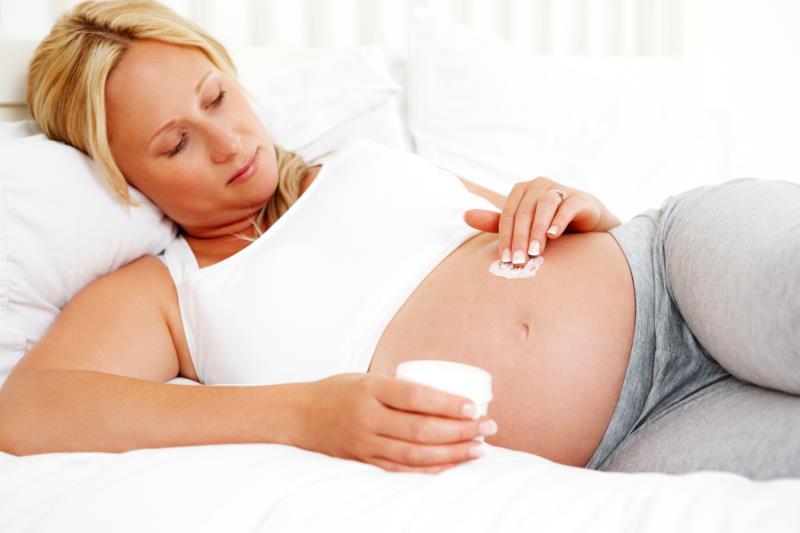
Pregnancy is a time of change, from stretch marks to acne, your skin reflects the big transformation that’s occurring in your body. While not every woman will experience all of these skin changes during pregnancy, here are a few things you might notice.
Skin Changes During Pregnancy
Changes in hormone levels during pregnancy can produce a wide range of skin changes: from stretch marks to acne to darkening of the skin. Most of these changes disappear shortly after delivery.
- Acne. During early pregnancy, some women develop acne, especially those who were prone to breakouts during menstrual periods before becoming pregnant. On the other hand, some women find that acne improves during pregnancy.
- Bluish or blotchy legs. For some women, especially those who live in cold climates, increased hormone production can cause temporary discoloration or blotchy skin in the legs. This usually disappears after delivery.
- Chloasma (“mask of pregnancy” or melasma). Some women experience a brownish darkening of the facial skin. This change is called the “mask of pregnancy.” The pregnancy hormones estrogen and progesterone stimulate the melanin cells in the skin to produce more pigment, yet because these cells do not produce extra pigment uniformly, your facial skin may acquire a blotchy tan. It is more common in women with dark hair and pale skin. The woman usually has brownish, uneven marks on the forehead, temples and middle of her face. Sometimes the marks appear around the eyes or over the nose. The darkened areas may get even darker when exposed to sunlight. These marks usually fade completely after delivery.
- “Glowing” skin. The increased volume of blood causes the cheeks to take on an attractive blush, because of the many blood vessels just below the skin’s surface. On top of this redness, the increased secretions of the oil glands give the skin a waxy sheen. The result of these two factors may be a healthy “glow.”
- Itchiness. Many pregnant women have itchy skin, particularly around the belly and breasts during the second and third trimesters. This happens as the skin stretches to adapt to your body’s growth.
- Linea nigra (dark line on the belly). Many women normally have a faint linea alba (white line) running from their navel to the center of their pubic bone. It is barely visible before pregnancy. (You may not have even known it was there). Sometime in the second trimester a linea alba becomes a linea nigra, a dark line that is much more noticeable. For many women, extra pigment (coloring) in the skin causes a dark line to appear, running from the navel to the pubic area. This line fades after delivery.
- Nails. For some women, hormonal changes may cause the fingernails and toenails to grow faster than usual or to become brittle or soft.
- Puffiness. During the third trimester, your eyelids and face may become puffy, usually in the morning. This is because of increased blood circulation. This condition is harmless. But if you have puffiness along with a sudden weight increase, contact your health care provider to rule out other potential problems.
- Rashes. Many women perspire more during pregnancy because of the effect of hormones on the sweat glands. This can increase the chances of getting heat rashes. Late in pregnancy, some women also develop harmless but itchy red bumps on the belly. These can spread to the buttocks, arms and legs, causing discomfort.
- Red or itchy palms. Increases in the hormone estrogen may cause your palms to become red and itchy. For some women, this may also affect the soles of their feet, called palmar erythema. The increased color is nothing more than a curiosity of pregnancy. Like most skin changes that occur during pregnancy, the redness should fade after delivery.
- Skin tags. Some pregnant women develop tiny polyps, called skin tags, in areas where skin rubs on clothing or skin rubs together. Commonly found under the arms, between neck folds, or under bra lines on the chest, skin tags are caused by hyperactive growth of a superficial layer of skin. Skin tags do not go away on their own after delivery. A health care provider can easily remove them.
- Stretch marks. As the breasts and abdomen grow, most women develop stretch marks across the belly and breasts. These small, depressed streaks of differently textured skin can be pink, reddish-brown or dark brown, depending on the woman’s skin color. Some women also get them on their buttocks, thighs, hips or breasts. These marks are caused by tiny tears in the tissue that lies just below your skin and helps the skin stretch. There is no way to prevent stretch marks during pregnancy. They usually fade and become less noticeable after delivery. You may see creams to treat stretch marks in the drug store. It isn’t clear whether these creams work.
- Spider veins. Some pregnant women have spider veins on the face, neck, upper chest or arms. These small, red spots have lines branching out from them. Spider veins are tiny blood vessels that appear because of increased blood circulation. Hormonal changes may cause them. Known as nevi, these burst vessels can be camouflaged by the appropriate use of make- up. Nevi take longer to disappear than many of the other skin problems of pregnancy, some spider veins on the legs or torso may not go away on their own. A dermatologist can remove them using injections if you feel that’s necessary.
- Skin darkening. In most pregnant women, hormonal changes cause darkening of skin that is already darker than the rest of the woman’s skin. This darkening may be most obvious in freckles, moles, areolas (colored rings around the breast nipples), nipples, labia (the genital tissue outside of the vagina) and the inner thighs. Some of this darkening may fade after delivery. But these areas are likely to remain darker than they were before pregnancy.
Skin Changes: What You Can Do
Many skin changes during pregnancy are unavoidable. Most disappear on their own after delivery. These tips may help reduce or treat common skin problems that occur during pregnancy:
- Skin cleansing. Good skin cleansing is the best way to avoid or treat acne breakouts. Wash your face with a mild cleanser two or three times a day. Don’t wash too often or the skin may become dry, aggravating the problem.IMPORTANT: Do not take any acne medications or over-the-counter treatments without checking with your health care provider. Some of these are not safe for pregnant women to use. Accutane (also called isotretinoin, Amnesteem and Claravis) is a prescription medication used to treat severe acne. It is a member of a family of drugs called retinoids. Accutane and other retinoids can cause very serious birth defects.
- Sun protection.. Your skin is more sensitive during pregnancy. Good sun protection is very important at this time. Sunlight can darken pigment changes in your skin and increase your chances of getting “mask of pregnancy.” Use a good sun block, cover up, and wear a hat when outside. Limit the time you spend outdoors between 10 a.m. and 2 p.m.
- Make-up. Cover-up and foundation can help hide dark streaks or spots on the skin. Avoid make-ups that contain mercury. Look at the label to see if the make-up contains mercury.
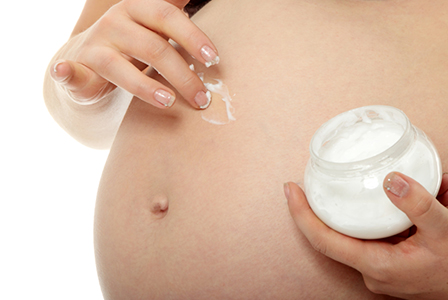
- Stretch marks. You won’t be able to avoid stretch marks entirely. It will help if you gain only the recommended amount of weight (usually 25 to 35 pounds), and do so slowly.
- Moisturizers. Moisturize your belly and your breasts to reduce itchiness and dry skin. To avoid skin irritation, use unscented moisturizer. Use mild soap when washing. Avoid hot showers or baths. They can dry out the skin.
- Excessive heat. Heat can intensify itchiness and rashes. When you go out in warm weather, wear loose-fitting, cotton clothing.
When to Talk to Your Health Care Provider
Most skin changes during pregnancy are harmless and painless. A few conditions might require medical attention:
- Severe itchiness. Severe itchiness, particularly in the third trimester, can be a sign of intrahepatic cholestasis of pregnancy (ICP). This is a liver problem that affects a very small percentage of pregnant women. Symptoms include severe itchiness all over the skin and sometimes nausea, vomiting, fatigue, yellowing of the skin and loss of appetite. Talk to your health care provider right away if you feel that you might have this condition. ICP does not harm a woman’s health, but it can hurt the baby. Women who have ICP are more likely to have stillbirths or to deliver prematurely. Premature babies are at increased risk of health problems and lasting disabilities. ICP usually goes away on its own after delivery.
- Skin darkening with other symptoms.. Certain types of skin darkening can be a sign of a serious problem. Let your health care provider know if changes in skin color are accompanied by pain, tenderness, redness or bleeding, or if you notice any changes in the color, shape or size of a mole.
- Puffiness of the eyelids. Some puffiness of the eyelids is normal during the third trimester. But contact your health care provider if you suddenly gain five pounds or more. This could mean that you are retaining too much fluid and have high blood pressure.
Always talk to your health care provider before using any medicated creams or ointments to treat skin problems. Some are unsafe during pregnancy.
Related Links
- Acne
- Stretch Marks
- Health Concern During Pregnancy
- Facial swelling
- Common Skin Problems
- Skin Care
- About Weight Gain During Pregnancy.
Disclaimer
The Content is not intended to be a substitute for professional medical advice, diagnosis, or treatment. Always seek the advice of your physician or other qualified health provider with any questions you may have regarding a medical condition.
