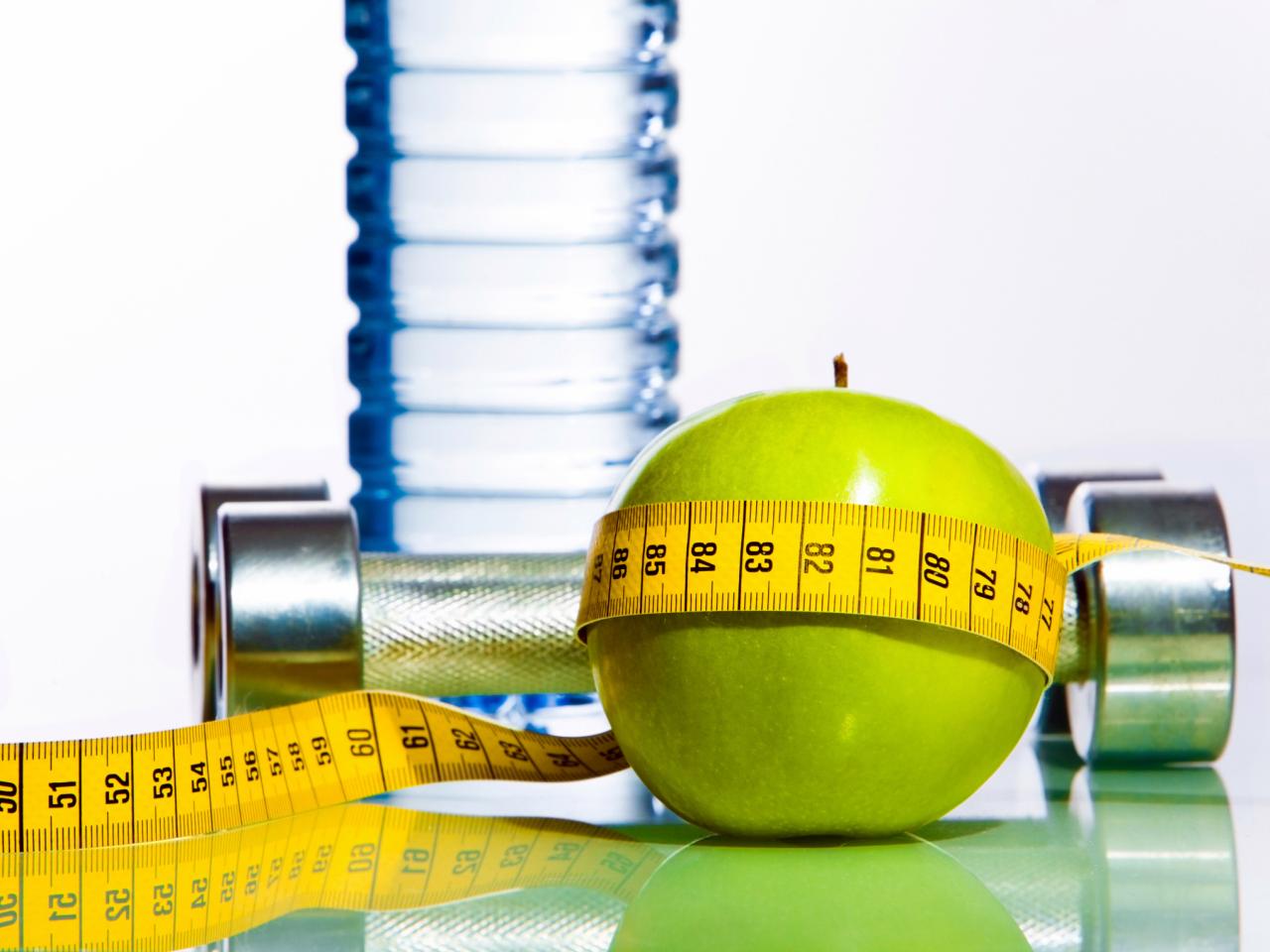
This article is keeping in mind constant questions raised by women as to why they are not able to lose weight.
More and more women fail to understand that they have to work hard if they want to change the shape of their body. That means a balance of medium-high intensitycardio exercise along with challenging strength training workouts.
 Exercise Input
In order to lose weight, you need to get workout for at least 5-6 days a week at 60-70% of heart rate for 30-45 min. Start slow and work your way up but, if you’re in good condition and have no restrictions, challenging yourself with harder workouts is the best way to burn more calories. Introduce interval training in order to burn calories even after you’ve stopped exercising.
In addition to your cardio workouts, you’ll need to lift weights for all your muscle groups at least 2 non-consecutive days a week. And, by lifting weights, that means using enough weight that you can only complete the desired number of reps. For example, if you’re doing 12 bicep curls, you need to use enough weight that you can only do 12 bicep curls and not one more.
 Overeating
This may seem obvious, but unless you’re tracking your calories each day, you may be eating more than you think. High-fat, high-sugar foods light up the brain’s dopamine pathway just like cocaine does, making us slaves to overwhelming cravings.
If you’re really serious about losing weight, you need to get serious about you’re eating. Start by keeping a detailed food journal for one week, without changing any of your eating habits. Be as specific as possible, measuring when you can, looking up your calorie and nutrient content and adding up your calories for each day. You’ll be surprised how those calories can sneak in when you’re not keeping track.
Another thing you need to keep in mind is your metabolism can drop as you get older if you don’t preserve your muscle mass. Muscle mass declines about 4% each decade from age 25 to 50. If you’re still eating the same number of calories as your metabolism drops, your weight may creep up over time. Start exercising and lifting weights now to keep your metabolism in check.
 Sleep Deprivation
 Lack of sleep can contribute to weight gain. Not sleeping enough seems to be associated with metabolic changes that can lead to overeating andobesity. Studies where sleep restriction in the laboratory was done, subjects tended to have metabolic changes and alterations of glucose metabolism that might lead to their becoming obese in the future. Sleeping too little can also contribute to weight gain by putting undue stress on the body. The body sees sleep deprivation as a state of stress; cortisol is the stress hormone. Cortisol causes, in turn, the release of insulin and insulin is a storage hormone that promotes fat storage.
Getting enough sleep is crucial if you’re trying to lose weight, not just because of how it affects you physically, but mentally as well. Sleep deprivation makes you cranky, confused and can even make you feel depressed or angry.
 Stress
Stress and weight gain (or lack of weight loss) go hand in hand. Though you may not be aware of it, being under constant stress can increase production of the hormone cortisol which can cause an increase in appetite as well as extra fat storage around the abdominal region–a big no-no since abdominal fat is linked to diabetes, high cholesterol and other health problems.
Dealing with stress can be as simple as taking a few minutes a day to relax, scheduling a massage as often as you can or cutting down on work hours and increasing play time.
 Lack of Consistency
For exercise to work, you have to do it on a regular basis. Once your body adapts to your program, you then need to change it to keep your body challenged. If you skip too many workouts, it’s almost like starting all over every time.
Find a program you enjoy and that fits in with your lifestyle, goals and needs. That means being realistic about what you’ll really accomplish each week rather than going by what you think you should be doing.

 Overindulgence
To lose one pound of fat in one week, you would need to cut 500 calories with diet and exercise for 7 days. If you follow that for 5 days, then eat way over your limit for two more days, you’re taking two steps forward and one step back. The trick is to plan your indulgences so that you can have some fun while staying on track with your weight loss goals.
 Rest
Rest
We are always being told to exercise more in order to lose weight, after all the more regular we workout the more calories and fat we burn. So it may seem weird to discuss the importance of gaining plenty of rest between exercise sessions.
When we exercise our muscles breakdown, tiny fragments of protein within the muscle cells shatter. The more we exercise during a workout the greater the muscle catabolism (degradation); it’s one of the reasons why we actually become weaker as we progress through a particular routine. How quickly muscles degrade also depends on the strength of the individual and the intensity of the exercise. Obviously the stronger and fitter the person the slower the rate of breakdown, also the more effort we put into an exercise the faster the rate of muscle catabolism, it’s the reason why we can all walk a hell of a lot further than we can run!
After any workout routine the muscles need to replace all elements lost, both proteins and energy stores need replacing for muscles to make a full recovery. But if muscles are not given enough time to recover fully before another workout is repeated then the muscles progressively become smaller. What this could mean for weight loss is a gradual decline in lean tissue, thus lowering the metabolism over the course of a few weeks.
 You have a medical condition
Some medical conditions and medications can contribute to weight gain. While not everyone will find this to be true, it’s important to explore every avenue if you’re genuinely following an exercise program and a clean diet and still not losing weight.
One condition known to affect weight is thyroid disease. A thyroid deficiency can cause a decrease in metabolism and may lead to weight gain.
Besides, there are number of drugs that may have weight gain as a side effect for some people. Some common ones include hormonal medications for birth control or menopause, oral steroids, some anti-depressants, diabetes medications and anti-psychotic medications. You should get a diagnosis from a professional in order to determine whether your weight problems are medically-related.
 You’ve hit a plateau
 Virtually everyone who works out with weights will, at one time or another, reach a training plateau. When this happens, each trip to the gym, In fact every workout feels like you’re reliving Groundhog Day. One workout just melds into the next and you begin to wonder if you’ll ever again make any gains. If your workout has hit a snag, don’t despair. By implementing the strategies indicated at Blasting Through Training Plateaus , you can take your physique to new heights.
 You don’t need to lose weight
Despite what you hear on the news or read in popular magazines, not all of us need to lose weight. In fact, many of us have unrealistic ideas of what a healthy weight and body shape is. We all have different shapes and, though we can make changes to our bodies, we can only improve on the bodies we have–not turn them into someone else’s body.
Is your BMI in an unhealthy range? Are you within yourideal weight range? If you’re at risk, losing weight may be important for staying healthy. But, if you’re very close to your goal and can’t seem to get rid of those last few pounds, ask yourself if you really need to lose them. Would it be possible to be happy at your current weight?
Disclaimer
The Content is not intended to be a substitute for professional medical advice, diagnosis, or treatment. Always seek the advice of your physician or other qualified health provider with any questions you may have regarding a medical condition.