In order to break the cycle of eating large portions all the time try out these day-to day solutions.
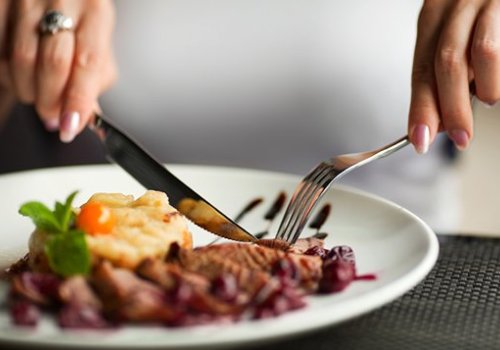
 Get started with your fork. Get into the routine of putting a very small amount on there. Do this intentionally at first, and it soon becomes a habit that happens without even noticing. If you are eating fries, pick up one, not seven. If they are the gigantic “steak fries,” eat a reasonable bite of one, only one at a time. Don’t cram your mouth full, then reach in for six more. If you have something like a hot dog, eat small bites of it and make it last. You won’t look like that cool guy on the commercial, but pretty soon you won’t be that fat either. By doing so you become more of a nibbler than a gobbler. Catch yourself when you put too much in your mouth. That’s the only way the habit will stick.
 Finish what you have in your mouth before you put something else in there. That’s simple enough. It eliminates stuffing and slows you down. Benefits, first, you chew your food better. Second, digestion is more complete when the food is broken down thoroughly in your mouth. Third, because digestion is more complete, your body makes better use of the food you do eat. If your mouth is packed with half the food on your plate, you can’t even taste most of it anyway. Also, piling in bites on top of each other covers over the taste of the first one. This is another way that taking smaller bites enhances the taste and appreciation of the food you do eat, at the expense of the quantity.
 Put your fork down between bites. Just put your fork down, intentionally at first, allow yourself to finish one bite before ever picking up something else. This actually turns out to be harder than it sounds, but don’t give up. If you have a partner, work on it together and gently remind each other when you forget. Get the fork out of your hand. Just put it down. Finish what’s in your mouth; then allow yourself to pick up the fork again.
 Eat on smaller plates. Our body and its physiology are important. But our mind and its psychology are just as vital to having a good relationship with our food, so we don’t overeat. Put simply, we generally believe that the food needs to fill the dish, however large. When you combine that with the fact that we have to clean our plates, we have a problem.
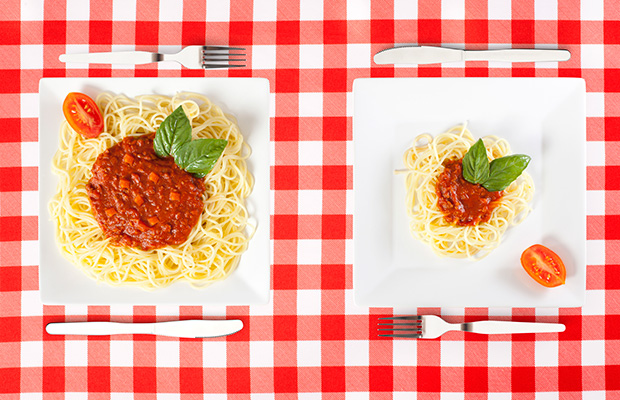
 Opt for serving size. A reasonable amount of food, if served on a gigantic plate, has a minimizing visual effect. But on a smaller plate, the same amount would seem like plenty. My family uses the medium-sized plates, which sets a physical upper limit on how much we eat before going back for seconds. Sometimes, of course, we have to use the larger dinner plates if we’re having “big food” (for ribs or corn on the cob or something like that), but for most of our meals the smaller plates leave all the room we need.
 There is no “good” or “bad” food: You must believe this. Sudden changes and/or drastic restrictions of high-fat foods when you have a preference or craving for fat will result in feelings of deprivation. No one can or should go through life depriving himself or herself of food they really enjoy. You must learn how to make gradual healthy changes to the foods you love while experimenting with a learning to appreciate new flavors and textures. A recent survey showed that more than 75 percent of people feel guilty about eating so-called ‘bad’ foods. The greatest obstacle to adopting healthy eating habits is guilt. Attaching a value to foods only makes you feel bad for eating them. When you do decide to eat a high-fat food, enjoy it. Don’t beat yourself up over it. Just make a special effort to eat low fat the rest of the day. Remember that there is nothing wrong with splurging now and then. It can even be good for you if the satisfaction of a higher – fat meal that you’ve been craving helps you stick with a low-fat lifestyle the rest of the time.
 Try to figure out emotions eating trigger. Learning to deal with these emotions in a healthy way can often times be easier with the help of a family member, friend or counselor.

Learn to read food labels. Research shows that most people underestimate how many calories they consume each day by as much as 25 percent. And some of the confusion comes from not knowing the difference between a portion size and a serving size. To get a better picture of what’s considered a standard serving, check the serving size listed on the Nutrition Facts panel of food labels. Then for a day or two use measuring cups or spoons to see how your portion compares to the standard. This way you’ll know how the portions you’re eating stack up against the nutrition information listed on the label.

 Never eat out of a bag or carton. because it is easy to overeat. You will also find yourselves eating several servings, which will be bombarded with calories.

Avoid being carried away with incentive Labels. Getting more FREE isn’t always such a bargain, if the saving is at a cost of increased calories and fat.
Eating healthy does not have to be something you avoid. Learning to opt for healthy food choices and maintaining a healthy weight can have positive effects on your life. You’ll enjoy increased productivity, have lowered risk for disease, and have more energy.
Disclaimer
The Content is not intended to be a substitute for professional medical advice, diagnosis, or treatment. Always seek the advice of your physician or other qualified health provider with any questions you may have regarding a medical condition.