Babies’ senses develop while they are in the uterus. You can start to establish a close bond with your baby even before she is born.

We now know that unborn babies are aware of much of their surroundings and are able to respond physically to a variety of stimuli. We also understand a great deal about the way a baby’s body function in the uterus and what she can hear and see. It can be a warm and rewarding experience for parents to capitalize on the baby’s awareness by making contact as she grows.
Studies of unborn babies and their parents suggest that babies remember certain aspects of their life in the uterus. In one study, babies whose pregnant mothers regularly sat down each afternoon to relax and watch their favorite program on TV were found to relax after the birth whenever the familiar sound of the show’s signature tune was played to them.
Unborn babies have a sense of taste as well as likes and dislikes. Researchers added saccharin to the amniotic fluid and observed (via ultrasound) that the babies’ swallowing rate doubled. When a foul-tasting oil was added, the babies grimaced, and their swallowing rate dropped sharply.
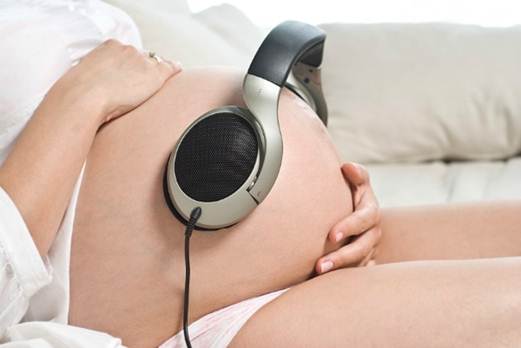
Your baby’s ears are acutely sensitive from the 24th week on. Inside the uterus, the baby can hear your heartbeat and digestive noises, the sound of your voice and that of other people. The sound of a heartbeat like noise always soothes a newborn, and tapes of womb noises, simulated or real, are available for use after the birth to calm the baby’s crying.
A baby’s eye muscles develop early in pregnancy, and from about week 16 the baby becomes sensitive to light. If a bright light is shone on your stomach, your baby may move away from the light. She will perceive the sunlight if you are sunbathing with your stomach uncovered.
The neural circuits of the brain are fully developed in a baby of 28 weeks’ gestation. At week 32, brain-wave tests detect REM (rapid eye movement) sleep, which in adults indicates a dream state. It seems likely that the unborn baby is reliving, in dreams, Some of the experiences she has already had of moving, hearing, seeing, and feeling.
What you can do…
- To stimulate your baby’s listening response
Start playing music regularly to your baby beginning five or six months into your pregnancy: set aside about 10 minutes several times a week. Choose a time when the house is quiet and sit or lie close to the speakers so that no extraneous noise interferes with the music. Research shows that unborn babies are more restful, are played. Simple flute music elicits an especially good response; more complex sounds at this stage are apparently too difficult to decipher. Loud orchestral or rock music with the occasional boom or clang causes jumpier, more agitated movements. - To make the sound of your voice familiarTalk to your baby when you are lying down and relaxing. She can hear your voice. Help her to know it better without the distractions of other everyday noises. It doesn’t matter what you say -read poetry if you’re not sure where to start -but use a calm, regular tone of voice. Or sing soft, soothing melodies to her.
- To communicate your touch
Babies are sensitive to touch from very early on. When you can feel your baby as she moves, and even see the shape of her kicking legs and punching arms, touch and massage your abdomen gently, smoothly, and regularly. You can use baby oil, or a mild vegetable or nut oil such as almond oil, to enhance the experience for you. Your partner can share or even take over the massage as you continue gently communicating with your baby.

- To avoid superbaby syndrome
One word of warning: stories abound of parents reading the classics or playing symphonies to their unborn babies with the intention of getting them into the best preschools by the age of three. No real evidence exists that such hot-housing works, and-even if it did-that any initial advantage is sustained as a child grows up.
Let your baby know that she is loved and wanted, both before and after birth. Then allow her to develop at her own pace.
Related Links
- Living With Changes
- Sleeping During Pregnancy
- After the baby arrives
- Pregnancy and Exercise.
- Practicing Yoga during pregnancy
Disclaimer
The Content is not intended to be a substitute for professional medical advice, diagnosis, or treatment. Always seek the advice of your physician or other qualified health provider with any questions you may have regarding a medical condition.