Middle Life means facing the downhill slope of life for the first time -counting the years left rather than the years gone. The average mid point of life is considered about 39 for women, but most women consider themselves middle aged only once they have entered their 40s. Middle age has a curious way of stealing up and catching you unaware-one fine morning.
A women is supposed to be nearing Menopause. You might begin to experience pre-menopausal-type symptoms, around this time. Peri-menopause literally means “around the end of menstruation” and can continue for years. While some women have few, if any, bothersome symptoms, others can experience a variety of signs beginning some time in their early 40s.
About 90 percent of women entering menopause have changes in their menstrual cycles. Periods may be longer or shorter, heavier or lighter. Sometimes your periods stop abruptly. Other times they can last for seven days one month and only three the next.
The other obvious sign of aging is an increase in the fat layer. Starting at about age 35, we gain an average of a pound-and-a-half of fat each year! Why do we get fat? Fat tends to move in because muscle moves out. After age 35, we lose half-a-pound of muscle per year! Muscle is an extremely active, hungry tissue: one pound of muscle burns 35 calories a day–just to stay alive. Muscle never sleeps; even while you watch TV or take a nap, your muscles are burning calories! Lose muscle, and you burn fewer calories–which are then stored as fat. Fat really is “dead weight”: A pound of fat burns just two calories a day.
Apart from the menopause and weight gain “middle age” today is more of a psychological than a physical change. Event such as significant birthdays, the appearance of wrinkles and grey hair, and noticing the adult status and success of much younger women ,often prompts a certain amount of life-assessment .Such a period of ‘stock-taking’ can be positive, provided you do not panic, it often opens the door to a new phase of maturity with an added confidence and creativity and greater awareness of personal achievements, needs and limits.
Experts recommend these tips for coping with the physical, nutritional ,social, mental and emotional needs of women at 40. Read on …
Physical Needs:
In middle-aged women, genetic factors remain the strongest influence on the amount and distribution of body fat, accounting for up to 60% of the variance. Among the environmental factors leading to total and central obesity, decreased physical activity is more important than energy intake and dietary composition.
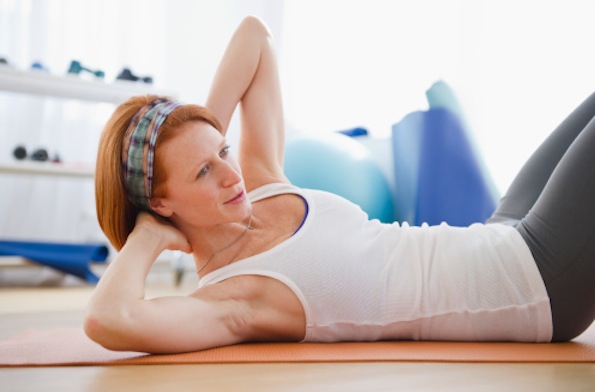
- Women should be encouraged to maintain physical activity, even if there are some limitations (such as arthritis). Australia’s national physical activity guidelines recommend that adults accumulate at least 30 minutes of moderate intensity activity (eg, moderate-paced walking) on most — preferably all — days of the week. Yes, aerobic exercise does burn calories and causes fat loss. It also strengthens the heart muscle. (Very good!) But aerobics has a dirty little secret: In the rest of your body, aerobics causes muscle loss! In other words, aerobics ages your muscle system! A two-month study of stationary bicyclers revealed that the subjects lost three pounds of fat, but also had a half-pound of muscle loss! With two months of hard work, they aged their muscle systems a full year! (And they did it at six times the normal rate of muscle loss from aging!)
- If you want to burn more calories and prevent muscle loss at the same time, you need to make weight training an essential component of your fitness and weight loss program. Weight lifting causes fat-loss in two ways:
[1] You burn extra calories while you lift, and
[2] Each pound of added muscle burns extra caloriesaround the clock, thereby returning your metabolic rate to a youthful level.Weight lifting is also essential in building bone tissue–fighting osteoporosis, one of the biggest age-related diseases. In fact, one in two women over 50 (and one in four men) will suffer from it. Compare this to breast cancer, which afflicts only one woman in eight! Studies prove that those who walk at least a mile a day lose bone more slowly than non-walkers, but only weight training increases bone mass–at any age. Weights also improve heart function.
- To incorporate physical activity as a long term behavioral change, the type, duration, intensity and frequency of the activity needs to be realistic, achievable and pleasurable.
Nutritional Needs:
- Women aged 40 and over should consume 3-4 serves of low fat dairy food daily. Other, non-dairy sources of calcium include fortified breakfast cereals, canned fish with edible bones, some nuts, seeds and green vegetables. If calcium supplements are required, the best absorption rate is from a dose of 500-600mg of calcium once or twice daily. Vitamin D supplements may be necessary for elderly women with inadequate sun exposure.
- Adding a serving of lean protein to your meals can help you feel satisfied longer, so you’ll eat less in the long run. By making fish your protein of choice, you may get even more weight loss power.
In a study of almost 70 overweight people, those who added one daily serving of fish (rich in omega-3 fatty acids) to their weight loss program lost more weight and increased their good cholesterol (HDL) more than those who ate fish only once a week or less (Amer. Jour. of Clinical Nutrition, Nov 1999). Eating more fish instead of meat can reduce the amount of total fat and saturated fat that you eat, which can aid weight loss, says study researcher Trevor A. Mori, MD, of the University of Western Australia in Perth. The best fish for omega-3s: salmon, canned white (albacore) tuna, mackerel, and whitefish. And go easy on fatty sauces such as butter, cream, and mayo. Try fruity salsas, herbs such as dill and peppercorn, or spicy curry flavorings instead.
- Eat more fiber, and watch those hunger pangs-and pounds-disappear! “You can take in loads of calories, yet never feel full if many of the foods you eat are high in refined carbohydrates and sugar and low in fiber,” says Michelle Rodgers, RD, weight management coordinator at Hershey Medical Center in PA. “Fiber not only fills you up but also helps keep your blood sugar and energy levels even, and it’s great for lowering cholesterol and improving your overall health.”. Fiber may also be your body’s best weight loss aid: It actually whisks some of the calories you eat through your digestive system before they have a chance to settle on your waistline. If you double your daily fiber intake from the usual 14 grams (g) to about 30 g, you’ll absorb almost 120 fewer calories a day. That’s 13 pounds a year!
- Aim at consuming a variety of foods, particularly grains, vegetables and fruit, to achieve a diverse intake of vitamins, fibre and phytoestrogens in a manner that can be considered “natural” for humans. Several studies indicate that high dietary intakes of vitamins A, C and E and fibre are associated with lower breast cancer rates, while taking these as supplements is not. Some observational studies have shown a relationship between lower rates of CHD (Cardiovascular Heart Disease) and high intakes of vitamin E consumed in food and not as supplements. Foods rich in antioxidants include fruits, vegetables, grains and garlic.
- Zinc plays a central role in metabolism, including the assimilation of metabolic fuel and maintenance of immune function. It is a component of many enzymes, often located at the active site, It helps to stabilize cell membranes and can function as a site-specific antioxidant; besides zinc “finger” proteins have sequence-specific DNA-binding domains and act as transcriptional mediators. Biochemical abnormalities in the absence of zinc are wide ranging and include reduced protein synthesis, resistance to infection, collagen synthesis and platelet aggregation. Women at 40 should increase their intake of zinc through food sources composed, mainly of protein foods such as meat, fish, poultry, and dairy. Zinc supplementation greater than 25mg/day should be avoided.
- Reducing alcohol consumption by women who consume excess alcohol on a regular basis may be a potential means of reducing breast cancer risk. Alcohol consumption by women has been associated with a linear increase in breast cancer risk.
- Lay Emphasis on minimal consumption of processed foods (eg, wholegrain breads and cereals, fruits and vegetables) low in saturated fats, and low fat, calcium-rich foods. Small amounts of fats can be included in the diet and should come from monounsaturated and polyunsaturated sources, such as olive and canola oils, fish, grains, nuts, seeds and legumes.
- Very low fat diets and quick weight-loss diets should be avoided as they can reduce lean body mass and promote weight regain. The rate of weight loss needs to be gradual.
To summarise, all women need to be encouraged to eat a diet that is low in saturated fat, contains more grain-based foods (eg, breakfast cereals, breads, pasta, rice) as well as fruits and vegetables and foods rich in calcium and zinc By maintaining an adequate physical activity and an energy-appropriate, diet a women can maximize her physical health and psychological wellbeing.
Psychological Needs:
- There is a complex relationship between depression, body image, weight gain and diet. However, the data consistently show that maintenance of adequate physical activity and a nutritious, but energy-appropriate, diet are the keys to maximizing physical health and psychological well-being.
- Regular physical activity reduces depression and anxiety, improves mood and has been associated with increased ability to perform daily tasks.
- Regular meals and nutritious afternoon snacks may improve cognitive performance. Eating breakfast regularly improves mood and memory, and increases energy and promotes feelings of calmness.
It is never too late to achieve health benefits from optimizing diet (below is an example of a suggested sample meal and snacks) and activity. Further, women exert a profound influence on societal behavior, and are, in general, still responsible for the fundamental eating pattern within their families. Favorable modification in the eating and exercise patterns of women aged 40 and over is likely to have a positive effect on their dependents and partners. The bottom line is that nutrition, physical activity, mood and well-being in women are integrally related and must be addressed both by individual women and by the community to prevent disease and to maximize quality of life.

Suggested sample meals and snacks* |
Breakfasts
Morning snacks
Lunches
Afternoon snacks
Dinners
Suppers
|
| * These suggested meals and snacks incorporate the dietary recommendations for women aged 40 and over. They have low amounts of saturated fat, include some monounsaturated and polyunsaturated fats, high amounts of fibre and calcium, and protective factors from a variety of foods such as seafood, fruit, vegetables and grains. |
Disclaimer
The Content is not intended to be a substitute for professional medical advice, diagnosis, or treatment. Always seek the advice of your physician or other qualified health provider with any questions you may have regarding a medical condition.