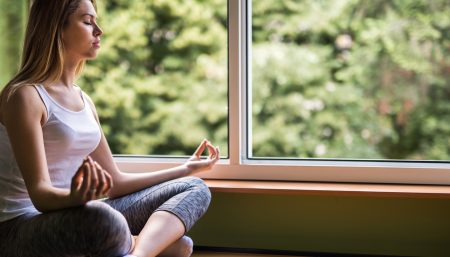
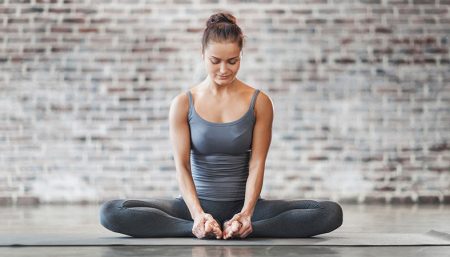
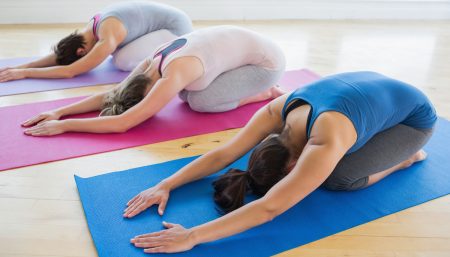
Stiff neck? Achy back? Painful knees? Those sore joints might be keeping you from exercising, but lack of exercise may actually be what’s causing the pain.
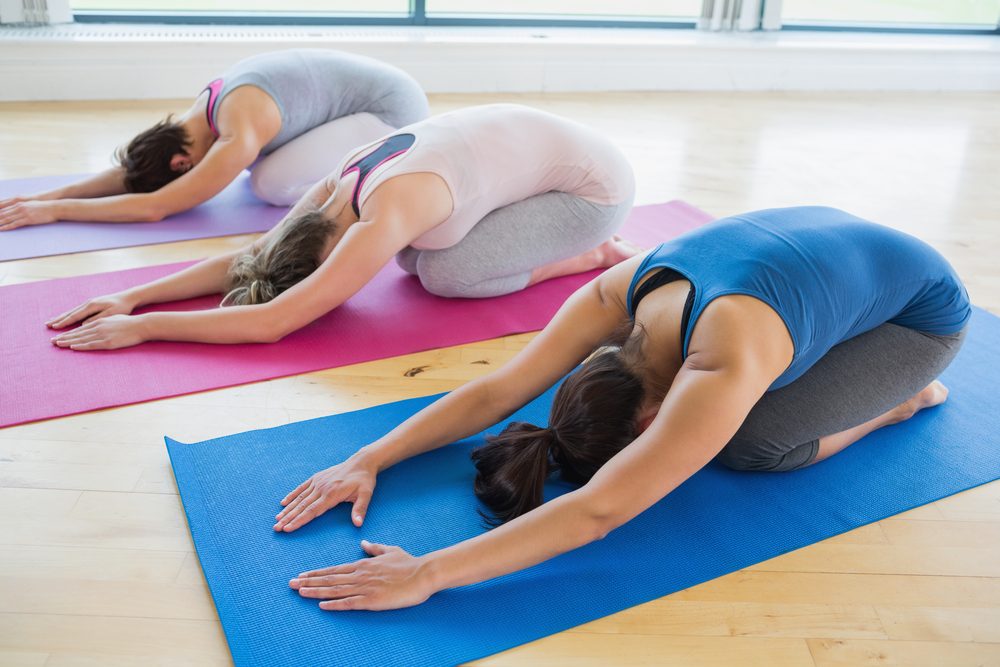
Improperly performed movements can also cause stiffness and pain but you can snap back to normal,pain-free movement by following these Yogasanas.
NAUKASANA (boat pose)
Steps
- Lie down straight on the abdomen with forehead resting on the floor.
- Keep your feet together and arms extended forward with palms on the floor. While inhaling, raise your arms, head, neck, shoulders, trunk and legs simultaneously as high as possible.
- Keep your elbows and knees straight. Balance the entire weight of your body on the navel. Maintain this posture as long as possible.
- While exhaling, bring down your legs, hands and forehead to the ground. Then relax in Makarasana.
Benefits & Precautions:
Naukasana improves the functioning of the lungs, is useful in treating disturbed navel and relieves body stiffness and back pain. It also reduces excess fat from the abdomen. It improves digestion and relieves constipation. Hernia and Ulcer patients should not do this asana.
PASCHIMOTTANASANA (posterior stretching posture)
Steps
- This posture involves stretching of the posterior muscles of the body.
- While sitting, stretch your legs forward and keep them close to each other. Bend a little forward, make hooks of your fingers and hold the big toes on the respective sides.
- While exhaling, bend forward stretching the trunk along the thighs. Rest your on the knees, which should be kept straight.
- Gradually, the tense muscles can be made supple for securing the complete posture. Inhale and return to the original position
Benefits & Precautions:
Aged persons and those with stiff spines should do it slowly and steadily in the beginning. All jerky movements should be avoided & be overcome with patience and perseverance. However, persons suffering from slipped disc, hernia, lumbar spondylysis and cardiac problems, and those who have undergone abdominal surgery, should not perform this asana. Paschimottanasana is a fine stretching exercise of the body. In one continuous movement, almost all the posterior muscles get fully stretched and relaxed. This helps to improve the functions of the abdominal organs and sets right respiratory disorders. It also helps to improve memory.
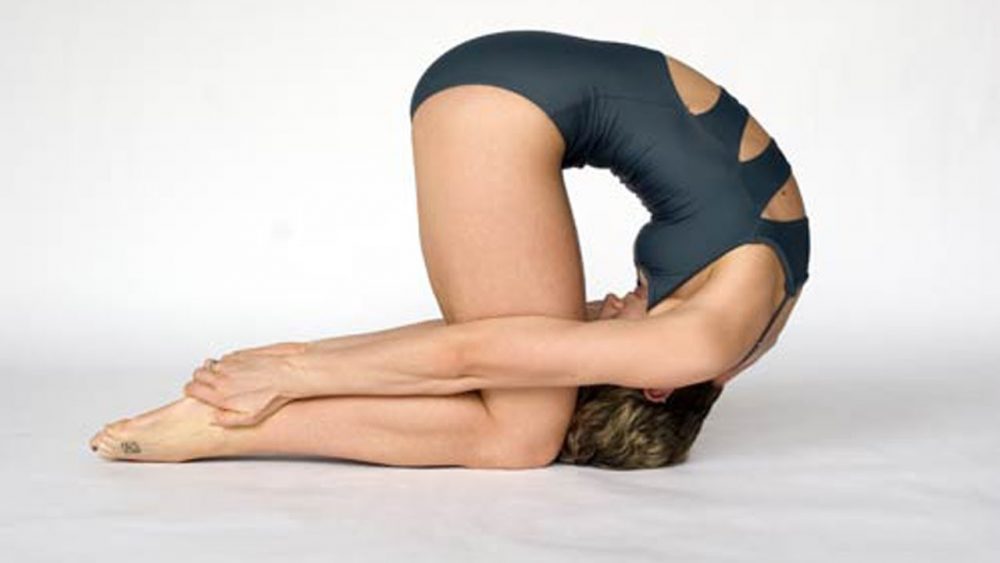
SHASHANKASANA (hare pose)
Steps
- Sit with legs folded backwards, heels apart, knees and toes together.
- Adjust your hips between the heels (Vajrasana). Slowly raise your arms over the head.
- While exhaling, slowly bend forward and stretch your palms on the floor with abdomen pressing against the thighs.
- Then bring your face downwards and touch the floor with the forehead without raising the buttocks. Inhaling slowly, return to an upright position, reversing the process.
Benefits & Precautions :
This asana strengthens the muscles of the legs and thighs and makes them supple. It tones up the spinal nerves and helps in relieving arthritic pain. It is an excellent asana for digestion.
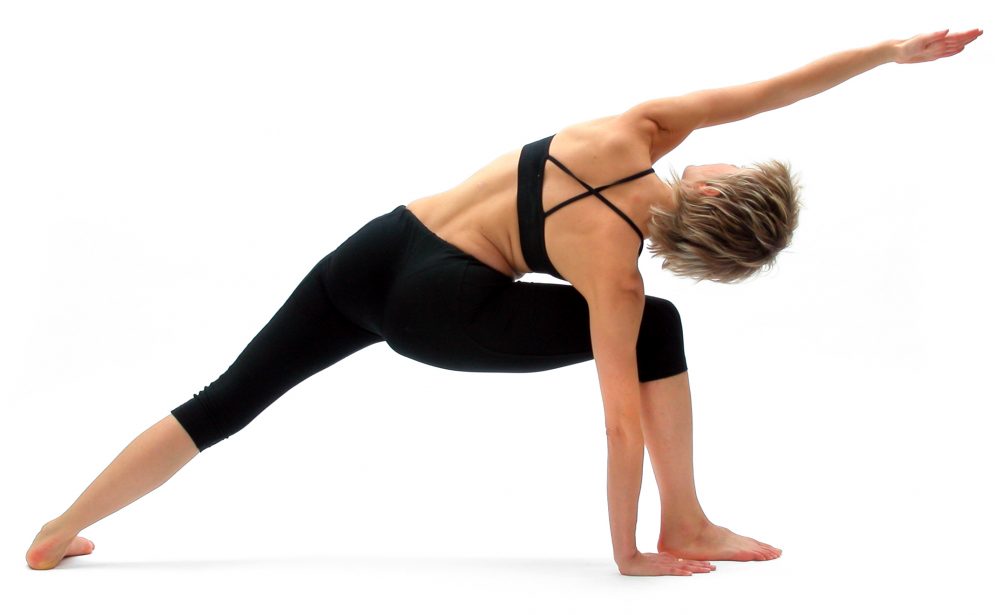
TRIKONASAN (lateral bending pose)
Steps
- Stand straight, feet apart and arms on the sides, palms facing and touching the thighs.
- While inhaling, raise your right arm slowly up to shoulder level, palm facing down with the elbow straight.
- Now turn the palm upwards and raise the hand so that it is in a straight line, touching the ear.
- While exhaling, bend as far as possible to the left. This is the final position of Trikonasana.
- Maintain it for a few seconds and return to normal position gradually.
- The same is to be done on the other side. This completes the process. The lateral stretch should be felt.
Benefits & Precautions:
This asana makes the spine flexible and gives good exercise to the lateral area. It also vitalizes the liver, pancreas and kidneys, exercises the side muscles and increases the flexibility of the hip joints and waist.
Makarasana (crocodile)
Steps
- Lie on your belly, with the arms crossed under your head. Turn your head to one side and rest your head on your arms.
- Close the eyes and let your whole body relax into the floor.
- Breathe deeply, pressing the belly down into the floor with each inhalation and hold for 6-10 breaths. With each exhalation allow your body to relax deeper into the floor.
- To release: bring the palms under your shoulders and slowly press up into table or child pose or roll over onto your back.
Modification:
Raise the head and shoulders and rest the chin in the palms of the hands with the elbows on the floor.
Benefit:
Crocodile reduces stress and tension, promotes sleep, regulates blood pressure and reduces anxiety.
Disclaimer
The Content is not intended to be a substitute for professional medical advice, diagnosis, or treatment. Always seek the advice of your physician or other qualified health provider with any questions you may have regarding a medical condition.