Namita Nayyar:
Which yoga practices helped you the most in regaining strength and mobility?
Abigail Atkinson:
Share five yoga asanas for a healthy heart.
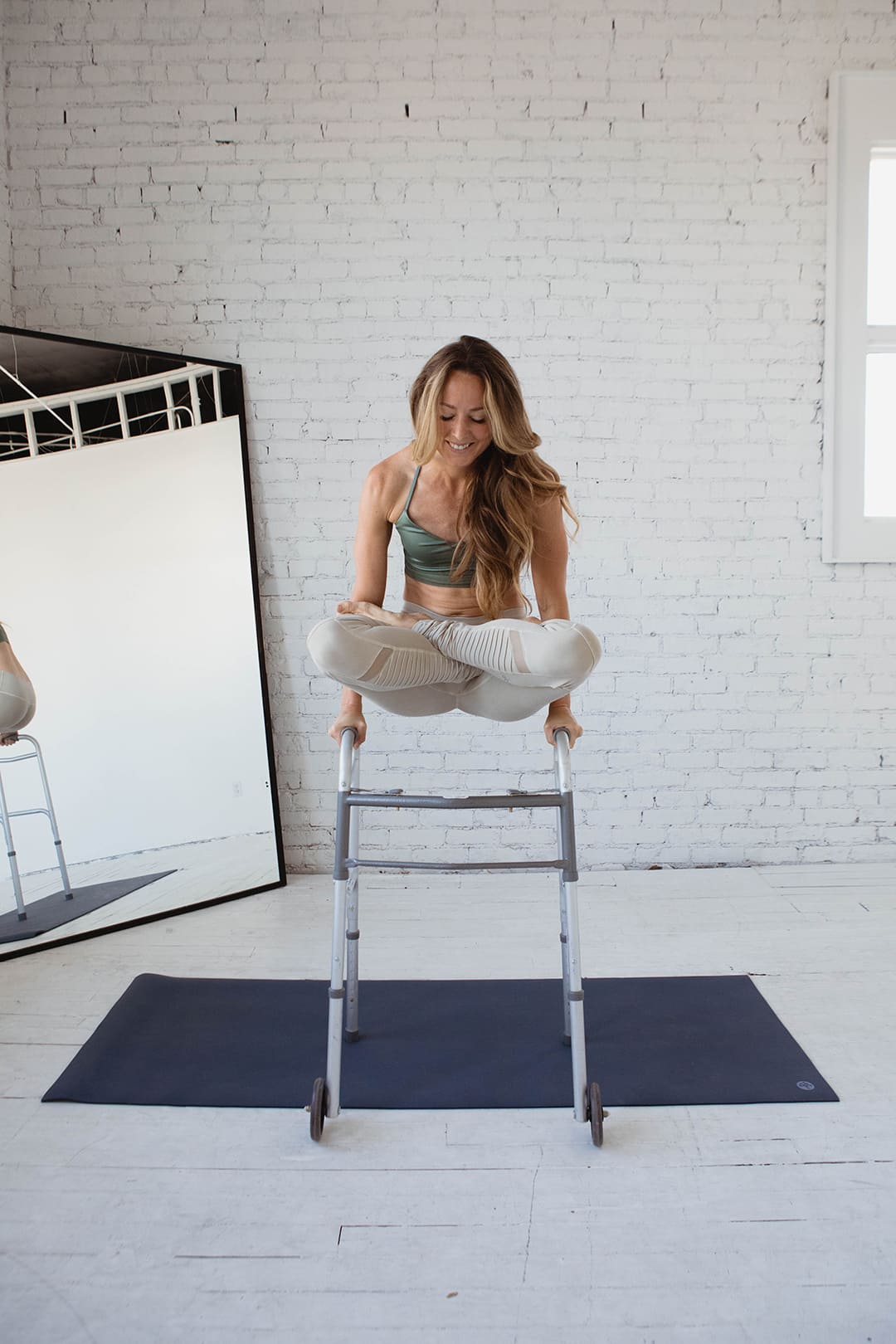
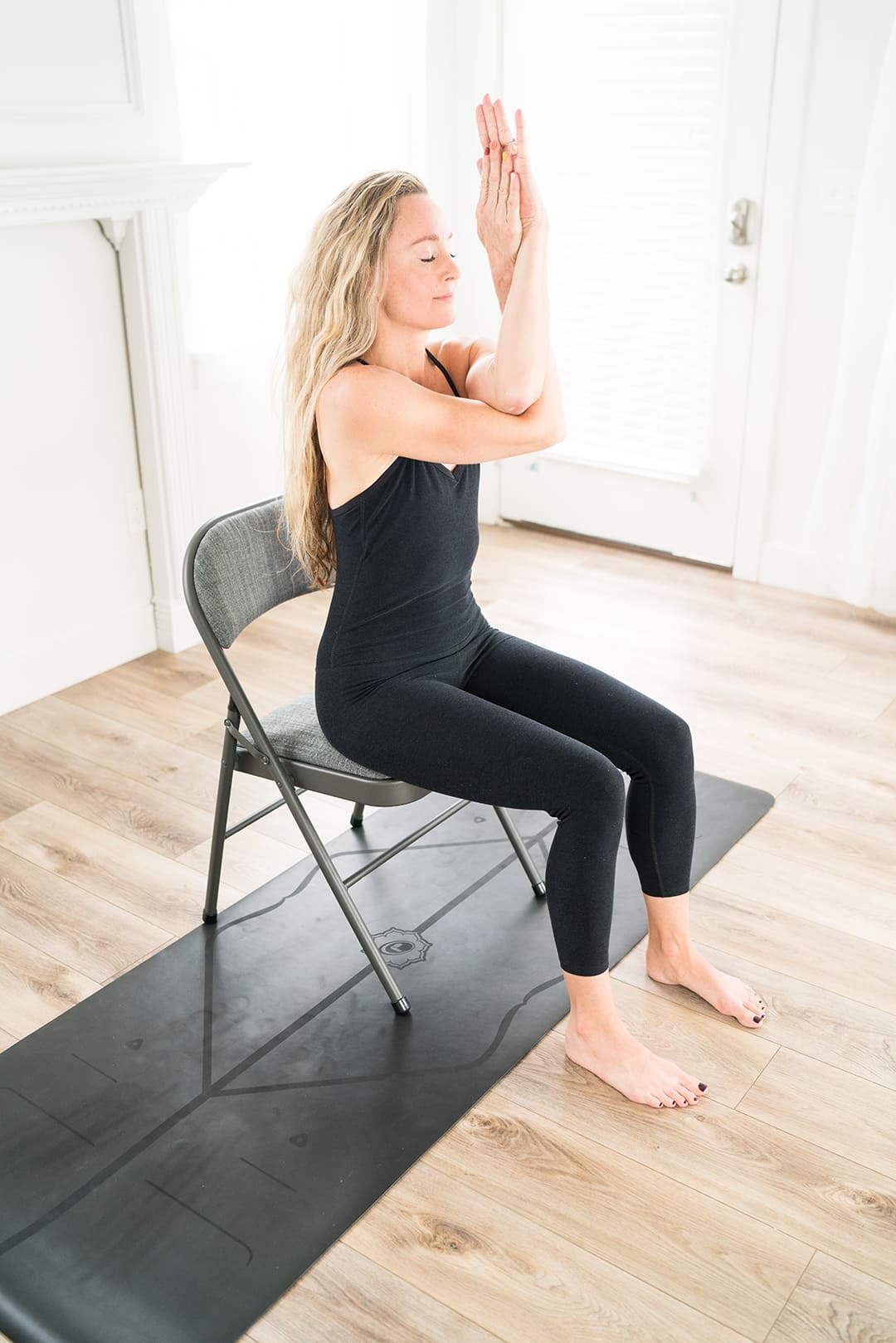
Adaptive yoga was essential for me, even before I knew what to call it. I used a chair at home, and later my walker became a prop for my practice. I had to relearn postures for a post-stroke body.
There were no adaptive yoga classes where I lived, so I experimented on my own. I later completed a year-long biomechanics course to stabilise and retrain my walking pattern and now incorporate this learning into my adaptive yoga teacher trainings.
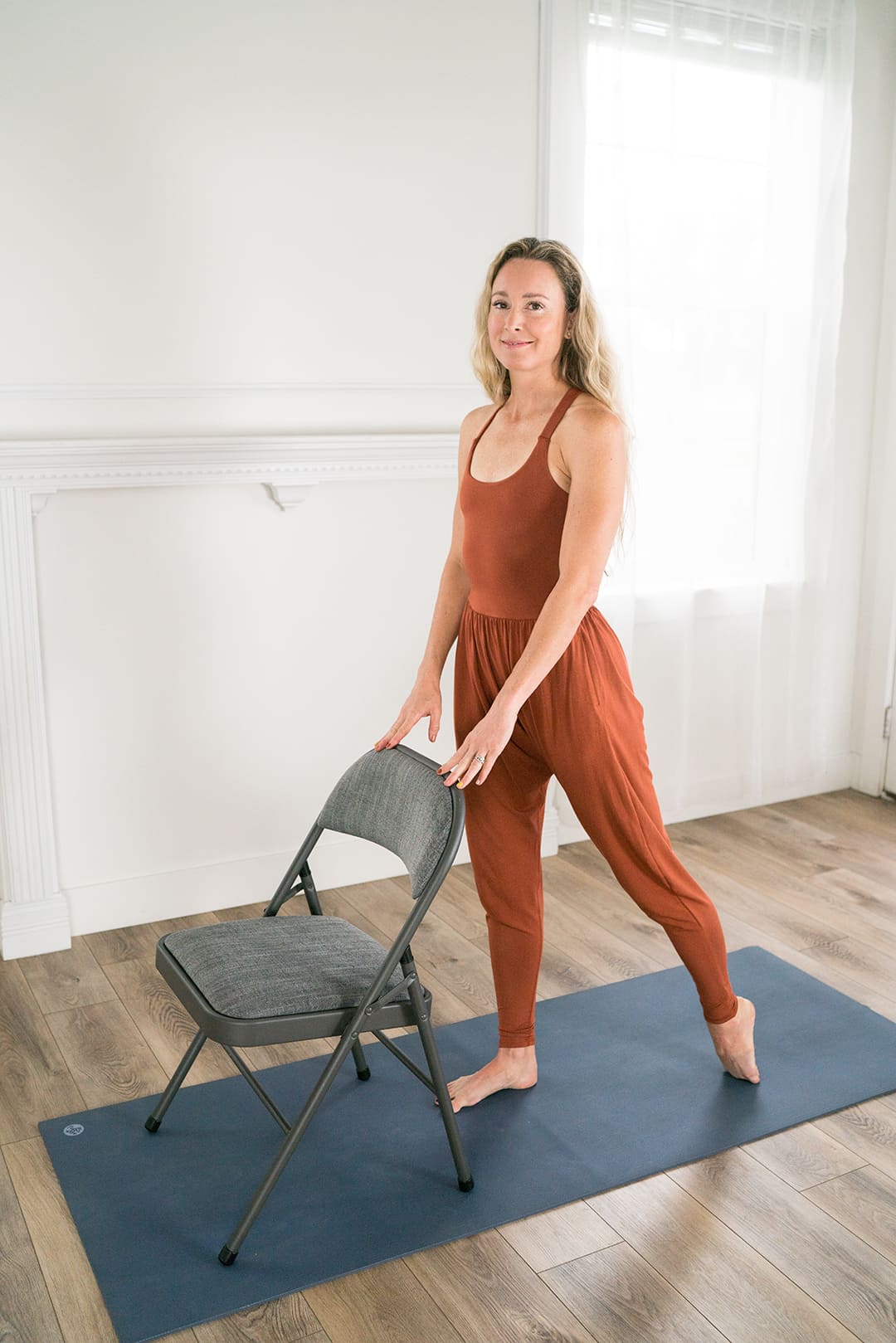
Here are five asanas I consider “non-negotiable” for heart health, alongside walking, strength training, quality sleep, and stress management. These are based on my experience as a stroke survivor and yoga teacher and are not a substitute for medical advice.
1- Mālāsana (Yogic Squat): Builds leg and hip strength for daily functional movement—one of the biggest drivers of heart health.
2- Utkāṭāsana (Chair Pose): A large-muscle strength pose that safely raises heart rate while improving stamina and lower-body resilience.
3- Vīrabhadrāsana II (Warrior II): Strengthens glutes and quads while improving joint mechanics, making walking and daily movement easier.
4- Bhujangāsana (Cobra Pose): Opens the chest and improves spinal extension, helping breathing efficiency and exercise tolerance.
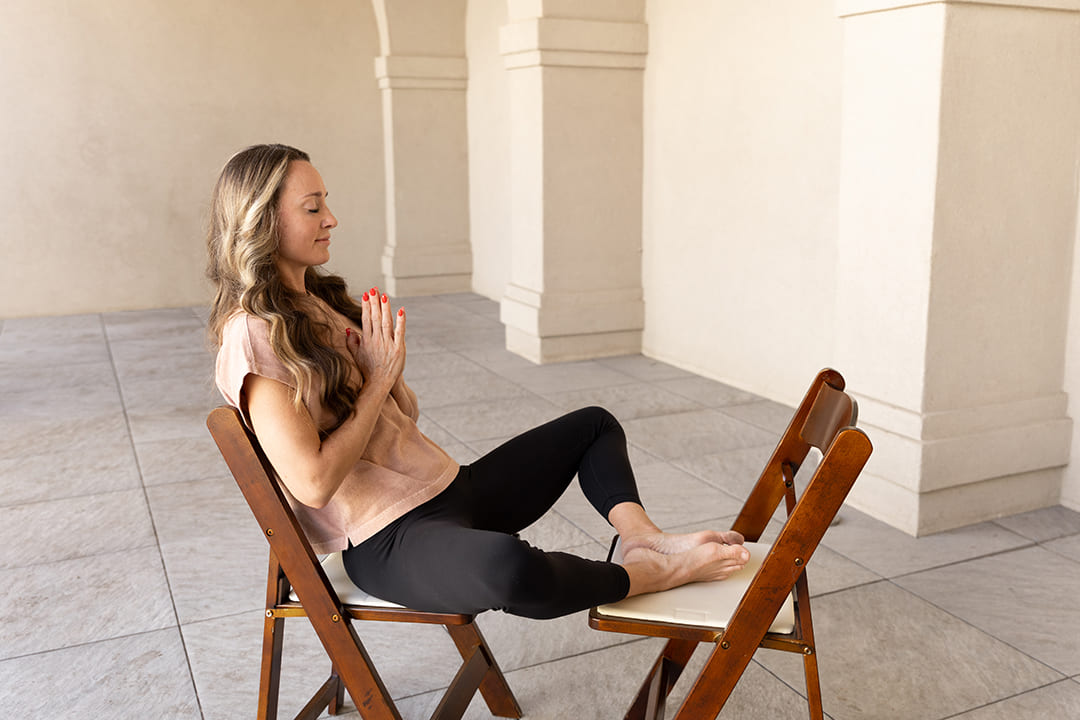
5- Viparīta Karaṇī (Legs-Up-the-Wall): A calming posture that reduces stress, supports vagal tone, and may help regulate blood pressure through relaxation and slower breathing.
Namita Nayyar:
What are the biggest misconceptions about exercising after a stroke?
Abigail Atkinson:
People think exercise needs to be long to be effective. What worked best for me was short “movement snacks.” Instead of one long session, I did 5-, 10-, or 15-minute practices spread throughout the day.
When I switched to this approach, my recovery accelerated. Within weeks, my walking stability improved so much that I no longer needed my walker. Never underestimate the power of small, consistent movement.
Namita Nayyar:
How did your relationship with your body change after the stroke?
Abigail Atkinson:
A stroke instantly transforms your body. I went from living in a body I trusted to one that felt like a stranger. At first, I felt betrayed by it.
Yoga gave me a safe way to explore this new physical reality. While all my therapies were important, yoga helped me rebuild a positive relationship with my body. Now, I respect my body more than I ever did before, because I understand it is the most important environment I will ever inhabit.
Namita Nayyar:
Which pranayama techniques best support cardiovascular health?
Abigail Atkinson:
My favourite is resonance breathing, also known as heart-coherence breathing. You inhale for five seconds and exhale for five seconds—about six breaths per minute—for two to five minutes.
It brings the heart, brain, and nervous system into coherence and can improve heart-rate variability and stress resilience without needing breath retention. It’s simple and accessible.
Disclaimer
The Content is not intended to be a substitute for professional medical advice, diagnosis, or treatment. Always seek the advice of your physician or other qualified health provider with any questions you may have regarding a medical condition.
